Sabitlenmiş Tweet

Get the fundamentals down.
If you know only the fundamentals of business, money, health, fitness, relationships, tech, etc,
you're way ahead of most people.
English
Ryan Faust
869 posts

@RyanRFaust
Solopreneur exploring tech, business, and the art of simplifying complexity.


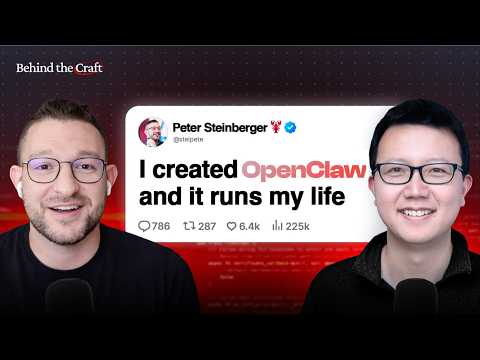




AI is voiding two maxims: 1. You should master skills before using them: no longer true in AI, because by the time you master something, brand new tools have been released. Why sharpen your axe when the chainsaw comes out tomorrow? 2. Focus wins: no longer true in AI, because AI allows us to spread our effort and agency over 10x more bets than we ever could before. Companies will start to look more like funds: portfolios of bets.


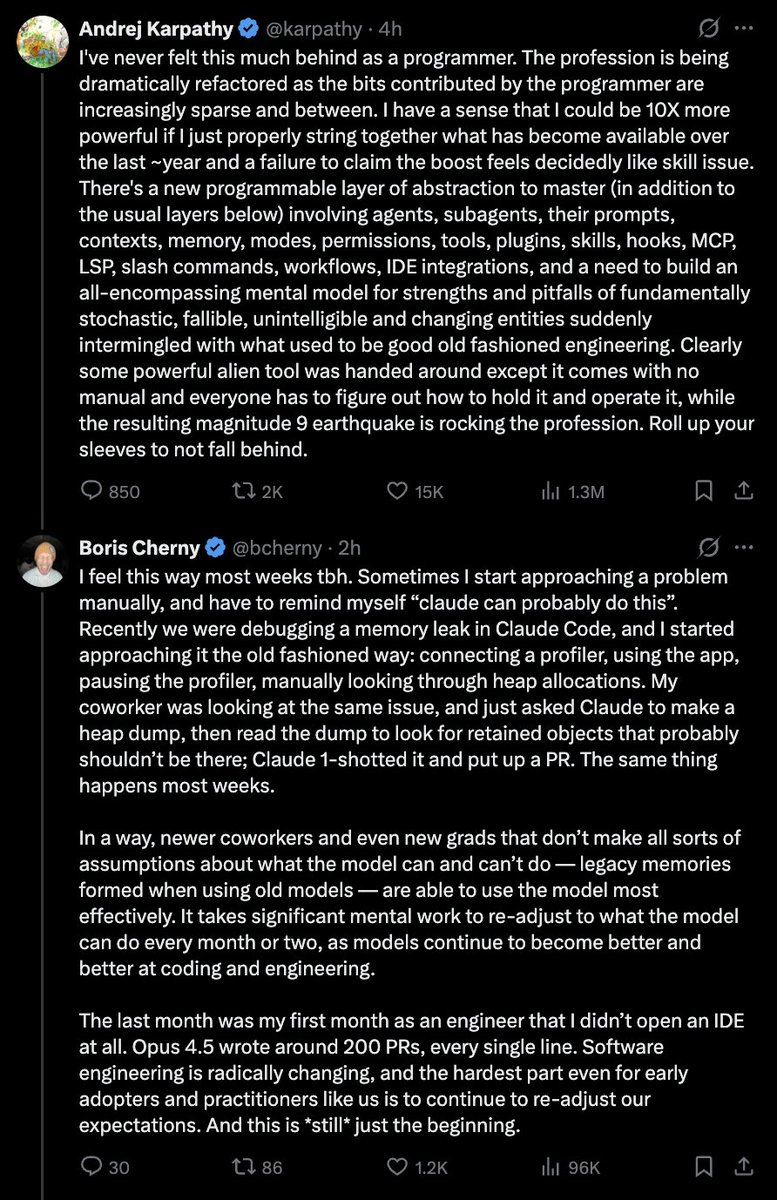
I feel this way most weeks tbh. Sometimes I start approaching a problem manually, and have to remind myself “claude can probably do this”. Recently we were debugging a memory leak in Claude Code, and I started approaching it the old fashioned way: connecting a profiler, using the app, pausing the profiler, manually looking through heap allocations. My coworker was looking at the same issue, and just asked Claude to make a heap dump, then read the dump to look for retained objects that probably shouldn’t be there; Claude 1-shotted it and put up a PR. The same thing happens most weeks. In a way, newer coworkers and even new grads that don’t make all sorts of assumptions about what the model can and can’t do — legacy memories formed when using old models — are able to use the model most effectively. It takes significant mental work to re-adjust to what the model can do every month or two, as models continue to become better and better at coding and engineering. The last month was my first month as an engineer that I didn’t open an IDE at all. Opus 4.5 wrote around 200 PRs, every single line. Software engineering is radically changing, and the hardest part even for early adopters and practitioners like us is to continue to re-adjust our expectations. And this is *still* just the beginning.