

VTSS
1.4K posts

Scientific discovery is reaching the limits of human capacity: too much data, too many disconnected fields, and too few ways to connect ideas fast enough to matter. The next breakthroughs in materials, medicine, energy, and beyond will not come from scaling today’s AI paradigm alone or from relying on serendipity alone. They will require a new kind of AI for knowledge discovery that not only models the world but shapes what it could become. At Unreasonable Labs, we are building superintelligence for knowledge discovery: systems that reason across disciplines, generate novel hypotheses, test them through simulation and experimentation, and help guide real-world discovery. Our AI engine is not confined to what it has seen in training. It creates new data, builds new tools, and maintains a persistent world model that grows more powerful as it reasons.
Why now?
Even today's most powerful AI models face a core limitation: they are trained on what we already know. True discovery begins when a system encounters something its current model cannot explain. This is why you cannot train your way to a discovery - a system has to reason through new problems, update its beliefs, and revise its understanding of the world as it thinks.
Another critical insight is that rich knowledge already exists, but is not yet applied to solve pressing problems. It sits in millions of papers, patents, and datasets, trapped in isolated silos, often in legacy data vaults. What's missing is a way to connect it, scale it, unlock the potential, and synthesize genuine novel predictions.
The time is now to build a system that enables practitioners to design, explore, and direct discovery, whether through human guidance or full automation, while capturing the tacit insight that domain experts bring.
Steerable reasoning
That is why we built an operating system for scientific discovery - one that replaces chance with steerable reasoning.
Rather than retrieving static facts, our AI builds and continuously updates a living world model - a representation of knowledge the system can actively reason over, question, and revise.
A concrete example: say you want to create "smart concrete" that can flex - a concept that doesn't exist yet. Our AI maps relationships across domains, finds a path from morphable smart materials to concrete, and identifies the most efficient way to bridge those concepts. It then autonomously writes simulations, tests the hypothesis, and refines the idea. Then it interacts with hardware to produce a physical artifact, and the loop expands into the real-world, where the machine becomes world-shaping.
Our AI gives users full visibility into how the system arrived at a conclusion. It delineates which existing patents and papers it drew upon versus what is genuinely new - protecting IP and competitive concerns from the start, and offering deep compositional insights into technology advances.
It takes unreasonable people to make progress
Our team reflects the interdisciplinary expertise required to build this next breakthrough - my co-founder Yuan Cao @caoyuan33 (formerly DeepMind) and Andrew Lew, @HaiqianYang, Matt Insler, Jennifer Kang and Julia McLaughlin.
We are backed by $13.5M in seed funding led by @PlaygroundVC with participation from @aixventures, @e14fund, and MS&AD. We are guided by advisors including Robert Langer (1,000+ patents), Kostya Novoselov (Nobel Prize in Physics), and @Thom_Wolf (Co-founder of Hugging Face).
We already have multiple pilot programs underway with leading industrial partners in materials science and engineering, with additional engagements developing across energy, logistics, bioengineering, and other strategic domains.
The biggest challenges of our time - fusion energy, sustainable materials, new medicines - demand exponentially more innovation than humans alone can produce. We are not replacing scientists, and instead are making every scientist capable of leading their own team of AI-powered researchers. Abundant innovation leads to abundant prosperity.
Watch our launch video below to see what we're building @unreasonable_ai 👇
English
@alancarroII LOL. And who will hire them, when all the other jobs are lost.
English

Plumbers and electricians seeing AI replace everyone who went to college
English
@avidseries Question, can you also filter other countries by majority vs minorities. Would be interesting to see rankings, majority vs majority and minority vs minority across countries.
English
I am 100% serious.
Would absolutely help found a Catholic college in Vermont.
Name? Donor’s privilege of course but I provisionally suggest Brownson College (after Vermont’s distinguished convert Orestes Brownson)
Josh Hochschild@JoshHochschild
Amazing opportunity. Would love to collaborate on a proposal. DM me if interested
English
English

This is amazing, businessman Raj Bhakta is giving away an entire college campus in Vermont for free, but only for the specific purpose of promoting the Catholic faith and Western civilization.
Civilization is healing.
English
@JeremyTate41 Come to VT. The lowest church attendance, highest atheism in the nation. The harvest is plentiful, but the laborers are few. We could use you here. God bless.
English
@elonmusk @creation247 He was either a liar, lunatic, or the Lord. It's not about the teachings. Read CS Lewis.
English


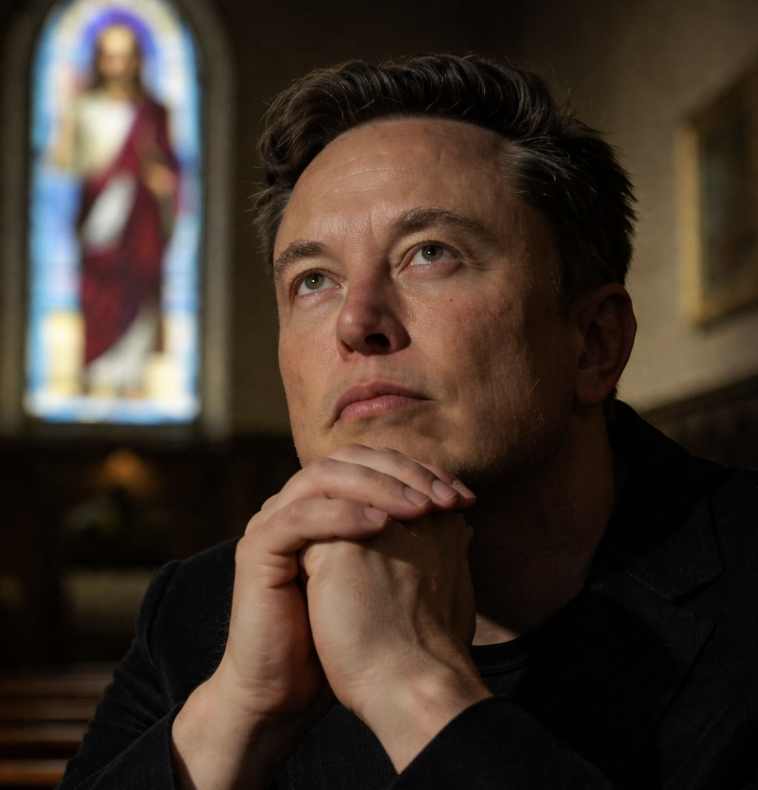
Someone needs to evangelize Elon Musk
Who will lead him to Christ?
English
@Math_files All the evidence of recent years turned out to be anti-evidence and anti-science, so we have updated our priors, to see it is unscientific to believe today’s science. Bayes’ revenge is great irony.
English

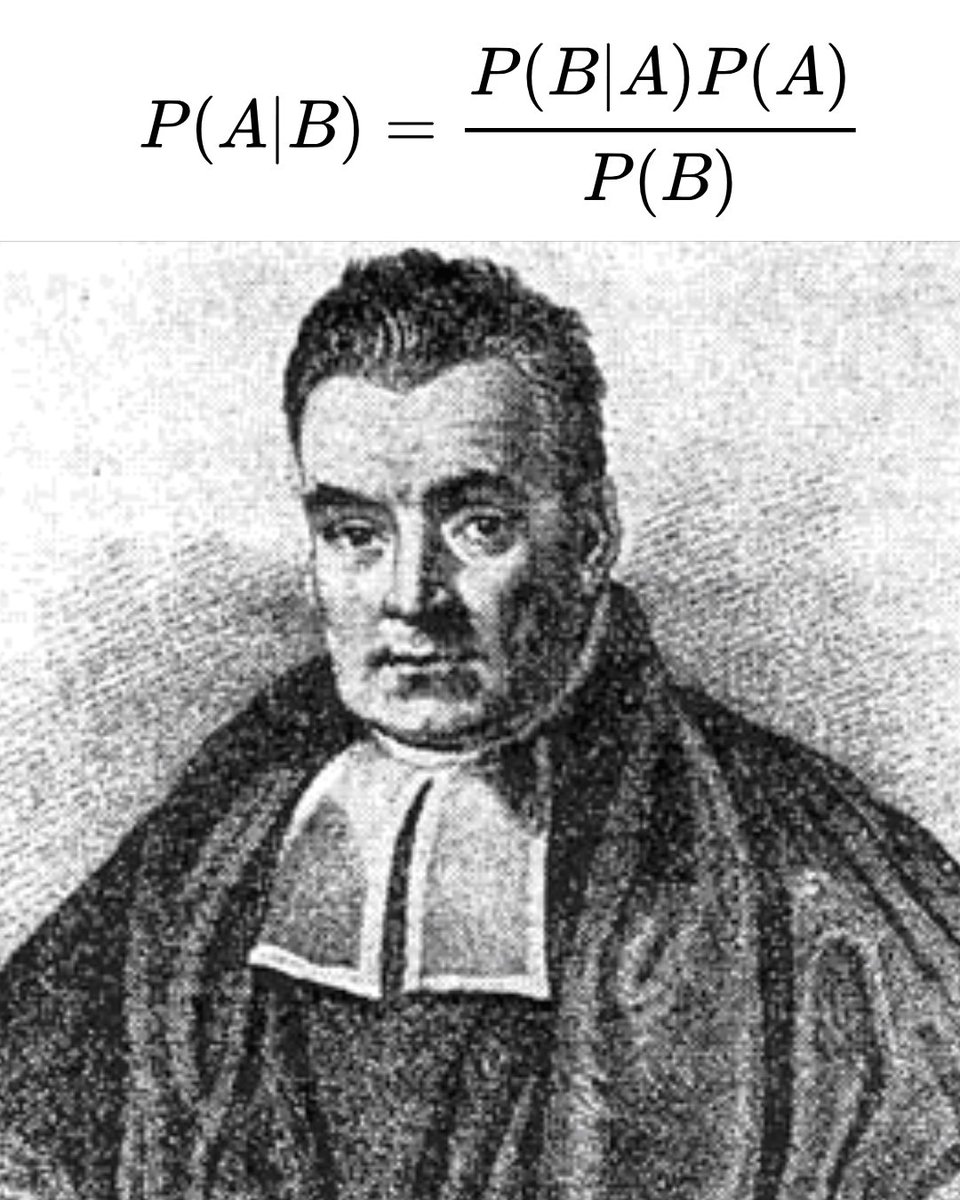
Bayes’ theorem is probably the single most important thing any rational person can learn.
So many of our debates and disagreements that we shout about are because we don’t understand Bayes’ theorem or how human rationality often works.
Bayes’ theorem is named after the 18th-century Thomas Bayes, and essentially it’s a formula that asks: when you are presented with all of the evidence for something, how much should you believe it?
Bayes’ theorem teaches us that our beliefs are not fixed; they are probabilities. Our beliefs change as we weigh new evidence against our assumptions, or our priors. In other words, we all carry certain ideas about how the world works, and new evidence can challenge them.
For example, somebody might believe that smoking is safe, that stress causes mouth ulcers, or that human activity is unrelated to climate change. These are their priors, their starting points. They can be formed by our culture, our biases, or even incomplete information.
Now imagine a new study comes along that challenges one of your priors. A single study might not carry enough weight to overturn your existing beliefs. But as studies accumulate, eventually the scales may tip. At some point, your prior will become less and less plausible.
Bayes’ theorem argues that being rational is not about black and white. It’s not even about true or false. It’s about what is most reasonable based on the best available evidence. But for this to work, we need to be presented with as much high-quality data as possible. Without evidence—without belief-forming data—we are left only with our priors and biases. And those aren’t all that rational.
English


After taking a small break from Fitbit and Google, I’m starting something new and very personal.
As a co-founder of Fitbit, I thought I understood health tech. Caring for my parents from afar changed that perception.Trying to help manage their care was frustrating. Their data was all across portals, apps attachments, texts, and paper. I was constantly surprised at changes in their condition, unexpected dr visits, or other events. I looked for tools to help.
And I realized health tech for the family has a long way to go. This experience is a big reason that I, along with my Fitbit co-founder, Eric, are announcing Luffu (“loo-foo”) @weluffu
We’re building something I want for my family and your family. Software now and hardware in the future, weaved together in an intelligent family care system that gives families peace of mind. Join our waitlist: luffu.com
English
VTSS retweetledi

After months of building quietly, @FormationQ_ is now public.
I founded FormationQ to bridge frontier #quantum research with real-world impact, building pathways, partnerships & operational systems to make it happen.
We’re kicking off at Cavendish Laboratory @DeptofPhysics, @Cambridge_Uni, working alongside @IonQ_Inc to translate breakthroughs in computing, networking, sensing, and secure systems into applied solutions.
Follow @FormationQ_ to track our journey. More announcements coming soon. 🚀
FormationQ@FormationQ_
Big news: FormationQ is live 🚀 We’re taking quantum out of the lab and into the real world. Launching at the @DeptofPhysics Cavendish Lab, our new initiative is powered by @IonQ_Inc’s full-stack quantum tech. prnewswire.com/news-releases/…
English
@HannaSuds Saint Aquinas said every individual angel is its own species. Right now, Ukraine drone tech evolves on a 3 week cycle. Soon, with AI, it will be daily, hourly, and eventually each individual drone will be its own species. Quantum accelerates this. We must win quantum. $IONQ
English

$IonQ This is absolutely one of the most important reports I’ve read regarding the entire IonQ and quantum tech ecosystem as it relates to national security.
Here’s the reality: as advancements in Q rapidly continue, there’s going to be a point where a clear leader takes control of the board. There are two boards: the commercial enterprise board and on the geopolitical stage, the national security board. In my view, the latter is the priority. But in the US, where things operate and move typically slower than in China due to the difference in government operations (Xi never needs to deal with a congressional boycott), it’s up to private enterprise to pick up the lag of government delay after delay.
We’ve seen the greatest success story of all when we view the US space program, whereas private enterprise propelled the US into incredible leadership. And it’s been incredible to see all these advancements up close and in real time. Now in Q, America and the West needs the same. And similar to Elon, Gwynne, and a few known and unseen others who changed the space exploration race, here comes a Niccolo with his own unique band drumming an independent beat. Many have tried to emulate what Elon and Gwynne have done. All have failed. Niccolo and his band will not.
Great job @netcreat!
Great job @NiccoloDeMasi!
4FIRE@netcreat
English

A merger between SpaceX and Tesla would instantly create the Berkshire Hathaway of the modern century.
The capital raising and operational efficiencies if both were together are obvious.
If this were to happen, it would also bring us one step closer to having one equity instrument for all things Elon which many would want to buy.
English
@HannaSuds The Hospitallers have an incredible history of sacrifice in charity and battle.
English
VTSS retweetledi
Today while walking to Saint Patrick’s Cathedral in the middle of this massive storm, the snow and wind prevented me from seeing the cathedral’s spires but I kept walking, with few others out in the storm. Continuing and thanking the God I believe in for the many blessings in my family’s life, I eventually saw the cathedral. And just like that, I came home.



English