

Afik Cohen
1.2K posts

Afik Cohen
@aphex
🤖 cto @houmanoids • 𝕥𝕣𝕒𝕟𝕔𝕖 𝕕𝕛 • ᴍᴇᴛᴀᴘʜʏsɪᴄɪᴀɴ 🌉 SF, CA @[email protected]
San Francisco, CA Katılım Aralık 2008
1.2K Takip Edilen776 Takipçiler


extremely good takes, also the last bullet point is exactly what we're doing, hi;)
arian ghashghai@arian_ghashghai
robotics is inherently about hardware, however I'm meeting more and more founders who want to find a software (or just non-hardware) business to build for robotics. thoughts: > software is behind hardware (so this realization is correct, but not unique), and "robot brain" is indeed a hard problem to solve (further out than most think). that being said, I don't think solving robot intelligence as a company that is neither 1) collecting data (either by robot deployment, or other means) nor 2) a true research company like PI makes a lot of sense > Selling dev tools to robotics companies is a horrible business idea right now (sounds smart, but not enough robot deployments + nowhere near the #1 pain point) > the most obvious non-hardware opportunity is in the deployment gap. specifically, imo the demand for businesses in manual labor that want to try robotic solutions *today* I believe is much greater than most people realize, however no robot (humanoid to service bot) is ready to work out of the box (i.e. someone needs to come set them up, teleop, maintain etc). if I were thinking about a business, I would think about doing something that helps old-school, regular-ass businesses put robots into their space tl;dr build stuff that actively puts more robots into the world
English
shhh don't reveal the huge alpha about building in robotics rn
Chris Paxton@chris_j_paxton
Again robotics software sucks. Its so bad. Part of what makes it so bad -- and what makes stuft like ROS useful -- is the amount of boring middleware code you need to write between sensors, processes, etc. Coding models make it so much easier to work with, its wonderful.
English
@sama Novel molecular therapies to stimulate progenitor cells that regenerate cochlear hair cells, thus curing hearing loss for billions of people; like the @frequencytx FX-322 trials; this would win a nobel
English

what problem do you most hope AI will solve in the future?
maybe we can help!
English
get you a co-founder who can do hip replacements in the field for a customer 🦿
Taylor Hou@taylorhou
Founders wear many hats. I added robot actuator technician to my list of skills ✅
English
Afik Cohen retweetledi

Prepping the robot dogs for our second deployment this week #security #patrol @houmanoids 📷@soundjar



English
Afik Cohen retweetledi
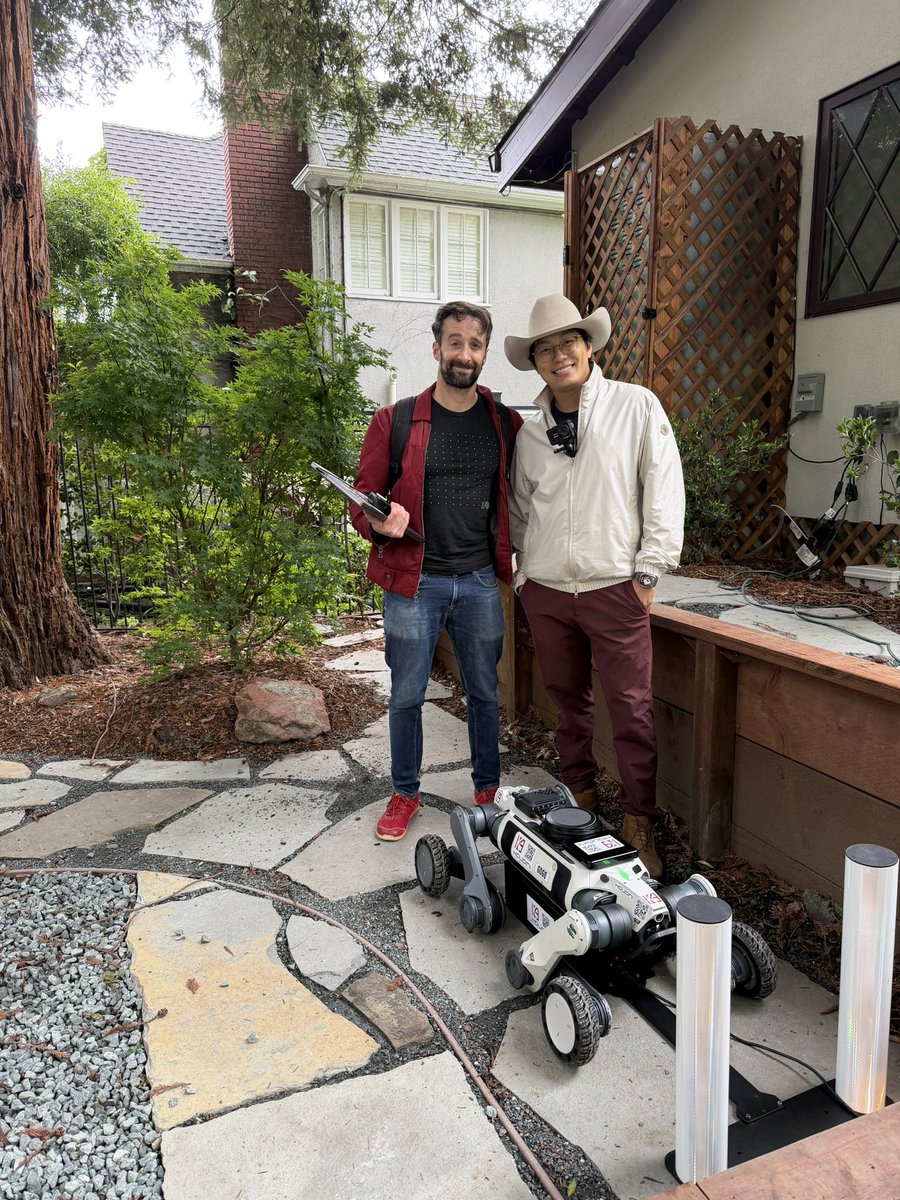
First residential deployment of quadruped robot for security and patrol!
English
within the first 60 seconds two guys bought the quadruped a beer and balanced it in on top of her and I haven't finished waterproofing the 5G router yet so ngl I was a bit concerned about whether the public is ready for robots in daily life
0xSero@0xSero
Few hours in SF POV
English
Afik Cohen retweetledi


just noticed these awesome pics from the @AGIHouseSF hardware night a few months back. met so many great robotics+hardware folks, when's the next one?
AGI House SF@AGIHouseSF
6 high-caliber events in 6 nights. Last night: The Consumer Hardware Night featuring robodogs, exoskeletons to prevent knee injury by @Hipposexo, synthesizers, and presentation of the Future Factory. Hosted by @Aililiuu, @jerryhuang01, @ShawKylin, @JvNixon and @JuliusYRitter.
English
github enterprise trial in one act: 50 seats auto-provisioned at $21/each, payment fails on $0 of real usage, CI dies mid-PR, every agent on my team frozen waiting for green checks. then a sales rep emails: "ready to move forward with the solution?" 🙃
English
Afik Cohen retweetledi

@JakeHulberg @infisical @doppler Claude Code needs to be able to run my local dev server with infisical run. infisical CLI frequently invalidates its session (seems like once a month) and requires manual re-login. this brings my agents to a screeching halt
English

@aphex @infisical @doppler @aphex
Hey! Just want to make sure I understand your use case. Are you thinking secrets for the app Claude Code is building, or for Claude Code itself (e.g. MCP / setting up Infisical)?
English
@infisical if you do not make your cli non-interactive (as in, letting me run `infisical login` from within claude code) within the next few weeks, I am canceling and moving our team to @doppler
English
@JakeHulberg @infisical @doppler Machine identities aren't working. I still get this, even with INFISICAL_UNIVERSAL_AUTH_CLIENT_ID and SECRET set in my .zshrc:
> infisical run -- pnpm run dev
No valid login session found, triggering login flow
English
Btw, if MCP isn't what you're looking for, you can also just use a Machine Identity to login non interactively via the CLI.
That'll look like this:
export INFISICAL_UNIVERSAL_AUTH_CLIENT_ID="your-client-id"
export INFISICAL_UNIVERSAL_AUTH_CLIENT_SECRET="your-client-secret"
if you're self hosted you will also:
export INFISICAL_API_URL="https://your-infisical-host/api"
And then
infisical login --method=universal-auth --plain --silent
--plain prints just the raw access token to stdout (easy to capture into INFISICAL_TOKEN for downstream commands), and --silent suppresses the banner output.
We'd still create a machine identity for this with permissions scoped to the secrets we want claude to have.
Let me know if you'd like help getting that set up or scoping the identities to specific folders!
A couple of relevant docs below as well.
infisical.com/docs/cli/comma…
infisical.com/docs/documenta…
English

Here's how to cut down on the slop:
1. use this skill github.com/mattpocock/ski…
2. Get a shared understanding of the repo with the agent, and save that into your working documents.
3. Don't rush features, it'll catch up eventually.
I've been grilled 2 hours straight with Qs

English
Afik Cohen retweetledi

go to bed
right now
i know the build is almost finished
the eval can wait til morning
the agent will still be failing tomorrow
you won't figure out why it's hallucinating
yes your coworker ships on 4 hrs of sleep
they also hallucinate a lot
off you go
English
after using @arcinternet browser since 2023, loving it dearly, and then getting unceremoniously abandoned in favor of @diabrowser before @browsercompany sold to @Atlassian, I'm back on chrome.
honestly chrome now has everything that lured me away from it in the first place: vertical tabs, tab groups, and PiP. heck, it even works best with the claude chrome plugin (which I use way more than dia's inflexible sidebar that obviously shunts you to whatever free model they're serving).
thank you for the ride, browser company, no hard feelings, glad you pressured chrome into improving and glad you got your bread from atlassian (does anyone actually like any of their products without being forced to use them? blink twice)
English