
Shane Curran
12.3K posts

@arcurn
Building @evervault — flexible payments security.


I am going to piss off so many friends by saying this but if I could invest in one emerging manager sub $50M fund, it would be @Joshuabrowder. A few things you need to know about Josh: - He makes the founders he invests in live in his spare room at the Four Seasons until they raise their seed - He turned his $100K Thiel Fellowship grant into a $10M angel portfolio - He was one of the first cheques into Micro1, Yuzu and many more - When he found out his father had been taken by the Russians, he was playing poker… (legend!) I have never had founder references like the ones I got on Josh. I spoke to 12 founders. He averaged 9.2/10 across all 12. This is one of the best episodes we have done in a long time and my notes below: 1. Why I Believe Young Founders Make the Best Founders Young founders have no safety net and no option but to win. Corporate engineers often default to hiring big teams, while young founders stay focused on building the product. Their grit is much higher. Without that level of dedication, most people quit at the first real obstacle. 2. How I Test Founder Commitment Before Investing To filter out tourist founders, schedule a pitch meeting at 11:00 PM. Elite founders accept immediately. Mediocre ones push it out by weeks. During the interview, ask rapid-fire questions. If they claim a specific revenue number, have them pull up their live Stripe account on the spot. Look for tactical customer acquisition goals, not vague partnership promises. 3. Why I Make Founders Live With Me After Investing The best early investments come from deep day-one relationships. Living together creates a focused, one-person accelerator where founders get a three-week crash course and avoid years of mistakes. The rule is simple: co-founders share one room near the Four Seasons and cannot check out until they raise an institutional seed round. 4. Why Pre-Seed Companies Fail Startups usually fail for three reasons: they run out of money, they run out of hope, or the co-founders break up. Money problems usually come from weak pitching, which is why founders should drop the deck and show the product live. To maintain hope, ignore Silicon Valley vanity signals and focus on customer progress. To avoid team blowups, handle mechanics like vesting early. 5. What Founders Need to Know About Signing With a VC VCs will say almost anything to get you to sign on the spot. They reverse-engineer your desires and claim they know every customer you want to meet. Impressionable founders fall for it, but the promised intros often never happen. Never sign in the room. Take the night to think clearly. 6. My Biggest Lesson on Reserve Investing Holding back reserves for later rounds has a huge opportunity cost. The biggest value creation happens at pre-seed, so saving capital for a Series A follow-on can limit your upside. Deploying upfront into 20 to 30 pre-seed companies can produce far better long-term returns. Go all-in early. (links below)


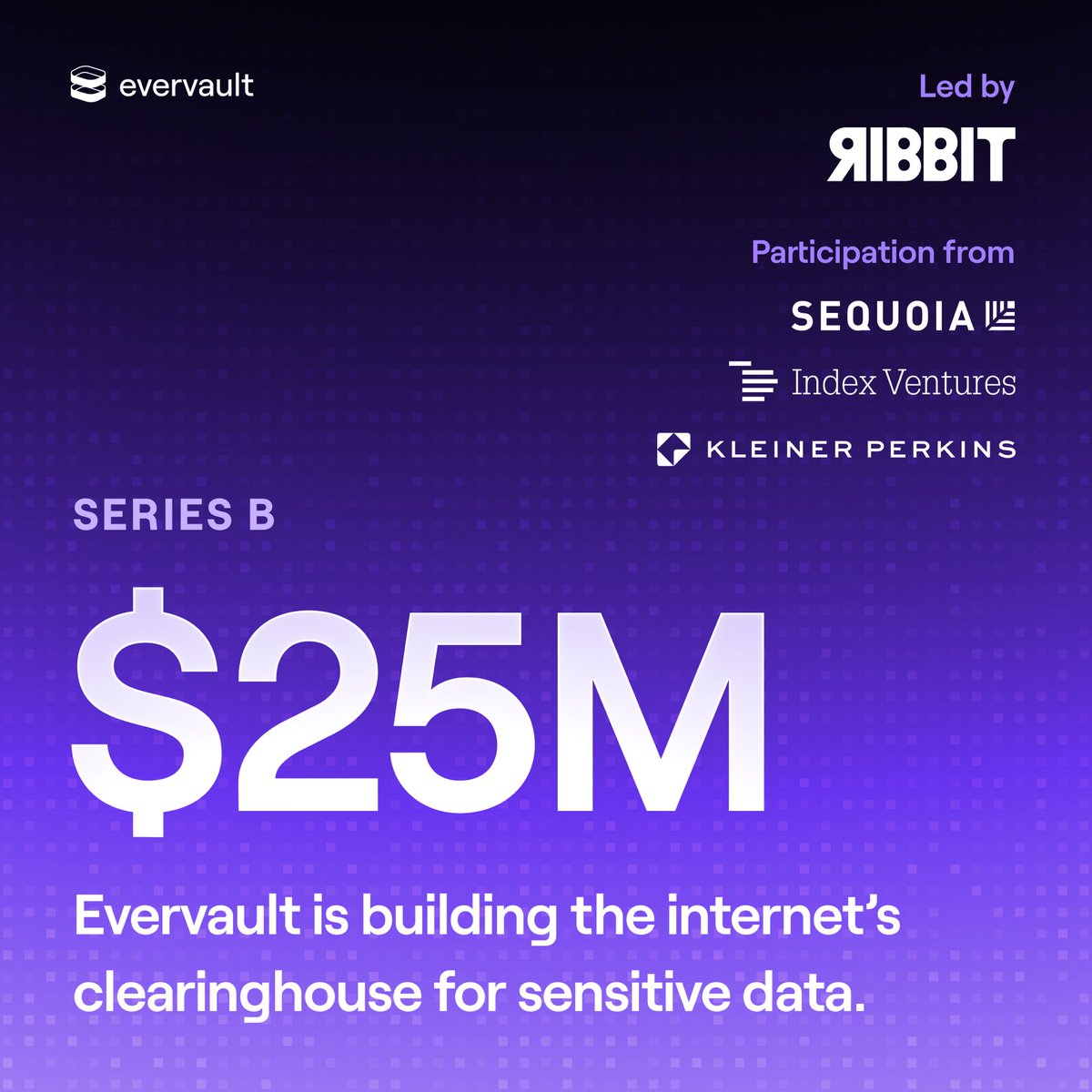
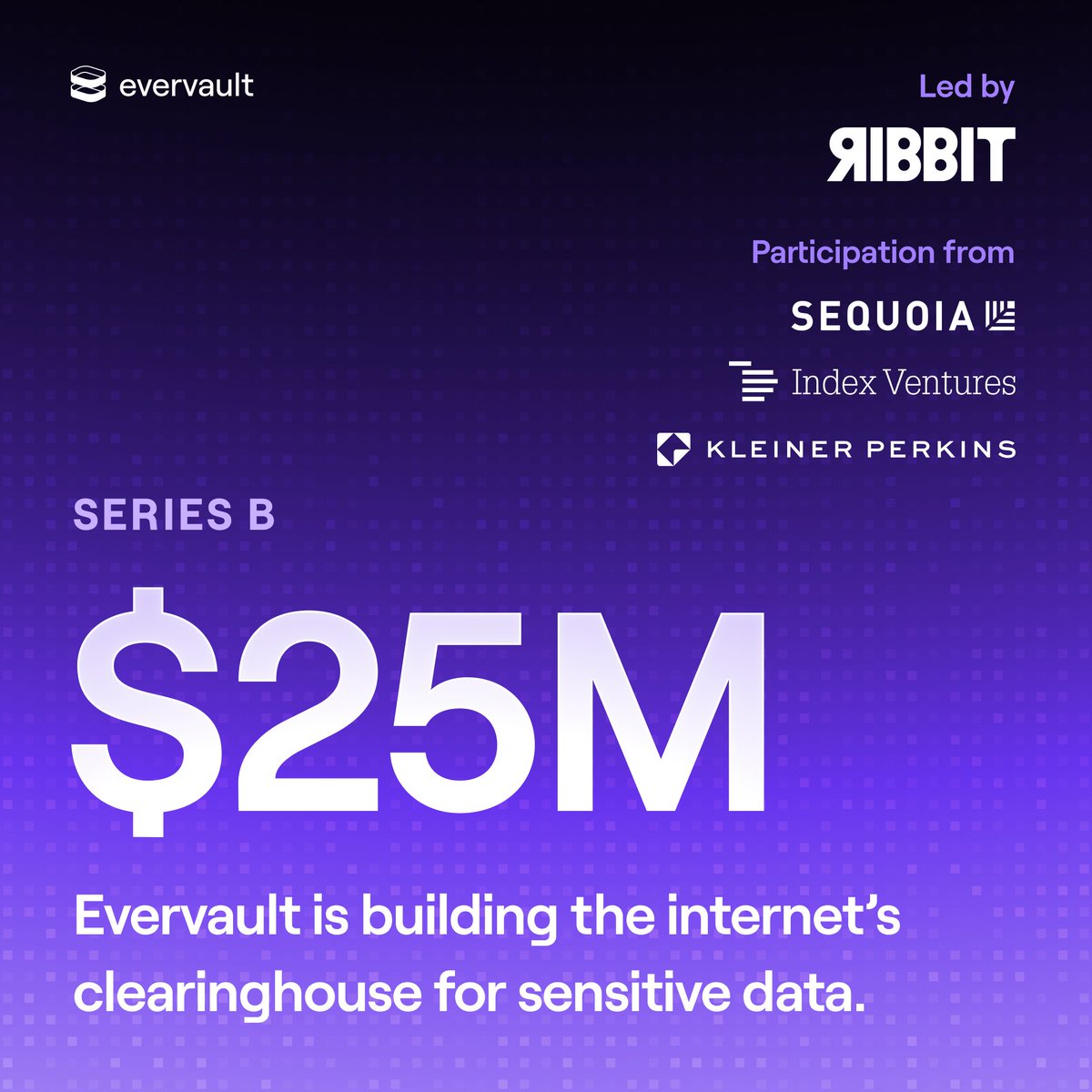
Today, we’re excited to announce @Evervault's $25M Series B, led by Ribbit Capital with continued support from @sequoia, @IndexVentures, @kleinerperkins, and @nextplayVC. This round comes at a time when sensitive data exchange on the web is going parabolic. Since 2019, we’ve been focused on building durable infrastructure for engineering teams to collect, process, share, and enrich sensitive data -- while keeping it encrypted at all times. We thought we were making good progress in encrypting the web, helping customers like @tryramp, @Rippling, @finix, @TheOverwolf, @Uniswap, @CarTrawler, and hundreds of others secure more than $5bn/year in payment flows and 100m+ unique tokens per month. But the past year has shown that our enemy -- plaintext data -- is getting stronger and more pervasive. Our vision is to build the clearinghouse for sensitive data, helping companies exchange sensitive data in a secure and encrypted way. This round helps us encrypt more of the web by further refining our developer experience, building deeper integrations with trusted third-parties, and increasing the value we can offer our customers for more data types. First and foremost, thank you to our customers. You trusted Evervault to sit directly in the flow of your most sensitive data (payments, identity, financial information, and more) and that trust is not something we take lightly. Your feedback, your requirements, and the problems you bring to us every day are what shape the product and push us forward. Thank you to the Evervault team. What you’ve built is genuinely special: infrastructure that lets developers process sensitive data without ever having to see it in plaintext. The pace, craft, care, and ambition you bring to work every day are what makes this company what it is. And thank you to our new investors for believing in the vision of making security architectural rather than procedural. We’re grateful to have partners who understand both the scale of the problem and the opportunity ahead. The internet still assumes that sensitive data must exist in plaintext somewhere. We’re building the infrastructure to change that. Onwards! More here 👉 evervault.com/blog/series-b?…


New @evervault customers page. ➡️ evervault.com/customers We've just started hiring for another design engineer position. Come build fun pages like this with me and @joshpensky!


We have three cool announcements today: (1) @OpenAI is launching commerce in ChatGPT. Their new Instant Checkout is powered by @stripe. (2) We're releasing the Agentic Commerce Protocol, codeveloped by Stripe and OpenAI. (3) @stripe is launching an API for agentic payments, called Shared Payment Tokens. It's clear that internet purchasing modalities are going to change a lot, and we're excited to start to lay some of the foundations. Links below!