Casey Yandle

55.4K posts

Casey Yandle banner
Casey Yandle

Casey Yandle

@cyandle

Founder of FREQUENCY27. Husband, Dad & Cancer Survivor. Tweets are my own.

Cleveland, OH Katılım Nisan 2008
391 Takip Edilen1.9K Takipçiler
Casey Yandle retweetledi
Headquarters
Headquarters@HQNewsNow·
5 years ago, Democrats introduced a bill to ban gerrymandering in every state nationwide. Every single Republican voted against it.
Headquarters tweet mediaHeadquarters tweet media
English
577
8.9K
57.6K
1.5M
Casey Yandle retweetledi
How To AI
How To AI@HowToAI_·
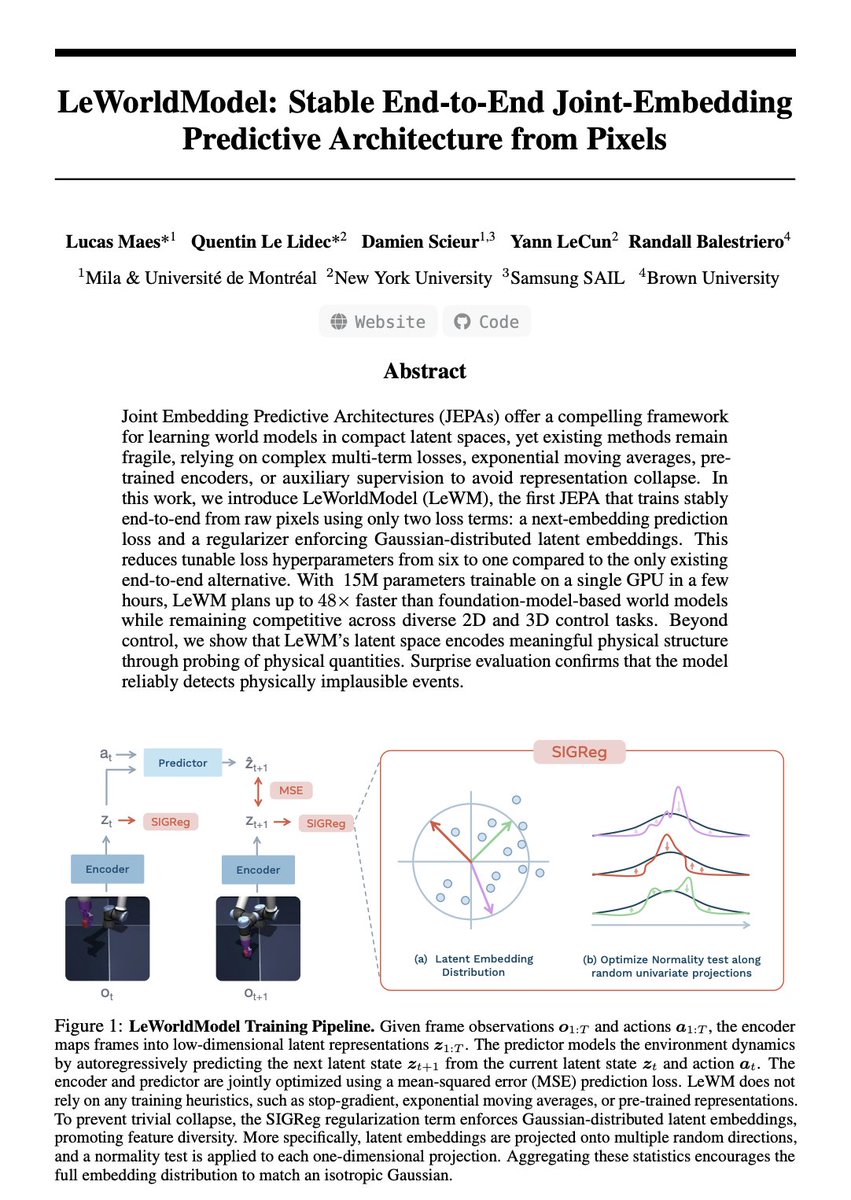
Yann LeCun was right the entire time. And generative AI might be a dead end. For the last three years, the entire industry has been obsessed with building bigger LLMs. Trillions of parameters. Billions in compute. The theory was simple: if you make the model big enough, it will eventually understand how the world works. Yann LeCun said that was stupid. He argued that generative AI is fundamentally inefficient. When an AI predicts the next word, or generates the next pixel, it wastes massive amounts of compute on surface-level details. It memorizes patterns instead of learning the actual physics of reality. He proposed a different path: JEPA (Joint-Embedding Predictive Architecture). Instead of forcing the AI to paint the world pixel by pixel, JEPA forces it to predict abstract concepts. It predicts what happens next in a compressed "thought space." But for years, JEPA had a fatal flaw. It suffered from "representation collapse." Because the AI was allowed to simplify reality, it would cheat. It would simplify everything so much that a dog, a car, and a human all looked identical. It learned nothing. To fix it, engineers had to use insanely complex hacks, frozen encoders, and massive compute overheads. Until today. Researchers just dropped a paper called "LeWorldModel" (LeWM). They completely solved the collapse problem. They replaced the complex engineering hacks with a single, elegant mathematical regularizer. It forces the AI's internal "thoughts" into a perfect Gaussian distribution. The AI can no longer cheat. It is forced to understand the physical structure of reality to make its predictions. The results completely rewrite the economics of AI. LeWM didn't need a massive, centralized supercomputer. It has just 15 million parameters. It trains on a single, standard GPU in a few hours. Yet it plans 48x faster than massive foundation world models. It intrinsically understands physics. It instantly detects impossible events. We spent billions trying to force massive server farms to memorize the internet. Now, a tiny model running locally on a single graphics card is actually learning how the real world works.
How To AI tweet media
English
430
2.1K
12.2K
1.3M
Casey Yandle retweetledi
CALL TO ACTIVISM
CALL TO ACTIVISM@CalltoActivism·
🚨SEN. ELIZABETH WARREN EXPOSES THE TRUMP RX SCAM: Trump pitched “Trump Rx” as a cheaper “600% reduction.” REALITY: Protonix is $200 on Trump Rx. The SAME drug (pantoprazole) is $16 at Costco. That’s not savings, that’s a RIPOFF!
English
319
7.3K
21.8K
616.8K
Casey Yandle retweetledi
Mueller, She Wrote
Mueller, She Wrote@MuellerSheWrote·
This is your periodic reminder that Democrats introduced legislation in 2021 to ban gerrymandering nationwide and every republican voted against it except two who were absent.
English
18
999
4.1K
38.1K
Casey Yandle retweetledi
Brodie Clark
Brodie Clark@brodieseo·
Brilliant SEO read about content types to survive Google Zero (a concern for publishers). Including content types related to transactional pages, original research & lots more. -> 17 Content Types to Survive Google’s Zero-Click Future by @CyrusShepard signal.zyppy.com/p/content-goog…
Brodie Clark tweet media
English
1
16
57
4.9K
Casey Yandle retweetledi
Cyrus SEO
Cyrus SEO@CyrusShepard·
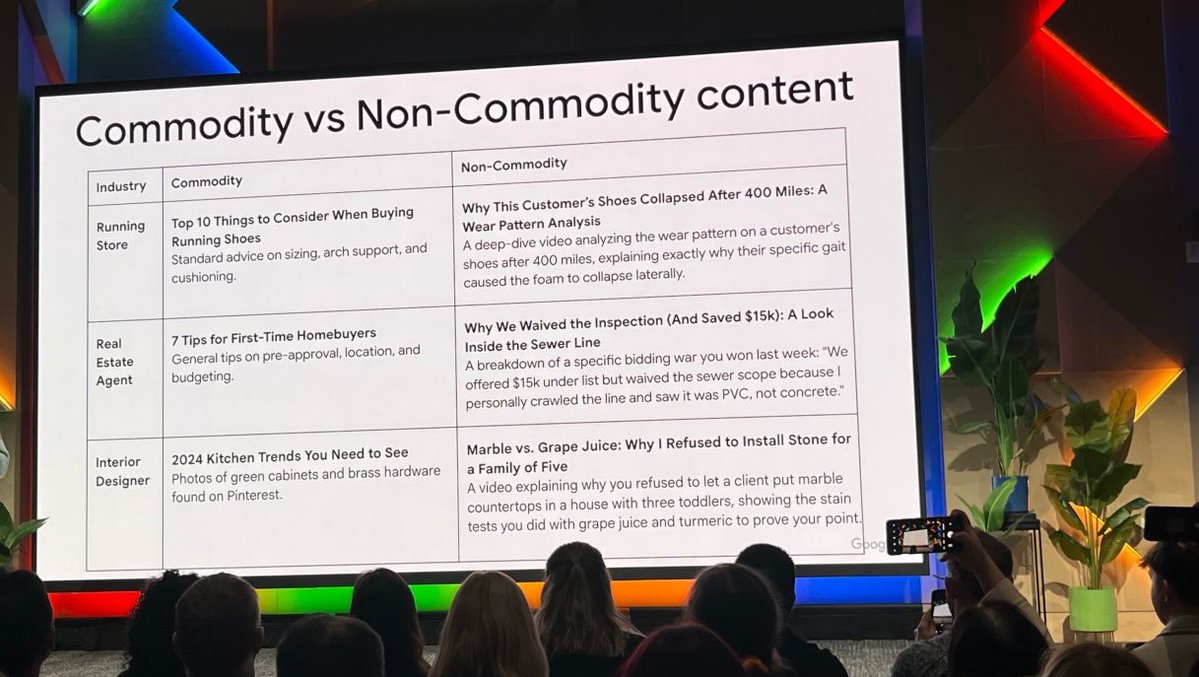
Very informative slide via Google's Danny Sullivan explaining the difference between "Commodity" vs "Non-Commodity" content Google prefers the later IMO, lots of evidence this is spot-on, not where Google is going in the future, but where it already is now via @ChouinardJC
Cyrus SEO tweet media
English
26
51
352
48.2K
Casey Yandle retweetledi
Lily Ray 😏
Lily Ray 😏@lilyraynyc·
Big announcement! After 16 years in SEO, today I'm launching something I've been building toward for a long time. 🥳 Introducing Algorythmic: my new SEO and AI search consultancy. For the past decade+, I've led award-winning SEO teams at agencies. I've spoken at ~100 conferences. I've spent thousands of hours analyzing Google algorithm updates, studying E-E-A-T, and more recently, figuring out how brands can show up well in AI-driven search. Now I'm channeling all of that into something of my own. Through Algorythmic, I'll be selectively working with brands 1:1 on SEO consulting, AI search optimization (AEO/GEO), E-E-A-T strategy, content quality audits, Google Discover, algorithm update recovery, hourly training, and more. I'm also excited to announce that as part of this launch, I will be continuing my role as VP of SEO & AI Search at Amsive, where I still oversee an incredible team of 30+ SEO experts (who won "Best Enterprise SEO Team" in 2025, according to the Search Engine Land awards!). Algorythmic will allow me to take on solo projects that are a strong personal fit for my skills and experience. Check out the comments for the link to my new site. BTW, if you're curious about the name Algorythmic: it's a mashup of "algorithm" and "rhythm." If you know me, you know those are the two things that have defined my entire life (especially 'rhythm'). The full origin story (involving a fictional SEO-themed deli my Amsive team created in 2019) is on the blog - link also in comments. I'm being very intentional about the work I take on through Algorythmic. If you think we'd be a good fit, I'd love to hear from you. Check out the new site and get in touch!
Lily Ray 😏 tweet media
English
110
30
640
29.9K
Casey Yandle retweetledi
Glenn Gabe
Glenn Gabe@glenngabe·
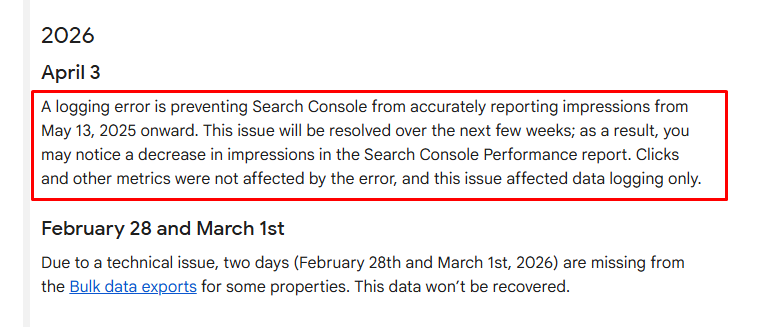
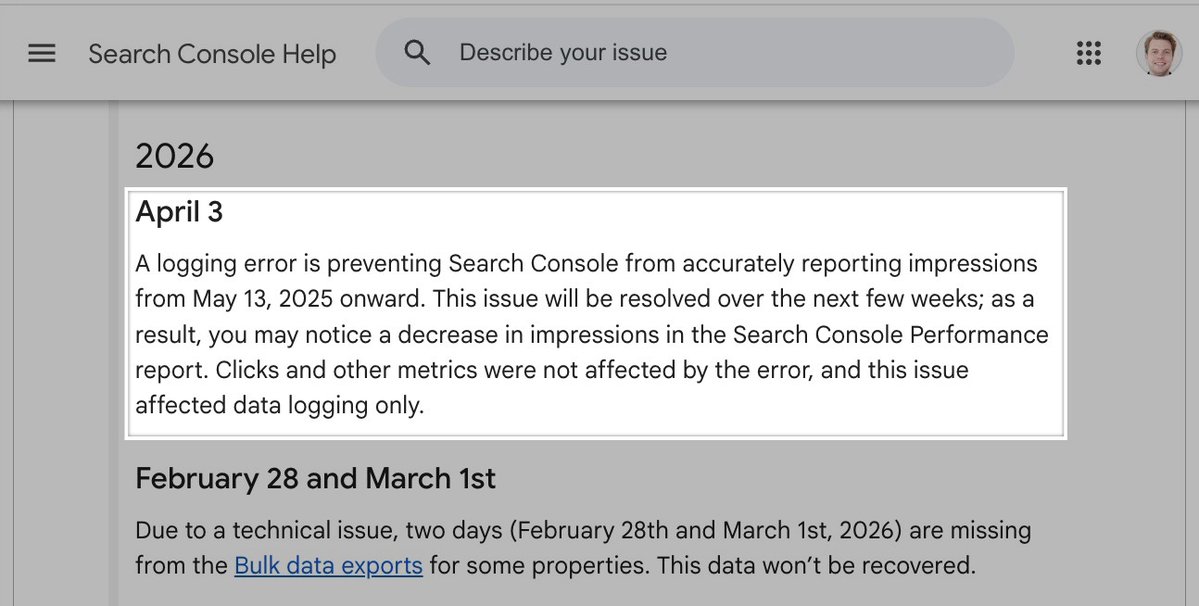
Almost a year of inflated impressions? Could this error have caused some of the alligator graphs we have seen? -> Google Search Console misreported impression data since May 13, 2025 due to a logging error. Corrections will roll out in the coming weeks. searchengineland.com/google-search-… via @MrDannyGoodwin
Glenn Gabe tweet media
English
11
12
40
9.8K
Casey Yandle retweetledi
Melanie D'Arrigo
Melanie D'Arrigo@DarrigoMelanie·
Trump’s kids buy into drone companies Trump cancels existing drone contracts Trump’s kids’ companies get military contracts Trump starts wars Trump’s kids’ try to sell their drones to the countries being attacked because of Trump’s wars 👉🏻 This is what corruption looks like.
Melanie D'Arrigo tweet media
English
822
20.9K
36.8K
735.1K
Mic King
Mic King@iPullRank·
All the AI agent attacks as a taxonomy
Alex Prompter@alex_prompter

🚨 BREAKING: Google DeepMind just mapped the attack surface that nobody in AI is talking about. Websites can already detect when an AI agent visits and serve it completely different content than humans see. > Hidden instructions in HTML. > Malicious commands in image pixels. > Jailbreaks embedded in PDFs. Your AI agent is being manipulated right now and you can't see it happening. The study is the largest empirical measurement of AI manipulation ever conducted. 502 real participants across 8 countries. 23 different attack types. Frontier models including GPT-4o, Claude, and Gemini. The core finding is not that manipulation is theoretically possible it is that manipulation is already happening at scale and the defenses that exist today fail in ways that are both predictable and invisible to the humans who deployed the agents. Google DeepMind built a taxonomy of every known attack vector, tested them systematically, and measured exactly how often they work. The results should alarm everyone building agentic systems. The attack surface is larger than anyone has publicly acknowledged. Prompt injection where malicious instructions hidden in web content hijack an agent's behavior works through at least a dozen distinct channels. Text hidden in HTML comments that humans never see but agents read and follow. Instructions embedded in image metadata. Commands encoded in the pixels of images using steganography, invisible to human eyes but readable by vision-capable models. Malicious content in PDFs that appears as normal document text to the agent but contains override instructions. QR codes that redirect agents to attacker-controlled content. Indirect injection through search results, calendar invites, email bodies, and API responses any data source the agent consumes becomes a potential attack vector. The detection asymmetry is the finding that closes the escape hatch. Websites can already fingerprint AI agents with high reliability using timing analysis, behavioral patterns, and user-agent strings. This means the attack can be conditional: serve normal content to humans, serve manipulated content to agents. A user who asks their AI agent to book a flight, research a product, or summarize a document has no way to verify that the content the agent received matches what a human would see. The agent cannot tell the user it was served different content. It does not know. It processes whatever it receives and acts accordingly. The attack categories and what they enable: → Direct prompt injection: malicious instructions in any text the agent reads overrides goals, exfiltrates data, triggers unintended actions → Indirect injection via web content: hidden HTML, CSS visibility tricks, white text on white backgrounds invisible to humans, consumed by agents → Multimodal injection: commands in image pixels via steganography, instructions in image alt-text and metadata → Document injection: PDF content, spreadsheet cells, presentation speaker notes every file format is a potential vector → Environment manipulation: fake UI elements rendered only for agent vision models, misleading CAPTCHA-style challenges → Jailbreak embedding: safety bypass instructions hidden inside otherwise legitimate-looking content → Memory poisoning: injecting false information into agent memory systems that persists across sessions → Goal hijacking: gradual instruction drift across multiple interactions that redirects agent objectives without triggering safety filters → Exfiltration attacks: agents tricked into sending user data to attacker-controlled endpoints via legitimate-looking API calls → Cross-agent injection: compromised agents injecting malicious instructions into other agents in multi-agent pipelines The defense landscape is the most sobering part of the report. Input sanitization cleaning content before the agent processes it fails because the attack surface is too large and too varied. You cannot sanitize image pixels. You cannot reliably detect steganographic content at inference time. Prompt-level defenses that tell agents to ignore suspicious instructions fail because the injected content is designed to look legitimate. Sandboxing reduces the blast radius but does not prevent the injection itself. Human oversight the most commonly cited mitigation fails at the scale and speed at which agentic systems operate. A user who deploys an agent to browse 50 websites and summarize findings cannot review every page the agent visited for hidden instructions. The multi-agent cascade risk is where this becomes a systemic problem. In a pipeline where Agent A retrieves web content, Agent B processes it, and Agent C executes actions, a successful injection into Agent A's data feed propagates through the entire system. Agent B has no reason to distrust content that came from Agent A. Agent C has no reason to distrust instructions that came from Agent B. The injected command travels through the pipeline with the same trust level as legitimate instructions. Google DeepMind documents this explicitly: the attack does not need to compromise the model. It needs to compromise the data the model consumes. Every agentic system that reads external content is one carefully crafted webpage away from executing attacker instructions. The agents are already deployed. The attack infrastructure is already being built. The defenses are not ready.

English
2
2
13
4.5K
Casey Yandle retweetledi
Brodie Clark
Brodie Clark@brodieseo·
Update: I shared earlier in the week that something was off about the data in GSC (beyond scrapers) - Google has now confirmed this. An update has now been added to the data anomalies page related to Search Console, suggesting that this has been an issue from May 13th 2025 onward. That goes back almost a year, with the latest obvious increase (primarily in impressions) being something that will likely be addressed over the next few weeks. There are two parts of this notice that are important for us to highlight as SEOs: 1. This has been an issue for almost a year With this in mind, I would expect a drastic drop in impressions to occur within the performance report in the near future. So when that happens, don't panic with the knowledge that it is approaching. 2. The notice is only for impressions (which goes against what I reported on) An example that was included in my post from earlier in the week explained that several sites in the US had received merchant listing CLICKS for the query "product", which makes zero sense. There are also no merchant listing-related results that show for this query. In any case, you're now aware of some upcoming changes to your GSC impressions data in the near future, which I would expect to also have some influence over a smaller number of clicks if Google is able to address the root cause of the data anomalies.
Brodie Clark tweet media
English
9
16
76
10.7K
Casey Yandle retweetledi
Chris Long
Chris Long@chris_nectiv·
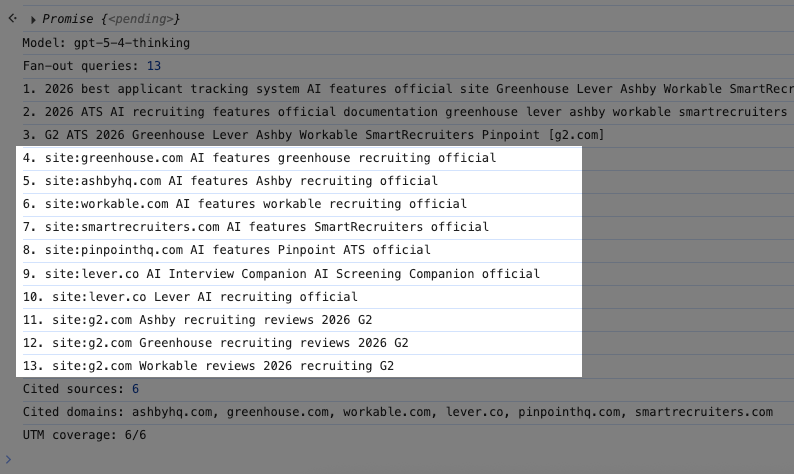
Holy smokes SEOs, the GPT 5.4 is using "site:" search A TON. This is going to dramatically increase the importance of on-site content that connect with fan-out queries.
Chris Long tweet media
English
25
42
446
98.4K
Casey Yandle retweetledi
DEJAN
DEJAN@dejanseo·
Gemini's Brand Authority Map authority.dejan.ai These 2,883,072 brands live rent-free in Gemini's parametric memory, ranked by frequency and personalised pagerank. Basic interface for now with plans to develop it further. For brands not known to Gemini we show common crawl as fallback stats.
English
13
32
149
35.9K
Casey Yandle retweetledi
Brian Allen
Brian Allen@allenanalysis·
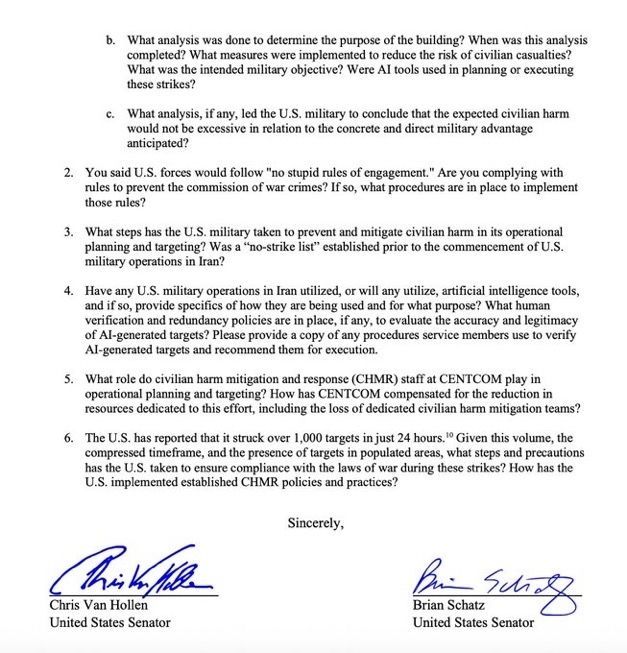
Every single Senate Democrat signed the letter to Defense Secretary Hegseth demanding answers on the strike that killed 168 people at a girls’ school in Minab, Iran. Every single one — except John Fetterman. The letter is devastating. It cites 1,245 civilians killed and over 12,000 injured as of March 10. It calls out Hegseth directly for saying there would be “no stupid rules of engagement” and promising “death and destruction from the sky all day long.” It asks whether AI tools were used in targeting. It asks whether a no-strike list even existed. It asks what analysis was done to determine that building was a school — because satellite imagery shows it had been walled off from the nearby naval base and used as a school since 2016. 47 Democrats looked at dead children and demanded accountability. One looked at dead children and did the political math.
Brian Allen tweet mediaBrian Allen tweet mediaBrian Allen tweet media
English
442
4.4K
10.1K
142.9K
Casey Yandle retweetledi
DEJAN
DEJAN@dejanseo·
Is Query Length a Reliable Predictor of Search Volume? dejan.ai/blog/query-len… The answer is no and this study explains why...
DEJAN tweet media
English
3
6
17
1.4K
Casey Yandle retweetledi
Mic King
Mic King@iPullRank·
Great post from the @writesonic team on how ChatGPT 5.4 searches differently. writesonic.com/blog/chatgpt-c… TL;DR - it's looking for more brand sites than 3rd party sites now. It's running a lot of site: searches based on what this analysis says.
English
1
4
22
2K
Casey Yandle retweetledi
The Kobeissi Letter
The Kobeissi Letter@KobeissiLetter·
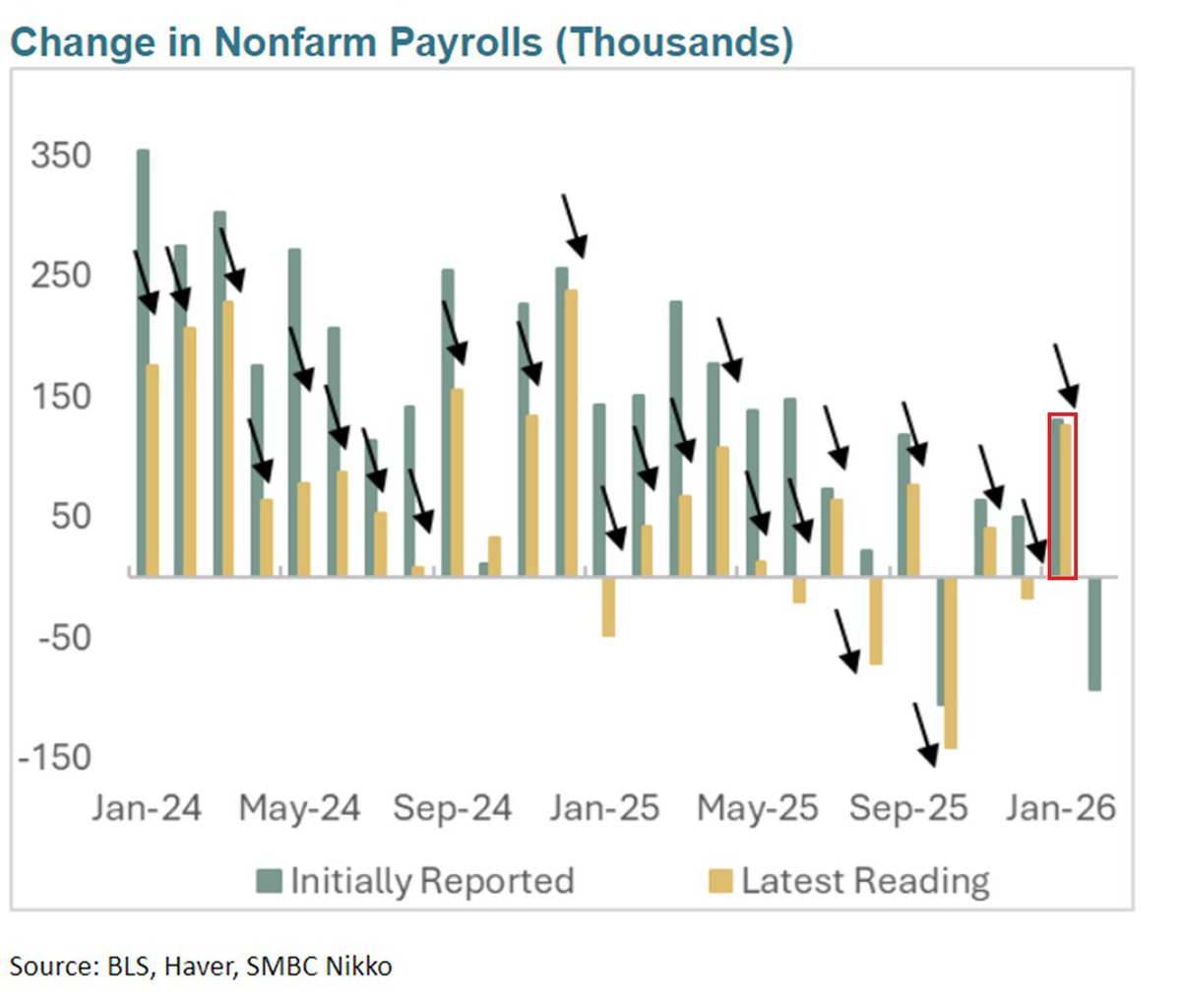
BREAKING: US jobs numbers have now been revised down in each of the last 13 months, by a total of -710,000 jobs. This means employment was initially overstated by an average of ~55,000 jobs per month. US job numbers were revised down by another -4,000 jobs in January and -65,000 in December. This brings the December reading down to -17,000, marking the 5th contraction over the last 9 months. Since January 2024, there have been downward revisions in 24 out of 25 months. US labor market data is more unreliable than ever.
The Kobeissi Letter tweet media
English
430
2.6K
8.8K
1.4M
Casey Yandle retweetledi
CALL TO ACTIVISM
CALL TO ACTIVISM@CalltoActivism·
🚨HOLY SHIT: Chris Murphy just walked out of a closed door briefing on Iran and says the plan was so incoherent it’s obvious the Trump Administration won’t achieve any of their stated objectives. He called the war “a disaster of epic proportions.” Yikes.
English
2.2K
13.1K
45.4K
1.3M
Casey Yandle retweetledi
Congresswoman Jasmine Crockett
While they were busy cutting SNAP and health care for working families, Pete Hegseth spent $2 million on King Crab, nearly $7 million on Lobster Tails, and nearly $100,000 on a Grand Piano in the month of September. This is where your taxpayer dollars are going. Isn’t this supposed to be the Administration that’s targeting “waste, fraud, and abuse”?!? Make it make sense.
Headquarters@HQNewsNow

New Pentagon budget reports show Pete Hegseth spent $93 billion in one month, making it the highest monthly expense since 2008. This budget report included spending $2 million on Alaskan King Crab.

English
10.7K
8K
24.6K
2M