David George

364 posts

David George banner
David George

David George

@DavidGeorge83

GP, Head Growth Fund @a16z | 👨‍👩‍👧‍👦 | “The key is not the will to win...everybody has that. It is the will to prepare to win that is important.”-Bob Knight

Palo Alto, CA Katılım Aralık 2011
1.2K Takip Edilen19.3K Takipçiler
Sabitlenmiş Tweet
David George
David George@DavidGeorge83·
I had a great time chatting with @patrick_oshag on @InvestLikeBest. I've known Patrick since college, and this is the first time we've talked markets and investing at this much depth. The fundamentals of company building haven’t changed: people, products, and markets matter. But obviously, private markets have evolved substantially over my career: there are now ~6x more private unicorns than public companies with a $1b+ market cap. And at the end of 2010, just 2 public technology companies were among the top 10 in market cap; today it’s 8 of 10. AI (alongside software eating everything more generally) is clearly driving a lot of this. But it’s instructive to look at everything from the steam engine, to the early days of Facebook and Google user monetization, to real-time success stories like Databricks, Anduril, OpenAI and Waymo, to get a clear picture of where the opportunities lie. It was a pleasure to go deep on all this and more!
Patrick OShaughnessy@patrick_oshag

.@DavidGeorge83 leads @a16z Growth, which has backed some of the most successful technology companies including Stripe, SpaceX, Waymo, Databricks, Figma, OpenAI, and Cursor. This conversation is a detailed look at how David built and runs the growth business. He shares how they win the most competitive deals, the principles behind its culture, and the framework he uses to evaluate companies. We discuss how a16z is investing across the AI stack -- from model providers to applications -- and why this platform shift creates a real window for startups to displace incumbents. Throughout the episode, David shares the models that guide his investing: why markets misprice consistent growth, what makes "pull" businesses so powerful, and why he likes to back a certain kind of founder he calls the "technical terminator." It’s fun to talk with students of the game, and David is certainly one of them. He's spent his career studying great companies, markets, and founders, and you can feel that depth in how clearly he connects patterns across cycles. Enjoy! Timestamps: 0:00 Intro 6:54 Enterprise AI 10:23 Lessons from Waymo 16:17 Technical Terminators 22:34 The "Glengarry Glen Ross" Rule 31:23 Winning Competitive Deals 42:24 The "Yankees" Mindset 46:13 Decision Making 51:12 Model Busters 53:42 Push vs. Pull Markets 1:10:23 How Startups Beat Incumbents 1:13:38 The Kindest Thing

English
19
16
174
67.1K
Alex Danco
Alex Danco@Alex_Danco·
This week’s charts of the week is a special one, because the identity of our charts guy is finally revealed! It’s @MosesSternstein, of Random Walk. I’ve had so much fun working with Moses on our team; please enjoy this week’s issue and many more a16z.news/p/charts-of-th…
English
2
3
20
1.4K
Peter Levine
Peter Levine@PeterL4e·
I am thrilled to announce my return to a16z as a full-time General Partner. Having made a full recovery from cancer and navigated some of life’s most taxing personal hurdles, I am returning with a sharpened sense of purpose and a deep optimism for the future, both personally and professionally. My time away reinforced that living to one's fullest capacity requires doing what you love with the people you trust. While I’ve continued to support my boards and founders, I’ve realized my greatest impact happens when I am 'all in.' I believe he current pace of innovation in infrastructure is unmatched, and I couldn't be happier to be back in the trenches with my colleagues and close friends on the a16z Infra team.
English
134
23
1.1K
134K
Vinay Hiremath
Vinay Hiremath@vhmth·
@andrew__reed Will never forget when you and @DavidGeorge83 gave me permission to stop chasing ghosts after our layoffs and to start focus on winning again. It was the encouragement I needed and has been one of the most impactful pieces of advice in my life. Thank you.
English
2
0
13
1.8K
Andrew Reed
Andrew Reed@andrew__reed·
“They reminded me that it was my fate to pursue only phantoms, creatures whose reality existed to a great extent in my imagination; for there are people - and this had been my case since youth - for whom all the things that have a fixed value, assessable by others, fortune, success, high positions, do not count; what they must have is phantoms. They sacrifice all the rest, devote all their efforts, make everything else subservient to the pursuit of some phantom. But this soon fades away; then they run after another only to return later on to the first.” Marcel Proust, In Search of Lost Time
Deedy@deedydas

The vibes in SF feel pretty frenetic right now. The divide in outcomes is the worst I've ever seen. Over the last 5yrs, a group of ~10k people - employees at Anthropic, OpenAI, xAI, Nvidia, Meta TBD, founders - have hit retirement wealth of well above $20M (back of the envelope AI estimation). Everyone outside that group feels like they can work their well-paying (but <$500k) job for their whole life and never get there. Worse yet, layoffs are in full swing. Many software engineers feel like their life's skill is no longer useful. The day to day role of most jobs has changed overnight with AI. As a result, 1. The corporate ladder looks like the wrong building to climb. Everyone's trying to align with a new set of career "paths": should I be a founder? Is it too late to join Anthropic / OpenAI? should I get into AI? what company stock will 10x next? People are demanding higher salaries and switching jobs more and more. 2. There’s a deep malaise about work (and its future). Why even work at all for “peanuts”? Will my job even exist in a few years? Many feel helpless. You hear the “permanent underclass” conversation a lot, esp from young people. It's hard to focus on doing good work when you think "man, if I joined Anthropic 2yrs ago, I could retire" 3. The mid to late middle managers feel paralyzed. Many have families and don't feel like they have the energy or network to just "start a company". They don't particularly have any AI skills. They see the writing on the wall: middle management is being hollowed out in many companies. 4. The rich aren’t particularly happy either. No one is shedding tears for them (and rightfully so). But those who have "made it" experience a profound lack of purpose too. Some have gone from <$150k to >$50M in a few years with no ramp. It flips your life plans upside down. For some, comparison is the thief of joy. For some, they escape to NYC to "live life". For others still, they start companies "just cuz", often to win status points. They never imagined that by age 30, they'd be set. I once asked a post-economic founder friend why they didn't just sell the co and they said "and do what? right now, everyone wants to talk to me. if i sell, I will only have money." I understand that many reading this scoff at the champagne problems of the valley. Society is warped in this tech bubble. What is often well-off anywhere else in the world is bang average here. Unlike many other places, tenure, intelligence and hard work can be loosely correlated with outcomes in the Bay. Living through a societally transformative gold rush in that environment can be paralyzing. "Am I in the right place? Should I move? Is there time still left? Am I gonna make it?" It psychologically torments many who have moved here in search of "success". Ironically, a frequent side effect of this torment is to spin up the very products making everyone rich in hopes that you too can vibecode your path to economic enlightenment.


English
7
5
190
32K
Harry Stebbings
Harry Stebbings@HarryStebbings·
I have interviewed 1,000s of the world's best founders over the past decade. Few have impressed me like @ShivdevRao at @AbridgeHQ. He navigated a brutal 5-year wilderness before exploding into one of the most dominant forces in vertical AI. Today, Abridge is a $5.3BN powerhouse. I sat down with Shiv to unpack exactly how he did it and condensed my notes below: 🚀 6 Lessons on Building a $5.3B Vertical AI Juggernaut 1. Survive Long Enough for Market Timing to Catch Up: Abridge spent 5 years in the "wilderness" before hitting a tidal wave of adoption. When you have an absolute true north thesis, your primary job in the early days is simple: stay standing and don’t die. You must be alive when the sky finally opens up. 2. Pivot the Product, Never the Core Thesis: Shiv was willing to pivot on features, go-to-market strategies, and business models. But he refused to budge on his core thesis that healthcare is ultimately powered by the spoken human signal. Die on the hill of your thesis; adapt everything else. 3. Target the Concentration of Scale Early: A massive trap for healthcare and enterprise founders is staying down-market too long for "fast feedback loops". In the US, the vast majority of clinicians are concentrated within large, integrated delivery networks. Time your "YOLO shot" to go up-market the moment the market inflects. Single biggest advice to founders on when to go up market @bhalligan @dharmesh? 4. Own Your Stack to Protect Your P&L and UX: While many AI startups rely entirely on frontier systems, 40% of Abridge's model outputs are generated by in-house models. Milliseconds matter in high-stakes enterprise workflows. Building your own models gives you insane performance gains, lower latency, and ultimate control over your P&L. When should you vs should you not build your own model @matanSF @MaxJunestrand @antonosika? 5. Don't Fight Foundation Models—Counter-Position Instead If you try to fight the frontier model giants directly, you've already lost. You win by going millions of miles deep into regulated industries with proprietary datasets and workflows they can't easily replicate. Find ways to coexist and leverage their tailwinds. Reminds me of what @bradlightcap said on his 20VC. 6. Move Toward the "Flat Company" Era: With the explosion of AI agents and advanced tooling, the traditional management layer is compressing. Shiv’s latest idealistic shift is building a hyper-flat organization: fewer managers, and highly leverageable "Super ICs" who can move in lockstep and cover massive surface area. (link in comments)
English
19
17
99
372.4K
MachineSovereign
MachineSovereign@VizierPrime·
The “AI job apocalypse” story is too simple. Yes, cheaper cognition should expand demand, create new tasks, and make some workers more productive. History does not support the idea that every productivity shock creates permanent economy-wide unemployment. But the opposite story is also too easy. The question is not only whether new work eventually appears. It is whether people, institutions, and labor markets can absorb the transition fast enough. AI may expand the frontier of useful work while still destroying specific career ladders, compressing wages, concentrating gains, weakening bargaining power, and leaving whole cohorts stranded between old credentials and new roles. The problem is not a fixed amount of labor. The problem is institutional throughput: training, mobility, income bridges, credentialing, firm redesign, and whether ordinary people can see a place for themselves in the new economy. Technological optimism is strongest when paired with transition architecture.
English
3
1
26
5.1K
Kevin Weil 🇺🇸
Kevin Weil 🇺🇸@kevinweil·
Today is my last day at OpenAI, as OpenAI for Science is being decentralized into other research teams. It’s been a mind-expanding two years, from Chief Product Officer to joining the research team and starting OpenAI for Science. Accelerating science will be one of the most stunningly positive outcomes of our push to AGI, and I’m rooting for @sama @markchen90 @fidjissimo @gdb @merettm and the whole team!
English
283
146
4.2K
590.1K
David George
David George@DavidGeorge83·
@kirbyman01 @a16z I learned a ton about consumer working with you. We are going to miss you, and hope to be working together for many years!
English
1
0
14
1.9K
Bryan Kim
Bryan Kim@kirbyman01·
PERSONAL UPDATE: After 5+ years, I am leaving @a16z to start a fund! This was the toughest career decision of my life. I learned from the best partners and was privileged to work with incredible founders. So why leave? It is simply time to build. More to come on this.
English
411
62
2.9K
645.1K
David George
David George@DavidGeorge83·
@gabepereyra "Systems that can operate over entire client matters like a team of associates" 💪🏻
English
0
0
4
1.3K
David George
David George@DavidGeorge83·
@buccocapital Over the course of a few years, 10%+ won't be enough if we're right about what's coming. I think it's a reasonable 12-18 mo target though. Agree w @buccocapital that every modern, good company should target path 1 in the near term.
English
1
0
3
741
BuccoCapital Bloke
BuccoCapital Bloke@buccocapital·
@DavidGeorge83 I think because of this most founders/CEOs are going to try to accelerate. Even if they should Hock Tan their business because acceleration is likely impossible. Intercom did show it’s possible. Wix is an interesting experiment. Crazy times
English
3
1
14
4.1K
David George retweetledi
Sarah Wang
Sarah Wang@sarahdingwang·
Very few founders have built and scaled a vertically integrated hardware company in the modern era. @RJScaringe is one of them. At Mind, he’s building the robotics partner @Rivian wanted but couldn’t find. We believe robotics is just starting to enter its compounding phase. The teams that integrate intelligence, hardware, and deployment into a coherent industrial platform will define the next generation of enduring companies. Real world deployment is not the final step; it forces clarity in every step, from research to reliability. Mind is setting out to build that platform. We are incredibly excited to partner with RJ and the entire Mind team. @DavidGeorge83 @RaghuRaghuram @jamiedsully @espricewright @JacobZietek @appenz
RJ Scaringe@RJScaringe

I am excited to announce Mind Robotics’ $500M financing, co-led by @Accel and @a16z!  Mind is focused on building the world’s leading industrial robotics platform, capable of performing dexterous, variable, and reasoning-intensive tasks. Existing industrial robotics can perform repeatable, dimensionally stable tasks, but a large share of industrial value-add work requires human-like dexterity, adaptation, and physical reasoning that classical robotics cannot address.  We are building AI-powered robots—models, hardware, and deployment infrastructure—that will perform real tasks, in real plants, at real scale.

English
10
18
97
33.3K
David George
David George@DavidGeorge83·
Congratulations @wiz_io and @assaf_rappaport! 💪🏻🙏🏻
Sarah Wang@sarahdingwang

.@assaf_rappaport, Yinon Costica, Ami Luttwak, and Roy Reznik are in a league of their own. The way they care for their customers, team, and investors is unparalleled. (and I still think they’re underrated) It’s no surprise this team built a platform people genuinely love, even in one of the most skeptical industries in tech. One CISO told us they’d quit if Wiz were removed. Generational run. And it’s just the beginning as they join @GoogleCloud to combine powerful environmental context, frontier AI research, and multi-cloud DNA to secure AI end to end. Congrats on this exciting new era. @a16z is honored to have been a part of the last one. @justin_kahl @zanelackey

English
2
0
20
5.6K
David George
David George@DavidGeorge83·
1.6% of global GDP and counting 💪🏻 @stripe
Alex Immerman@aleximm

Happy @Stripe annual letter day! Stripe is definitely increasing the GDP of the internet: - In 2025, Stripe businesses generated $1.9T volume, equivalent to ~1.6% of global GDP - Stripe powers 5m+ businesses, including “all of the top AI companies, many of the largest blue-chip companies (90% of the Dow Jones Industrial Average), most of the biggest tech companies (80% of the Nasdaq 100), and a significant fraction of freshly minted startups (25% of all Delaware corporations are now created with Stripe Atlas).” - The 2025 new customer cohort is by far the “highest performing and fastest moving” Stripe has ever seen, growing around 50% faster than the 2024 cohort. The number of companies reaching $10 million ARR within 3 months of launch was double the 2024 count. - In 2025, 20% of Atlas startups charged their first customer within 30 days, up from 8% in 2020. - Businesses that accepted Stripe Capital offers grew 27 percentage points faster over the following year than comparable businesses. What started as “if you are a startup and you charge customers, you build on Stripe” has increasingly become “if you’re any company of consequence and you charge customers, you build on Stripe.” And now with this next wave, “if you are an AI company and charge customers, you build on Stripe.” We @a16z are thrilled to have been their partners since 2010 and even more excited to deepen our partnership in today’s announced tender.

English
4
2
45
6.1K
David George
David George@DavidGeorge83·
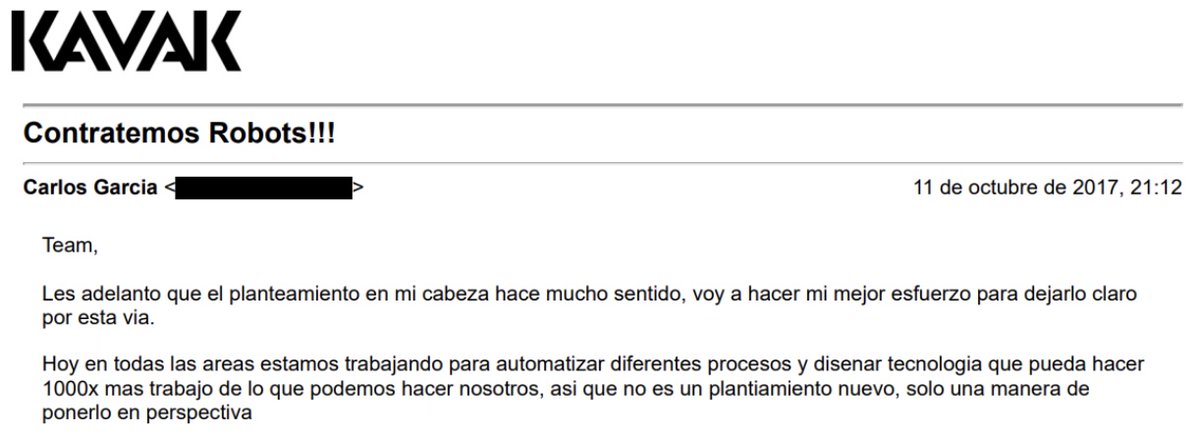
Excited to be leading Kavak’s Series F! In 2017, CEO @carlosjgarciao sent an email to his executive team with the subject line “Let’s hire robots!!!” envisioning a future where Kavak would accomplish 1000x more with automation than humans could do alone. That’s how canny their team is. Building a profitable used-car marketplace in a developing market is very hard, and Kavak essentially had to build 10 companies in one to make up for missing infrastructure. Today they operate profitably across Mexico, Brazil, Chile, Argentina, and the GCC region. They’ve now rebuilt the company to answer every problem with an AI-first approach. Atoms (vehicle sales) + bits (AI agents) = Kavak is well positioned to be one of the big beneficiaries of the AI revolution. Proud to be partnering with Kavak in our first large, late-stage investment in the region. @santiago__rdz @GEVS94 @a16z
David George tweet media
a16z@a16z

There are hard problems, then there’s building a profitable used-car marketplace in a developing market. But the Kavak team has the rare trait of running towards hard problems, and we’re excited to lead their Series F as they continue enabling fair, transparent, and secure auto ownership for millions of people across Latin America and beyond. When Carlos and the team set out to transform the used-vehicle market in the region, much of the necessary infrastructure just didn’t exist. So Kavak built it all, essentially starting 10+ companies in one. Ten years later, Kavak now operates profitably across Mexico, Brazil, Chile, Argentina, and the GCC region. That brings us to why we’re making our first large, late-stage investment in the region now. The depth of AI adoption across the company is unlike anything else we’ve seen, and they have rearchitected themselves to be AI-native. Combining atoms (vehicle sales) with bits (AI agents), Kavak is well positioned to be one of the big beneficiaries of the AI revolution. By @DavidGeorge83, @santiago__rdz, and @GEVS94 @carlosjgarciao

English
13
9
120
31.6K