Jack Vogel

2.7K posts

Jack Vogel

Jack Vogel

@jvogs02

Alpha Architect team member, Philadelphia sports fan, father of 3 daughters

Philadelphia, PA Katılım Ocak 2012
486 Takip Edilen5.2K Takipçiler
Hoops
Hoops@Hoopss·
Tell me the 2 WORST players in this photo
Hoops tweet media
English
8.8K
567
13K
5.7M
Jack Vogel retweetledi
Matthias Hanauer
Matthias Hanauer@HanauerMatthias·
NEW PAPER OUT! Should ML models specialize in sectors like human analysts? 🤖 🧠 We tested Generalist, Specialist, and Hybrid models. Key findings: 🔴 Specialist < Generalist 🟢 Hybrid > both Full paper below 👇
English
3
7
31
34.3K
Matthias Hanauer
Matthias Hanauer@HanauerMatthias·
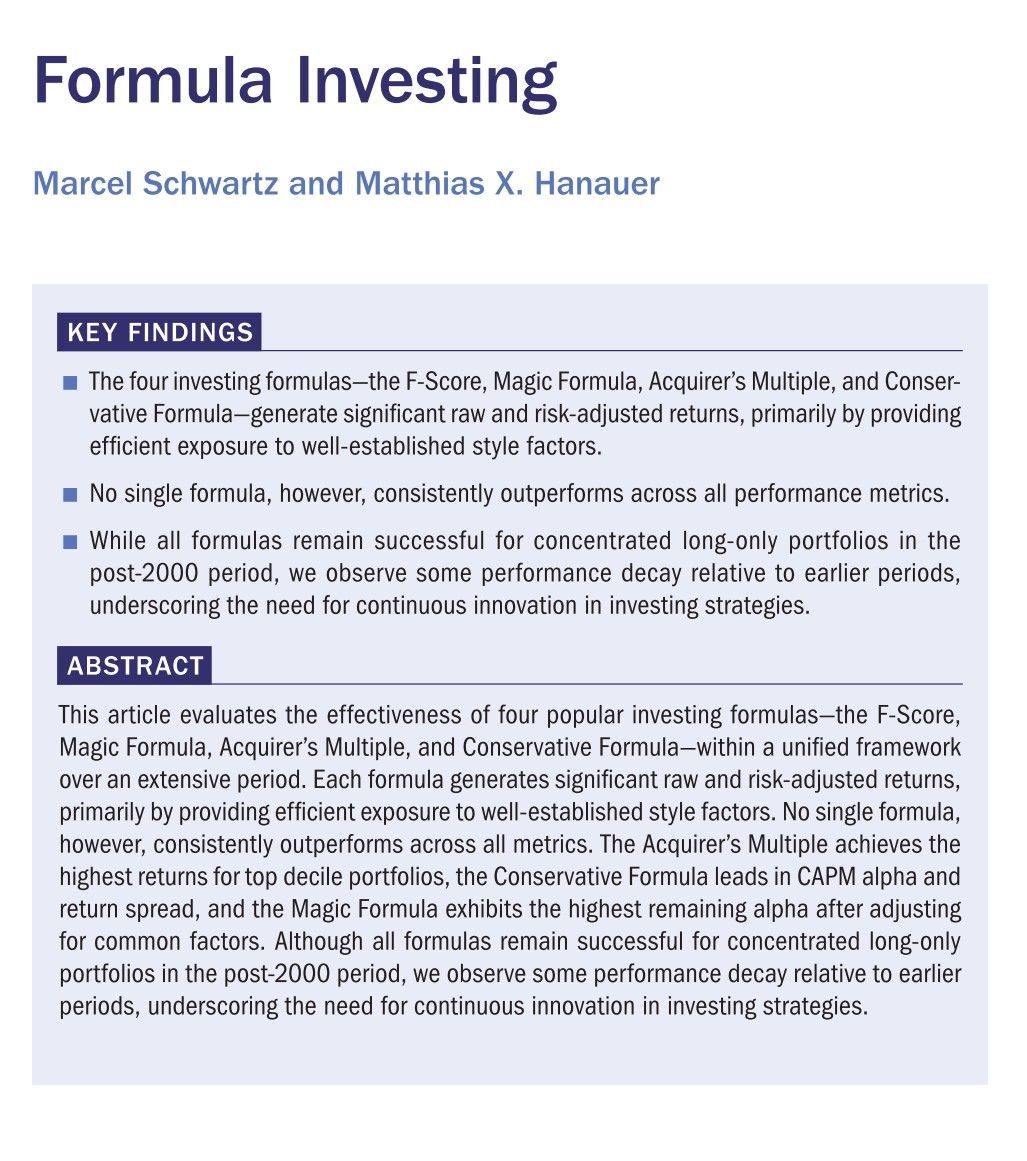
📣 New Publication Alert! I’m excited to share that my paper “Formula Investing" has just been published in the Journal of Portfolio Management! ❤️ to @paradoxinvestor, @alphaarchitect, @jvogs02, and @Greenbackd for feedback! Comment 👇or DM me if you want the full paper!
Matthias Hanauer tweet media
English
12
5
38
5.6K
Jeremy Walter
Jeremy Walter@jeremywalter·
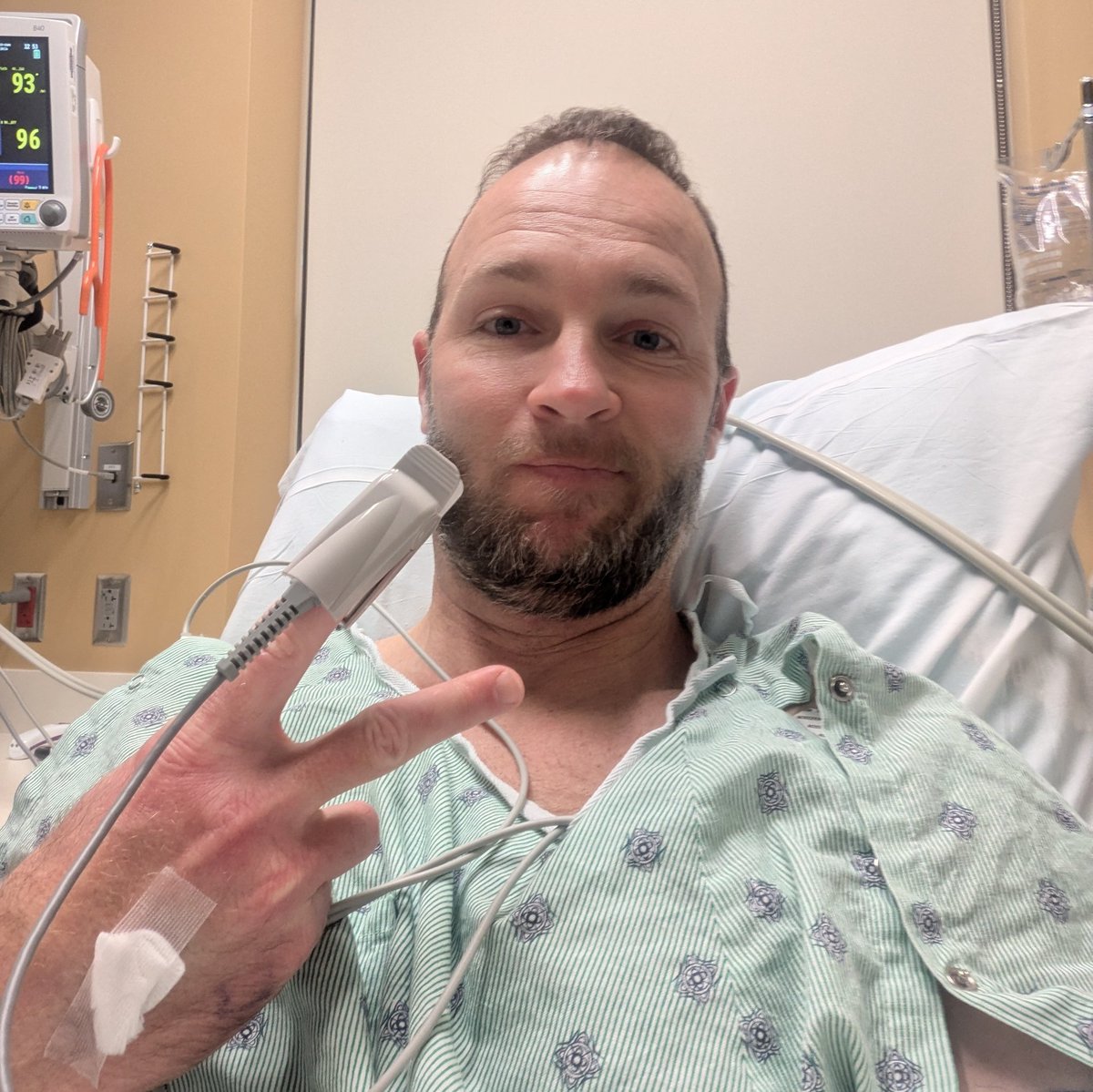
Project 110% recovery started today. Strong start. 3 days post op, at 45 degree bend and 1 degree off from straight. Ice water circulation machine for the win.
Jeremy Walter tweet mediaJeremy Walter tweet mediaJeremy Walter tweet mediaJeremy Walter tweet media
English
10
0
28
10.9K
Jack Vogel retweetledi
Matthias Hanauer
Matthias Hanauer@HanauerMatthias·
📢 NEW PAPER - FORMULA INVESTING Do simple formulas still work? 👇
English
3
15
109
22.7K
Jack Vogel retweetledi
Corey Hoffstein 🏴‍☠️
There’s a file on my desktop titled Thank You.docx. I wrote it in 2020. It was the COVID times, my father had been diagnosed with lymphoma (he’s fine now), and I had received a call that an institutional client was redeeming $750 million. And this Calvin & Hobbes comic was clawing at the back of my brain. So, I decided I was going to shut it all down. The funds. The business. Everything. And Thank you.docx was my announcement. I mapped it all out. I'd publish Liquidity Cascades, end my Flirting with Model podcast season with a Cliff Asness episode, wind everything down and just... go dark. I remember my business partner saying, "you're just going to start another asset management firm in a year or two. Why rebuild all this? Hang on another day. You can always shut it down tomorrow." Hang on another day. You can always shut it down tomorrow. This isn't a story about my own perseverance, though. That's bullshit because I had the luxury to even think about quitting. I keep that document on my desktop as a reminder of what my team stuck through. At the lowest lows, they still said, "there's something here worth fighting for." So, on days like today, when we're celebrating a successful launch, I like to open up that document, give it a read, and refresh my gratitude for my team. 🥂 @sbraun27 @dillonjpierce16 @daaaabears52 here's to you.
Corey Hoffstein 🏴‍☠️ tweet media
Eric Balchunas@EricBalchunas

Wow, $RSSY has $100m in volume already, likely a giant initial investor or investors. That's massive, esp for an indie issuer, top 1% all time Day One numbers

English
58
24
543
99.3K
Jack Vogel retweetledi
Jose Ordoñez Jr.
Jose Ordoñez Jr.@JOrdonezJr·
For those of you who have been following: I passed the CFA Level III exam!
Jose Ordoñez Jr. tweet media
English
14
3
107
10.2K
Jeffrey Ptak
Jeffrey Ptak@syouth1·
To think that 5%+ annual (stat significant FF 5 factor) alpha could have been had in an index fund. Alas, this is QQQ’s numbers for the nearly 25-year period ended January 2024. 🤷‍♂️ spr.ly/6019Zq7w1
Jeffrey Ptak tweet media
English
2
0
9
2.2K
Jack Vogel retweetledi
Corey Hoffstein 🏴‍☠️
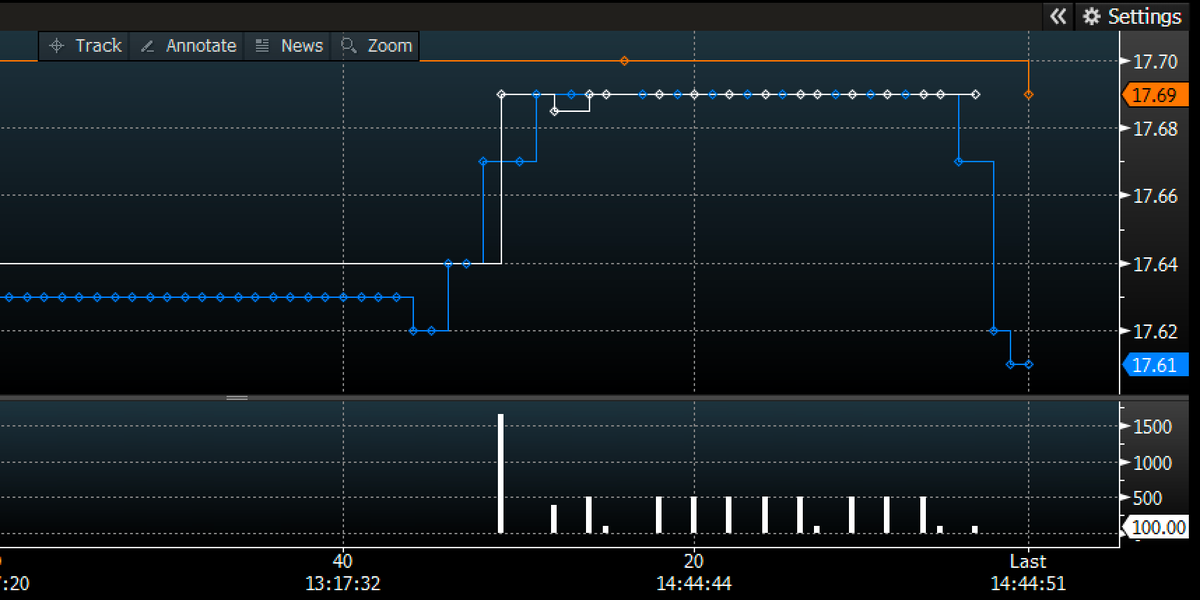
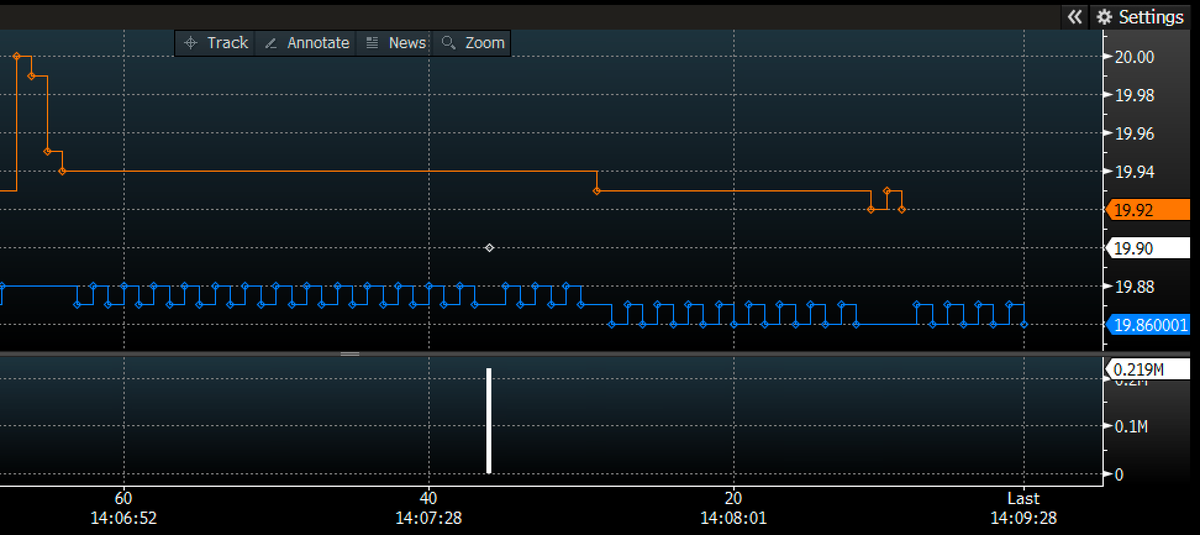
One of the questions I’m always grateful to receive is, “I'm interested in buying one of your ETFs; what's the base way to execute a trade?" I’ve gotten this a few times in DM’s lately, so I thought I’d share the response I normally send to my RIA clients. --------- ETF liquidity is governed by two factors.  (1) “On screen” liquidity of the ETF itself (i.e. how much an ETF trades within a given day; sometimes called “secondary” liquidity) and (2) the liquidity of the underlying holdings within the ETF (sometimes called “primary liquidity”). When an ETF is small and growing, the secondary liquidity can be quite small even if the primary liquidity is quite high.  That’s because market makers don’t want their capital sitting idle in the order book.  Hence, you’ll often see just a few hundred shares quoted at the bid or ask. That does not mean, however, that you cannot achieve great trade execution at size! Smaller Trades (<$250k) For smaller trades, we recommend executing with a limit order. A limit order says, “only execute me at a specific price (or better).” For example, in the graph below we can see what appears to be the execution of a limit order placed at 17.69.  We can see several 500 share trades fire off over the span of a few milliseconds, as market markets continued to bring more capital to the order book. To choose a limit order price, we recommend working around the current best bid/offer quote.  If you’re buying, you can place your limit at, or slightly below ask.  If you’re selling, you can place your limit at, or slightly above bid. Note that while the price is guaranteed, execution is not.  It is entirely possible that the market moves while you’re being executed, at which point you may have to update your limit price. We highly recommend against using a market order.  Market orders will indiscriminately execute through an order book.  If the standing order book (i.e. the current bids and asks in the market) is sufficiently thin, a market order can violently move price, leading to incredibly poor execution. Larger Trades On October 2nd, at 2:07PM ET, a client executed a 219,000-share order (approximately $4.35mm) at almost exactly the mid-point between bid and ask, without moving the market. How did this large, single trade not move the market on our ETF?  Because the underlying holdings within our ETFs are so liquid, large orders can usually be worked through institutional trading desks to receive very tight execution. There are two primary execution strategies, both of which should be available to you through your brokerage’s institutional trading desk. (1) Risk Quotes (for intraday execution) In risk trading, your trading desks publishes an RFQ (“request for quote”) to a number of market makers.  This RFQ tells the market makers the symbol and the size of the trade, but asks them to make a “two way” (i.e. provide a bid and ask) so as to not let the street know what direction you’re trading. The market makers all know they are in competition with one another, so you should receive bids to execute the entire trade at once that are more competitive than the currently quoted National Best Bid Offer (“NBBO”) price. If the best quote is to your liking, you can then execute at that price.  If not, you can walk away from the trade. (2) NAV Trading (for end-of-day execution) If you do not care about intraday execution, you can also execute a NAV trade.  The process is almost identical to the Risk Quote, with the exception that the quoted price is in reference to the next NAV that is struck (usually end of day).  For example, the market maker might say something like:, “Bid: NAV - 12 basis points / Offer: NAV + 10 basis points.” Again, you should receive a number of competitive quotes, allowing you to choose the best execution for your clients.  Once you select a bid or offer, the desk will trigger the trade.  The final execution price is settled once the next NAV is struck. Final Thoughts It's critically important to remember that ETFs do not always trade at NAV. In fact, the price of an ETF can meaningfully deviate from NAV. Large, well-established, easy-to-borrow ETFs with very liquid underlying very rarely deviate from NAV, as it represents an arbitrage opportunity. ETFs with less liquid underlying or that are more complicated to hedge frequently trade +/- 50bp around NAV, and in extreme cases can trade significantly above or below. And ETFs with consistent one-way flow often trade at a persistent premium (if it's buying) or discount (if it's selling). Despite all this, you'd still – obviously – want to trade as close to NAV as possible (or sell at a premium and buy at a a discount). Unfortunately, most ETFs don't disseminate intraday NAV calculations anymore. The best I can say here is that prior day NAV, as well as premium/discount, should be published on each ETF's webpage, and hopefully some quick back-of-the-envelope estimates can get you an idea as to where premium/discount is at on a given day.
Corey Hoffstein 🏴‍☠️ tweet mediaCorey Hoffstein 🏴‍☠️ tweet mediaCorey Hoffstein 🏴‍☠️ tweet media
English
6
17
156
35.5K
Phil Huber
Phil Huber@bpsandpieces·
New Year, New Career! As 2023 came to a close, so too did my time as CIO of @SavantWealth It has been an amazing ride, but I’m now ready to embrace my next challenge Today, I start a new role as Head of Portfolio Solutions at Cliffwater Press Release: prnewswire.com/news-releases/…
Phil Huber tweet media
English
32
0
104
11.1K