malika

59.2K posts

malika banner
malika

malika

@malikakas

Question Everything. Even This.

Katılım Eylül 2015
1.3K Takip Edilen4K Takipçiler
Sabitlenmiş Tweet
malika
malika@malikakas·
“Falsehood will fly, as it were, on the wings of the wind, and carry its tales to every corner of the earth; whilst truth lags behind; her steps, though sure, are slow and solemn, and she has neither vigour nor activity enough to pursue and overtake her enemy…” -Thomas Francklin
English
0
7
25
26.7K
malika retweetledi
malika retweetledi
Dr. AK 🇮🇳
Dr. AK 🇮🇳@docakx·
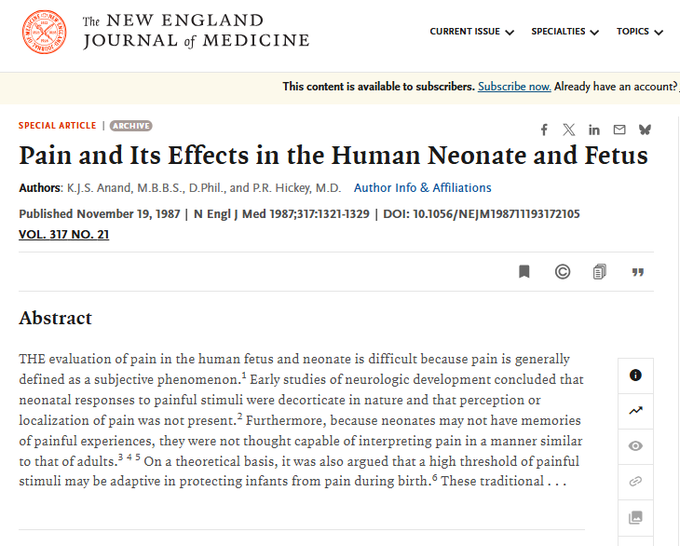
Infant surgeries were routinely performed with minimal or no anesthesia because anesthetists wrongly believed infants felt no pain due to their immature nervous systems, dismissing their responses as mere reflexes. This barbaric practice persisted until 1987, when Dr. Kanwaljeet J.S. Anand and Dr. P.R. Hickey published their groundbreaking research in the NEJM, demolishing those outdated myths. In 1985, Dr. K.J.S. Anand had reviewed preterm neonatal surgeries and the results were shocking. He found that 76% used only muscle relaxants. This left infants awake, aware, and paralyzed during painful procedures. In 1987, the article “Pain and Its Effects in the Human Neonate and Fetus” appeared in the New England Journal of Medicine. It combined clear evidence on pain perception in fetuses and newborns. This work changed medical practice. It led to global reforms in pediatric anesthesia that required proper pain relief for infant surgeries. The paper has been cited more than 2,700 times.
Dr. AK 🇮🇳 tweet mediaDr. AK 🇮🇳 tweet media
Keith Siau@drkeithsiau

Share a medical fact that would surprise most people💡

English
49
1.2K
6.7K
277.5K
malika retweetledi
Heather Exner-Pirot
Heather Exner-Pirot@ExnerPirot·
TLDR; whatever pain is being felt in Canada from the Iran crisis, it is worse pretty much everywhere else. We are incredibly lucky to be an energy and fertilizer exporter.
IMF@IMFNews

The economic shock from war in the Middle East is global yet uneven: energy importers face more exposure than exporters, poorer countries more than richer ones, and those with thin buffers more than those with ample reserves. Read our blog. imf.org/en/blogs/artic…

English
21
76
412
14.9K
malika retweetledi
malika retweetledi
Velina Tchakarova
Velina Tchakarova@vtchakarova·
When the crisis arrives in full swing in Europe next week, our governments will be announcing shortages, rationing, rate hikes and other precarious measures. But in Europe, Central Banks are coping with different type of systemic risk-derived crisis this time, contrary to Covid.
English
29
188
1.2K
114.1K
malika retweetledi
Saagar Enjeti
Saagar Enjeti@esaagar·
We're basically in Feb 2020: The online set knows what is coming and sounds a bit nuts to IRL friends whose only real knowledge of something awry is $4 dollar gas which they think will resolve relatively soon
Paolo Mossetti@paolomossetti

Italy's Defence Minister on the consequences of the Iran war for Italy: “I am forced to know things about what could happen in the coming week, and the effects it will have on the economy and our daily lives, that no longer allow me to sleep.” [@repubblica]

English
73
1K
7.9K
712.2K
malika retweetledi
True Discipline
True Discipline@TruueDiscipline·
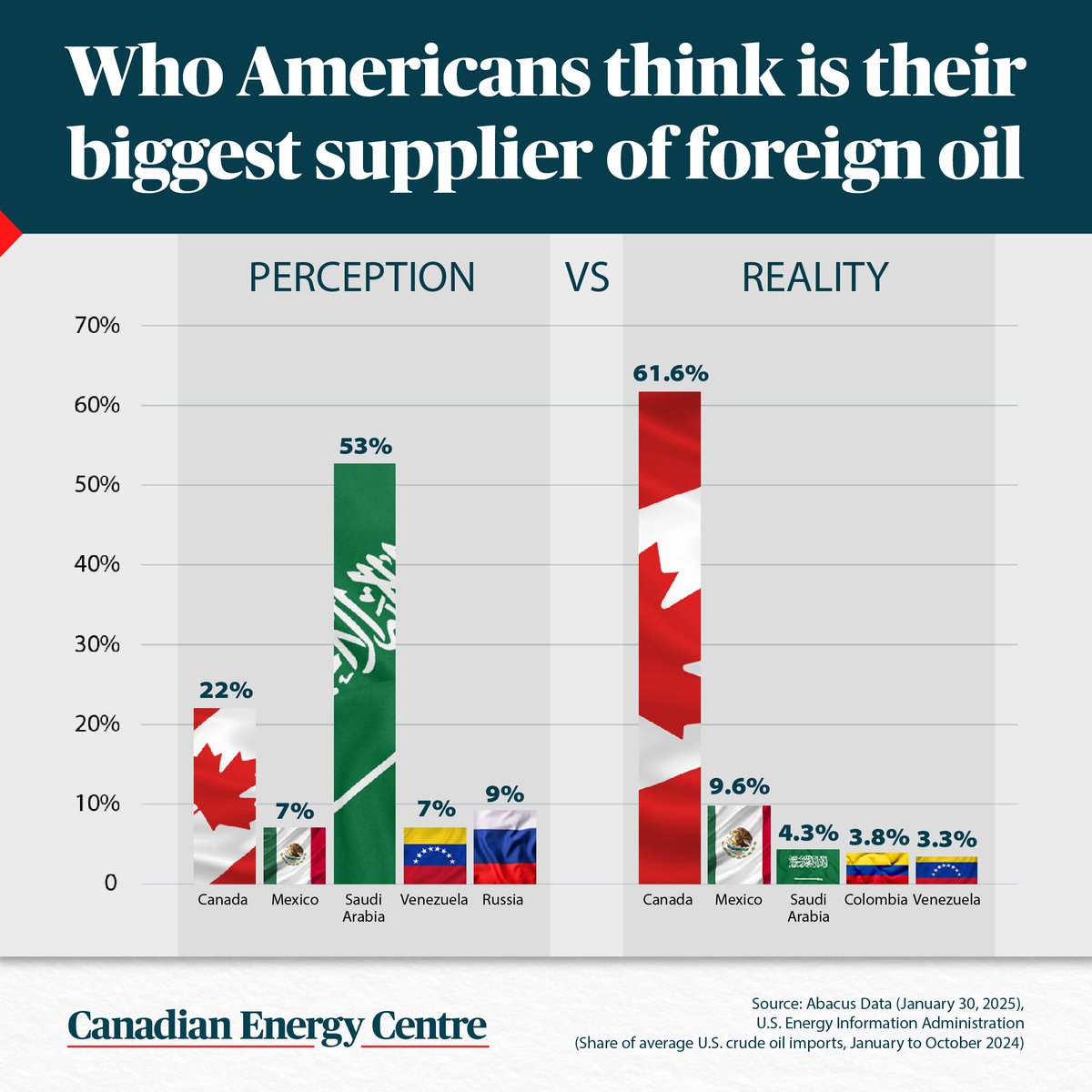
Who Americans think is their biggest supplier of foreign oil vs the reality:
True Discipline tweet media
English
164
1.1K
7.9K
341.2K
malika retweetledi
Alexander Stahel 🌻
Alexander Stahel 🌻@BurggrabenH·
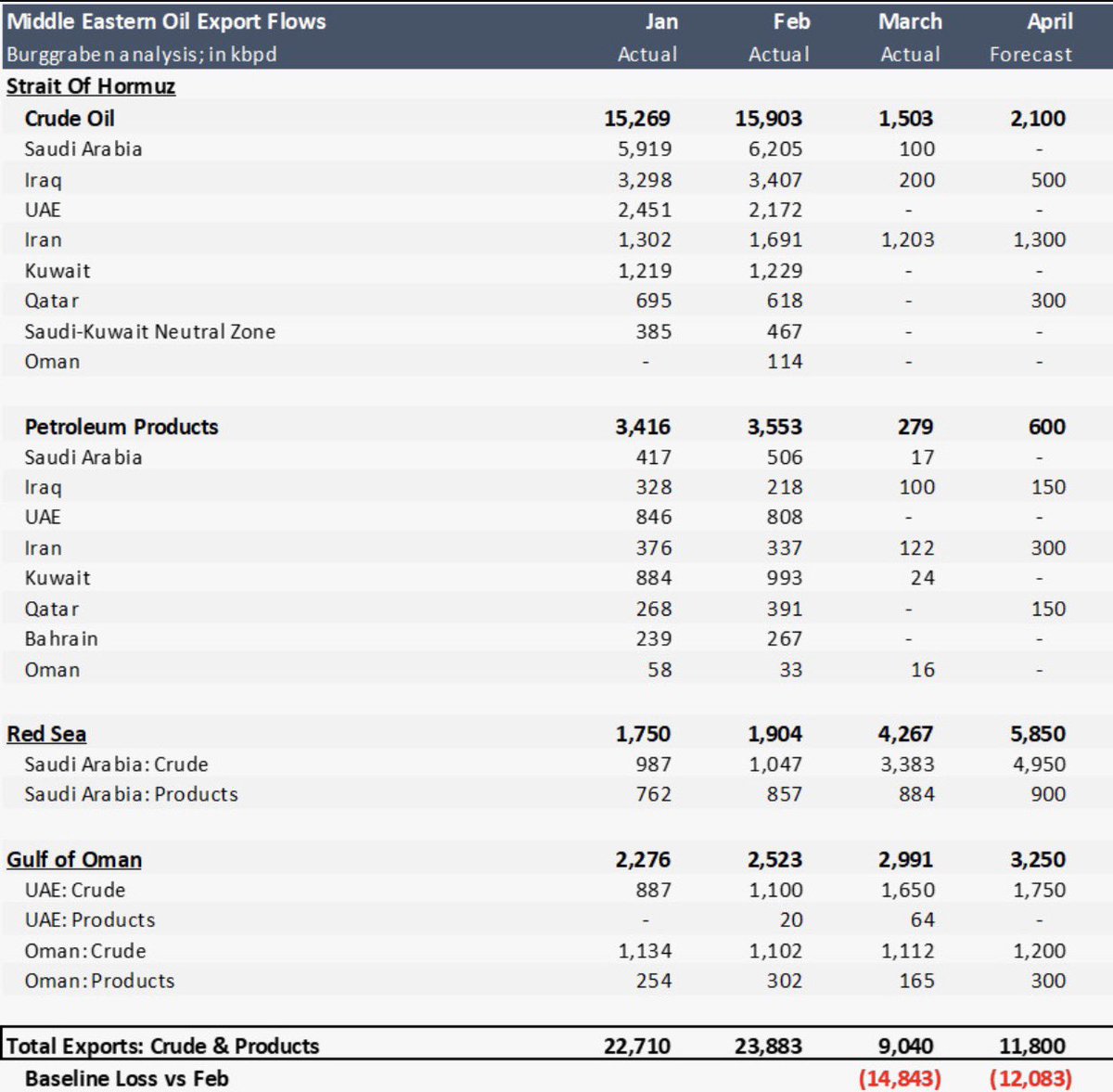
Demand destruction won’t fix this. The world cannot function with 10–15% less energy. We are 15mbpd short of crude & products versus my Feb baseline. If the Red Sea route remains open to the South (VLCCs) and assuming some VIP toll booths treatment (like 20 « Pakistani » vessels), it reduces to 12mbpd in April. Some of the gap is compensated with SPR releases, but with highly uneven results due to location & quality issues. During Covid, when OECD, China, and most major economies briefly shut down (Chinese literally locked people up in their apartments), demand fell by 16.5mbpd at peak, and only for a few weeks. Most demand snapped back within weeks. Demand normalized within months, adjusted for the recession and ex-jet. Gasoline, diesel, & bunker demand are highly inelastic. People don’t stop driving or shipping because prices rise. Jet and naphtha are more elastic, but cannot fix the lack of crude at the refinery level evenly. By April, some governments will learn that reopening the Strait is not optional, and that it takes real resources to do so. That’s when panic begins. This has the potential to become the mother of all crises. Respect it. It’s highly likely to get real awkward. And pay attention to the political blame game that’s already in full swing and isn’t helping. Eventually this crisis gets fixed and yes, the invisible hand of oil is incredibly powerful. But it won’t return to pre-war barrel counting anytime soon and certainly not with policies like this.
Alexander Stahel 🌻 tweet media
Javier Blas@JavierBlas

COLUMN: Five weeks into the Third Gulf War, the math of oil-barrel counting is intractable: The world is short of the black stuff. Enter demand destruction. @Opinion bloomberg.com/opinion/articl…

English
60
353
1.5K
171.3K
malika retweetledi
FrancescaMarino
FrancescaMarino@francescam63·
At @UNGeneva Human Rights Council, Roshaan khattak exposes 8 staff members at @Cambridge_Uni @WolfsonCam @CamSociology for their alleged role of ‘facilitative complicity’ in transnational repression & for placing his life at an increased risk. It also draws attention to over £200 million in donations from China to @Cambridge_Uni & censoring of his PhD research into Balochistan genocide. 100s of copies of evidence bundle were distributed, triggering international scrutiny. @officestudents @AmnestyUK @MaryLawlorhrds @ICJ_org @IntlCrimCourt @DanielZeichner @ComAcFreedom
FrancescaMarino tweet media
English
0
13
40
1.9K
malika retweetledi
Anas Alhajji
Anas Alhajji@anasalhajji·
This perfectly aligns with everything I've been saying for the past three weeks — including what I said on Al Jazeera TV earlier today: This is a historic event. Bigger than any energy shock we've seen in our lifetime."
English
9
74
482
117.2K
malika retweetledi
Next Science
Next Science@NextScience·
🚨 Breaking: Science Confirms This Ancient Ritual Kills 94% of Germs… For centuries, Native Americans have burned sage in a practice called smudging — believed to clear bad energy. But now, science is revealing a hidden power: the smoke from sage can destroy up to 94% of bacteria floating in the air. That’s right — what was once considered just a spiritual ritual may actually be cleaning your space at a microscopic level. Imagine lighting a stick of sage and watching invisible germs vanish while honoring an ancient tradition. Could this be the ultimate blend of magic and science? Source: Loughlin, A., et al. (n.d.). Antimicrobial effects of Salvia officinalis smoke on airborne bacteria. Journal of Ethnopharmacology.
Next Science tweet media
English
72
875
4K
166.7K
malika retweetledi
Amy Diehl, Ph.D.
Amy Diehl, Ph.D.@amydiehl·
International study finds female-managed orgs (those with a higher than average number of women in high-earning positions) more likely to dismiss perpetrators of abuse, while male-managed ones were more likely to see the victim of abuse leave the company.theguardian.com/world/2026/mar…
English
50
493
1.5K
72.5K
malika retweetledi
Stephen McIntyre
Stephen McIntyre@ClimateAudit·
there's an absurd irony to these events. During World War 2, Canadian aluminum production supplied about 35-40% of all Allied requirements. When U.S. Defense Production Act was passed in 1950, Canada was given unique status as "domestic" production as a //secure// producer. Instead of building on that relationship, Trump implemented tariffs on Canadian aluminum, which resulted in US importing aluminum from Persian Gulf nations and Canada sending much of its aluminum to world markets in Europe and Asia. The Trump policy was to replace secure aluminum from Canada with insecure aluminum from inside the Strait of Hormuz. All in the name of national security.
Morgan Cameron Ross@Morgan_C_Ross

Canada really has dealt well this past year.

English
40
366
1.5K
78.5K
malika retweetledi
Kirk Lubimov
Kirk Lubimov@KirkLubimov·
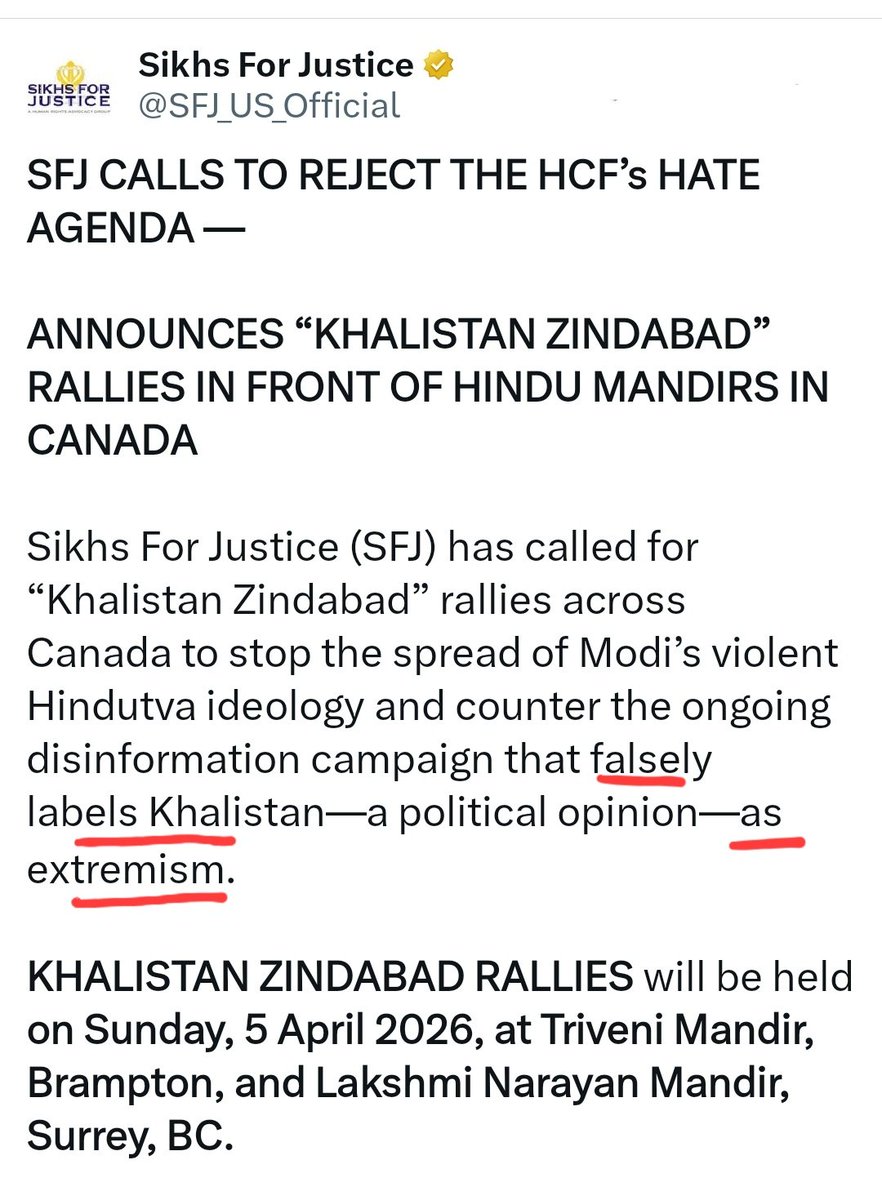
Khalistani nutcases are planning rallies across Canada harassing Hindus because they claim they are falsely being labeled as extremists 🤦🏼 These are the same people making parades with floats portraying & glorifying assassinations. We don't need this garbage in Canada.
Kirk Lubimov tweet media
English
77
368
1.4K
41.6K
malika retweetledi
Seth Frantzman
Seth Frantzman@sfrantzman·
Was it isolated? My recollection of history, was that Bin Laden was “found” a mile from the military academy there and that a secret raid was done not to alert Pakistan; and then after it was just kind of quietly ignored how Bin Laden got there and we kind of walked away as if it never happened, as if Bin Laden was found on the moon. I don’t recall this isolation. I recall plausible deniability. Kind of like those Nazi officers ended up in S. America or even some war criminals ended up in Canada
The Wall Street Journal@WSJ

Pakistan, once isolated by Washington for harboring Osama bin Laden, is assuming a surprisingly prominent position in the multinational effort to push the U.S. and Iran toward the negotiating table on.wsj.com/47oJG4A

English
34
173
1K
62.4K
malika retweetledi
Sama Hoole
Sama Hoole@SamaHoole·
India ran the most important cardiovascular study of the 20th century by accident, and then immediately forgot about it. In 1967, Dr. S.L. Malhotra published a study in the British Heart Journal examining heart disease rates among 1.5 million Indian railway employees. The population was extraordinarily useful for research purposes: same employer, same healthcare access, comparable income and working conditions, spread across the entire country. The only meaningful variable was geography. Which meant diet. North Indian railway workers: Punjab, Rajasthan, UP, ate a diet built around ghee and dairy fat. They consumed up to 19 times more fat than their southern counterparts. The fat was primarily saturated: clarified butter, milk fat, the short-chain saturated fatty acids that Ancel Keys had recently been telling the Western world were arterial death. South Indian railway workers ate a diet based on rice, sambar, and seed oils: groundnut oil and sesame oil, primarily. They ate considerably less fat overall. By the standards of dietary advice being formulated in the 1960s, they should have been the healthy ones. Heart disease mortality in South India: 135 per 100,000. Heart disease mortality in North India: 20 per 100,000. Seven times higher in the population eating seed oils. Among railway sweepers specifically, the lowest-paid, most physically active workers, the gap was even wider. Heart disease was fifteen times more common in the South Indian sweeper population than in the North Indian sweeper population. Malhotra controlled for everything he could reach: smoking, where Northerners actually smoked more. Activity levels, where the relationship was inconsistent. Socioeconomic status, where executives died more often than sweepers regardless of region. He found no variable that explained the gap except the type of fat in the diet. He published the data. In a peer-reviewed journal. In 1967. The study was cited periodically, acknowledged as methodologically interesting, and then set aside. The decade in which Malhotra published was the decade in which Ancel Keys's fat hypothesis was being converted into policy. The American Heart Association was issuing guidance recommending polyunsaturated vegetable oils as replacements for saturated animal fats. The food industry was producing seed oils at industrial scale. The infrastructure of seed oil promotion was being built, expensively and with great institutional momentum. A study showing that populations eating animal fat had a fraction of the heart disease of populations eating seed oils was not, in that context, a study that anyone particularly wanted to follow up. Nobody followed up. Almost sixty years later, the finding stands unrefuted in the literature. It is not in the dietary guidelines.
Sama Hoole tweet media
English
231
3.2K
9.8K
631K