Maths Week Ireland

8.7K posts

Maths Week Ireland banner
Maths Week Ireland

Maths Week Ireland

@mathsweek

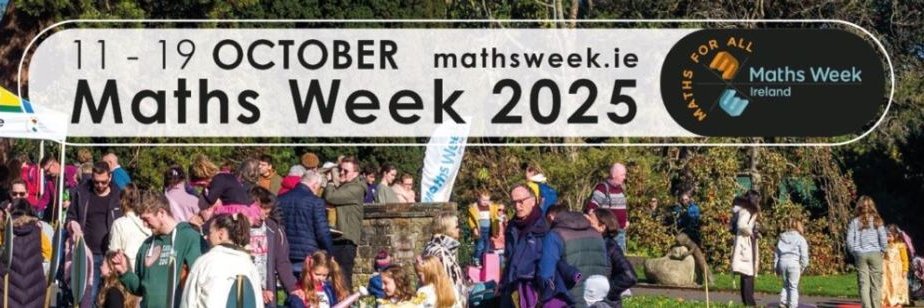
The all-island annual festival for the promotion of maths. 11-19 October 2025. #IUseMaths #STEM4All

Ireland Katılım Eylül 2009
1.8K Takip Edilen7.2K Takipçiler
Maths Week Ireland retweetledi
TeachNetIreland
TeachNetIreland@TeachNetIreland·
📢Latest episode of the TeachNet Ireland Podcast live Dr. Michael Hallissy is joined by by Dr. Eamon Costello, Associate Professor in DCU’s IOE, to explore what #AI literacy really means for teachers and schools. #AILiteracy #CESICon26 buff.ly/biDLyyO
TeachNetIreland tweet media
English
0
1
0
106
Maths Week Ireland retweetledi
Calmast SETU
Calmast SETU@CalmastWIT·
Harry Kroto inspired 1,000's of pupils at his Buckyball workshop and we were privileged to bring him to SETU Waterford (then WIT) in 2005, saying of Calmast "I doubt that there is likely to be a more educationally worthwhile or cost effective SET initiative"
Calmast SETU tweet media
English

0
2
0
125
Maths Week Ireland retweetledi
Dr Tom Crawford
Dr Tom Crawford@tomrocksmaths·
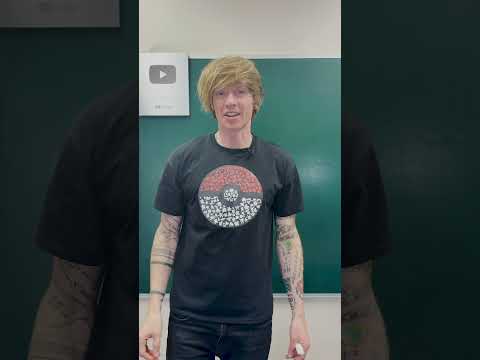
NEW VIDEO: youtube.com/shorts/1OYojM-… How many ping pong balls would it take to raise a shipwreck? Or specifically, how many would it take to raise the Vasa, the most intact shipwreck in the world? Maths and history collide in this collab with Chloe from Tiger Lily History :)
YouTube video
YouTube
Dr Tom Crawford tweet media
English
0
2
8
575
Maths Week Ireland retweetledi
MathsWith Sam
MathsWith Sam@Sam_Axiom·
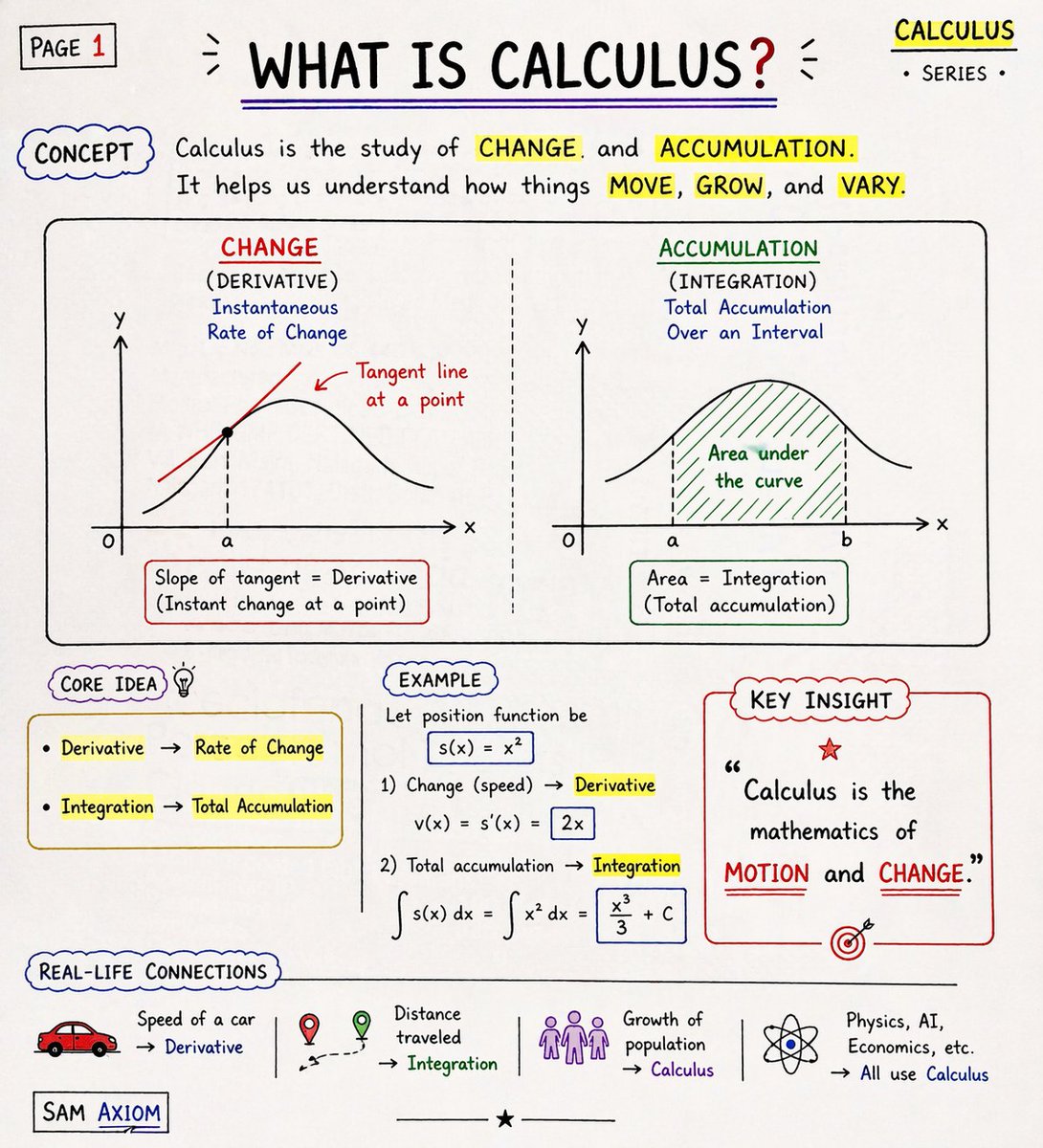
What's Calculus=? Calculus Part-1: It all begins with limits — understanding how things behave as they approach change. Before solving problems, you learn to see patterns, continuity, and logic behind motion.
MathsWith Sam tweet media
English
12
358
1.8K
60.3K
Maths Week Ireland retweetledi
Big Brain AI
Big Brain AI@realBigBrainAI·
Eric Schmidt, former CEO of Google, offers a sobering view: The biggest technological shift in human history is happening, and almost no one is talking about it. Schmidt opens with a startling industry prediction: "We believe as an industry that in the next one year the vast majority of programmers will be replaced by AI programmers. We also believe that within one year you will have graduate level mathematicians that are at the tippy top of graduate math programs." He explains why this matters so much. Programming and math aren't just two fields among many: "Programming plus math are the basis of sort of our whole digital world." And the AI labs are already using AI to build better AI: "The research groups in OpenAI and anthropic and so forth… around 10 or 20% of the code that they're developing in their research programs is being generated by the computer. That's called recursive self-improvement." @ericschmidt then lays out the timeline most people haven't grasped: "Within 3 to 5 years we'll have what is called general intelligence AGI which can be defined as a system that is as smart as the smartest mathematician physicist artist writer thinker politician." He gives this belief system a name: "I call this by the way the San Francisco consensus because everyone who believes this is in San Francisco it may be the water." But the truly unsettling part comes next. Once AI starts improving itself, humans become optional to the process: "The computers are now doing self-improvement… they don't have to listen to us anymore. We call that super intelligence or ASI… computers that are smarter than the sum of humans. The San Francisco consensus is this occurs within six years." And here's where Schmidt sounds the alarm. The conversation isn't keeping pace with the technology: "This path is not understood in our society. There's no language for what happens with the arrival of this. This is happening faster than our human that our society, our democracy, our laws will address." His closing thought captures why this matters: "That's why it's underhyped. People do not understand what happens when you have intelligence at this level which is largely free."
English
281
765
2.2K
631.9K
Maths Week Ireland retweetledi
American Mathematical Society
American Mathematical Society@amermathsoc·
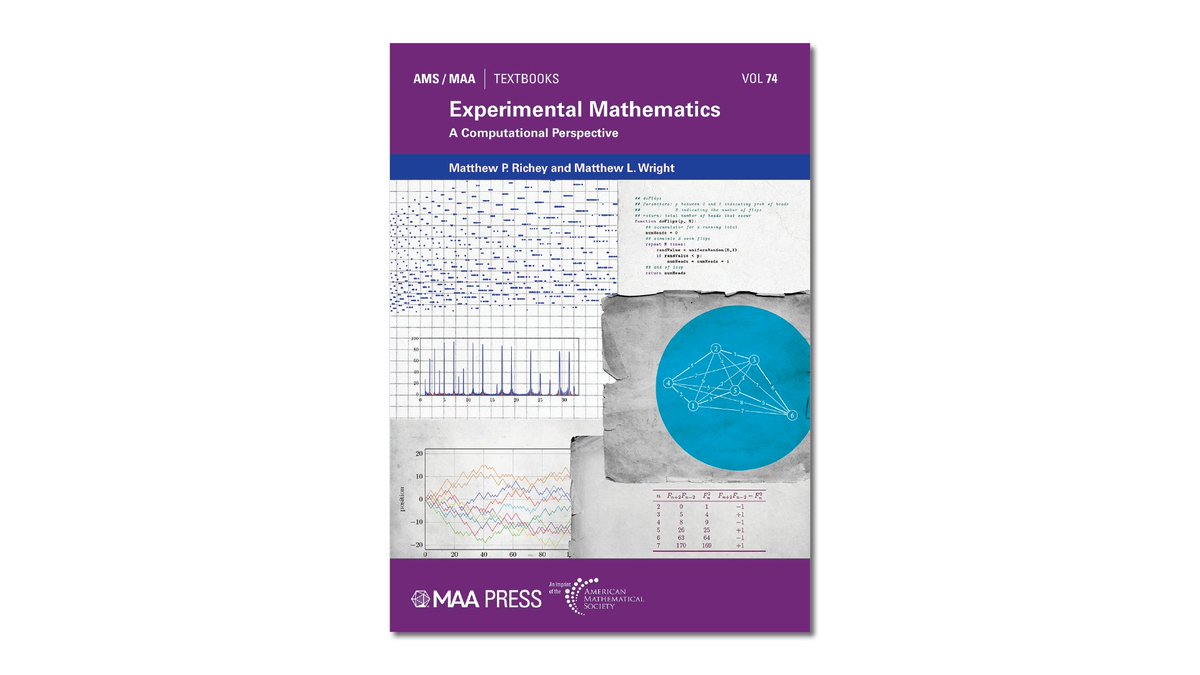
Math & Stats Month Feature: Experimental Mathematics: A Computational Perspective Explore math through computation! Investigate patterns in number theory, complex analysis, and probability with hands-on experiments, algorithms, and over 450 exercises. Minimal programming experience required. #MathStatMonth #ExperimentalMath #ComputationalMath #UndergraduateMath Link in comments.
American Mathematical Society tweet media
English
1
13
70
4.4K
Maths Week Ireland retweetledi
Ihtesham Ali
Ihtesham Ali@ihtesham2005·
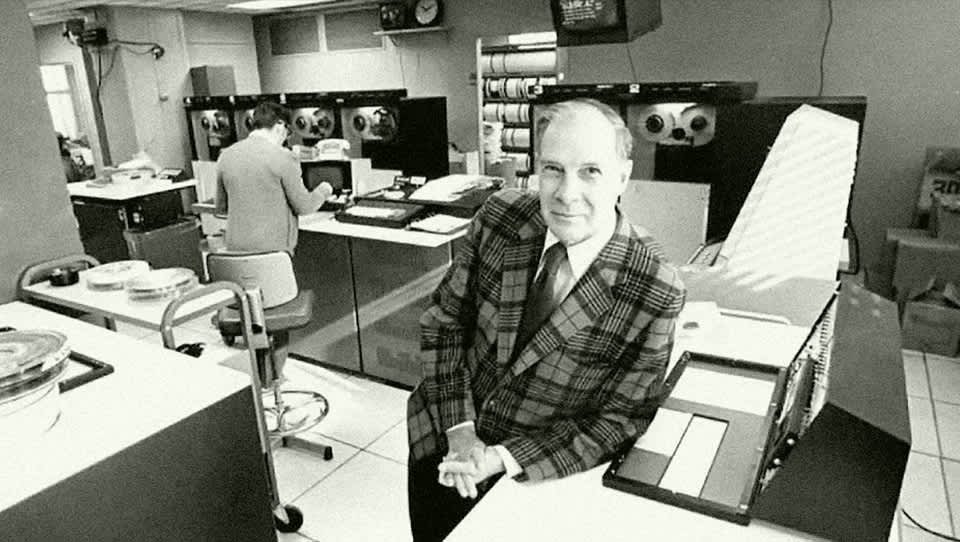
A mathematician who shared an office with Claude Shannon at Bell Labs gave one lecture in 1986 that explains why some people win Nobel Prizes and other equally smart people spend their whole lives doing forgettable work. His name was Richard Hamming. He won the Turing Award. He invented error-correcting codes that made modern computing possible. And he spent 30 years at Bell Labs sitting in a cafeteria at lunch watching which scientists became legendary and which ones faded into nothing. In March 1986, he walked into a Bellcore auditorium in front of 200 researchers and told them exactly what he had seen. Here's the framework that has been quoted by every serious scientist for the last 40 years. His opening line landed like a punch. He said most scientists he worked with at Bell Labs were just as smart as the Nobel Prize winners. Just as hardworking. Just as credentialed. And yet at the end of a 40-year career, one group had changed entire fields and the other group was forgotten by the time they retired. He wanted to know what the difference actually was. And he said it wasn't luck. It wasn't IQ. It was a specific set of habits that almost nobody is willing to follow. The first habit was the one that hurts the most to hear. He said most scientists deliberately avoid the most important problem in their field because the odds of failure are too high. They pick a safe adjacent problem, solve it cleanly, publish it, and move on. And because they never swing at the hard problem, they never hit it. He said if you do not work on an important problem, it is unlikely you will do important work. That is not a motivational line. That is a logical one. The second habit was about doors. Literal doors. He noticed that the scientists at Bell Labs who kept their office doors closed got more done in the short term because they had no interruptions. But the scientists who kept their doors open got more done over a career. The open-door scientists were interrupted constantly. They also absorbed every new idea passing through the hallway. Ten years in, they were working on problems the closed-door scientists did not even know existed. The third habit was inversion. When Bell Labs refused to give him the team of programmers he wanted, Hamming sat with the rejection for weeks. Then he flipped the question. Instead of asking for programmers to write the programs, he asked why machines could not write the programs themselves. That single inversion pushed him into the frontier of computer science. He said the pattern repeats everywhere. What looks like a defect, if you flip it correctly, becomes the exact thing that pushes you ahead of everyone else. The fourth habit was the one that hit me the hardest. He said knowledge and productivity compound like interest. Someone who works 10 percent harder than you does not produce 10 percent more over a career. They produce twice as much. The gap doesn't add. It multiplies. And it compounds silently for years before anyone notices. He finished the lecture with a line I have never been able to shake. He said Pasteur's famous quote is right. Luck favors the prepared mind. But he meant it literally. You don't hope for luck. You engineer the conditions where luck can land on you. Open doors. Important problems. Inverted questions. Compounded hours. Those are not traits. Those are choices you make every single day. The transcript has been sitting on the University of Virginia's computer science website for almost 30 years. The video is free on YouTube. Stripe Press reprinted the full lectures as a book in 2020 and Bret Victor wrote the foreword. Hamming died in 1998. He gave his final lecture a few weeks before. He was 82. The lecture that explains why some careers become legendary and others disappear is still free. Most people who could benefit from it will never open it.
Ihtesham Ali tweet media
English
147
1.9K
8.2K
1.2M
Maths Week Ireland retweetledi
OECD Education
OECD Education@OECDEduSkills·
What stands out about the most knowledgeable teachers? A new OECD survey looks at teachers’ professional knowledge and practices in eight countries around the world. See what practices are more common among knowledgeable teachers: oecd.org/en/publication…
OECD Education tweet mediaOECD Education tweet media
English
0
23
44
5.5K
Maths Week Ireland retweetledi
Fianna Fáil
Fianna Fáil@fiannafailparty·
🚀 Minister James Lawless has just launched AIReady.ie🤖 🎯 The goal? Upskill ONE MILLION people in AI across Ireland! ✅ Free courses ✅ Bite sized and beginner friendly ✅ Under 30 minutes each ✅ Works on your phone, tablet or laptop ✅ No tech background needed
Fianna Fáil tweet media
English
11
4
5
2K
Maths Week Ireland retweetledi
American Mathematical Society
American Mathematical Society@amermathsoc·
More than 100 children and family members gathered together at Pleasant View Elementary School in Providence for the annual AMS Family Math Night. Thank you to our volunteers, @CityYearRI, Always Learning Rhode Island, @RIDeptEd, @GovDanMcKee, @PVDMayor, Superintendent Dr. Javier Montañez, Principal Tracey Learned, @theJRMF, and all attendees who made the night a fun and great success! Read the full story. Link in comments.
American Mathematical Society tweet mediaAmerican Mathematical Society tweet mediaAmerican Mathematical Society tweet mediaAmerican Mathematical Society tweet media
English
2
7
10
1.1K
Maths Week Ireland retweetledi
Ihtesham Ali
Ihtesham Ali@ihtesham2005·
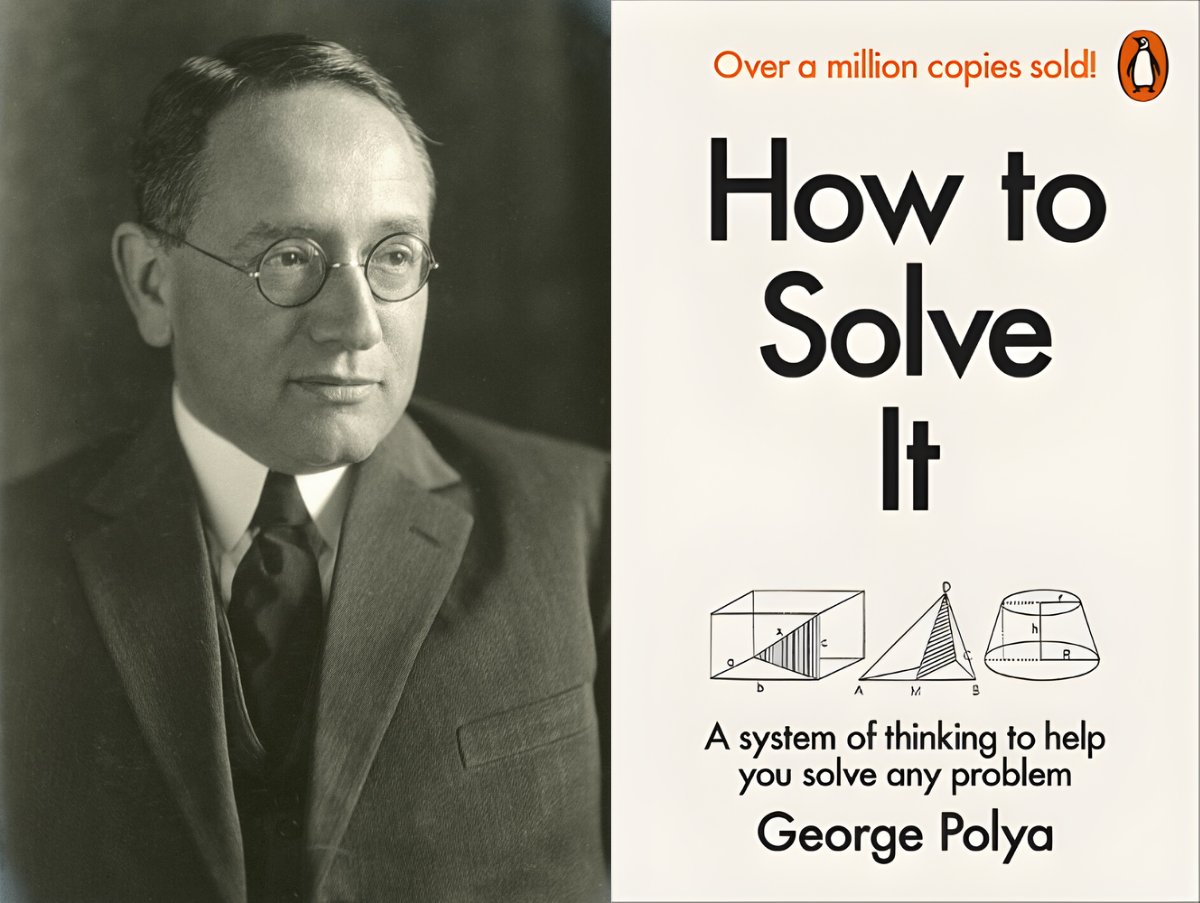
A Stanford mathematician spent 40 years watching brilliant students freeze in front of hard problems. Not because they lacked intelligence. Because nobody had ever taught them what to do before they started solving. His name is George Pólya, and the book he wrote in 1945 has never gone out of print. It has sold over a million copies. Marvin Minsky, the man who built the first neural network machine at MIT, said publicly that everyone should know this work. Engineers, mathematicians, and computer scientists treat it as scripture. Most people have never heard of it. Here is the framework buried inside it that changed how I think about every hard problem I face. Pólya watched the same failure repeat itself across decades of students. A problem would be presented. The student would stare at it for a moment, feel the first wave of anxiety, and immediately start calculating. Not because calculating was the right next step. Because calculating felt like doing something, and doing something felt better than sitting with the discomfort of not knowing what to do. The calculation was almost always wrong. Not because the student lacked the skill to execute it. Because they had not yet understood what they were being asked. Pólya called this the most neglected step in all of problem solving, and he spent the rest of his career trying to make people take it seriously. Step one is to understand the problem. Not skim it. Not assume you know what it is asking because you have seen something similar before. Understand it. Completely. He gave students a specific set of questions to force this: What is the unknown? What are the given conditions? Can you draw a figure? Can you restate the problem in your own words without looking at it? That last one is the filter. If you cannot restate a problem in your own words, you do not understand it. You have only read it. Most people skip this entirely and wonder why they get stuck. Step two is to make a plan. Not to execute. To plan. Pólya documented every heuristic he could observe in successful problem solvers, and one pattern appeared more than any other. When a problem feels impossible, find a simpler version of it and solve that first. Not because the simpler version is the goal. Because solving it gives you a foothold, a method, a partial structure you can carry back to the original problem and build from. He phrased it with precision: if you cannot solve the proposed problem, try first to solve some related problem. Could you imagine a more accessible related problem? That question alone is worth more than most problem-solving courses. Step three is to carry out the plan. This is the step everyone thinks is the whole game. It is not. It is the third of four. And Pólya spent the least time on it because it is the most obvious. Once you understand the problem and have a plan, execution is mostly patience. Step four is the one almost nobody does. Look back. Not to check the arithmetic. To ask a different set of questions entirely. Can you verify the result by a different method? Can you use this result or this method to solve a different problem? What would you do differently next time? This is where the real learning lives and almost no one goes there. The look-back step is not about the problem you just solved. It is about building a library of methods that transfers to the next problem, and the one after that. Every expert problem solver Pólya studied had this habit. Every struggling student skipped directly from the answer to the next question on the page, carrying nothing forward, starting from zero every time. Pólya's deepest insight was not a technique. It was a diagnosis. The reason most intelligent people feel bad at problem solving is not that they lack the ability to reason. It is that they conflate understanding a problem with having read it. They conflate having a method with starting to work. They conflate getting an answer with having learned anything. These are not the same things. They never were. The students who get genuinely good at hard problems are not the ones who practice more. They are the ones who slow down at the beginning and the end, at the two moments every instinct tells them to rush. The problem is almost always not as hard as it looks at the start. You just haven't understood it yet.
Ihtesham Ali tweet media
English
75
1.2K
5.9K
298.7K
Maths Week Ireland retweetledi
World of Engineering
World of Engineering@engineers_feed·
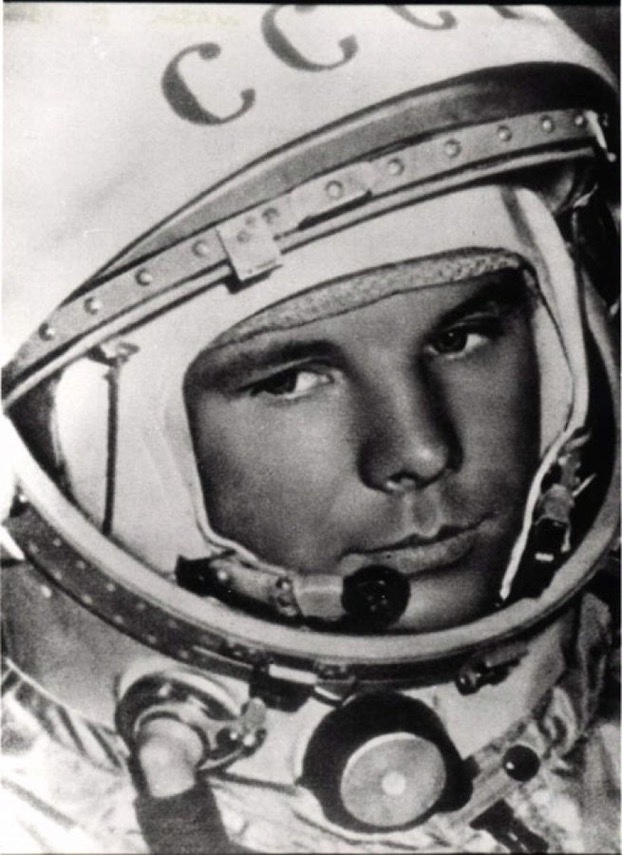
OTD in 1961, cosmonaut Yuri Gagarin became the first human to fly into space. His historic single orbit around Earth took only 108 minutes from ignition to landing.
World of Engineering tweet media
English
15
76
552
31.8K
Maths Week Ireland retweetledi
Koena Moabelo🇿🇦
Koena Moabelo🇿🇦@Koena_za·
Meet Dr Siyabonga Zulu from Estcourt, KZN. After attending to his duties as a doctor, he dedicates his time to teaching matriculants Mathematics. #inspirational 🙌👌
English
62
606
3.4K
59.2K
Maths Week Ireland retweetledi
London Mathematical Society
London Mathematical Society@LondMathSoc·
🌸 𝗝𝗼𝗶𝗻 𝘁𝗵𝗲 𝗟𝗠𝗦! 🌸 If you are considering joining the LMS and enjoying the many benefits, don't forget to fill in the application by TOMORROW (13 April) so it can be presented at our next Society Meeting on 17 April. Full details ➡️ lms.ac.uk/membership
London Mathematical Society tweet media
English
0
9
18
1.1K