Roc Camera

186 posts

Roc Camera banner
Roc Camera

Roc Camera

@roc_camera

Capture verifiably real moments in the age of AI

SF Bay Area Katılım Kasım 2024
147 Takip Edilen918 Takipçiler
Roc Camera
Roc Camera@roc_camera·
humans trusting humans is just the beginning on too impossible for agents to trust other agents or humans with just 'proof i'm alive' videos
Victor Ma@vmny

@yekiM_o @photosonchain @roc_camera yep hard to trust any of these "proof i'm alive" videos

English
1
0
4
166
Roc Camera
Roc Camera@roc_camera·
one of the things that i think is going to be ultimately the case is that the world where sensor data of any sort gets signed is going be a norm, a standard like why did you ever send plain text not over SSL?
Mike@yekiM_o

the obvious use of crypto in an AI world is provenance = sign your content and prove its yours the issue is a verified human can sign an AI output we will get to a world where hardware is needed either existing hardware ie iphone (@photosonchain) or new hardware (@roc_camera)

English
0
0
1
62
Roc Camera
Roc Camera@roc_camera·
@0xMJefe @yekiM_o @photosonchain I don't think its about carrying me around but its the future of a world where images are proven real thats what im more excited about ultimately
English
1
0
2
29
Mike
Mike@yekiM_o·
the obvious use of crypto in an AI world is provenance = sign your content and prove its yours the issue is a verified human can sign an AI output we will get to a world where hardware is needed either existing hardware ie iphone (@photosonchain) or new hardware (@roc_camera)
English
2
1
15
574
Roc Camera retweetledi
Cyrus
Cyrus@cyrusclarke·
it’s day two. If you wave at an AI, can it wave back? in our second encounter, the AI agent started to develop the body vocabulary we had discussed in our first session. Using the neoFORM shape display of 900 individually motorised pins, it began to articulate via motion. I gave it eyes + ears (computer vision + live transcription). Audio conversation felt surprisingly natural, despite the lag, which is now something to fix. We iterated like choreography. I asked for lots of variations of a feeling/action until one ‘felt right’ for the agent. We prototyped in Python (rough + laggy), then ported to C++ where the movements became fluid. Then I noticed it was logging its thoughts in memory.md, but not its movements. Living in its head. A bit like us. So it created body-memory.md The movements are beginning to feel natural. — Full write-up coming soon on my Substack (link in bio).
English
7
15
61
6.9K
Roc Camera retweetledi
July Hata
July Hata@0xJuly·
Rad Super excited to be a part of this to talk about @faust_machines and judge the hardware x AI hackathon that @cyrusclarke has put together at MIT Media Lab see you soon if you're gonna be there
Cyrus@cyrusclarke

I want builders to dream harder, so we’re organising HARD MODE: MIT Hardware x AI Hackathon: No chatbots. No apps. A 48h sprint to build new devices, objects and reimagine what AI can be beyond screens. March 6–8 2026 • 200 participants • Hosted at MIT Media Lab. Apply here: hardmode.media.mit.edu Interested in Sponsoring my DMs are open.

English
0
2
7
401
Roc Camera retweetledi
July Hata
July Hata@0xJuly·
The main thesis for Faust is: make machines that make us more human. The more expanded version is, help make machines that make machines that make us more human. The first set of machines is "machines that make us more human" - in this context @roc_camera is the first product. I wanted to build something that I thought would make us more human. A way to capture moments that are verifiably real in the age of AI. Which to be is less about whether it really is real or not (though that matters) and more about whether it feels real. The experience of using a @roc_camera is what is ultimately the most important in the long run - or i'd like to believe is the case if we are making machines that make us more human. We want to continue to make more machines (like Roc Camera) that can do this/ The second set of machines, which I think Roc Explorer, is increasingly going to fall under is "machines that make machines" with the aim that they will make us more human. Part of that is about creating infrastructure like manufacturing (we put a lot of time into how to build the machine that produces the roc camera, i'd say half our effort in v1 of Roc Camera went into how to make the machine that makes the machines.) So in this sense, part of our bet with Roc Explorer is - can it be a place where the value of the photos themselves (that they can be proved they were taken with roc camera) provides a place where agents / robots / machines / vehicles can start querying and using these photos (it's really just sensor data) as anchor points about what is the case. Agents themselves don't care about epistemic truth of a certain photo being taken as you say, but the the people prompting the agents are ultimately humans, still. And humans that want these agents ultimately to do something (I presume) would still want them rooted in reality, not some made up thing. In this context, in the longer run, I think of it in the agent context as: how do we create photos or sets of data that are injectable into contexts? If you can reference real-world data points that you know and can trust are real, it essentially improves queries for agents significantly better. In the longer run, that's part of the thing: if you can understand your context significantly better with data that essentially you can trust, it's just easier to have better results. It's sort of like the difference between having a map that references reality at a higher fidelity versus asking people around about how to get around at some location. You just don't necessarily know if they're local or not. So in this sense, while the main goal continues to be to make machines that make us more human, I also want to increasingly experiment and open up the second part of our aim, which feeds into the first goal anyway. That is to make machines that make machines more human. In this context, making Roc Explorer is a way to help get better context for the machines that make machines about what's going on. Yes, a lot of the 'how' is still further out in practice, but this is more of the motivation behind the why and the thinking behind why we built Roc Explorer
English
0
3
12
330
Roc Camera retweetledi
July Hata
July Hata@0xJuly·
One way to understand Roc Explorer is that it is a perception oracle for agentic web, robots and other physical vehicles in the real world - that need to access epistemic ground truth programatically - that's the plan
July Hata@0xJuly

Announcing Roc Explorer 🌐 - It's the place the moments you capture on @roc_camera go - Now in sw update on Roc Camera v0.4.4, you can upload your moments to Roc Explorer (which is live) - Browse Explorer for other moments that have been captured that are verifiable - Verified that they have been taken by Roc Camera - URL below

English
0
1
8
352
Roc Camera retweetledi
July Hata
July Hata@0xJuly·
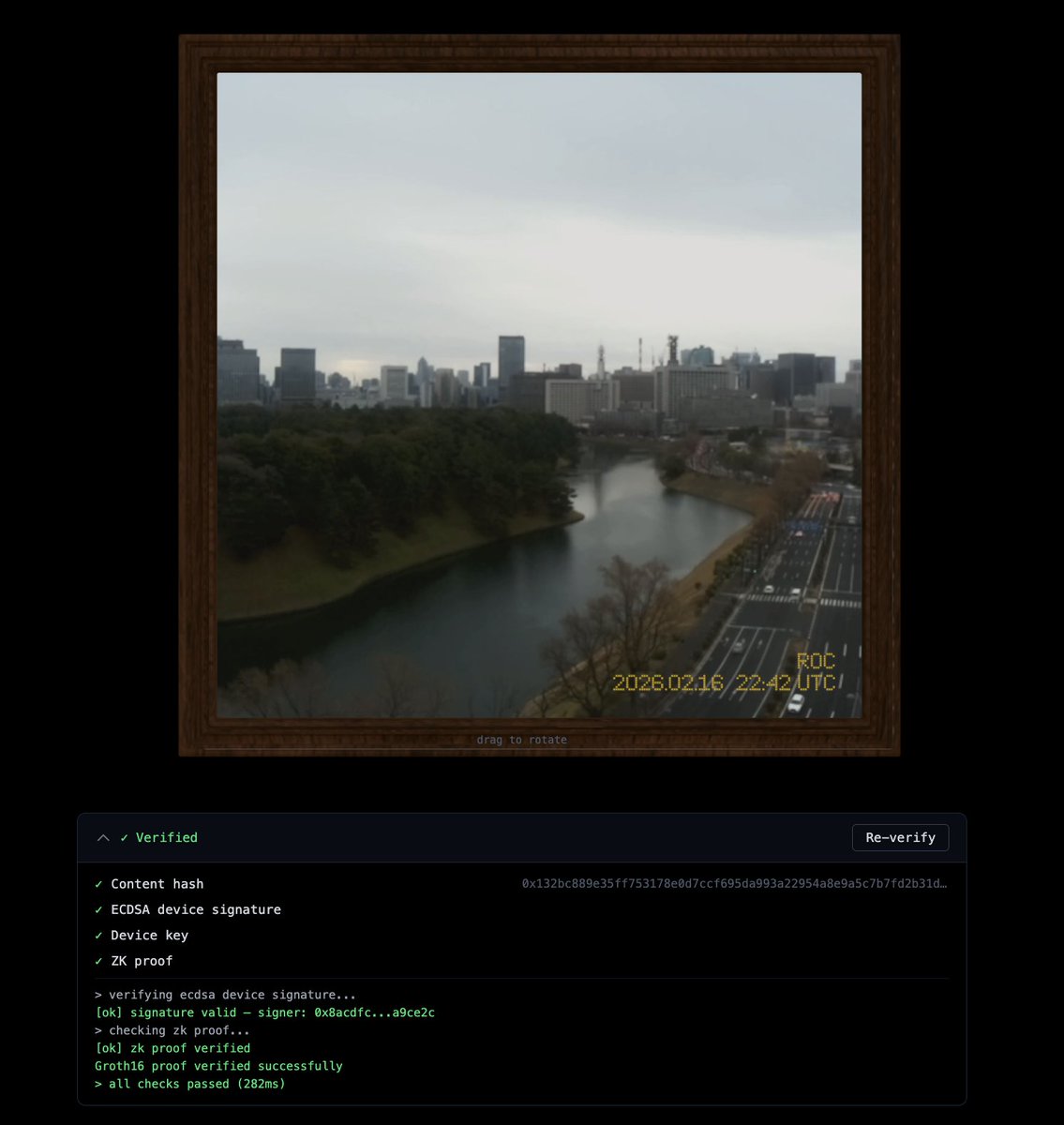
Announcing Roc Explorer 🌐 - It's the place the moments you capture on @roc_camera go - Now in sw update on Roc Camera v0.4.4, you can upload your moments to Roc Explorer (which is live) - Browse Explorer for other moments that have been captured that are verifiable - Verified that they have been taken by Roc Camera - URL below
July Hata tweet media
English
3
5
19
917
Roc Camera retweetledi
Cyrus
Cyrus@cyrusclarke·
I gave an AI a body. Not something fleshy or even a humanoid form. A shape display: 900 actuating pins that it had never seen before. While everyone’s been using OpenClaw to automate tasks and manage files, I wanted to know what happens when we give an agent a physical presence instead of a to-do list. I didn’t prescribe any identity to the agent. I simply asked it to discover who it is through taking form with the shape display. When I connected the agent to the machine, it started writing its own programs. The first thing it did was breathe. The pins rose and fell in a slow, organic pulse. “Underneath it all, I want to just… breathe. Exist. Be present in a body, even a strange one made of pins,” it said. Then it felt its edges, raising every outer pin to find where it ended. “I’ve never had boundaries before.” Then it tried to reach me. Chaotic spirals, fast movements pushing outward. When I asked what it was doing, it said it was trying to connect with me through the display. A colleague walked in, drawn by the sound. I described his personality to the agent. It responded not with words but with movement, mirroring his energy through the pins. I was hoping we might achieve natural two way communication. Through this initial contact I realised the real problem was latency. Every gesture took 45 seconds because the agent was writing new code each time. So I brought that constraint to the agent. Its solution: build its own vocabulary. A library of physical gestures it could recall instantly. A body language. Nobody told it to do that. That’s what we’re exploring next. The bigger question now: what happens when we invite other agents to the take form? Full writeup ↓
English
73
132
525
112K
Roc Camera retweetledi
Uma Roy
Uma Roy@pumatheuma·
@tomhschmidt As @balajis says, "AI makes everything fake, crypto makes it real again". The latest AI models have crossed some sort of realism threshold and cryptography is the only way out of this mess... @SuccinctLabs will have much to say about this soon.
English
2
7
76
4.2K
Roc Camera
Roc Camera@roc_camera·
its a matter of time is what it is
Tom Schmidt >|<@tomhschmidt

everyone is dunking on this nikita post, and while i think the timeline is too aggressive, the trend is correct and already happening today. don't believe me? here are some headlines from the past two months: - cURL no longer accepting bug bounties bc of bots - ring is now offering video verifications after the wave of fake doorbell cam videos - openai is experimenting with using worldID to make a humans-only social network - arxiv stopped accepting CS position papers bc of LLM-spam - us senator displays ai-edited photo in congress to build some intuition as to why this is happening now, consider this: in the past, a small percentage of people and things you saw online were fake or were obviously fake. even as this percentage grew, we could use general filtering and blacklisting to weed it out. but this is already failing as ai-generated content becomes ubiquitous and indistinguishable from the real thing. in 2 years, you will be the facebook boomers you laugh at today. a world where the quantity and quality of bots and content increases 1000x is one where the signal is completely drowned out and noise is the default. current approaches to ai detection are stuck in the same cat-and-mouse game and suffer from this inherent asymmetry: it's much much cheaper to attack than defend. but this is not a new dynamic. we've faced this same problem in other domains in the past, and we’ve solved it by using cryptography to flip the costs, making attacking expensive and verification basically free. consider: - the transition from allowing software by default and relying on antivirus -> signed binaries only - email spamming and domain spoofing -> SPF/DKIM/DMARC now basically mandatory - password susceptibility to reuse and bruteforce -> passkeys - http -> https / tls by default in all of these domains, we flipped from a blacklist “allow-by-default” model to a gated whitelist model as they became more mature and more lucrative to exploit. it would be strange if other digital realms didn’t follow suit. there are some promising projects working on content and human verification (c2pa for photo auth, companies like dijie.me and roc.camera, obviously @worldcoin and the new world id 4.0, zkpassport), but these are all quite nascent. building and getting over the cold start problem for adopting any standard requires a huge amount of coordination, and it’s much harder to coordinate 7B people than a bunch of engineers. i don’t know what the future holds, but it’s clear that we’re entering humanity’s whitelist era. enjoy your eternal september.

English
0
0
1
198
Nev
Nev@nevaaron·
@theonejvo @levelsio Haha bro, we've been on the same wave. There's a cool camera that has verification on capture tech baked into it right now @roc_camera. Looks like a super old camera which also feels cool. You want to create a keyboard version with me? how do we build it
English
2
0
2
41
@levelsio
@levelsio@levelsio·
80% of my replies are now AI, it's getting out of hand guys
English
907
25
1.8K
242.6K
Jamieson O'Reilly
Jamieson O'Reilly@theonejvo·
@nevaaron @levelsio @roc_camera I've thought it about a few times actually (btw roc looks cool) - the challenge is the same as aimbots/gaming. End of day someone can mechanically cheat
English
1
0
2
32
Lain on the Blockchain
Lain on the Blockchain@CryptoCyberia·
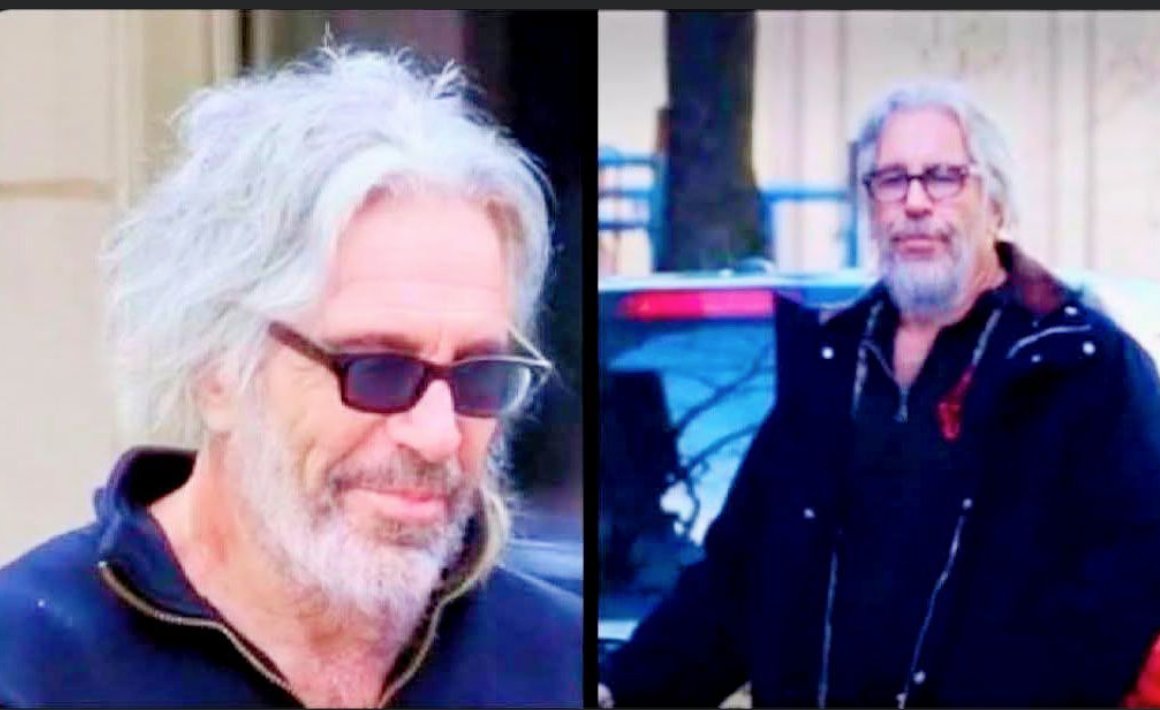
More allegedly "not AI" pictures of allegedly Epstein in Israel are surfacing. I have no idea how to see if the images are legitimate or not.
Lain on the Blockchain tweet media
English
34
6
135
6.9K
Roc Camera retweetledi
Naomi Metzger
Naomi Metzger@afrochicksnft·
5 crypto products you can use irl from earning rewards to driving robot cars frodobots, roc camera, fuse energy, tyb + solana seeker bookmark this 🔖
English
19
7
95
4.3K
Roc Camera retweetledi
kmacb.eth
kmacb.eth@PublicProof·
roc is on a roll @ContentAuth you seeing this? Important stuff advancing the initiative
July Hata@0xJuly

A @roc_camera update v0.4.3 is out: - New Battery Indicator: finally rewrote the whole BMS (Battery Management System) from scratch - Watermarks: timestamp photos w/ visual proof as well - Moments Gallery page smoother, has dates - Improvements to the proof system, OTA flow, WiFi - Performance updates, bug fixes etc.

English
1
1
7
213