

Spencer Macdonald
209 posts
Spencer Macdonald
@spencermac_
"You wanna know how I did it? This is how I did it, Anton. I never saved anything for the swim back."
🇺🇸 Katılım Eylül 2021
1.5K Takip Edilen2.1K Takipçiler

@uttam_singhk Tend to be more hard tech focused across the board, including defense tech. No social. 95% of SaaS is also fairly hard to invest in these days outside of domaine automation or production
English
I’ve been writing more angel checks in 2026 than 2024/25 combined. So many great people I’ve worked with and respected becoming first time founders or stating their second thing.
DMs are open and would love to chat.
English
Spencer Macdonald retweetledi
Big news for @biosphereio today: we’ve been awarded a $9 million U.S. Army contract to develop field-deployable biomanufacturing systems that can produce nutritious, ready-to-eat food from air, water, and energy in remote or contested environments. Thank you to @DEVCOM_SC for your support!
biosphere.io/article/biosph…
English
Spencer Macdonald retweetledi

🚨 THE PEPTIDE GOLD RUSH
@mansizzzzle - The #1 peptide substacker & founder of Chief Longevity Officer
We discuss peptide culture, the supply-chain race, and how $HIMS fits in. One of the most fun + fascinating episodes I've ever done. Thank you Mansi!!
02:09 - Background on Mansi
03:45 - Inside peptide culture
06:30 - NAD+ shots and different form factors
08:20 - Peptide culture across cities
10:54 - Dubai’s longevity gold rush
12:21 - Why peptides feel a little like crypto
16:41 - Mansi’s peptide experiments
19:50 - FDA timeline for peptide reclassification
24:46 - Why supply chain wins
26:11 - The synthesis bottleneck
28:15 - China’s scale advantage
30:29 - Why Hims bought CS Bio
31:39 - State laws
33:57 - Who wins the peptide rush
36:51 - Pricing power, tariffs, and trust
41:53 - Why gray markets persist
45:01 - Peptides with real LTV
47:51 - The Flatiron Health for peptides
Not financial, legal, or medical advice
English

@devahaz Private non-profits use ballrooms/conference facilities on military bases/USG land all the time. 32 CFR Part 213. So there is massive legal justification here for hosting private non profit events in WH ballroom.
English

Once again, this makes no sense. The President didn’t hold this event! These weren’t his guests, he was a guest. Ballroom or no ballroom, private orgs can invite POTUS and whoever else to their fancy gala dinners. And the President and members of admin can choose to go or not!
Pam Bondi@PamBondi
We MUST have the Ballroom completed to protect @POTUS and his guests. God Bless President Trump, his Administration and our Great Country. 🇺🇸🙏🏻
English
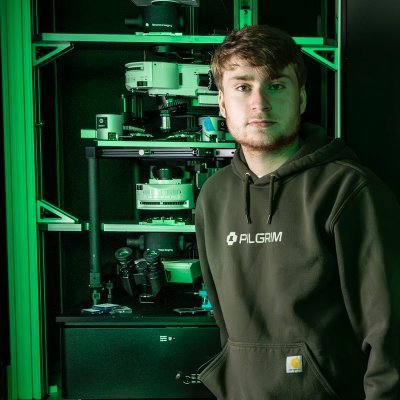
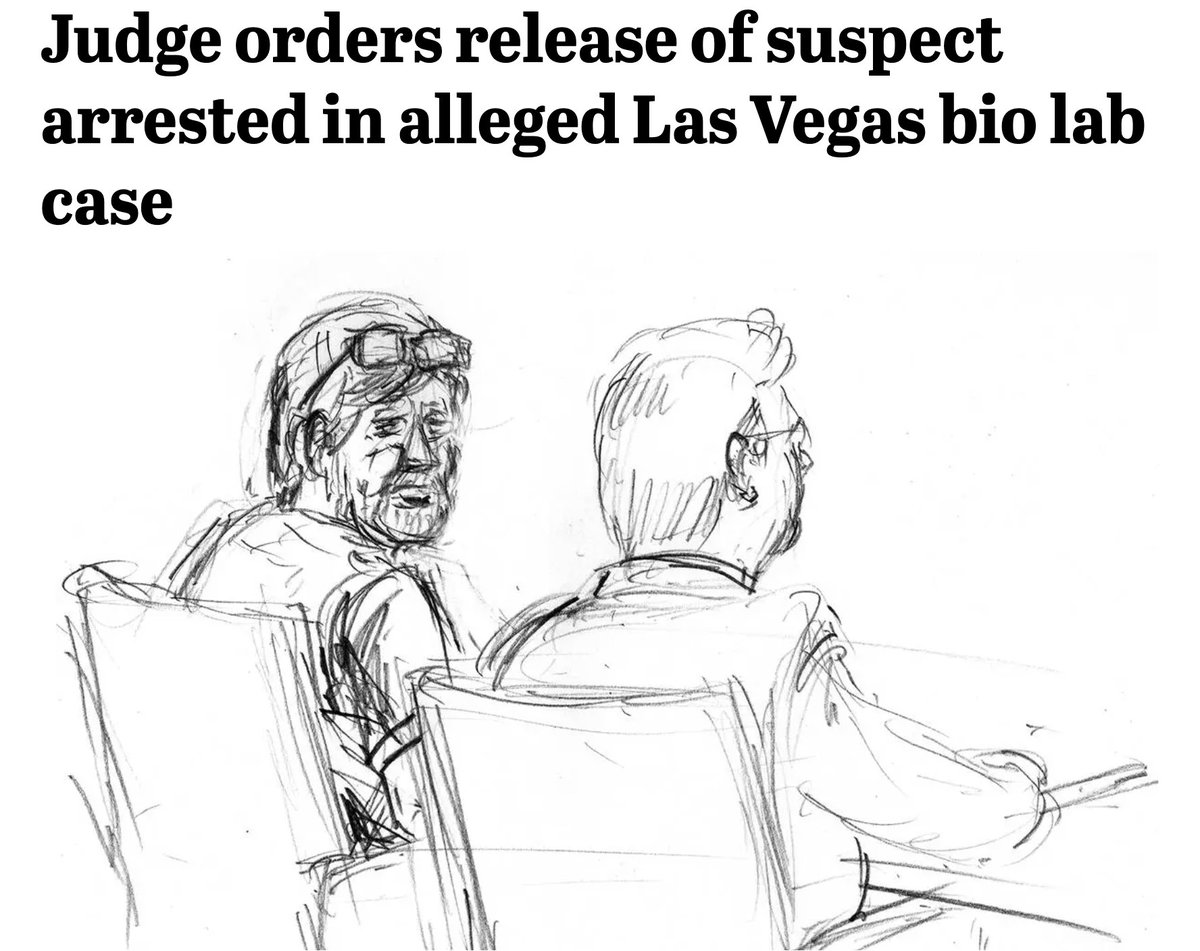
good to know if i ever get arrested for running a ccp lab on american soil with modified viruses, cocaine, and illegal firearms, i’d still qualify for release

English
Spencer Macdonald retweetledi
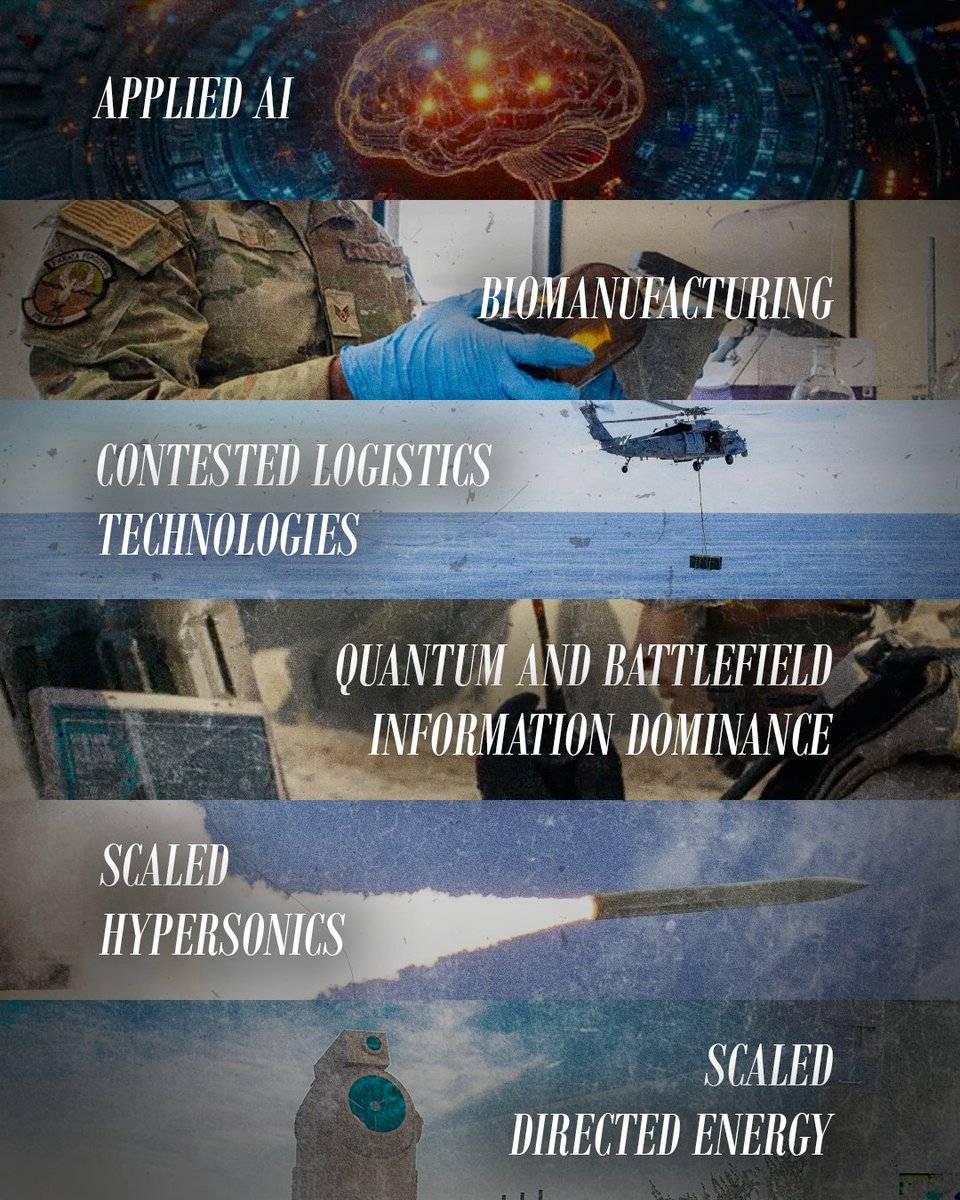
Six critical technology areas to ensure total military technological dominance:
✅ Applied AI
✅ Biomanufacturing
✅ Contested Logistics Technologies
✅ Quantum and Battlefield Information Dominance
✅ Scaled Hypersonics
✅ Scaled Directed Energy
English

All economic activity in biopharma is designed for a world in which credentialed experts decide what sells
"Experts are in control" is a core assumption of every biotech investor playbook, every business model, every R&D program
That assumption has never looked weaker
ADM Brian Christine, MD@ADM_Christine
For years, men with Low T had nowhere to turn. That ends with @DrMakaryFDA. The @US_FDA is expanding treatment options for idiopathic hypogonadism. Using gold standard science to get real results for American men.
English
Spencer Macdonald retweetledi

El Segundo Demo Day yesterday
3 companies to watch out for:
> Anaula: bioreactor for pharma APIs and GLP-1s
> @jared_western: bioreactor for waste water
> @AJA_Cortes: reshoring nitrogen and creatine manufacturing
If the US got into a war with China, we'd be out of insulin, statins, antibiotics, Tylenol, etc. in a month
Like what happened with masks during COVID
Feels like there's an opportunity for a $20M solo GP fund just focused on reshoring pharma and biomanufacturing
@jakobdiepen @discipulusvent cooking
English


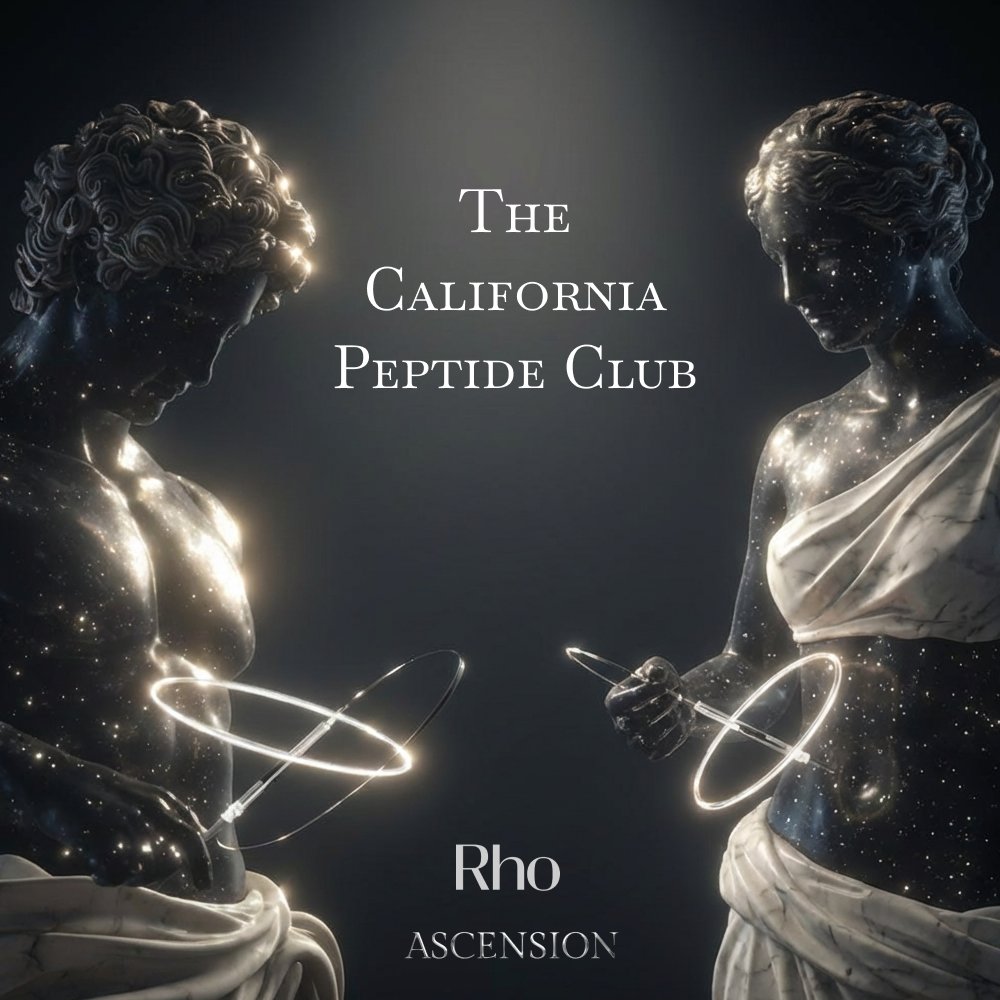
Peptides are taking over Silicon Valley.
This Sunday, we're launching The California Peptide Club - a hub for founders & doctors on the frontier to exchange protocols, sources & the latest science in the first peptide club.
7 experts on stage @agihousesf. RSVP below.
English
at this point i should write a god damn book on the subject (a continuity of peter's work if you will which was highly focused on business outcomes).
but you see power law outcomes are now beyond busiensses, they exist in partners/housing/jobs etc. & they aren't a bug of the internet age, they're actually the revealed preference of a species that always wanted this but was constrained by information friction. the internet made the latent preference function legible.
this is basically girardian mimesis at scale which is that everyone can now see & desire the same things simultaneously, so convergence on few winners is not only inevitable, but almost a certainty in terms of outcomes.
oh & ai tightens the ratchet like a mofo. this will get gnarly at scale very soon.
English
Spencer Macdonald retweetledi

My take on the whole "AI cures cancer in dog in Australia". It's a very interesting story, but perhaps not for the reasons that are being noted.
In 2007, Freeman Dyson published an essay in The New York Review of Books called “Our Biotech Future.” It contains one of the most memorable predictions about the future of biology I’ve ever read.
“I predict that the domestication of biotechnology will dominate our lives during the next fifty years at least as much as the domestication of computers has dominated our lives during the previous fifty years.”
Dyson believed biology would eventually follow the trajectory of computing. At first, powerful tools live inside large institutions - universities, government labs, major companies. Over time those tools get cheaper, easier to use, and more widely distributed.
Eventually individuals start doing things that once required entire organizations.
“Biotechnology will become small and domesticated rather than big and centralized.”
He even imagined genome design becoming something almost artistic:
“Designing genomes will be a personal thing, a new art form as creative as painting or sculpture.”
Dyson's words rang in my mind as I read the "AI cures dog cancer" story. Much of the coverage framed this as an example of AI discovering new science. But that’s not really the interesting part of the story.
The scientific pipeline involved here is actually well known. It closely mirrors the workflow used in personalized neoantigen vaccine research that has been under active development for years. The steps are fairly standard: sequence the tumor, identify somatic mutations, predict which mutated peptides might be recognized by the immune system, encode those sequences in an mRNA construct, and deliver them to stimulate an immune response.
The biological targets themselves were almost certainly not new discoveries (I have been unable to find out what they are, but mutations in targets like KIT which are common might be involved). Partly therein lies the rub, since the hardest part of drug discovery, whether in humans or dogs, is target validation, the lack of which leads to lack of efficacy - the #1 reason for drug failure. In neoantigen vaccines, the proteins involved are usually ordinary cellular proteins that happen to contain tumor-specific mutations. AlphaFold which was used to map the mutations on to specific protein structures is now a standard part of drug discovery pipelines. The challenge is identifying which mutated peptides might plausibly trigger immunity. What is interesting though is how the pipeline was assembled.
Normally, this type of workflow spans multiple domains - genomics, bioinformatics, immunology, and translational medicine - and in institutional settings those pieces are distributed across specialized teams, document sources and legal and technical barriers. Navigating the literature, selecting computational tools, interpreting sequencing results, and designing a candidate mRNA construct is typically a collaborative process. In this case, AI appears to have helped compress that process, pulling together data and tools from different sources. Instead of requiring multiple experts, a motivated individual was able to assemble the workflow with AI acting as a kind of guide through the technical landscape.
I’ve seen something similar in my own work while building lead-optimization pipelines in drug discovery. The underlying science hasn’t changed, but the friction involved in assembling the workflow can drop dramatically. Tasks that once required stitching together multiple tools, papers, and areas of expertise can now often be executed much faster with AI helping navigate the terrain; and by faster I mean roughly 100x. That kind of workflow compression is powerful, to say the least. When the cost of navigating technical knowledge drops, more people can realistically assemble sophisticated research pipelines. This story is a great example of what naively seems like a boring quantitative acceleration of the research process.
In that sense, therefore, the real novelty here is not the biology but the combination of three things: a non-specialist orchestrating a complex biomedical pipeline, AI acting as a navigational layer across multiple technical domains, and the resulting decentralization of capabilities that were once confined to institutional research environments. But I think the story also points to something deeper, which is a challenge to modern regulatory environments. Modern biomedical innovation does not operate solely according to what is scientifically possible. It is structured by regulatory frameworks - clinical trials, safety oversight, institutional review boards, and regulatory agencies. Those systems exist for important reasons, but they also assume that the development of therapies occurs primarily within large, regulated organizations.
When individuals begin assembling pieces of these pipelines outside those institutions, the relationship between technological capability and regulatory oversight starts to shift. The dog in this story sits outside the human regulatory framework. That fact alone made the experiment possible. In other words, the story is not just about technological capability; it is also about how certain forms of experimentation can occur when they bypass the regulatory pathways that normally govern biomedical innovation. One is reminded of another Australian, Barry Marshall, who received a Nobel for demonstrating through self-experimentation that ulcers are caused by bacteria.
This raises an interesting question: what happens when the tools for assembling sophisticated biological workflows become widely accessible while the regulatory structures governing them remain institution-centric? That tension may ultimately be the most important implication of this moment. Regulatory frameworks will need to adapt to this kind of citizen science. Seen in this light, the story about the AI-assisted vaccine is less about a breakthrough in cancer therapy and more about a glimpse of the early stages of something Dyson anticipated nearly two decades ago: the domestication of biotechnology.
If AI continues to reduce the cognitive overhead required to navigate biological knowledge and assemble complex pipelines, the boundary between professional research and motivated individuals may begin to blur. That shift will require careful thinking about safety, governance, and responsibility. But it also carries an exciting possibility. Dyson imagined a world in which biological design might eventually become something like a creative craft practiced not only by institutions but also by curious individuals experimenting at smaller scales. For a long time that vision felt distant. Now, it feels like we may be seeing the first hints of it.
English
Spencer Macdonald retweetledi

• According to the story, the dog's cancer has not been cured.
• Absent all regulatory and manufacturing constraints, we could not just synthesize magic mRNA cancer cures. The technology is very promising, but it's not yet any kind of panacea.
• The emergent system of regulators and manufacturers is indeed far too conservative, and small-scale experimentation is much harder than it should be. More people should read the first part of The Rise and Fall of Modern Medicine. Recommend @RuxandraTeslo, @PatrickHeizer for more.
English
Spencer Macdonald retweetledi
Proud with @UNSWRNA to have been involved & making the mRNA-LNP for Rosie. There are nuances here that the thread below misses but nevertheless, the intersection of RNA technology, genomic & AI poses an opportunity to change the way do medicine and make access more equitable 1/8
Greg Brockman@gdb
How AI empowered Paul Conyngham to create a custom mRNA vaccine to cure his dog’s cancer when she had only months to live. The first personalized cancer vaccine designed for a dog:
English


@noampomsky they are like a little baby
real AI grievers got their start in 2006 with Kurzweil
English

@parkerconrad @lessin where is the evidence that SMB formation is happening moreso because of AI? the data shows otherwise. 12% of all VC in 2021 went to the top 10 companies. 52% of all VC in 2025 went to the top 10.
English

@lessin I think a counterpoint to this is that will be (and, maybe, there already is) a massive increase in company formation. Many more SMB success stories instead of giant cos that bring all their employees along.
English
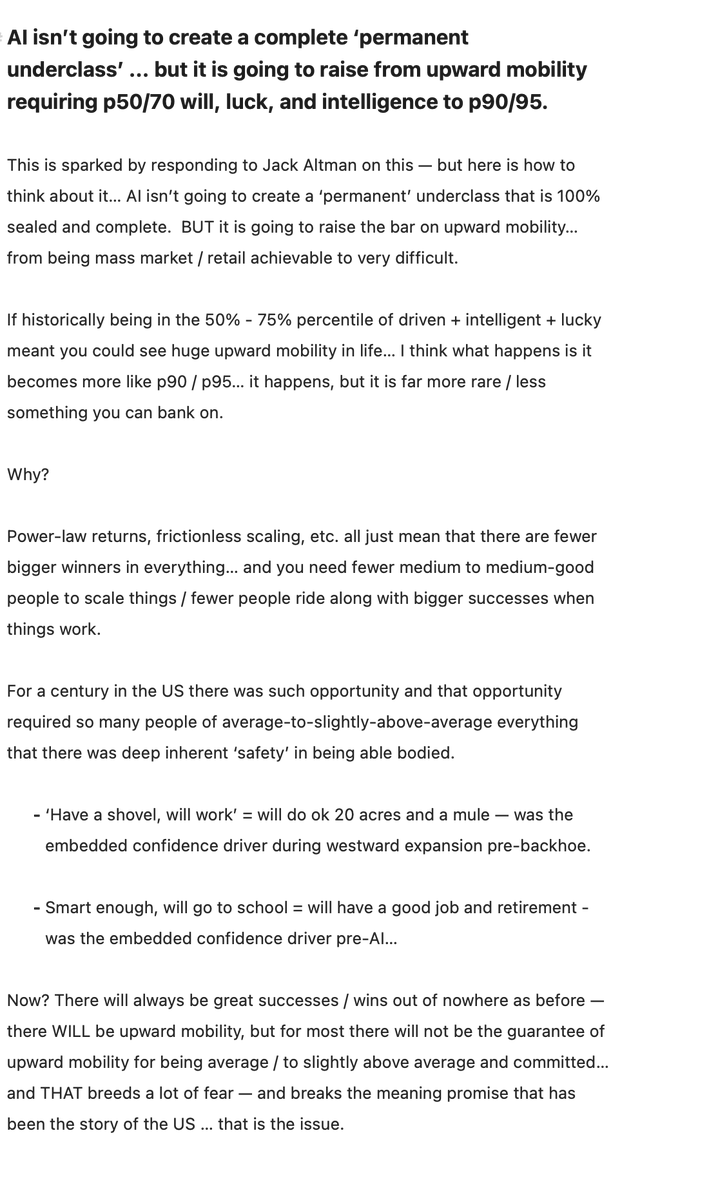
AI isn’t going to create a complete ‘permanent underclass’ ... but it is going to raise from upward mobility requiring p50/70 will, luck, and intelligence to p90/95.
English
@digitalpeyote @ItzSuds "Sell the vision but don’t create a fantasy world"
tautology?
English


Wrong! Startups aren’t fake or real, they’re call options.
Early investors pay for a small probability of a massive outcome: 90% chance it dies, 0.1% chance it’s a $100B company
Wall Street optimizes for stability, VCs optimize for nonlinear upside. Completely different games.
English
@Chickenhearts69 embryo selection and germline engineering will really blow your mind. not saying these things are inherently morally good (they can be used for evil), but there is something more to the human experience than mere genes, as genes can be modified.
English

Physiognomy is some of the realest shit there is. Most of the time you can tell almost immediately what kind of character a person has, and it’s surprisingly hard to hide. A guy can grow his hair long, grow a beard, cover himself in tattoos all the little hippie signifiers but you still see it: he’s from some provincial town and he never really escaped it. It shows in the face, in the expressions, in the way the features sit together.
The same goes for people who are inwardly poor, or who grew up poor and later made a lot of money. They might have the status now, the clothes, the lifestyle but something in the face still gives it away. In the end, people rarely escape their genetics or their upbringing
English