
ElowitzLab
425 posts
ElowitzLab
@ElowitzLab
Lab of Michael Elowitz at Caltech. Synthetic biology and systems biology
Los Angeles เข้าร่วม Aralık 2013
1K กำลังติดตาม12K ผู้ติดตาม

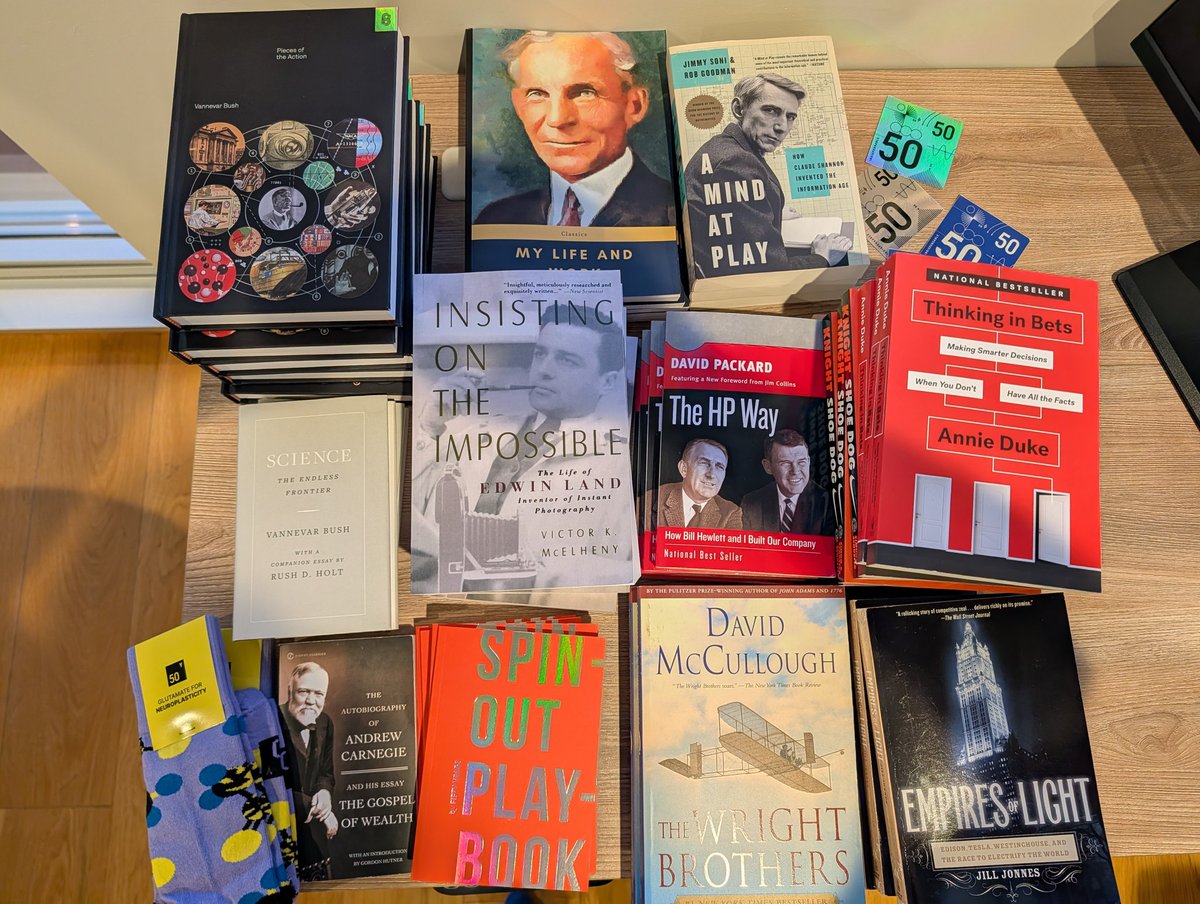
Goodies for 5050 gift boxes going out to labs. If you want one for your lab, let us know below!
English
ElowitzLab รีทวีตแล้ว

Excited to co-found @Merge Labs!
TLDR: We’re developing a new paradigm for BCI using molecules instead of electrodes. If you’re excited about this and want to contribute in protein engineering, synbio, delivery, immunology, ultrasound, devices, neuroscience, or data/ML/AI, we’d love to hear from you.
merge.io/blog
merge.io/careers
🧵
English
Amazing work!
Ronghui (Ron) Zhu@RonZhu2015
Together with Emma Dann, we are thrilled to present a massive new Perturb-seq atlas of 22M primary CD4+ T cells, from 4 donors, across 3 timepoints – the result of a decade-long collaboration between the Marson (@MarsonLab) and Pritchard (@jkpritch) labs. 🧵👇
English
ElowitzLab รีทวีตแล้ว

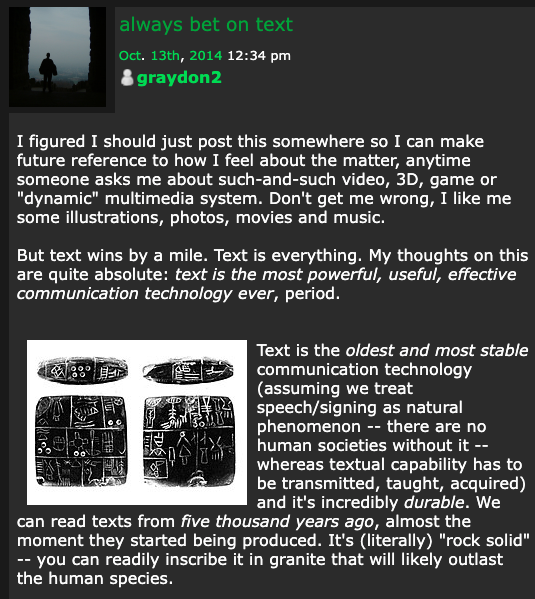
Some things I believe about writing:
> It is the best, most efficient way to transmit ideas. (Brain-to-brain BCIs may surpass it someday.) Even the best YouTube videos or podcasts usually only convey a fraction of the ideas contained in an excellent essay.
> It is faster to write than to make a video or record a podcast. Therefore, you should usually default to writing when exploring an idea. (And videos and podcasts usually involve a fair amount of writing anyway.)
> Using AI to write for you (not research, or explaining a paper to you, but actually **writing**) will make you dumb.
> Writing is a form of telepathy across space and time. Here's a passage from Stephen King that I love, about a table on which there is "a cage the size of a small fish aquarium. In the cage is a white rabbit with a pink nose and pink-rimmed eyes. In its front paws is a carrot-stub upon which it is contendedly munching. On its back, clearly marked in blue ink, is the numeral 8....
Do we see the same thing? We'd have to get together and compare notes to make absolutely sure, but I think we do." (King wrote this in 1999, and his thought of this rabbit, and what it looks like, shall remain firmly established for all time. Similarly, I can still read Pliny today and know exactly what he was thinking 2,000 years ago.)
> It is the best way to make sure you, yourself, understand something.
> If you can write something using simpler words, without distorting your meaning, then you should do so.
> Adverbs are almost always your enemy; akin to a gentle lullaby that will strangle you into the passive tense. (And readers do not enjoy the passive tense.)
This list will expand over time. Brief bibliography:
- The Elements of Style by Strunk and White is the only book on writing worth reading. But Stephen King's "On Writing" is also nice.
- "Always Bet on Text" by graydon2: graydon2.dreamwidth.org/193447.html
English
This experiment came to life when I realized the negative control (two genes, same regulation) was intrinsically more interesting—and easier!—than the "real" experiment I had been planning... Thanks
@NikoMcCarty!
Niko McCarty.@NikoMcCarty
Take two cells and place them side by side. Both cells have the same genome. And yet, oddly enough, they behave in different ways. They divide at different times and their RNA levels are distinct. Now let’s go one step further. Take those same two cells. But this time, imagine that they have not only the same genome, but completely identical molecules at identical concentrations. Will these two cells behave in the same way? The answer is no. This is because there are two types of "noise" inside of living cells; intrinsic and extrinsic. In the first example, the two cells act differently because of subtle differences in their gene levels. Not all genes are expressed at the same time or in the same amount, and this leads to slight differences. This is extrinsic noise, because it is “global to a single cell” but varies “from one cell to another.” In the second example, which is so statistically unlikely as to be basically impossible, the two cells would still have different gene expression patterns “because of the random microscopic events that govern which reactions occur and in what order.” This is intrinsic noise or stochasticity; it is an inalienable part of biology. I’m pulling these quotes from one of my all-time favorite papers, called “Stochastic Gene Expression in a Single Cell.” The first author is @ElowitzLab (of synthetic biology fame) and it was published in August 2022. It’s worth reading. For this paper, Elowitz & co. designed a simple experiment to separate intrinsic and extrinsic noise in a cell. Their goal was measure each source of noise to figure out which one dominates in different scenarios, like exposure to IPTG or the addition of a plasmid. So here’s what they did: First, they took E. coli cells and inserted two genes into the genome; one encoding a fluorescent cyan protein, and another encoding a fluorescent yellow protein. Each gene had the same promoter, and was placed equidistant from the genome’s origin of replication (but on opposite sides.) Next, they grew these cells in LB broth and photographed them using a microscope with color filters. The brightness of each color, in each cell, was quantified. If the variability between different E. coli cells stems from shared cellular conditions (like ribosome levels or extrinsic noise), then both colors in a single cell would fluctuate together. If the variability instead arises from random molecular events (intrinsic noise), then even within the same cell, the cyan and yellow levels would differ. If you plot these changes out on a scatterplot, then you can literally decode which “signals” or “triggers” are dominated by intrinsic or extrinsic noise, and by how much. This is a “beautiful experiment” because the experiment is so simple, yet it retrieves a huge amount of information. All they did was put two genes into an E. coli cell at symmetrical locations in the genome! And from that alone, they deconvoluted noise and its origins.
English
ElowitzLab รีทวีตแล้ว

⏰Tick-tock!⏰
Abstract deadline for SynBio for Future Health
Jan 17th #synbio
Heads up to
@MoKhalilLab @RosserLab @barbara_synbio @LeonardoMorsut @rjerala @XueSherryGao @SynBioGaoLab @ElowitzLab @genegirl007 @BintuLacra @TheLeonardLab @Geneticdesigner @kunjapur @ProfTomEllis
Wellcome Connecting Science Learning and Training@eventsWCS
Our #SynBioFH23 team have brought together an exciting programme to showcase how #bioscience technologies are impacting global healthcare approaches. #GlobalHealth Submit an abstract by 17 Jan 2023 for an opportunity to share your work.📅 Full details➡️bit.ly/3Dj2HHp
English
This work had wonderful contributions from Jordan Lay, James Linton, @ChadlyDuncan, @Y0shiki_2019, Ron Hadas, @AndrewPerez9201, Mario Blanco, @PaolaLaurino, @mitchguttman
English
“What’s past is prologue” — excited about chromatin recording by synthetically engineering recruitment of adenine methyltransferases in living cells. Will enable one to correlate past states with subsequent fate decisions. New work from the virtuosic @yodai_takei See thread.
Yodai Takei@yodai_takei
I'm excited to share our new preprint on LagTag, a method that recovers both past and present chromatin states from the same mammalian cells. biorxiv.org/content/10.110…
English
ElowitzLab รีทวีตแล้ว

In 2000, a physicist named Michael Elowitz published one of the first synthetic gene circuits, called the "repressilator."
By stitching three genes together, he endowed living cells with an artificial rhythm, coaxing them to flash green.
Learn how he built it, and even play around with its parameters, in our interactive article from the archives: "The Making of a Gene Circuit."
press.asimov.com/articles/gene-…
English
ElowitzLab รีทวีตแล้ว
I’ve always been interested in the stories behind BioNumbers.
Textbooks say DNA polymerase, for example, replicates 220 nucleotides per second. But how do we know this? How can one actually measure the speed of a single enzyme?
A fast typist, for comparison, types ~80 words per minute or ~5-7 characters per second. This means that DNA polymerase (in this case, from T7 phage) “types” letters 30-40 times faster than a skilled typist.
Measuring the speed of a single enzyme is not so simple. In this case, one cannot simply time how long it takes for a cell to divide, say, and then divide that time by the cell's genome length to arrive at an estimate of DNA polymerase speeds. That is because division rates are not bottlenecked by DNA division times, and bacterial cells initiate multiple rounds of DNA replication on their genomes simultaneously.
Therefore, we need another way. Ideally, there would be a “single molecule” way to observe DNA replication happening without relying upon highly indirect measurements. In 2006, a group of Harvard biochemists figured out a way to do exactly that.
Before explaining their experiment, though, it’s important to note that these biochemists took advantage of length differences between single-stranded and double-stranded DNA. Double-stranded DNA has a rigid, helical structure (which we learn about in school) and, therefore, also a consistent length of about 0.34 nanometers per base pair.
Single-stranded DNA, for comparison, is far more flexible and disordered. It doesn’t have stabilizing hydrogen bonds like double-stranded DNA does, so it tends to coil and collapse on itself. Under experimental conditions, and outside of cells, single-stranded DNA has a short length of only about 0.03 nanometers per nucleotide.
Now, here’s how this experiment worked:
First, the researchers took a long, single-stranded thread of DNA and stretched it between a glass surface and a tiny bead, floating in liquid.
Next, they added a short piece of DNA, called a primer, which latched onto the DNA near the glass surface. This gave the enzyme a starting point to begin copying DNA.
Then, they added the T7 DNA polymerase to the liquid. As the enzyme added new nucleotides, it turned the single-stranded DNA into stiff, double-stranded DNA. The DNA began to uncoil and stretch out. And since one end was fixed to the glass and the other to the bead, the bead slowly moved as the DNA extended.
Finally, the researchers watched this movement using a microscope and camera. By tracking the bead’s movements, and measuring its distance further and further from the glass slide, they figured out that polymerase was copying about 220 nucleotides of DNA per second. From this experiment, the researchers could ALSO see that the DNA polymerase enzyme moves in "bursts;" it doesn't copy DNA continuously.
This is just one “Behind the BioNumbers” experiments that I really enjoy. I’ll plan to write more about these in the future if you enjoy them.


English
Congratulations @ShiyuXia and @ucberkeley!
Shiyu Xia@ShiyuXia
In January 2026, I will be joining Berkeley @UCBerkeley as an Assistant Professor in the Department of Chemical and Biomolecular Engineering, College of Chemistry @UCB_Chemistry, with exciting connections with world-class communities including the Lawrence Berkeley National Laboratory @BerkeleyLab and the California Institute for Quantitative Biosciences @QB3Berkeley. Incredibly grateful to all the mentors (especially @ElowitzLab and @WuLabHarvard), colleagues, friends, and family who made this next chapter possible. ❤️🙏 Research directions and student/postdoc opportunities coming soon. Stay tuned! 👀
English
ElowitzLab รีทวีตแล้ว
Added some tiny improvements to the flowcytometry app I made during my time in @ElowitzLab. Now it supports exporting gated events as npy and mat. So you can gate data in your favorite graphic interface, then analyze them with python or Matlab!
ym3141.github.io/EasyFlowQ/Raw%…
English
Congratulations to @ShiyuXia and all of the outstanding CASI recipients!
BWFUND@BWFUND
BWF is pleased to announce the 2025 recipients of its Career Awards at the Scientific Interface (CASI). buff.ly/WDswUnt #bwfcasi
English
This work was led by brilliant students: @andreww_lu, @lkmoeller, and Stephen Moore, and is a collaboration with @Zhu_Lab and @DJSiegwart.
If you have experience in animal cancer models and are interested in circuit therapeutics, please reach out.
English
In a mouse model of Ras-driven liver cancer, systemic treatment with the circuits (lower row) reduced tumor burden compared to untreated controls (upper row). Much more to explore.

English
Synthetic biology could enable new types of programmable therapeutics. Our new preprint introduces synthetic protein circuits that selectively trigger cell death in Ras-mutant cancer cells, with interesting advantages compared to existing approaches.
biorxiv.org/content/10.110…
English