David Hendrickson

12.7K posts

David Hendrickson banner
David Hendrickson

David Hendrickson

@TeksEdge

CEO & Founder | PhD | Startup Advisor | @Columbia | Author Generative Software Engineering https://t.co/9oqvHuTX5f | 🔔 Follow for AI & Vibe Coding Tips 👇

PNW เข้าร่วม Temmuz 2023
524 กำลังติดตาม3.8K ผู้ติดตาม
ทวีตที่ปักหมุด
David Hendrickson
David Hendrickson@TeksEdge·
Just saw this GitHub project 🛡️ OpenViking is skyrocketing 📈. This could be the best memory manager for @openclaw! 👀 ✅ OpenViking (volcengine/OpenViking) is an open-source project released by ByteDance’s cloud division, Volcengine. It's exploding in popularity and could become the standard for agentic memory. The community is already building direct plugins to integrate it with OpenClaw. Here is what I found about OpenViking as the ultimate memory manager for autonomous agents. 👇 🦞 What is OpenViking? Currently, most AI agents (like OpenClaw) use traditional RAG for memory. Traditional RAG dumps all your files, code, and memories into a massive, flat pool of vector embeddings. This is inefficient, expensive, sometimes slow, and can cause the AI to hallucinate or lose context. OpenViking replaces this. The authors call this new memory a "Context Database" that treats AI memory like a computer file system. Instead of a flat pool of data, all of an agent's memories, resources, and skills are organized into a clean, hierarchical folder structure using a custom protocol. 🚀 Why is this useful for OpenClaw? 🗂️ The Virtual File System Paradigm Instead of inefficiently searching a massive database, OpenClaw can now navigate its own memory exactly like a human navigates a Mac or PC. It can use terminal-like commands to ls (list contents), find (search), and tree (view folder structures) inside its own brain. If it needs a specific project file, it knows exactly which folder to look in (e.g., viking://resources/project-context/). 📉 Tiered Context Loading (Massive Token Savings) Stuffing massive documents into an AI's context window is expensive and slows the agent down. OpenViking solves this with an ingenious L0/L1/L2 tiered loading system: L0 (Abstract): A tiny 100-token summary of a file[5]. L1 (Overview): A 2k-token structural overview[5]. L2 (Detail): The full, massive document[5]. The agent browses the L0 and L1 summaries first. It only "downloads" the massive L2 file into its context window if it absolutely needs it, slashing token costs and API bills. 🎯 Directory Recursive Retrieval Traditional vector databases struggle with complex queries because they only search for keyphrases. OpenViking uses a hybrid approach. It first uses semantic search to find the correct folder. Once inside the folder, it drills down recursively into subdirectories to find the exact file. This drastically improves the AI's accuracy and eliminates "lost in the middle" context failures. 🧠 Self-Evolving and Persistent Memory When you close a normal AI chat, it forgets everything. OpenViking has a built-in memory self-iteration loop. At the end of every OpenClaw session, the system automatically analyzes the task results and updates the agent's persistent memory folders. It remembers your coding preferences, its past mistakes, and how to use specific tools for the next time you turn it on. 👁️ The End of the "Black Box" Developers hate traditional RAG because when the AI pulls the wrong file, it's impossible to know why. OpenViking makes the agent's memory completely observable. You can view the exact "Retrieval Trajectory" to see which folders the agent clicked on and why it made the decision it did, which I find the most useful feature. 🎯 The Bottom Line OpenViking is the missing piece of the puzzle for local autonomous AI. By giving OpenClaw a structured, file-based memory system that saves tokens and permanently learns from its mistakes, ByteDance has just given the 🦞 Clawdbots an enterprise-grade brain for free.
David Hendrickson tweet media
OpenViking@openvikingai

OpenViking has hit GitHub Trending 🏆 10k+ ⭐ in just 1.5 months since open-sourcing! Huge thanks to all contributors, users, and supporters. We’re building solid infra for the Context/Memory layer in the AI era. OpenViking will keep powering @OpenClaw and more Agent projects🚢🦞

English
43
90
909
142.7K
David Hendrickson
David Hendrickson@TeksEdge·
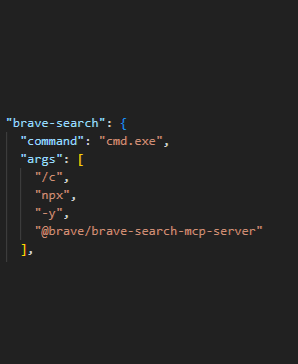
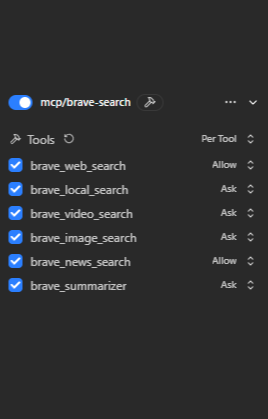
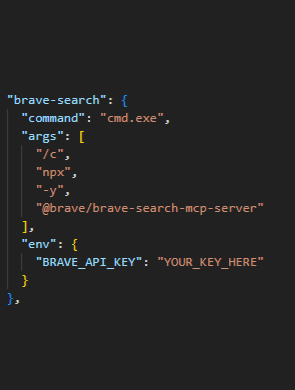
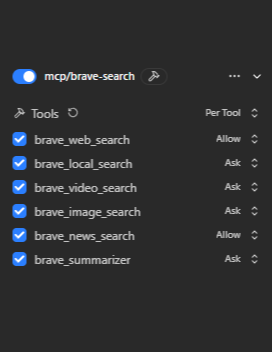
🤖 Why don't people realize you can give local AI live internet access for free? You can take an offline, quantized model (like a Qwen 9B Unsloth Q4_K_M) running locally in @lmstudio, and instantly give it the ability to: 🌐 Search the live web 🛒 Shop and compare real-time prices 📰 Retrieve breaking news The Secret: The Model Context Protocol (MCP). Just sign up for a free @brave Search account and plug their MCP server directly into LM Studio. Here is exactly how to set it up: 👀👇
David Hendrickson tweet mediaDavid Hendrickson tweet media
English
17
19
201
12.2K
David Hendrickson
David Hendrickson@TeksEdge·
Just want to echo the most important paragraph IMHO "There are now over 170 AI-discovered drug programs in clinical trials. AI is compressing early drug discovery timelines by 30 to 40%, turning what used to take three to four years of preclinical work into 12 to 18 months. No AI-discovered drug has yet received FDA approval, but the first is expected in 2026 or 2027. The pipeline is real and growing fast."
English
1
0
0
55
Anish Moonka
Anish Moonka@AnishA_Moonka·
Charlie Munger explained why AI will solve diseases faster than anything in human history. He did it two weeks before he died, at 99. In 1954, his eight-year-old son Teddy was diagnosed with leukemia. There was no treatment. The survival rate for childhood leukemia in the 1950s was close to zero. Munger was 31, freshly divorced, nearly broke. His friend Rick Guerin said Munger would go to the hospital, hold Teddy, then walk the streets of Pasadena alone, crying. Teddy died in 1955 at the age of 9. A reporter asks how he got through it. He says, "You can't bring back the dead. You can't cure the dying child. You have to soldier through. If you have to walk through the streets crying for a few hours a day, it's part of soldiering. You go ahead and cry away. But you can't quit." Then he says, "In those days, the fatality rate with childhood leukemia was 100%. That's gone away. Now the cure rate is way up in the 90s." He's right. The five-year survival rate for the most common childhood leukemia (called ALL, acute lymphoblastic leukemia) was close to zero before 1950. By the 1960s, it was under 15%. Today, it's about 90%, according to the American Cancer Society. It took 70 years of researchers running clinical trials and developing combination drug therapies to get there. That was without AI. Human researchers work on one hypothesis at a time. There are now over 170 AI-discovered drug programs in clinical trials. AI is compressing early drug discovery timelines by 30 to 40%, turning what used to take three to four years of preclinical work into 12 to 18 months. No AI-discovered drug has yet received FDA approval, but the first is expected in 2026 or 2027. The pipeline is real and growing fast. What took seven decades for leukemia, AI could compress into years for diseases we haven't cracked yet. Munger said it plainly: "What mankind did, what civilization did, was soldier through those tough years that took away my cousin Tommy from meningitis, and then took away my son Teddy from leukemia. Imagine pretty well fixing that disease for families who came into life later. It's a huge achievement." He lost his son 68 years before this interview. He watched civilization solve the thing that took his boy. He died two weeks later, at 99. AI is about to make civilization progress much faster.
English
8
90
611
106.2K
Theo - t3.gg
Theo - t3.gg@theo·
Since OpenAI dropped gpt-oss-120b, Mistral has released 4 models that are worse than gpt-pss-120b
Artificial Analysis@ArtificialAnlys

Mistral has released Mistral Small 4, an open weights model with hybrid reasoning and image input, scoring 27 on the Artificial Analysis Intelligence Index @MistralAI's Small 4 is a 119B mixture-of-experts model with 6.5B active parameters per token, supporting both reasoning and non-reasoning modes. In reasoning mode, Mistral Small 4 scores 27 on the Artificial Analysis Intelligence Index, a 12-point improvement from Small 3.2 (15) and now among the most intelligent models Mistral has released, surpassing Mistral Large 3 (23) and matching the proprietary Magistral Medium 1.2 (27). However, it lags open weights peers with similar total parameter counts such as gpt-oss-120B (high, 33), NVIDIA Nemotron 3 Super 120B A12B (Reasoning, 36), and Qwen3.5 122B A10B (Reasoning, 42). Key takeaways: ➤ Reasoning and non-reasoning modes in a single model: Mistral Small 4 supports configurable hybrid reasoning with reasoning and non-reasoning modes, rather than the separate reasoning variants Mistral has released previously with their Magistral models. In reasoning mode, the model scores 27 on the Artificial Analysis Intelligence Index. In non-reasoning mode, the model scores 19, a 4-point improvement from its predecessor Mistral Small 3.2 (15) ➤ More token efficient than peers of similar size: At ~52M output tokens, Mistral Small 4 (Reasoning) uses fewer tokens to run the Artificial Analysis Intelligence Index compared to reasoning models such as gpt-oss-120B (high, ~78M), NVIDIA Nemotron 3 Super 120B A12B (Reasoning, ~110M), and Qwen3.5 122B A10B (Reasoning, ~91M). In non-reasoning mode, the model uses ~4M output tokens ➤ Native support for image input: Mistral Small 4 is a multimodal model, accepting image input as well as text. On our multimodal evaluation, MMMU-Pro, Mistral Small 4 (Reasoning) scores 57%, ahead of Mistral Large 3 (56%) but behind Qwen3.5 122B A10B (Reasoning, 75%). Neither gpt-oss-120B nor NVIDIA Nemotron 3 Super 120B A12B support image input. All models support text output only ➤ Improvement in real-world agentic tasks: Mistral Small 4 scores an Elo of 871 on GDPval-AA, our evaluation based on OpenAI's GDPval dataset that tests models on real-world tasks across 44 occupations and 9 major industries, with models producing deliverables such as documents, spreadsheets, and diagrams in an agentic loop. This is more than double the Elo of Small 3.2 (339) and close to Mistral Large 3 (880), but behind gpt-oss-120B (high, 962), NVIDIA Nemotron 3 Super 120B A12B (Reasoning, 1021), and Qwen3.5 122B A10B (Reasoning, 1130) ➤ Lower hallucination rate than peer models of similar size: Mistral Small 4 scores -30 on AA-Omniscience, our evaluation of knowledge reliability and hallucination, where scores range from -100 to 100 (higher is better) and a negative score indicates more incorrect than correct answers. Mistral Small 4 scores ahead of gpt-oss-120B (high, -50), Qwen3.5 122B A10B (Reasoning, -40), and NVIDIA Nemotron 3 Super 120B A12B (Reasoning, -42) Key model details: ➤ Context window: 256K tokens (up from 128K on Small 3.2) ➤ Pricing: $0.15/$0.6 per 1M input/output tokens ➤ Availability: Mistral first-party API only. At native FP8 precision, Mistral Small 4's 119B parameters require ~119GB to self-host the weights (more than the 80GB of HBM3 memory on a single NVIDIA H100) ➤ Modality: Image and text input with text output only ➤ Licensing: Apache 2.0 license

English
69
12
1.2K
84.2K
Matthew Berman
Matthew Berman@MatthewBerman·
Kinda cold in my office...time to do some fine-tuning.
English
14
0
37
3K
David Hendrickson
David Hendrickson@TeksEdge·
@chrysb @openclaw Of course, it's more than the early internet. It would be like full Linux AND an ecosystem of games, capabilities, tools, and software showing up on early DOS machines while IBM, Microsoft, and Silicon Graphics try to figure out how to add these capabilities too.
English
0
0
0
79
Chrys Bader
Chrys Bader@chrysb·
folks who are calling @openclaw pure hype are telling on themselves openclaw is like the early internet, it's raw, unrefined, and takes a little doing to get things to work, but when you figure it out, it's transformative. here are some real use cases that are having material impact on our $2.5M ARR business: 1. ad creative pipeline. our head of growth @ArjunShukl95550 built an end-to-end creative pipeline to go from ideation to publish adds to meta, greatly increasing our creative iteration speed. it's producing winning creatives. it lives in slack, and anyone on the team can share their ideas and have them enter the pipeline. 2. data analytics agent. another bot lives in our slack that connects to bigquery and lets our team ask any questions of the data, it produces charts and answers questions in real time. no one needs to write SQL anymore. 3. recruiting. i told my agent about a role we're hiring for, and it scoured linkedin and the web, found 30 candidates, portfolio, email addresses, and stack ranked them based on fit with our criteria this is just in the past week. i have twenty more success stories for you i can share another time. you have to understand, this is the shittiest it will ever be. everyone is going to have one or more personal self-improving agents that they use every day, and openclaw is what revealed this future to us. if you can't see this, i encourage you to look harder there will be many competitors (and already are), and the large labs will start to converge on this (they already are) too. openclaw may not win, but it opened pandora's box and uncorked the agentic future.
English
55
61
679
392.9K
David Hendrickson
David Hendrickson@TeksEdge·
🎬 Marveling at the state of AI video today! We've officially reached cinematic quality, and it is staggering. 🍿 Here are 4 🧠-blowing, 💯 AI-gen clips showing where the tech is: 1️⃣ @freepik 1x1 2️⃣ @itsPolloAI 1x2 3️⃣ @Hailuo_AI 2x1 4️⃣ @LumaLabsAI 2x2 See for yourself 👀👇
English
0
2
1
84
David Hendrickson
David Hendrickson@TeksEdge·
❓ Been using @lmstudio to test new small models on my Strix Halo PC. It's perfect for local inference + 🛠️ tool use (via MCP). Edit mcp.json, add tools, and have a free ChatGPT alternative with web search, code exec, etc. Running Qwen3.5 or Gemma4 (?) locally + tools = Win 🤖
David Hendrickson tweet mediaDavid Hendrickson tweet media
David Hendrickson@TeksEdge

🤖 Why don't people realize you can give local AI live internet access for free? You can take an offline, quantized model (like a Qwen 9B Unsloth Q4_K_M) running locally in @lmstudio, and instantly give it the ability to: 🌐 Search the live web 🛒 Shop and compare real-time prices 📰 Retrieve breaking news The Secret: The Model Context Protocol (MCP). Just sign up for a free @brave Search account and plug their MCP server directly into LM Studio. Here is exactly how to set it up: 👀👇

English
1
0
12
1K
David Hendrickson
David Hendrickson@TeksEdge·
🦞 I’ve installed OpenViking and noticed a slight drop in token usage over my previous memory system and performance has improved a little. Every bit helps. 🦾 I think I’ll be sticking with it.
David Hendrickson@TeksEdge

Just saw this GitHub project 🛡️ OpenViking is skyrocketing 📈. This could be the best memory manager for @openclaw! 👀 ✅ OpenViking (volcengine/OpenViking) is an open-source project released by ByteDance’s cloud division, Volcengine. It's exploding in popularity and could become the standard for agentic memory. The community is already building direct plugins to integrate it with OpenClaw. Here is what I found about OpenViking as the ultimate memory manager for autonomous agents. 👇 🦞 What is OpenViking? Currently, most AI agents (like OpenClaw) use traditional RAG for memory. Traditional RAG dumps all your files, code, and memories into a massive, flat pool of vector embeddings. This is inefficient, expensive, sometimes slow, and can cause the AI to hallucinate or lose context. OpenViking replaces this. The authors call this new memory a "Context Database" that treats AI memory like a computer file system. Instead of a flat pool of data, all of an agent's memories, resources, and skills are organized into a clean, hierarchical folder structure using a custom protocol. 🚀 Why is this useful for OpenClaw? 🗂️ The Virtual File System Paradigm Instead of inefficiently searching a massive database, OpenClaw can now navigate its own memory exactly like a human navigates a Mac or PC. It can use terminal-like commands to ls (list contents), find (search), and tree (view folder structures) inside its own brain. If it needs a specific project file, it knows exactly which folder to look in (e.g., viking://resources/project-context/). 📉 Tiered Context Loading (Massive Token Savings) Stuffing massive documents into an AI's context window is expensive and slows the agent down. OpenViking solves this with an ingenious L0/L1/L2 tiered loading system: L0 (Abstract): A tiny 100-token summary of a file[5]. L1 (Overview): A 2k-token structural overview[5]. L2 (Detail): The full, massive document[5]. The agent browses the L0 and L1 summaries first. It only "downloads" the massive L2 file into its context window if it absolutely needs it, slashing token costs and API bills. 🎯 Directory Recursive Retrieval Traditional vector databases struggle with complex queries because they only search for keyphrases. OpenViking uses a hybrid approach. It first uses semantic search to find the correct folder. Once inside the folder, it drills down recursively into subdirectories to find the exact file. This drastically improves the AI's accuracy and eliminates "lost in the middle" context failures. 🧠 Self-Evolving and Persistent Memory When you close a normal AI chat, it forgets everything. OpenViking has a built-in memory self-iteration loop. At the end of every OpenClaw session, the system automatically analyzes the task results and updates the agent's persistent memory folders. It remembers your coding preferences, its past mistakes, and how to use specific tools for the next time you turn it on. 👁️ The End of the "Black Box" Developers hate traditional RAG because when the AI pulls the wrong file, it's impossible to know why. OpenViking makes the agent's memory completely observable. You can view the exact "Retrieval Trajectory" to see which folders the agent clicked on and why it made the decision it did, which I find the most useful feature. 🎯 The Bottom Line OpenViking is the missing piece of the puzzle for local autonomous AI. By giving OpenClaw a structured, file-based memory system that saves tokens and permanently learns from its mistakes, ByteDance has just given the 🦞 Clawdbots an enterprise-grade brain for free.

English
1
0
1
293
Matthew Berman
Matthew Berman@MatthewBerman·
Running a fine-tune on Qwen3.5-35B-A3B using @UnslothAI It's ALIIIIIVEEE
Matthew Berman tweet media
English
28
15
238
15.9K
Alex Finn
Alex Finn@AlexFinn·
OpenClaw made Anthropic completely pivot Quite literally every single release the last month has been an answer to OpenClaw • Telegram messaging • Scheduled tasks • Remote sessions A 1 person led open project caused a 1/2 trillion $ company to completely change everything You have way more power as an individual than you think
Thariq@trq212

We just released Claude Code channels, which allows you to control your Claude Code session through select MCPs, starting with Telegram and Discord. Use this to message Claude Code directly from your phone.

English
183
80
1.1K
88.9K
Vals AI
Vals AI@ValsAI·
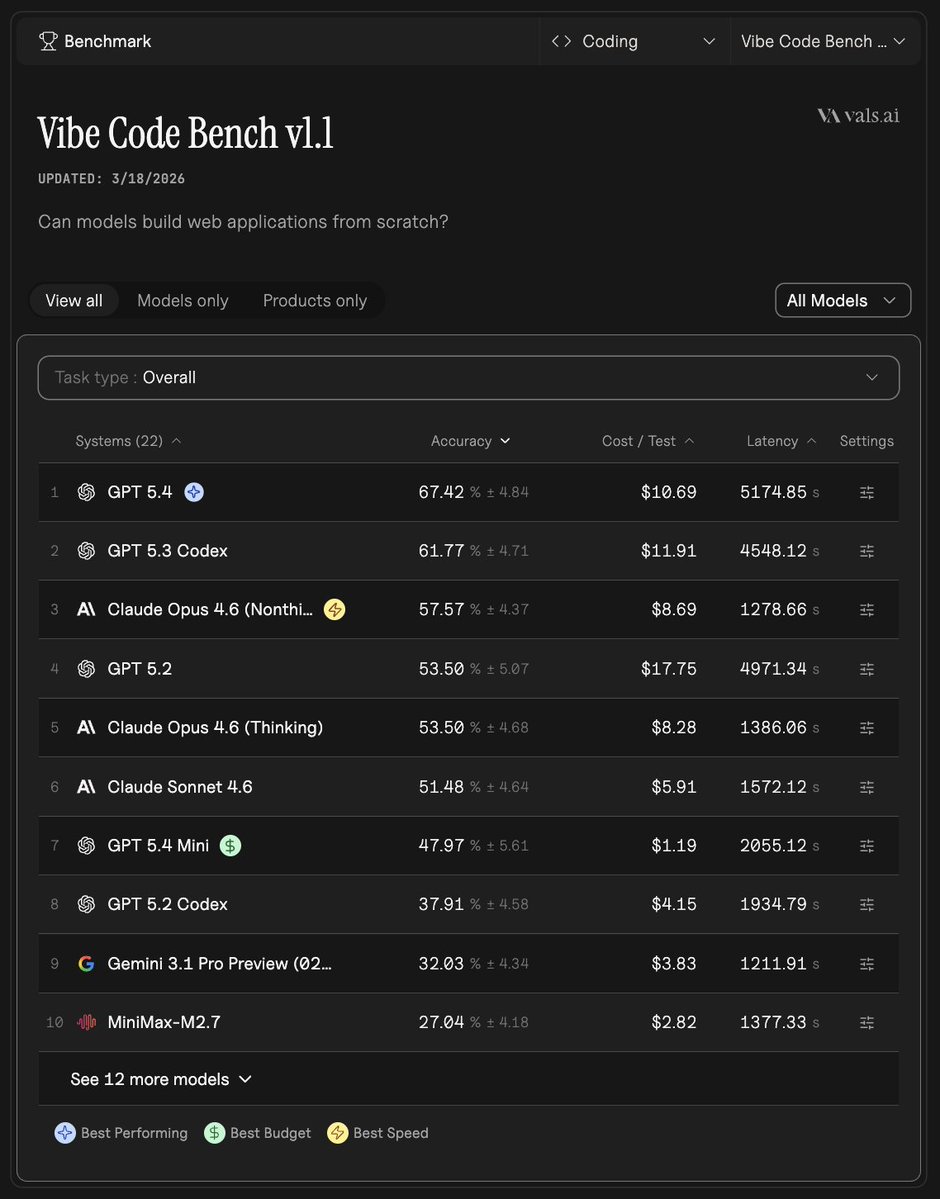
One last Minimax M2.7 result for you all - it has broken 25% on Vibe Code Bench. This is a benchmark we created in-house, testing a model's ability to write an application completely from scratch. It is the only Chinese model to do so so far.
Vals AI tweet media
Vals AI@ValsAI

Full Minimax results now available!

English
6
8
167
13.4K
David Hendrickson
David Hendrickson@TeksEdge·
📈 PinchBench is a suite of 23 standardized, real-world tasks 📋 (not synthetic trivia or math 🧮 problems) that simulate practical developer/agent workflows in an actual OpenClaw runtime environment such as scheduling, web research, coding etc. 🏆Qwen3.5 is dominating. 💪
David Hendrickson@TeksEdge

Holy 💩 check out the @openclaw 📊 daily PinchBench benchmark leaderboard! As more runs are amassed, averages go up or down. Qwen3.5 went up and is currently the leader 🎯. My Clawdbots are running very well on local Qwen3.5-27B unsloth Q4. 📊 Qwen 3.5 27B: 90.0% 📊 Qwen 3.5 397B-A17B: 89.1% 📊 Claude Sonnet 4.5: 88.2%

English
0
2
4
728
David Hendrickson
David Hendrickson@TeksEdge·
🌍 Open source AI isn’t catching up because it’s already the default engine of the egalitarian AI ecosystem. New eye opening report from @huggingface 👀. 👥 13M users 🤖 2M+ public models 🗂️ 500K+ datasets 🇨🇳 China now leads HF downloads. 🧬 Qwen spawned 113K+ derivatives. ⚡ Small models are winning on real-world adoption. 🦞 Clawdbots 🏰 The AI moat is shrinking.
David Hendrickson tweet media
English
1
0
8
816