Angehefteter Tweet

#Wargames Iran War Day 67 / Blockade Day 23. Winners and Losers (Updated) Deep Dive. May 5, 2026 PM
This is no longer kinetic shock-and-awe. It is a grinding stalemate of dual blockades, economic attrition, renewed clashes in the Gulf, and strategic endurance. The winners and losers are now in sharper relief amid fresh escalation and limited U.S. escort attempts.
Winners:
• IRGC — regime survival + nuclear reconstitution capacity
• Israel — degraded adversaries, retained initiative
• Iran’s fast-boat/swarm layers — persistent asymmetric cost imposition
• Global oil & gas producers — massive windfall profits
Losers:
• U.S. strategic objectives (including incremental bombing strategy that failed to force a negotiated settlement) and industrial base
• American consumers — paying a $40–46 billion war tax so far and counting
• Gulf states — net economic damage
• Hezbollah, Iranian civilians, and import-dependent economies
IRGC verdict: Survival equals victory. The U.S. and Israel failed their core goals — regime change and decisive nuclear elimination. The program’s human capital, institutional knowledge, procurement networks, delivery systems, and reconstitution pathways remain largely intact. @iaeaorg still cannot verify the size, composition, or location of Iran’s enriched uranium stockpile. That ambiguity preserves breakout potential and proliferation risk (@criticalthreats @TheStudyofWar). The regime absorbed strikes, adapted, and retained control.
Democratic overthrow by internal forces remains highly improbable. The regime has methodically dismantled potential opposition through successive uprisings: the 2022 Woman-Life-Freedom protests, the 2025 economic unrest, and the post-strike wave. Thousands have been killed in mass shootings and crackdowns, with 18,000–24,000+ arrested in the most recent cycle alone, many subjected to torture, enforced disappearances, forced confessions, and expedited death sentences for “moharebeh.” Key democratic organizers, student leaders, labor activists, and civil-society figures have been systematically imprisoned or eliminated, leaving opposition networks fragmented, exiled, or terrorized. Internal support for the regime—particularly among the IRGC, Basij militia, conservative rural and clerical bases, and hardliner factions—has held firm; there have been no meaningful security-force defections even amid sustained strikes. Historical memory of pre-1979 U.S. interference, combined with the regime’s narrative of external aggression, further cements loyalty among its core constituencies. Without organized, broad-based internal defection or a viable democratic alternative inside Iran, “regime change from below” is more aspiration than operational reality.
Even a power vacuum would not likely produce democratic transition or open armed conflict between state actors. The IRGC and affiliated institutions (Basij, intelligence apparatus) dominate the coercive apparatus and would almost certainly consolidate control rather than fracture into open civil war. Any vacuum would see IRGC factions or allied state actors fill the breach, preserving ideological and institutional continuity. Democratic forces lack the armed or institutional muscle to prevail.
Israel’s gains: Iran’s conventional and proxy capabilities are degraded. Hezbollah is bloodied and isolated. Jerusalem now dictates tempo on the Lebanon front with stronger leverage (@INSSIsrael @BESA_Center @Israel_Alma_org).
Fast-boat force: Despite losses, these platforms — integrated with mines, drones, shore-based missiles, jamming, and coastal defenses — continue to raise the cost of Hormuz transit and commercial shipping (@cdrsalamander @mercoglianos @US5thFleet @CIMSEC). Fresh clashes saw U.S. forces sink multiple IRGC small boats during limited escort attempts under Project Freedom. On the MANPADS front, U.S. intelligence still assesses China is preparing to deliver shoulder-fired systems (potentially 1,000+ units, possibly QW-2/QW-18 variants) within weeks, likely routed through third countries. If realized, this would materially complicate low-flying helicopter, boarding-team, and maritime patrol operations and further empower the swarm model.
Oil & gas producers: Clear beneficiaries. War-driven spikes and trading gains have delivered an estimated $25–40 billion windfall. Brent crude hit a wartime high of $126.41/bbl — the exact economic tipping point analysts had flagged as potentially catastrophic for the U.S. economy and a direct path to stagflation. Prices remain elevated and volatile in the $110–115 range despite limited successful transits. @EIAgov signals and street prices confirm sustained pressure — gasoline near $4.30–$4.45/gal, with diesel far more damaging at ~$5.50/gal nationally (@DanielYergin @JavierBlas @RystadEnergy @TrishaJCoffee).
#IranWar #Hormuz #OilPrices #GasPrices #WarTax #Wargames
American consumers bear the clearest, most immediate costs — and diesel is the sharper knife. Joint Economic Committee data (updated trackers through early May) shows households hit with roughly $20–22 billion extra on gasoline since Feb 28. Broader fuel impacts (especially diesel) now push the U.S. economy’s absorbed costs to $40–46 billion so far and counting. This is a direct war tax embedded in higher prices for food, consumer staples, housing materials, and transport. American families subsidize the campaign at the pump while leaders debate strategy. Who compensates them? @StephenM
Stagflation risk looms if these levels are sustained — and the brief breach of the $126/barrel Brent threshold brought us right to that edge. Prolonged $120+/bbl oil — with diesel as the transmission belt — would deliver simultaneous inflation and growth slowdown (@elerianm). Energy costs crush margins, raise input prices across supply chains, and erode consumer purchasing power (@IMFNews @WSJ). A modest 0.3-point headline lift from energy/supply-chain fractures and market volatility already equates to roughly $65 billion annualized loss in consumer purchasing power. Diesel’s outsized role amplifies this because it is the backbone of the real economy.
North America’s energy reality makes this especially frustrating. The U.S., Canada, and Mexico together supply ~97% of America’s total energy needs. We are effectively energy independent on a continental scale. Yet the Trump administration has offered no concrete plan to address the consumer pain or the diesel crunch (@ENERGY). Compounding the issue: Venezuelan heavy crude — the very grade U.S. refiners rely on to make diesel and avgas — continues flowing to China through the Panama Canal.
Gulf states reveal the blockade’s brutal asymmetry. Higher crude prices offer a temporary revenue spike for exporters, but the dual blockade has triggered catastrophic export-volume collapses, infrastructure damage, and non-oil sector implosions that far outweigh any windfall (@Gulf_Research @GulfStatesInst @CSIS @AtlanticCouncil). Qatar declared force majeure on LNG shipments; Kuwait and Iraq saw oil export revenues drop over 70%. Food imports (supplying ~70% of GCC needs) have been severely disrupted, driving domestic price spikes of 40–120% and triggering localized shortages. Aviation and tourism have collapsed under war-risk insurance premiums that have surged 10–40x. Smaller, shipping-dependent economies — Qatar, Kuwait, Bahrain, Oman — are hit hardest, with outright contractions or multi-percentage-point growth downgrades. Disruption costs decisively exceed price gains. Today’s Iranian attacks on the UAE add further regional risk.
#Geopolitics #MiddleEast #EnergyCrisis #Inflation #Stagflation
U.S. reload and industrial depth emerge as a critical exposed vulnerability — again. At its foundation, any serious industrial surge or sustained defense effort first requires the right human material: a deep pool of individuals with high cognitive ability (high IQ) and strong work ethic to supply the manpower for both high-volume manufacturing and critical infrastructure as well as the skilled core of the defense force itself. For the past 60 years, successive domestic policies and immigration programs have steadily eroded that foundational talent pool — diluting average cognitive standards in education and technical pipelines, shifting workforce demographics away from high-productivity cohorts, and prioritizing non-merit criteria over selection for the demanding trades and military roles that actually produce and sustain modern weapons systems.
Without that upstream human capital, everything downstream collapses. America’s problem is not simply magazine depth. It is industrial depth, and that starts upstream with skilled workers and reliable power. If you do not have enough welders, machinists, casters, forge workers, electricians, toolmakers, plus the transformers, substations, and grid capacity to support real surge production, then “industrial base mobilization” remains more slogan than operational reality. Prolonged operations expose these constraints fast. Ukraine first laid them bare; the Middle East is now confirming them in real time (@DeptofDefense @RANDCorporation). Surge production rhetoric collides with reality when forward repair, parts pipelines, and maintenance depth are tested under pressure (@WarOnTheRocks @CNASdc @HASCRepublicans @SASCDems).
Compounding this is the U.S. incremental bombing strategy — limited, phased strikes meant to pressure negotiations. Instead, it gave Iranian leadership time and space to adapt, disperse, and reconstitute, turning a potential decisive blow into prolonged attrition. Incrementalism, partly driven by U.S. manpower and inventory limits, became a clear strategic loser.
Repairing advanced “wonder weapons” in contested or austere environments is slow, extremely expensive, and reveals the limits of sustainment. Battle-damage repair teams do heroic work, but the industrial base upstream simply lacks the scale and resilience for a true high-intensity, extended conflict. This is not a procurement issue alone — it is a foundational weakness in the American industrial ecosystem that no amount of initial strikes can paper over.
Quantity has a quality all its own in man and materials.
Hezbollah weakens with a diminished patron. Iranian civilians endure the regime’s survival: continued repression layered on sanctions and economic strangulation. Import-dependent economies worldwide absorb spillover via elevated energy, insurance, and supply-chain costs. Hormuz instability is global.
Regime resilience has deep roots. Historical memory of pre-mullah U.S. interference (1953 coup, Shah era) and the Iran-Iraq War frames external pressure as existential threat rather than liberation. This sustains cohesion across segments of society beyond hardcore loyalists, making outsider-driven overthrow far more difficult than optimistic models assume.
Essential context → Civ Div on Iranian historical mentality and why regime-change assumptions repeatedly falter.
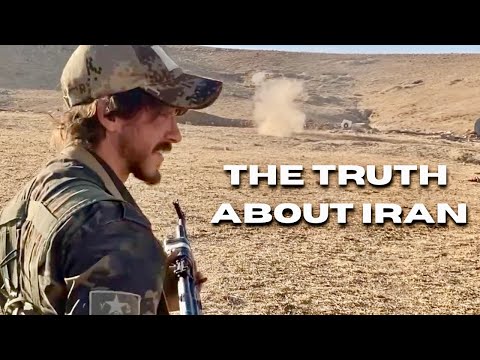
The reality is a very large portion of the Iranian people support this regime and have since the Iranian Revolution:
youtu.be/ifWv3uZYi1E?si…
#Iran #Consumer #Defense
Maintenance realities underscore the reload challenge. Advanced platforms demand sophisticated forward repair, parts pipelines, and skilled labor. Battle-damage logistics in austere or threatened environments expose industrial-base fragility that initial strikes cannot fix.
Relevant exposure → Aircraft battle-damage repair and the sustainment burden (F-35 examples included):
youtu.be/jMgh-5Dtukw?si…
Bottom line on Day 67: The ledger favors endurance players amid renewed Hormuz clashes and Iranian strikes on the UAE. IRGC and fast boats preserved core capabilities. Israel improved its position. Producers banked profits. American consumers paid dearly — especially through diesel-driven stagflation risk that briefly touched the $126/barrel tipping point. Gulf economies absorbed net disruption far beyond any oil-price sugar high. U.S. objectives remain unmet on regime and nuclear fronts, while incrementalism and industrial constraints loom larger in attrition warfare. Project Freedom escorts have enabled only limited successful transits so far and are unlikely to meaningfully restore pre-war oil supply flows or lower prices in the near term — the dual blockade and persistent Iranian threats keep shipping insurance high and volumes depressed. No decisive victory, no clean resolution, just higher costs, harder questions, and a glaring policy vacuum on energy relief despite North America’s 97% self-sufficiency.
Strategic clarity requires acknowledging these trade-offs. American families already feel them daily at the pump and in the grocery aisle. The rest of the ledger continues writing itself in real time.
#Wargames #Geopolitics #Energy #MiddleEast #Stagflation
@Bloomberg @IEA @Fab_Hinz @EricNuttall @JKempEnergy @ArmsControlWonk @sentdefender @maxabusa @Aviation_Intel @Erik_Erikprince
hormuzstraitmonitor.com
YouTube

YouTube
English