

Thomas
456 posts

Thomas
@0xThomassss
Content creator @get_optimum Contributor
Katılım Şubat 2024
240 Takip Edilen125 Takipçiler

Great products earn attention
Great infrastructure earns trust
Behind every breakthrough application is a foundation built to perform reliably, efficiently, and at scale
That's the future Optimum is building
Build with confidence. Scale without limits 👨💻
#Optimum
English


Scaling Blockchain Requires Better Networking
As blockchain adoption accelerates, the challenge is no longer only about increasing throughput.
The bigger question is how data can move across decentralized networks efficiently without compromising fairness or decentralization.
Optimum is tackling this networking bottleneck.
In a recent technical session, CEO and MIT professor Muriel Médard explained that every blockchain faces a natural propagation limit.
The constraint is not just computation or block size it is the network's ability to distribute information to validators around the world.
The Problem with Traditional Propagation
Ethereum currently relies on GossipSub, where nodes forward multiple copies of the same data through a decentralized mesh.
While this helps preserve decentralization, it also creates:
Redundant traffic
Higher bandwidth usage
Additional propagation delays
Uneven block delivery between validators
Validators located closer to block proposers often receive information earlier than validators in distant regions, creating a co-location advantage based on geography rather than participation.
How RLNC Changes the Model
Optimum uses Random Linear Network Coding (RLNC) instead of repeatedly transmitting identical copies of a block.
Validators receive encoded linear combinations of the original data and only need enough independent coded packets to reconstruct the block.
This approach can:
Reduce redundant network traffic
Improve bandwidth efficiency
Increase resilience to packet loss
Make block propagation more consistent across regions
Why It Matters
The goal is not simply to make Ethereum faster.
The goal is to reduce unnecessary networking overhead so decentralized systems can scale without amplifying geographic advantages.
Physical distance will always exist, but inefficient data distribution does not have to.
By improving how blocks propagate through the network, @get_optimum is helping build a more scalable, fair, and decentralized blockchain infrastructure.
@blockchainjeff
@aqccapital
@ada_pegasus
@cryptooflashh
@CryptoSundayz

English


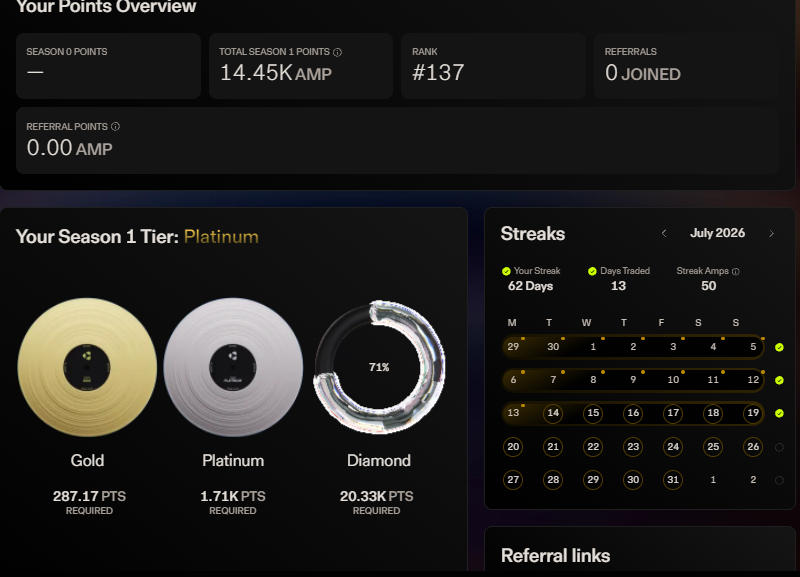
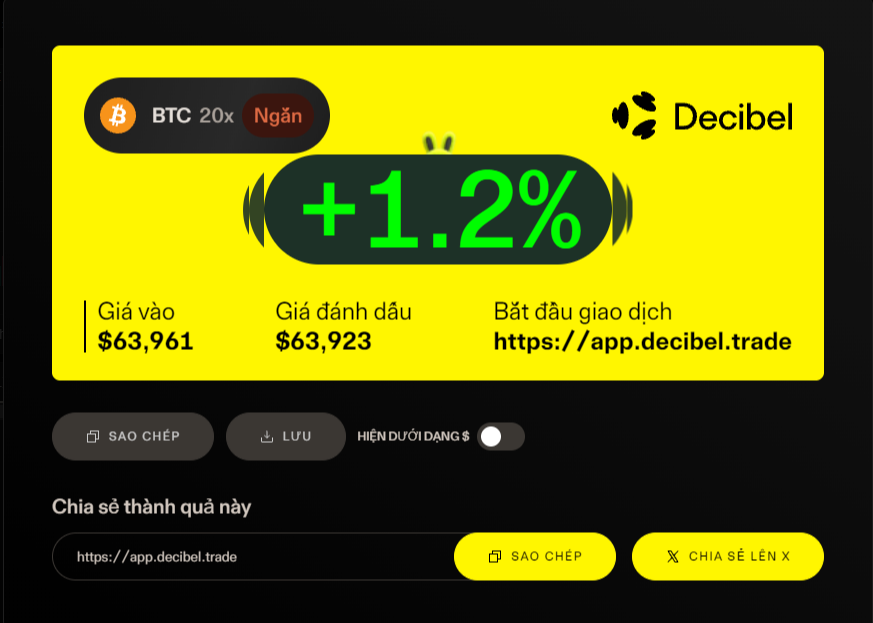
I truly believe Decibel will change my life.
From today until TGE, I'll post daily updates showing how much I've traded and how I've grown my streak. This is my journey, and I want to share every step with you.
Day 14 starts today — here's my result. 🚀
@DecibelTrade
#decibel

English

Gmum
Great Optimum
The core tension in decentralized systems has always been performance vs. decentralization. TradFi relies on heavy hardware advantages which goes entirely against the blockchain ethos.
But what if we could optimize throughput at the mathematical layer instead?
This is exactly what Optimum is doing by tackling the Delay Curve, the model where latency spikes to infinity as traffic hits capacity. Rather than forcing users to compete for a finite slice of speed, Optimum leverages Random Linear Network Coding (RLNC) to shift the entire curve.
How it works:
- RLNC encodes packets as random linear combinations.
- This eliminates the heavy retransmission overhead typical of congested or lossy networks.
- It ensures more traffic can be handled at lower latency targets.
The result? An open, participatory and highly performant network. It’s a fascinating look at how technical breakthroughs from MIT’s labs can directly build a sustainable, decentralized Latency Marketplace.
@get_optimum @cryptooflashh @aqccapital
GIF
English

Gmum!
Day 365 haha😂😂😂 of pretending I am not checking every few minutes to see if I've magically become Refined. 😂😂😂
Me: "I am just here to contribute."
Also me: refreshes the role list for the 68th time today.
No shortcuts, no complaints, just keep grinding and trust the process.
Hopefully one morning I'll wake up, open Discord, and finally see that beautiful Refined role next to my name.💙
Until then... back to the grind.
@get_optimum @aqccapital

English
🎤 Our first Utexo Vietnamese Karaoke Night was a success🇻🇳💚
A huge thank you to everyone who joined, sang, cheered each other on, and helped create such a fun and welcoming atmosphere. It wasn't just about karaoke, it was about bringing our community closer together
Seeing everyone laugh, sing, and enjoy the evening reminded us that great communities are built through genuine connections, not just conversations about crypto
This is only the beginning
📅 Utexo Vietnamese Karaoke Night will now take place every Friday at 13h30 PM (UTC)
Whether you're an amazing singer, a shower singer, or just want to hang out and meet fellow community members, you're always welcome💚
Let's continue growing the Utexo community together, one song, one conversation, and one unforgettable Friday night at a time
See you next Friday🎶🎙️💚
@utexocom @Utexoasia
@ThanhCraffey
#Utexo #Bitcoin #UtexoVietnamese

English

The Hidden Layer of Blockchain
Everyone talks about faster execution.
But before a transaction is processed, data must reach the network first.
That’s where @get_optimum stands out.
By improving data propagation with advanced networking technologies like RLNC, Optimum aims to reduce latency, strengthen network resilience, and help decentralized systems communicate more efficiently.
Sometimes, the biggest innovation isn’t processing data faster it’s moving data smarter.
@get_optimum
@aqccapital
@blockchainjeff
@ada_pegasus

Thần Quang@thanquang9999
GMUM ☕ Every great network starts with a simple connection. Behind every transaction, every validator, and every block is one thing we often overlook: communication. That’s why @get_optimum is building where it matters most making data propagation faster, smarter, and more resilient for decentralized networks. The faster information flows, the stronger the ecosystem becomes. Here’s to another day of building, learning, and pushing Web3 infrastructure forward. GMUM, Optimum fam! @get_optimum @aqccapital @blockchainjeff @ada_pegasus
English

Ethereum Needs More Than Higher TPS
When discussions about Ethereum scalability begin, the focus is usually on higher transactions per second, lower gas fees, or faster execution. While these improvements are important, they represent only part of the scalability challenge.
A blockchain cannot process information that has not yet reached its participants.
Before validators can execute transactions or reach consensus, they must first receive blocks, attestations, and other critical data. If communication across the peer-to-peer network becomes inefficient, increasing execution capacity alone cannot deliver the full benefits of scalability.
This is why networking deserves to be considered a core component of Ethereum's future.
According to Optimum's documentation, the project is building a Universal Data Acceleration Network that improves data propagation without changing Ethereum's consensus or execution layers. Through mump2p and Random Linear Network Coding (RLNC), Optimum aims to reduce redundant network traffic, improve bandwidth efficiency, and enable faster, more reliable communication between validators.
As Ethereum continues to support stablecoins, tokenized real-world assets, decentralized finance, and AI-driven applications, the volume of information moving across the network will grow significantly. Scaling this future requires more than simply processing more transactions. It also requires ensuring that information reaches every participant quickly and efficiently.
Higher TPS may increase blockchain capacity, but better networking ensures that capacity can be fully utilized. By strengthening the communication layer, Optimum is helping build an Ethereum ecosystem that is not only faster, but also more resilient, efficient, and ready for long-term growth.
@get_optimum
@blockchainjeff
@aqccapital

bidogold.data@bidogold
Why Faster Data Creates Better Decentralization For years, blockchain has been built around a familiar trade-off: improve performance, and you often sacrifice decentralization. But what if better networking could strengthen both at the same time? One of the biggest challenges in decentralized systems is that not every validator has the same network conditions. Participants located closer to major infrastructure hubs often receive blocks and attestations sooner, while those farther away face higher latency and more redundant traffic. Over time, these differences can create an uneven playing field. @get_optimum approaches this problem from the networking layer rather than the consensus layer. According to the project's documentation, its mump2p protocol uses Random Linear Network Coding (RLNC) to improve how data is propagated across peer-to-peer networks. By reducing redundant transmissions and making communication more efficient, the protocol helps information reach validators in a more consistent and reliable way. This matters because decentralization is not only about the number of nodes in a network. It is also about giving participants a fair opportunity to receive and process information, regardless of where they are located. Faster and more efficient networking can reduce the disadvantages caused by geography, improve communication under heavy network load, and help maintain a healthier decentralized ecosystem. True decentralization is not achieved by slowing everyone down equally. It is achieved by building infrastructure that allows more participants to compete on a fair and efficient network. That is the future Optimum is working toward. @blockchainjeff @aqccapital
English

Complexity Is Quietly Becoming Web3’s Biggest Scaling Challenge
Every technology ecosystem grows by adding new layers.
Blockchain has followed the same path.
As the industry matured, we introduced:
infrastructure networks
cross-chain communication
middleware services
data availability layers
coordination frameworks
Each innovation solved an important problem.
Yet every new abstraction also increased the number of moving parts.
What began as an effort to improve scalability gradually produced something else:
An ecosystem that is becoming increasingly difficult to coordinate.
1⃣ Scaling isn't just about adding more infrastructure
Technical debt is no longer confined to application code.
In Web3, it increasingly exists across the entire infrastructure stack.
Developers today don't simply build applications they assemble ecosystems.
Every project depends on numerous external components:
bridges
indexing services
RPC providers
messaging layers
security modules
orchesation frameworks
Each dependency is valuable on its own.
Collectively, they create hidden operational costs.
As systems expand:
🔹integrations multiply
🔹maintenance becomes continuous
🔹failure points increase
🔹coordination becomes harder than execution
The challenge isn't insufficient infrastructure.
It's that infrastructure is evolving faster than the ecosystem's ability to organize it.
History offers a familiar pattern.
As computing matured, industries didn't continue adding disconnected tools forever.
They introduced platforms that unified them.
Cloud computing simplified infrastructure operations.
Operating systems standardized fragmented hardware.
Internet protocols enabled independent networks to communicate seamlessly.
Progress accelerated because complexity became manageable.
Blockchain is approaching a similar inflection point.
The next leap may come not from creating another layer but from making existing layers function as a coherent system.
Projects like @get_optimum are exploring infrastructure designed around coordination rather than accumulation, reducing operational friction while improving interoperability across decentralized environments.
Because real scalability is measured by how easily systems work together not by how many components they contain.
2⃣ The future belongs to organized ecosystems
Complexity is an inevitable consequence of growth.
Disorder is not.
As Web3 expands, ecosystems face a strategic choice.
One path continues adding infrastructure until coordination becomes the dominant cost.
The other focuses on simplifying interactions, reducing dependencies, and making the entire stack easier to operate.
The strongest technology platforms have always taken the second approach.
Innovation creates new possibilities.
Coordination is what allows those possibilities to scale.
And in the next phase of Web3, the ecosystems that master complexity not merely expand it will define the future. @get_optimum
@cryptooflashh
@blockchainjeff
@aqccapital
@ada_pegasus
@shariaronchain
@CryptoSundayz

WeJin@dangtruong4421
Blockchain Doesn't Need More Connections. It Needs Better Orchestration. 1⃣ Connection is no longer the challenge In Web3's early years, simply connecting decentralized systems was considered progress. Bridges expanded reach. Cross-chain messaging unlocked new possibilities. Interoperability became the industry's primary objective. But the ecosystem has evolved. Today, most networks can exchange information. The bigger question is what happens after the connection is established. Can applications coordinate state consistently? Can infrastructure respond without introducing latency or operational overhead? Can developers build across ecosystems without maintaining countless custom integrations? Connectivity opened the door. Coordination determines what comes next. 2⃣ Complexity grows faster than adoption Every new blockchain, rollup, data layer, and execution environment adds another piece to the ecosystem. Individually, each improves performance. Collectively, they increase operational complexity. Developers are no longer building a single application. They're orchestrating distributed systems. That means managing: 🔹different execution environments 🔹multiple trust assumptions 🔹independent infrastructure providers 🔹fragmented data availability 🔹cross-network synchronization The technical challenge isn't moving assets anymore. It's ensuring every moving part behaves as one coherent system. Infrastructure is shifting from enabling communication to managing coordination. 3⃣ The next infrastructure race The next generation of blockchain infrastructure won't compete by adding another chain. It will compete by reducing the complexity created by all existing chains. Developers shouldn't have to think about where computation happens. Users shouldn't notice how many networks are involved. Applications should behave as if the ecosystem were a single programmable environment. Projects like @get_optimum are exploring this directionbuilding coordination layers that allow distributed infrastructure to function cohesively while preserving modularity. Because the future of Web3 won't be defined by how many networks exist. It will be defined by how effortlessly those networks operate together. ▶️Infrastructure succeeds when complexity disappears. The best coordination layer is the one developers never have to think about. @get_optimum @cryptooflashh @blockchainjeff @aqccapital @ada_pegasus @shariaronchain @CryptoSundayz @get_optimum
English

A new week is the perfect time to keep building, learning, and exploring the future of Bitcoin native payments.
As stablecoin adoption continues to grow, the demand for secure, private, and efficient payment infrastructure becomes more important than ever. @utexocom is helping shape that future by combining private execution, predictable fees, and Bitcoin backed settlement into a unified payment layer.
Every innovation starts with a strong foundation and Bitcoin provides exactly that.
Let's make this week another step toward a future where digital payments are faster, more private, and built on trust.
Happy Monday 🥰

English

Raw metrics are useful. Meaningful metrics are what actually matter
One thing I appreciate about @get_optimum telemetry design is that it separates operational visibility from performance evaluation.
The Gateway is responsible for collecting raw events in real time:
- Block arrival via libp2p vs mumP2P
- Publish timestamps
- Attestation forwarding & drop reasons
- Propagation latency
- Inclusion delay
- Peer connectivity and subnet distribution
- Pack size, dedup efficiency, and message counters
This level of telemetry makes debugging and monitoring much easier.
But here's the important part:
These numbers aren't treated as validator KPIs.
Instead, they are simply the building blocks that Bootstrap uses to compute stable, network-wide metrics. Raw libp2p vs mumP2P deltas are great for engineering analysis, but they don't directly represent validator performance.
That separation keeps dashboards clean, prevents misleading conclusions, and ensures contributors evaluate the network using consistent, reliable indicators rather than noisy operational data.
A small architectural decision but one that says a lot about how @get_optimum approaches observability.

Adam (❖,❖)@th787252
Another week, another memorable Optimum Vietnam Karaoke Night. 🎤 This week's karaoke night was filled with amazing performances. There were so many talented singers, and every song made the atmosphere even more lively and enjoyable. It was a great chance to catch up with the @get_optimum community, meet familiar faces, and enjoy a fun evening together. Looking forward to more unforgettable moments and even more great performances at the next karaoke night!
English

Blockchain Performance Begins With Data Propagation
A low block time means little if blocks, transactions, and blobs cannot reach validators consistently.
Traditional gossip can waste bandwidth by sending duplicate data across the network.
Optimum uses mump2p and RLNC to divide messages into coded shards that nodes can forward and recode before receiving the complete message.
For builders, this matters beyond validator infrastructure.
Faster and more predictable propagation improves inclusion, reduces hidden application latency, and makes onchain products feel more responsive.
Before measuring how much a blockchain can process, we should measure how efficiently its nodes can communicate.
@get_optimum
@blockchainjeff
@aqccapital
@ada_pegasus

English

One of the easiest ways to support a project you believe in is by staying active.
If you've been following @get_optimum, take a moment to connect with their official channels and engage with the latest content.
YouTube: @getoptimum" target="_blank" rel="nofollow noopener">youtube.com/@getoptimum
TikTok:
@get_optimum" target="_blank" rel="nofollow noopener">tiktok.com/@get_optimum
Telegram:
t.me/getoptimumxyz
Optimum is building a universal data acceleration network designed to reduce latency and improve data propagation across decentralized networks.
A follow, a like or a thoughtful comment may seem small, but together they help the community grow and bring more visibility to the project.
Let's keep supporting the builders and growing the ecosystem together. 💙

English