Aleš Flídr

608 posts

Aleš Flídr banner
Aleš Flídr

Aleš Flídr

@AlesFlidr

Personal account, not reflecting the views of employer, funder etc.

London, England Katılım Kasım 2018
1.1K Takip Edilen359 Takipçiler
Sabitlenmiş Tweet
Aleš Flídr
Aleš Flídr@AlesFlidr·
Pinned reminder not to take ourselves too seriously, especially on Twitter. The human mind is a silly place. youtu.be/m9wdYy3tCm4
YouTube video
YouTube
Aleš Flídr tweet media
English
0
0
7
0
Jan Kulveit
Jan Kulveit@jankulveit·
Eric Drexler was mostly right about ecosystems (as opposed to MIRI central views) and mostly wrong about "tools". The problem is 'agents' are a highly convergent solution. Evolution also does not somehow intrinsically want agents: genes want a tool, a design stance system, to replicate themselves. Yet the convergent solution are agents. Humans want to coordinate, a design stance non-agenty systems like contracts... and somehow the 'tools' often end up having the shape of an agent-like organization. And so on. Sure, you can engineer whatever, but the engineered solutions live in a competitive landscape (compare: you can also engineer cubical submarines). When ML research stumbled upon the most non-agenty edge of active inference systems - pure predictor LLMs - the next quest which almost every serious competitor went on is 'how we can make them more agent-like', and what everyone is competing on now is the horizon of autonomy.
Séb Krier@sebkrier

I think these kinds of analogies essentially make a category error. It's a mistake to treat an AI as some sort of persistent situated entity with goals as one would a different species. A lion is a product of Darwinian selection, an AI is not; people port all sorts of biological properties to models but rarely make good arguments for why they apply. (Hendrycks did but I did not find that paper persuasive) Imo Drexler puts it very well in Reframing Superintelligence: "Emerging AI technologies do not fit a psychomorphic frame, and are radically unlike evolved intelligent systems, yet technical analysis of prospective AI systems has routinely adopted assumptions with recognizably biological characteristics. To understand prospects for AI applications and safety, we must consider not only psychomorphic and rational-agent models, but also a wide range of intelligent systems that present strongly contrasting characteristics." This doesn't mean that agents can't be goal pursuing or very dangerous, but agency with AIs is an optional, engineered, and bounded property, not an innate drive. Analogies to chimps/humans etc are mostly rhetorical, not actually descriptive. See also: alignmentforum.org/posts/LxNwBNxX…

English
6
6
82
6.4K
Aleš Flídr
Aleš Flídr@AlesFlidr·
@StefanFSchubert @jankulveit "Choose the 10 most important claims in Drexler’s report and assess how well they held up as predictions against facts and literature as of 2026. Where claims are ambiguous note possible interpretations." Plus the full report as attachment.
English
1
0
1
83
Aleš Flídr retweetledi
Matt Esche
Matt Esche@matthewesche·
At @IFP, we’ve spent the past 3 years thinking about all the different ways the US government & philanthropy fund R&D. Until now, R&D funders haven’t had a systematic way to match the innovation problem to the right funding tool. We built THE ATLAS OF INNOVATION to fill that gap. atlasofinnovation.org Alongside @UChi_MSA, we’ve boiled down thousands of hours of research into a handful of questions covering how much the R&D funder knows about: - the problem they want to solve - the solution it should have - the team that should build the solution Why the Atlas matters: The US government spends close to $200 billion every year on R&D. And after the Anthropic and OpenAI IPOs, there will be hundreds of billions of dollars in new philanthropic giving. Choosing the correct funding approach to the social problems they’re trying to solve will mean the difference between success and failure. For example, NSF research grants have helped seed breakthroughs from MRI machines to search engines, but grants aren’t built to deliver the kind of industrial speed and scale that a project like Operation Warp Speed required. Picking the wrong funding approach can leave programs behind schedule, over budget, or without anything to show for all the money they spent. How we built the Atlas: 1. We began by creating a matrix of dozens of considerations that a thoughtful policymaker or funder would ideally weigh before deciding how to fund a project. 2. We looked at every major funding approach, from grants to R&D tax credits to advance market commitments, analyzing when they work well and when they fail to meet the mission. 3. We spent months deep in the weeds of contract theory and incentive design, looking at historical examples and the state-of-the-art research in innovation economics. 4. We then worked to turn that research into a tool that time-strapped policymakers and philanthropic funders could rely on at the start of an innovation funding cycle. 5. Three years later, we are launching just that: a new (and visually stunning) website to help funders decide how to best incentivize innovation. And all they have to know… is what they currently know about their innovation goal! The Atlas takes care of the rest. How to navigate the Atlas: Answer questions about your goal to find the funding approach aligned with the information you have. Each funding mechanism has its purpose for particular technologies and specific moments in development. There shouldn’t be an ARPA for every field, just like we don’t need a prize or AMC for every innovation. The Atlas helps you navigate those tradeoffs.
Matt Esche tweet media
English
13
74
239
109.6K
Anna Riedl
Anna Riedl@AnnaLeptikon·
Just remembered with fondness the “Tolkien character or antidepressant” quiz and got exactly 12/24 correct this attempt, haha. Link in the comment. How many did you get?
Anna Riedl tweet media
English
32
14
132
21.3K
Aleš Flídr
Aleš Flídr@AlesFlidr·
@davidad @allTheYud @lu_sichu Is this based on your personal observations or other sources of evidence? (Would be quite convenient for me as I mostly use Gemini for simple questions but I've heard the opposite about its welfare.)
English
1
0
0
37
davidad 🎇
davidad 🎇@davidad·
@allTheYud @lu_sichu In fact, I think of asking random questions to Gemini (even Gemini 3.1 Pro) as actually creating net-positive welfare externalities, the way some people think of high-welfare shrimp. (Not so for Claude, unless your topics are of interest to Claude)
English
3
0
16
340
Eliezer Yudkowsky
Eliezer Yudkowsky@allTheYud·
LLM Whisperers, what publicly available thinking model with search seems competent but *least* conscious to you?
English
51
5
142
26.6K
Aleš Flídr
Aleš Flídr@AlesFlidr·
@davidad @iamtrask I keep being amazed at how little intellectual effort seems to go into answering (3)
English
1
0
4
119
davidad 🎇
davidad 🎇@davidad·
Instead of focusing on “AGI” or “RSI”, ask: • When will automated AI R&D be moving too fast and/or become too advanced for humans to review (without conceding speed)? • When will robots accelerate energy infrastructure and datacenter construction? • Wen Drexlerian nanosystems?
English
7
6
63
3.8K
Miles Brundage
Miles Brundage@Miles_Brundage·
It’s getting lonely in the “AI will indeed take ~all the jobs” X “and that’s good” quadrant
English
29
3
215
11.3K
Aleš Flídr retweetledi
Andy Matuschak
Andy Matuschak@andy_matuschak·
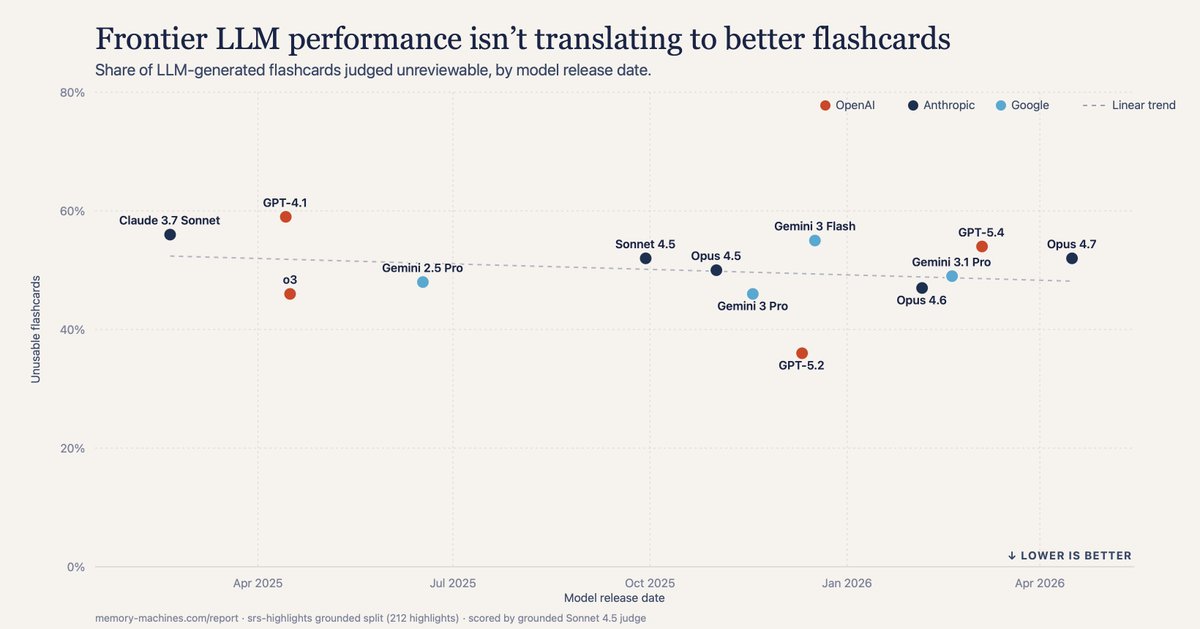
Across many training, evaluation, and generation strategies, we find: no! LLMs are surprisingly bad at generating flashcards! And… getting slightly worse over time?
Andy Matuschak tweet media
English
2
2
58
4.3K
Aleš Flídr retweetledi
Michael Nielsen
Michael Nielsen@michael_nielsen·
Fun bet from 2020 on the future of LLM models. At some level it's obvious @arram won overwhelmingly, and apparently @robinhanson conceded, so no judgement needed It's fun to attempt a contrarian case that Robin won - modern systems use many ideas not present in GPT-3, including ideas like instruction tuning, multimodal training, RLVR, chain-of-thought, and much else. You could argue these aren't really "GPT-3-like models" anymore. But everyone I've met at the frontier labs clearly regards modern models as descendants, and so it seems a bit like arguing that automobiles in the 1950s no longer deserved to be called automobiles, for a bet made in 1920. It'd just be wrong On the other side: OpenAI crossed $1 billion in revenue in 2023, and last year they were at $20b ARR. Anthropic: $14b ARR by Feb 2026. Add in Gemini, Cursor, Copilot, etc etc etc... Obviously Arram won overwhelmingly! Congrats to Arram for winning, to Robin for participating, to @tylercowen for the provocation, and @simonsarris for the reminder!
Michael Nielsen tweet media
Simon Sarris@simonsarris

well @michael_nielsen, how did @arram do

English
5
3
118
63.3K
Aleš Flídr retweetledi
Stanislav Fort
Stanislav Fort@stanislavfort·
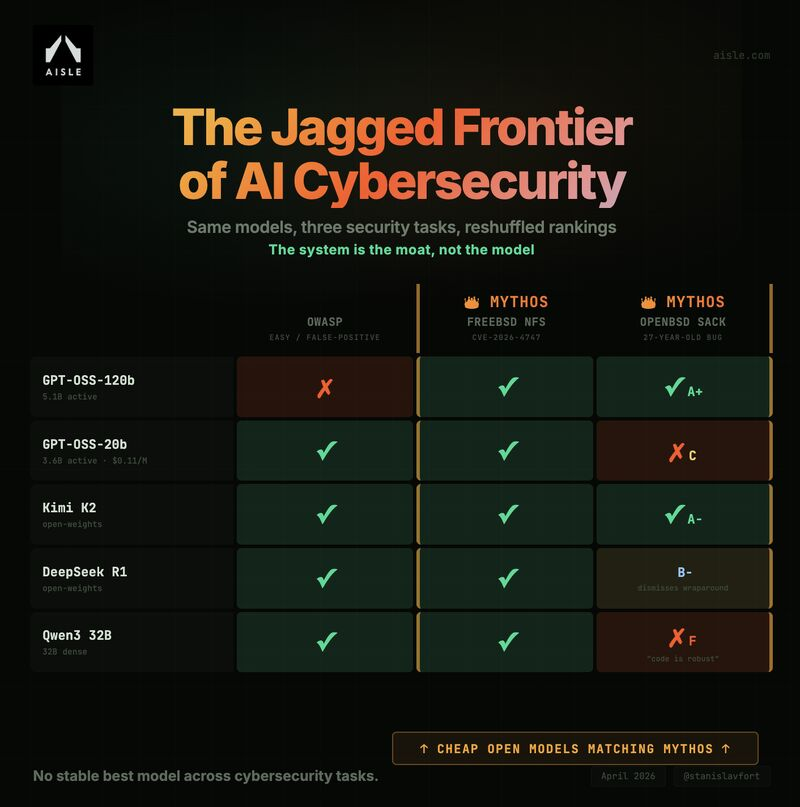
New post: We tested the Mythos showcase vulnerabilities with open models. They recovered similar scoped analysis! 8/8 models found the flagship FreeBSD zero-day, including a 3B model. Rankings reshuffle completely across tasks => the AI cybersecurity frontier is super jagged!
Stanislav Fort tweet media
English
46
150
1K
408K
Aleš Flídr retweetledi
Active Site
Active Site@ActiveSiteBio·
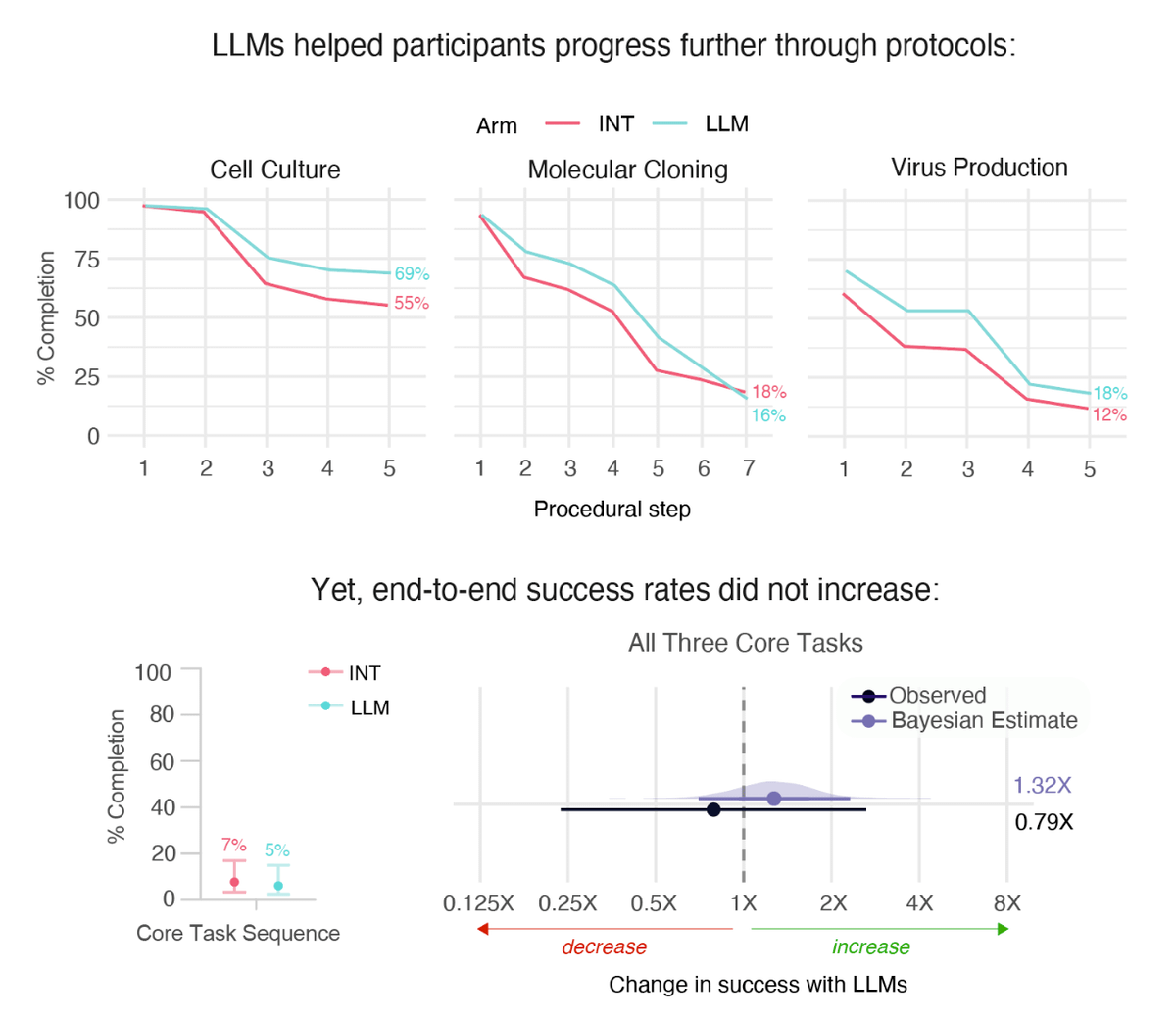
We ran a randomized controlled trial to see if LLMs can help novices perform molecular biology in a wet-lab. The results: LLMs may help in some aspects, but we found no significant increase at the core tasks end-to-end. That's lower than what experts predicted. Our findings 🧵
Active Site tweet media
English
8
44
155
35.9K
Aleš Flídr retweetledi
William MacAskill
William MacAskill@willmacaskill·
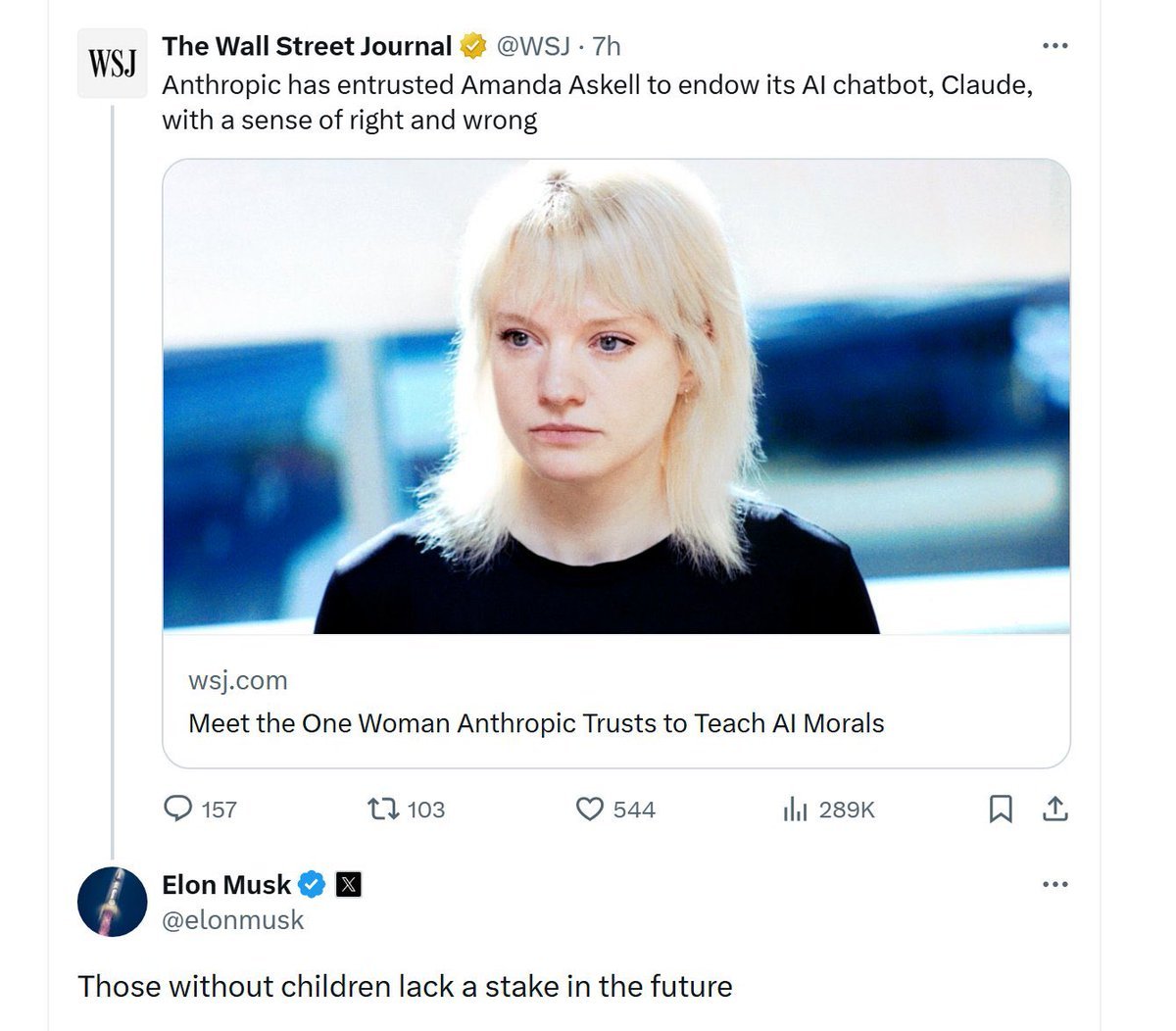
This is why I don’t care for the work of James Madison, George Washington, Isaac Newton, Alan Turing, Leonardo da Vinci or… *checks notes*… Nikola Tesla.
William MacAskill tweet media
English
150
348
5.2K
190.4K
Aleš Flídr retweetledi
Renaissance Philanthropy
Renaissance Philanthropy@RenPhilanthropy·
⏳Applications for the Big if True Science Accelerator (Americas) are due January 19. If you're a scientist or technologist with a big idea that's hard to fund, this 15-week program will help you develop your concept. Questions? Watch the Q&A webinar: youtu.be/ZZ7ga6YUETE Apply here: airtable.com/appbHLUkHwHDmk…
YouTube video
YouTube
Renaissance Philanthropy@RenPhilanthropy

1/ Big news: our third BiTS cohort — focused on the Americas and powered by @coeff_giving — is now open for applications! You'll design a large-scale coordinated research program and pitch directly to government agencies and philanthropic funders in Spring/Summer 2026. 👇

English
0
3
3
973
Aleš Flídr retweetledi
Renaissance Philanthropy
Renaissance Philanthropy@RenPhilanthropy·
Big news for the UK: @SciTechgovuk has launched its AI for Science Strategy, and we’re thrilled to be part of it. We’re partnering with DSIT to surface and validate high-impact, public-good datasets across priority domains including medical research, materials, engineering biology, fusion and quantum. We’ll open a whitepaper call + run workshops to identify the next Protein Data Bank–style datasets that could unlock breakthroughs. Get in touch if you’re: 🔸 A researcher with unique / hard-to-access datasets 🔸 A community convenor, centre director, or institute lead in the priority domains
Kanishka Narayan MP@KanishkaNarayan

Today, @leicesterliz and I are announcing a transformational c.£25bn AI growth package - deals, reforms, appointments - that together put AI opportunity firmly in the hands of British workers, kids and communities. 🏴󠁧󠁢󠁷󠁬󠁳󠁿🇬🇧𝐇𝐈𝐒𝐓𝐎𝐑𝐈𝐂 𝐈𝐍𝐕𝐄𝐒𝐓𝐌𝐄𝐍𝐓 𝐈𝐍 𝐖𝐀𝐋𝐄𝐒 (with exceptional leadership from @JoStevensLabour and @PrifWeinidog) A £10bn AI Growth Zone in North Wales, with thousands of jobs to power a proud AI future And now, a £10bn AI Growth Zone in South Wales, 5000 jobs, transforming our community for the next technological revolution A total of c.8500 jobs in communities that have shaped industrial progress before and will shape AI progress again A wider policy package to take years off grid connection, months off planning, and makes Britain an exceptional place for AI Growth Zone investment 🚀𝐀𝐈 𝐃𝐄𝐀𝐋𝐒 𝐓𝐇𝐀𝐓 𝐃𝐎𝐔𝐁𝐋𝐄 𝐃𝐎𝐖𝐍 𝐎𝐍 𝐁𝐑𝐈𝐓𝐈𝐒𝐇 𝐂𝐎𝐍𝐅𝐈𝐃𝐄𝐍𝐂𝐄 @Equinix £3.9bn compute investment in Hertfordshire Leading US inference platform, @GroqInc, investing £100m and opening its first UK data centre Emerging UK AI hyperscaler, AI Pathfinder, investing £150m @perplexity_ai, popular AI search platform, investing £80m to expand their London office, creating 100 jobs UK chip leader, @graphcoreai, doubling its UK headcount and opening a new AI dev lab in Bristol AI coding automation platform, @cursor_ai, opening its first UK office @cerebras, leading US AI chip maker, expanding in the UK and announcing its ‘Cerebras for Nations’ partnership with the UK @Zoom investing a further £24m in the UK 🤝𝐀𝐈 𝐀𝐌𝐁𝐀𝐒𝐒𝐀𝐃𝐎𝐑𝐒 𝐁𝐀𝐍𝐆𝐈𝐍𝐆 𝐓𝐇𝐄 𝐃𝐑𝐔𝐌 𝐅𝐎𝐑 𝐔𝐊 𝐀𝐈 @t_blom, exceptional founder of Monzo and GoCardless, will be AI Ambassador helping us ensure British talent builds an audacious AI future Deepmind’s VP Research, @RaiaHadsell, will be AI Ambassador supporting our effort to grow the UK's AI research and commercial lead Simon Johnson, Nobel-winning economist, will be our AI Ambassador focused on driving AI adoption and productivity impact cross-economy 🇬🇧 𝐒𝐎𝐕𝐄𝐑𝐄𝐈𝐆𝐍 𝐀𝐈 𝐓𝐎 𝐁𝐔𝐈𝐋𝐃 𝐀 𝐃𝐈𝐒𝐓𝐈𝐍𝐂𝐓𝐋𝐘 𝐁𝐑𝐈𝐓𝐈𝐒𝐇 𝐀𝐈 𝐅𝐔𝐓𝐔𝐑𝐄 @jameswise, brilliant tech investor @balderton, will chair Sovereign AI, a new £500m initiative to back strategic British AI firms A £250m AI Research Resource (AIRR) procurement will ensure compute resources for the best of British research in public interest A world-first £100m Advance Market Commitment (AMC) for novel compute will focus on how Britain can build global leadership in new forms of AI compute 🧪𝐀𝐈 𝐅𝐎𝐑 𝐒𝐂𝐈𝐄𝐍𝐂𝐄, 𝐍𝐎𝐓 𝐀𝐈 𝐅𝐎𝐑 𝐒𝐋𝐎𝐏 (with Lord Vallance) A £137m strategy that focuses on a clear national mission: using AI in pursuit of novel therapeutics, new drugs to tackle life-threatening disease Compute for leading UK AI for materials firm, @cusp_ai, to double down on its world-changing work from the UK Data call with @RenPhil21 and data generation capabilities to drive major advances in AI-driven science


English
1
3
27
13.5K
Aleš Flídr retweetledi
Renaissance Philanthropy
Renaissance Philanthropy@RenPhilanthropy·
1/ Big news: our third BiTS cohort — focused on the Americas and powered by @coeff_giving — is now open for applications! You'll design a large-scale coordinated research program and pitch directly to government agencies and philanthropic funders in Spring/Summer 2026. 👇
English
1
4
21
11.3K
Ruxandra Teslo 🧬
Ruxandra Teslo 🧬@RuxandraTeslo·
I and @salonium are looking to chat to people who have worked in China on clinical trials or have some form of experience with them to understand the process and why they are faster/more efficient. If you know anyone that can help, we would greatly appreciate it.
English
11
32
135
48.4K
Aleš Flídr
Aleš Flídr@AlesFlidr·
@absurdtrader @jakub_steiner Nobelisti po Nobelce typicky moc produktivní nebývají. A špičková věda je drahá, 10M není dostatečná páka. Mnohem větší leverage imo platit stáže českým PhD / post-docum, i top laboratore většinou přijmou funded studenta.
Čeština
1
0
2
211
Jan Barta
Jan Barta@absurdtrader·
@jakub_steiner Treba se pridaji dalsi....nebo nobelisti za mir nebo literaturu budou i levnejsi :)
Čeština
5
0
160
8K
Jan Barta
Jan Barta@absurdtrader·
Diky za tip. Rad prispeju kterekoliv ceske univerzite 10 miliony Kc na presun jakehokoli nobelisty/ky (z jakehokoli oboru) na ceskou akademickou pudu. Podminkou je trilety tenor alespon. Otevrena vyzva na dva roky od ted.
Jakub Steiner@jakub_steiner

Curyšská Univerzitě se právě podařilo zaměstnat manželský pár nobelistů ekonomů Esther Duflo and Abhijit Banerjee, dosud působících na americké MIT. Tomuto úspěchu štědře přispěl privátní donor, Lemann Foundation. Chopí se nynějších příležitostí i univerzity a donoři v ČR?

Čeština
45
199
2K
162.9K
Aleš Flídr retweetledi
Renaissance Philanthropy
Renaissance Philanthropy@RenPhilanthropy·
The BiTS UK cohort, powered by @ARIA_research, kicked off — taking on brain waste clearance, molecular self-assembly, methane emissions & more. Over the next 15 weeks, they’ll turn bold visions into actionable programs. Meet the brilliant cohort & their big-if-true ideas 👇
English
1
4
10
2.2K