
Guy
10.4K posts


#Rdc: Plus de 600 ex- mobondo ont quitté Kinshasa pour Kanyama Kasese. Hier miliciens demain ils seront bâtisseurs
Français
Guy retweetledi
GAhima BIRASANZWE, avec son béret rouge de la GR ( Garde républicaine) un redoutable FDLR-CRAP, encore actif dans le parc de VIRUNGA et qui mène des attaques organisées dans les tronçons Kibumba-Mayimoto...Rugari, n'est pas un vieillard mais un jeune formé par les Ex-far à Rusayo dans le territoire de NYIRAGONGO comme le reste de ces milliers des jeunes ex- combattants FDLR rendus à MUTOBO.
GAHIMA BIRASANZWE avec son arme PKM dotée par le gouvernement congolais, reste actif avec d'autres éléments dans le parc de VIRUNGA, et mène des opérations militaires de guérilla contre des convois civils et militaires dans la tronçon Kibumba-Mayimoto....
Revenir sur les discours : Les FDLR c'est l'or....coltan.... ou ne représentent pas une menace après avoir " signé les accords de Washington exigeant leur neutralisation", et souvent dire " ils sont dans les zones sous control du m23"... N'est ce pas la mauvaise foi @PatrickMuyaya ?
Il n'y a pas deux jours, les @FARDC_officiel ont déclaré avoir des positions dans BWITO, Rushake, VIRUMBI, KAZAROA...pourtant des positions des FDLR bien connues même par la @MONUSCO et tout expert de bonne foi sur les conflits de l'Est de la RDC.
@_AfricanUnion @AUC_MoussaFaki @EU_Commission @EUatUN @UNOSAPG @WairimuANderitu @AsstSecStateAF @JuttaUrpilainen
@SLOtoUN
@swiss_un @UNDSS @un_council
@Denmark_UN
@UKUN_NewYork @AdviserAdaDieng @MichaelKanuSL @JBorgstam
@CanadaUN @WairimuANderitu
@FranceONU @JuttaUrpilainen @HuangXia16 @SophieUKRPG @eucopresident @JosepBorrellF @StateDeptSpox @EP_President @SwissmissionEU @SecBlinken @USAmbUN @RepStephMurphy @WilliamsRuto @4thPresidentKE @jlprdeangola @RepStefanik @EmmanuelMacron @secgen @volker_turk @mbachelet @antonioguterres


Français
@MichaelTshi Tshilombo vend la RDC aux impérialistes et vous l'applaudissez? Bande de complexés. Des vrais esclaves
Français
Accablé par les menaces de sanctions, Paul Kagame défie ouvertement la communauté internationale et l’envoie, sans détour, au diable. " Go to hell".
Le bras de fer est engagé. Le temps dira si les États-Unis iront jusqu’à sanctionner le Rwanda. Kagame reconnaît toutefois qu’il est soumis à une pression si forte, une pression étouffante.
Français
@StanysBujakera @julienpalukucom effectivement c'est la derniere parce que les M23 ne quitteront plus jamais chez eux. et leurs parents refugies doivent rentrer aussi en RDC
Français
#RDC #Rwanda: « Je prends le risque de dire que, ça c’est la dernière rébellion en #RDC », dit @julienpalukucom qui s’explique 👇🏻
Français

@El_SimaYan @SugiraMireille @PaulKagame Dites a tshilombo de déclarer la guerre au Rwanda s'il est garçon !!!
Français

@SugiraMireille L'épilogue de cette mésaventure se jouera ds les jours à venir. Après que le criminel @PaulKagame ait reconnu sa paternité sur le M23, la RDC se trouve face à une évidence : une confrontation directe avec le Rwanda. Il est temps d'en finir & de rétablir la souveraineté notre pays
Français
Goma – Bukavu, une année de paix, une première depuis plus de 30 ans. 😎
Après la stabilisation, quelle est peut-être la suite ? Que pouvons-nous réclamer de plus auprès de l’AFC-M23 ?
N.B. : Je vous bloque si vous critiquez depuis Kin, la poubelle… 😉
Français

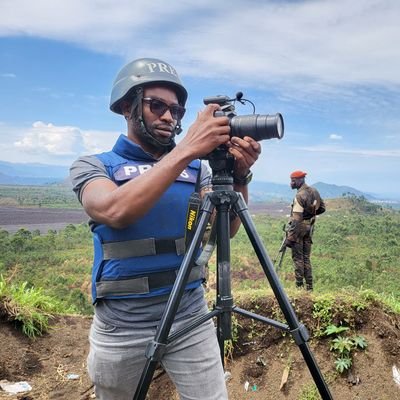
DRC 🇨🇩📍: A delegation of Congolese youth from the diaspora, The Unity 🇺🇸, is visiting eastern DRC amid the voluntary return of refugees to areas described as liberated by ARC-M23.
English
@michombero @Imforutembesa13 A la prison de makala 2000morts, a Goma 300 morts du secte wazalendo, etc. qui a tué tous ces gens ? N'est ce pas les FARDC ? Est une armée régulière? Ou une armée de clochards comme les appellent leu chef suprême l'idiot de tshilombo
Français
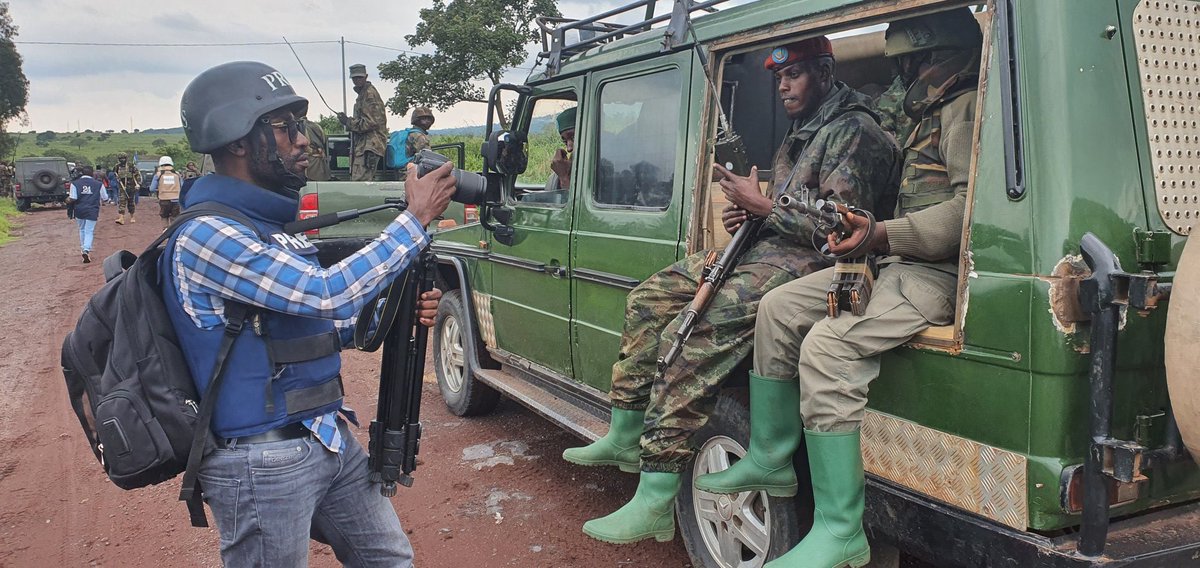
#RDC 🇨🇩: quand le M23/RDF instrumentalise les morts pour accuser l’armée congolaise
Une nouvelle opération de communication orchestrée par la rébellion du M23, soutenue par le Rwanda, se dessine dans la ville de Goma. Selon des informations concordantes issues de sources sécuritaires et locales jugées fiables, les rebelles prévoient d’organiser, des cérémonies funéraires publiques visant à imputer aux FARDC la responsabilité de la mort de civils dans les zones sous leur occupation.
Derrière l’apparence d’un hommage aux victimes, cette initiative s’inscrirait dans une stratégie de propagande soigneusement planifiée, destinée à redorer l’image du mouvement rebelle tout en discréditant l’armée congolaise sur la scène nationale et internationale.
Selon les mêmes sources, plusieurs corps de civils conservés dans différentes morgues de Goma, ainsi que d’autres victimes tuées dans des zones sous contrôle du M23/RDF, auraient été délibérément retenus par les rebelles. Dans ces territoires occupés depuis plusieurs mois, les familles auraient été interdites d’organiser des deuils ou des enterrements, les dépouilles étant maintenues en vue d’une mise en scène collective.
L’objectif serait de regrouper ces corps dans un lieu public, autour d’une cérémonie présentée comme un acte de compassion, afin de faire croire qu’ils auraient été tués par les FARDC, alors même que certaines victimes ont péri dans des zones contrôlées par les rebelles eux-mêmes.
Parmi les corps annoncés figureraient notamment les huit victimes du récent bombardement de Masisi centre, un épisode déjà instrumentalisé dans la guerre de communication qui accompagne le conflit armé.
Cette opération viserait à installer un récit bien précis : celui d’une armée congolaise présentée comme « brutale » et ciblant volontairement des civils, en particulier issus de la communauté tutsie, pendant que le M23 chercherait à apparaître comme un acteur « protecteur » et « humanitaire ».
Une lecture que contestent de nombreux observateurs indépendants, rappelant que le M23 est régulièrement accusé par les Nations unies d’exactions contre les civils, de gouvernance parallèle et de violations graves des droits humains dans les zones qu’il contrôle. Sous plusieurs sanctions, les rebelles cherchent à se faire passer pour les libérateurs profitant des mois d’occupation des territoires et villes congolaises.
Toujours selon les informations disponibles, la rébellion aurait mobilisé à l’avance des médias locaux, des réseaux sociaux, ses communicateurs attitrés ainsi que des relais médiatiques internationaux, afin d’assurer une large diffusion de cette mise en scène funéraire.
Cette synchronisation médiatique viserait à imposer rapidement un récit émotionnel, avant toute vérification indépendante, en exploitant la sensibilité autour des pertes civiles dans un contexte de conflit déjà fortement polarisé.
Pour plusieurs acteurs de la société civile et analystes sécuritaires, cette initiative pose une question fondamentale : peut-on parler d’hommage aux victimes lorsque leurs familles ont été privées du droit au deuil et à l’enterrement ?
Ils appellent ainsi à :
une vérification indépendante de l’identité des victimes et des circonstances de leur mort.
Le respect du droit humanitaire, notamment le droit des familles à enterrer leurs proches.
Une prudence accrue des médias face aux images et récits produits par des groupes armés engagés dans une guerre d’influence.
Daniel Michombero
Français
@michombero Les miettes de tshilombo vont vous faire massacrer pour rien. Des petits corrompus
Français
#Goma : les organisateurs de la marche pour exiger le retrait des troupes Rwandaises dennoncent l'arrestation de plus de 70 jeunes par le M23/RDF
" Il est 21h25 à #Goma plusieurs arrestations arbitraires ont déjà été signalées. Plus des 70 jeunes son déjà arrêtés sous prétexte d'être en contact avec les personnes appelant à la manifestation de demain. Le #M23 doit comprendre qu'avoir le numéro de quelqu'un dans son téléphone ne fait pas de lui un complice de l'organisation d'une manifestation", a déclaré Sankara Bin Kartumwa, un des organisateurs de la marche.
Français
Guy retweetledi

Français
@michombero Menteur menteur menteur menteur. felix est un truand tres dangereux et il a tout mis en place pour que le genocide des tutsis continue en RDC
Français
#RDC 🇨🇩: Félix Tshisekedi dénonce les discours discriminatoires et réaffirme l’unité nationale
Le président de la République démocratique du Congo, Félix Tshisekedi, a tenu un discours ferme contre toute forme de discrimination ethnique, en particulier à l’égard des Banyamulenge et des Tutsis congolais, qu’il a réaffirmés comme des citoyens à part entière de la RDC.
« Les Banyamulenge et, plus largement, tous les Tutsis congolais sont nos compatriotes », a déclaré le chef de l’État, rappelant que plusieurs d’entre eux ont servi et sont morts sous le drapeau national, au nom de la République. Pour Félix Tshisekedi, les discours stigmatisants à l’encontre de ces communautés constituent non seulement une injustice, mais aussi un danger pour la cohésion nationale.
Le président a mis en garde contre ce qu’il qualifie de manipulations régionales, accusant le régime rwandais d’exploiter les tensions communautaires pour justifier des ingérences militaires en RDC. Selon lui, Kigali instrumentaliserait des violences ciblées pour construire un narratif fallacieux autour d’une prétendue mise en danger des Tutsis, afin de légitimer ses actions.
« Ce genre de discours fait le lit d’un régime criminel », a insisté Félix Tshisekedi, appelant les Congolais à la vigilance face aux tentatives de division. Il a également souligné que le Rwanda mobiliserait, selon lui, différentes communautés à des fins politiques et militaires, y compris en orchestrant des violences pour servir ses intérêts.
« Tant que je serai président, aucun citoyen, aucune communauté ethnique ou tribale de ce pays ne sera discriminée. »
Concluant son propos par un appel à l’unité, Félix Tshisekedi a martelé un message central de son mandat : la cohésion nationale.
« Bomoko », a-t-il répété, soulignant que l’unité demeure, selon lui, la seule voie pour préserver la souveraineté et la stabilité de la République démocratique du Congo
Français
Guy retweetledi

DRC
The Truth They Don’t Want Told: Rwanda, Congo, and the Thirty-Year Lie of War
For three decades, the world has been told that Rwanda and the Democratic Republic of Congo (DRC) have been locked in a cycle of war. That formulation is repeated so often it is accepted as fact: “thirty years of war.” But it is a dangerous distortion. What the region has endured is not thirty years of war between equals, but thirty years of denial — denial that genocidal forces defeated in Rwanda in 1994 were allowed to survive, regroup, and thrive under international cover in Congo. Denial that United Nations peacekeepers and international experts, mandated to protect civilians and tell the truth, instead became complicit in perpetuating instability. Denial that successive Congolese governments have collaborated with these forces while Western institutions inverted reality to portray the victims as perpetrators. This is ultimately part of the Denial of the Genocide Against the Tutsi in Rwanda 1994 and the same time a support for those who committed the genocide and their western supporting powers.
This narrative inversion — turning the perpetrators of genocide into victims, and Rwanda into the aggressor — has been so persistent that it now structures international debates at the UN Security Council and the Human Rights Council. The most recent sessions in New York and Geneva showcased the same pattern: Félix Tshisekedi’s government, which has integrated genocidal militias and even contracted foreign mercenaries, was spared scrutiny, while Rwanda was once again presented as the destabilizing actor. Such distortions are not just insulting; they are dangerous. They perpetuate impunity, embolden genocidal forces, and condemn millions of Congolese to continued suffering.
1994: The Crime the World Saw but Chose Not to Stop
The truth begins in 1994, when Rwanda descended into the fastest genocide of the twentieth century. The United Nations Security Council was not blindsided. It had reports on its desk from the commander of the UN peacekeeping force in Rwanda. It knew about hate speech broadcast by extremist radio stations. It knew about militias arming and training openly. Yet when the presidential plane was shot down on April 6th and the genocide machinery was unleashed, the Council dithered. For one hundred days, more than a million Tutsi were hunted down and slaughtered while the so-called international community watched.
When the genocide was halted by the Rwandan Patriotic Front, the perpetrators were not dismantled. Instead, they were escorted into Zaire, under French military cover, and given sanctuary by Mobutu’s regime. It was a stunning betrayal: would the Allies after World War II have tolerated a Nazi army regrouping in Switzerland or Austria, rearming, and launching cross-border raids? The question answers itself. What was unthinkable in Europe was tolerated in Africa.
Thirty Years of Denial
The remnants of the genocidal regime reconstituted themselves into new armed groups, most prominently the FDLR. They launched raids into Rwanda, destabilized eastern Congo, and embedded themselves into local conflicts. Rwanda and other African states were drawn into wars to neutralize them, yet the international community consistently refused to recognize the root cause. Instead, it adopted the lazy shorthand of “thirty years of war between Rwanda and Congo,” erasing the agency of the genocidal forces and the complicity of their enablers.
The refusal to confront this truth has consequences. It allows the myth to persist that instability in eastern Congo is a Rwandan export rather than the direct result of harboring genocidal actors. It permits Congolese leaders, from Laurent Kabila to Félix Tshisekedi, to use the FDLR as a political tool, while scapegoating Rwanda whenever domestic failures come under pressure. And it encourages Western chancelleries and UN officials to absolve themselves of responsibility by blaming the most convenient target.
MONUSCO: A Mission that Multiplied Armed Groups
Since 1999, the United Nations has deployed its largest-ever peacekeeping mission, MONUC — later renamed MONUSCO — in the DRC. Its track record is damning. When the mission began, there were just four armed groups active in Congo. Today, there are more than 200. When Tshisekedi began his presidency, there were 28. This explosion of armed groups happened under MONUSCO’s watch.
Even more damning is its relationship to the very forces it was meant to neutralize. MONUSCO never dismantled the FDLR. At times, it even cooperated with them. Atrocities in Ituri province continue to unfold despite MONUSCO’s heavy presence. And yet, year after year, the Security Council mandates “UN Experts” to report on the situation. These reports, opaque in recruitment and methodology, have consistently deflected blame away from MONUSCO and the Congolese government, while shifting suspicion onto Rwanda. Far from being impartial, they have helped to construct and entrench the false narrative of Rwanda as aggressor.
Tshisekedi’s Calculated Escalation
Félix Tshisekedi has not only inherited this machinery of denial; he has actively deepened it. His government has integrated the FDLR into the Congolese army, multiplied local militias known as Mai-Mai (later rebranded as “Wazalendo” to dodge international criticism), and even hired foreign mercenaries. Romania, a NATO member, sent a contingent that was captured during the fall of Goma. The United States, through Erik Prince — founder of the notorious Blackwater — has supplied another. Neither the UN, nor the EU, nor the African Union, which formally banned mercenaries in Africa in 1977, has spoken a word of condemnation.
The hypocrisy is staggering. Rwanda is scrutinized for defensive actions aimed at protecting its borders from genocidal militias, while the Congolese government is given carte blanche to collaborate with those militias and employ Western mercenaries. This is not neutrality; it is complicity.
The Manipulation of Numbers and Memory
The distortion goes beyond politics into the realm of memory itself. The oft-repeated claim of “millions dead in Congo” is traced back to the UN’s infamous “Mapping Report” covering 1993–2003. That document was so riddled with methodological flaws that it reads less like professional research than a political pamphlet. Its purpose was transparent: to inflate numbers in ways that incriminate Rwanda, while erasing the structural causes of death in Congo — state collapse, corruption, and the harboring of armed groups.
Yes, thousands have perished in Congo — from direct violence, from displacement, from preventable disease. But to inflate these figures into the millions without context, and to assign blame selectively, is not just bad scholarship. It is a moral crime. It erases the real victims, most of all the Congolese Banyarwanda, who have been displaced and targeted for over thirty years. And it allows those responsible — Congolese politicians, UN officials, and their international enablers — to wash their hands of accountability.
Geneva, New York, and the Inversion of Truth
All of these threads converge in the present. At the UN Security Council’s latest session on the DRC, and at the Human Rights Council in Geneva, the script was repeated once more. Tshisekedi’s government organized side events and interventions designed to paint Rwanda as the aggressor, while UN officials played along. The FDLR’s role was minimized. MONUSCO’s failures were ignored. The use of mercenaries was never mentioned. Instead, the narrative inversion was complete: Rwanda, the country that stopped a genocide and has spent thirty years defending its borders from its remnants, was presented as the destabilizer.
It is a shameful spectacle. But it is also a revealing one. The international system is not neutral. It protects its own failures. It prefers denial to accountability. And in doing so, it ensures that the cycle of violence continues.
The Urgency of Truth
Thirty years on, the question is no longer whether the world failed Rwanda in 1994. That is beyond dispute. The real question is why the world has continued to fail the Great Lakes region for three decades afterward — by denying the root causes of instability, by shielding the perpetrators, and by inverting the roles of victim and aggressor.
It is time to say it plainly: this has not been thirty years of war. It has been thirty years of denial. Denial that has protected genocidal actors. Denial that has enabled Congolese governments to weaponize militias. Denial that has allowed UN peacekeepers and “experts” to preside over the multiplication of armed groups. And denial that has permitted Western chancelleries to avoid their own complicity by pointing the finger at Rwanda.
Breaking that denial is not only about Rwanda. It is about justice for the Congolese civilians trapped in cycles of violence, abandoned by their own state, and failed by the international community. It is about accountability for institutions that claim moral authority while practicing selective blindness. And it is about finally affirming that African lives, African history, and African truths cannot be endlessly distorted without consequence.
If the world truly cares about peace in the Great Lakes, it must abandon the thirty-year lie and confront the truth it has avoided for too long. Until then, every new resolution in New York and every new declaration in Geneva will be nothing more than a continuation of the denial that has condemned the region to endless suffering.
English
Guy retweetledi
#RDC, This is deeply alarming and heartbreaking. Mr President @realDonaldTrump, Mr @SecRubio, Mr @US_SrAdvisorAF, and the @USAmbDRC —
do you also endorse, even implicitly, calls for the extermination of the #Banyamulenge and Congolese Tutsi in the #DRC?
Under international law, incitement to genocide and ethnic extermination is a grave crime, and states have a duty to prevent, not to legitimize, such acts.
Receiving or honoring individuals who promote ethnic violence undermines peace, violates the spirit of genocide-prevention obligations, and fuels impunity.
Peace cannot be imposed from outside while hatred is tolerated inside.
Lasting peace and stability require national unity, accountability, and strict respect for the rule of law.
A state that ignores the foundations of justice builds only fragile peace one destined to collapse.
The United States can do better.
Congo must first address its internal challenges through an inclusive national dialogue, confront these issues honestly, and heal a broken nation from within, Otherwise, all efforts amount to nothing but a waste of time.


English
Guy retweetledi
QME
Guy retweetledi

@PatrickMuyaya Muyaya manipule l'opinion avec les termes "occupation" et "agression", lesquels sont absents des accords de Doha ou Washington. Tshilombo, par inexpérience, arrogance et manque de conseillers serieux vient de se faire humilier encore en acceptant de signer avec les "pantins".

Français
@aecb2007 @Col_Alimasi @kamba82 @judaRdc @pmgalance @SugiraMireille @AlainMake20 @BrendaMonkango @chauffeur243 @CNangaa @FannyKaj1 @michombero L’avenue mbaki et ulindi sont
Entrain d’être réhabilitée. Il faut encourager les bonnes actions
Français
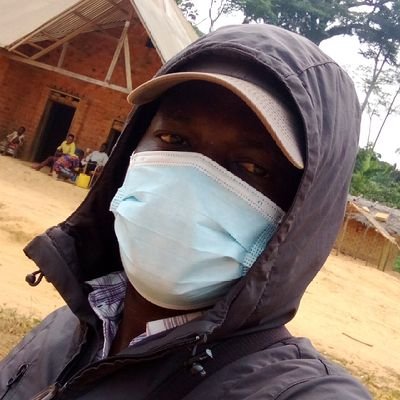
@Col_Alimasi @kamba82 @judaRdc @pmgalance @SugiraMireille @AlainMake20 @BrendaMonkango @chauffeur243 @CNangaa @FannyKaj1 @michombero Que fait le Bourgoumestre de la commune d'ibanda ? Dans la commune d'ibanda nous observons du désordre sans précédent
Français
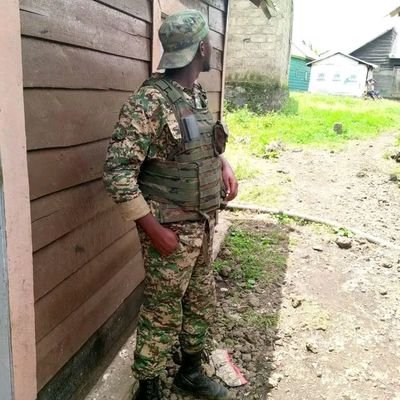
Sud-Kivu | AFC/M23: La commune de Kadutu, dans la ville de Bukavu, bénéficie d’un nouveau chantier d’envergure initié par l’AFC/M23.
Français
@OnokombaO157 @AleshOfficiel @chauffeur243 @petertiani007 @NadegeMututi @wembi_steve @StanysBujakera Vous devez d’abord vous former et comprendre les problèmes de fond de votre pays
Français
#RDC: Plus qu’un slogan, c’est notre identité.
La jeunesse extra-système se lève.
📍 Rendez-vous le 24 octobre au terrain municipal de Masina.
Match eza truqué… to boré yango.✊🏾🇨🇩
@AleshOfficiel

Français
@OnokombaO157 @onduhungirehe Petit Nathaanael, tu commences naïvement ta carrière politique par la haine de quelque chose que tu ignores. Informes toi sur les conflits chez toi
Français
@onduhungirehe À quoi le tweet de notre ministre vous dérange ?
L’organisation de notre sécurité vous intéresse en quoi ?
Même si nous décidons de traverser la mère rouge c’est nos affaires.
Le sang 🩸 congolais sera venger un jour
Français

Only in DRC can a Vice Prime Minister and Minister of Interior surreptitiously brag about the deployment of mercenaries in his country, which is against international law, namely the 1977 OAU/AU Convention and the 1989 UN Convention.
Indeed, following the humiliating defeat of Romanian mercenaries in Goma late January 2025, mercenaries who were even given safe passage through Kigali, the Government of DRC has this time hired Colombian mercenaries through "Blackwater", an American company owned by Erik Prince.
This is of course against the letter and spirit of the Washington Peace Agreement and the Doha Declaration of Principles. And I hope that Rwanda will not again be requested to facilitate the repatriation of another bunch of mercenaries...
SHABANI Lukoo J.@shabani_lukoo
🇨🇩 Black Water
English