
Crop Protection Network

5.8K posts

Crop Protection Network banner
Crop Protection Network

Crop Protection Network

@CropNetwork

Protecting crops, hopper to harvest. Extension expertise for the United States and Canada.

A field near you. Katılım Ocak 2015
462 Takip Edilen5.8K Takipçiler
Crop Protection Network retweetledi
Chad Lee 🧢
Chad Lee 🧢@KentuckyCrops·
Freezing temps will make small corn plants look terrible. The growing points are safe. These will recover. 📸 by Nick Roy
Chad Lee 🧢 tweet media
English
0
1
11
760
Crop Protection Network retweetledi
Nick Seiter
Nick Seiter@nick_seiter·
Every year, we publish results from field trials that we feel translate directly to farmer practices - insecticide and fungicide efficacy, pest surveys, and resistance bioassays. You can find the 2025 results (along with previous years) at go.illinois.edu/pestmanagement…
English
0
3
6
413
Crop Protection Network retweetledi
K-State Agronomy
K-State Agronomy@KStateAgron·
Soybeans are going into saturated soils across Kansas. Standing water can affect the survival of seedlings. Watch for root issues and uneven emergence. Read more: bit.ly/4cVir3l #kstateagronomy
K-State Agronomy tweet media
English
1
3
5
394
Crop Protection Network
Crop Protection Network@CropNetwork·
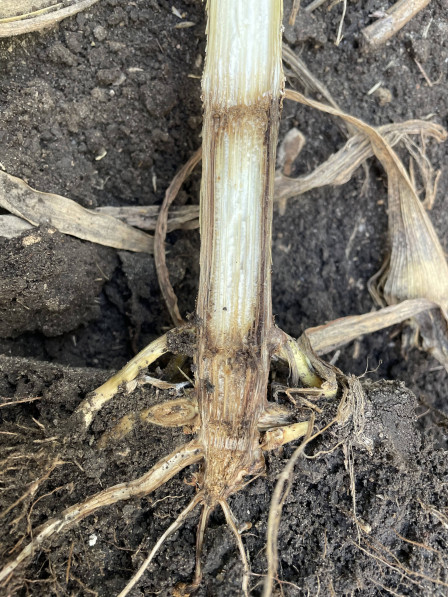
Many pathogens cause corn seed decay and seedling blight. The first symptom may be an area of the field with poor or no stand. Decayed seeds are very soft and may be covered with fuzzy fungal growth; seeds can be difficult to find if badly rotted. Postemergence damping off appears as yellowing and wilting; seedlings soon collapse leaving only dead leaves above the soil. Nodal roots may show the same decay symptoms as seminal roots and the mesocotyl. If the nodal root system escapes decay, the plant will survive; it may be stunted or recover fully. Favored by cool, wet soils, these diseases are more common in low-lying or poorly drained areas or in fields planted too early in spring. Ask local Extension for more information. @alisonrISU @cropdoc08 @alabamaED @ppp_trey @travisfaske @DTelenko @MandyBish1 @tjcksn @MPlumblee @dsmuelle @YuanZeng3 @baldpathologist @bobkemerait @badgercropdoc @MartinChilvers1 @maddishires @NationalCorn @kscorn @MississippiCorn #plant26 #corn #agx #seeds #farming
Crop Protection Network tweet mediaCrop Protection Network tweet media
English
0
10
22
1.3K
Crop Protection Network retweetledi
Nick Seiter
Nick Seiter@nick_seiter·
Growing alfalfa in Illinois? Tell us about your experiences with insect management (particularly alfalfa weevil) here: z.umn.edu/alfalfapestsur…
English
0
5
2
703
Crop Protection Network retweetledi
Shawn Conley
Shawn Conley@badgerbean·
I know a lot of soybeans have gone in the ground the past week. This is where we have been sitting at our Arlington research station. In case you have been colder here is a reminder of our article about Imbibitional Chilling in Soybean and Corn. badgercropnetwork.com/imbibitional-c…
Shawn Conley tweet media
English
1
7
16
2K
Crop Protection Network retweetledi
West Texas Integrated Pest Management
The weather is perfect for them this year.
West Texas Integrated Pest Management@WestTexasIPM

Scouting 101 Wireworms (true [Elateridae] and false [Tenebrionidae]) in cotton Description True wireworms (larvae of click beetles, Elateridae: e.g., Conoderus, Aeolus, Limonius spp.) and false wireworms (larvae of darkling beetles, Tenebrionidae: e.g., Eleodes, Blapstinus spp.) are hard-bodied, segmented, yellow-to-dark-brown larvae (~1 inch long at maturity) with three pairs of legs near the head that feed on cotton seedling roots, hypocotyls, cotyledons, and growing points, causing stand reduction, stunting, wilting, yellowing, increased disease susceptibility, severed plants, and “Christmas tree” terminal growth—most severe in reduced/no-till fields, following grain/cover crops, or in sandy/dry soils of the Texas High Plains and Rolling Plains. Preferred scouting method Place grain bait traps (whole wheat or 1:1 wheat:corn in mesh sock, soaked 24 hours, buried 6 inches deep) in fields a few weeks before planting (when soil temperature ≥50°F); retrieve after 10–14 days to count larvae; supplement with visual excavation of seedlings (planting to 4–5 leaf stage) for larvae/damage and observation of darkling beetle (Blapstinus) adults at plant bases or under debris in dry areas. Economic threshold None established; use preventive management based on field history (prior infestations, reduced tillage, preceding grain/cover crops, or bait trap detections). Economic injury level: Not defined separately (preventive tactics avoid stand-loss injury); no temperature adjustments noted (scout at soil temps ≥50°F). Recommended insecticide(s) with labeled rate(s) per acre Seed treatments (neonicotinoids; standard commercial cotton packages) imidacloprid (e.g., Acceleron Standard/Elite, Prime, CottolyST Enhanced/Premier, PhytoGen TRiO, Avicta Elite) or thiamethoxam + imidacloprid combinations at labeled rates (typically 0.3–0.5 mg ai/seed; consult specific brand for exact mg ai/seed) In-furrow at-plant (high-risk fields) aldicarb (AgLogic 15GG) 3.5–5 lb/acre imidacloprid or phorate at labeled rates Foliar (adult darkling beetles only) pyrethroids or other labeled adulticides when large numbers + clipping threaten stand (use per current Texas cotton labels) agrilife.org/texasrowcrops/…

English
0
1
2
528
Crop Protection Network retweetledi
Tommy Butts
Tommy Butts@PUweeds·
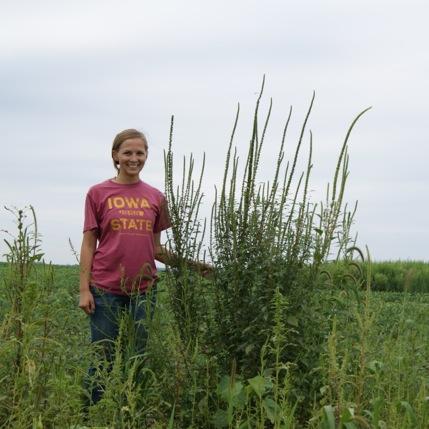
The next few weeks will present an interesting mix of IN weed problems. #Waterhemp was rampant before this cool down, now we're in prime #GiantRagweed germination temps. But as soon as it warms up again, soil temps are already high enough for WH to explode again. #PUweeds
Tommy Butts tweet mediaTommy Butts tweet mediaTommy Butts tweet media
West Lafayette, IN 🇺🇸 English
2
4
19
767
Crop Protection Network retweetledi
West Texas Integrated Pest Management
Scouting 101 Two-spotted Spider Mite (Tetranychus urticae) Description The two-spotted spider mite pierces leaf cells of cotton to suck nutritional contents, producing a white/yellowish stippling appearance followed shortly by reddened/browned leaves, square/boll bract desiccation, and premature defoliation with yield/fiber/seed loss. They are most damaging under hot/dry conditions and often start on field borders from weeds/crops after broad-spectrum sprays remove beneficials. Preferred scouting method Visual leaf inspection should focus on stippling, reddening, bronzing, or webbing; check field borders/edges first as populations are often clumped; scout before bloom for defoliation risk and post-bloom to protect boll-filling leaves. Economic threshold Treat when mite infestations cause areas of discolored (stippled/reddened/browned) leaves; spot-treat infested patches to slo,w spread; anticipate repeat applications in ~5 days if needed. Continue protection of boll-filling leaves until 650–750 DD60s beyond cutout (NAWF=5). Recommended insecticide(s) with labeled rate(s) per acre. Target when thresholds are met; provide thorough coverage with drop nozzles/high spray volume is essential; rotate modes of action; use caution with abamectin due to detected resistance in two-spotted spider mites in Louisiana. abamectin Agri-Mek (0.15EC): 8.0–16.0 oz (0.66–1.0 lb ai pre-bloom; 0.009–0.0187 lb ai in SC formulations bloom-harvest) fenpyroximate Portal (0.4EC) spiromesifen Oberon (4SC) etoxazole Zeal (72WSP). (Note: Maximize coverage; avoid pyrethroids/neonics that may flare mites; hot/dry weather favors rapid increase.)
West Texas Integrated Pest Management tweet mediaWest Texas Integrated Pest Management tweet mediaWest Texas Integrated Pest Management tweet media
English
0
2
5
462