Jim Morales, CFA

975 posts

Jim Morales, CFA banner
Jim Morales, CFA

Jim Morales, CFA

@The10XCFO

💸10X Fractional CFO/COO for DTC | DTC Finance OS Author | Past : CFO/COO-Kings Loot, CFO-Grant Cardone, COO-Alex Hormozi portco | "Culture=king, cash=result"

South Florida Katılım Eylül 2009
500 Takip Edilen233 Takipçiler
Colin Dougherty
Colin Dougherty@colindougherty·
THREE WAYS DTC BRANDS QUIETLY DIE @JonAlbertBlair has audited 50+ brands. The patterns: 1. OPEX over 10% of revenue. (Modern ecom is 10% or less. The lean ones? 6-7%.) 2. Scaling broken unit economics "scaling a problem instead of scaling profitability." 3. All the cash trapped in excess inventory. Most brands don't have a marketing problem. They have a math problem.
Jon Blair@JonAlbertBlair

What levers can your DTC brand pull to increase operating cash flow? Here's a simple cheat sheet you should memorize ⬇️ ⬇️


English
3
1
18
4.3K
oliverb
oliverb@oliverbrocato·
100k/month in ecom means ur poor. 1/ $60k Meta 2/ $25k COGS 3/ $12k team 4/ $6k refunds, apps, random bs U clear like… nothing. But congrats. U bought urself a full-time headache.
English
41
1
152
18.9K
Jim Morales, CFA
Jim Morales, CFA@The10XCFO·
My 2c OpEx = everything below COGS: Admin Software (except SMS/Email/fulfillment software if you have in house WH, i include in COGS since variable and drives sales) Labor Costs/Professional Services - no labor in COGS unless you have people involved in manufacturing (rare) General Marketing OpEx - agencies, UGC T&E You could argue UGC is variable but I'd only include if they get cut of sales vs a flat fee. In house WH vs 3PL can be a big driver of OpEx from WH rent/CAMS.
English
1
0
0
28
ron | e-comm owner & operator
@JonAlbertBlair how is OpEx defined? Is it everything after Contribution margin after marketing? I feel like sometimes people only count people when they say OpEx but don't count sass. Also do you count variable people expenses into OpEx: such as product photography, content creation for ad?
English
1
0
1
188
Grace G
Grace G@Grace_9g9·
@SullyBusiness Sometimes my clients don’t have internet on the airplane. They need to download the PDF and read it later.
English
6
0
2
8.5K
Bryant
Bryant@SullyBusiness·
Learning to ask Claude for HTML outputs instead of PDFs or excel files will change your life.
English
53
25
1.8K
278.2K
PAUL
PAUL@PaulEnu_·
@The10XCFO I was about to dm you, Jim Noticed your inbox is locked. Do you know about this?
English
1
0
0
7
Jim Morales, CFA
Jim Morales, CFA@The10XCFO·
I think COVID distorted buying habits with all the free money from PPP/0% credit sloshing around, people at home bored looking for next thing and a new generation more digital native coming of age. Also this is first era a lot of people have operated in normal biz cycle rotation without cheap money providing steroid shots to keep music going. Not surprising marketing is a tad behind the times...
English
0
0
0
23
Jim Morales, CFA
Jim Morales, CFA@The10XCFO·
@LCSlates @levelsio Recourse. It's the unspoken oil that greases the credit card economy. There's more of "them" (customers) than of "you" (merchants). They have to keep them using the product for the biz model to work so they're higher on priority stack than merchants.
English
0
0
1
41
Chris Riley
Chris Riley@LCSlates·
Well, here goes nothing. Building mine this morning thanks to a $2,333 annual chargeback. (thanks for the prompt @levelsio) Reason: Fraudulent. (10.4) Proof (18 pages, incl 1 main summary): User added 3 sites, added 4 team members, added 3 integrations, logged in 49 times in 54 days (Google Auth), generated articles and images for each site, published them through Cuppa into Wordpress, I have the IP address at login and initial checkouts (match), I have site WHOIS info, I have cryptographic info... I just have an overwhelming amount of evidence that this is bullshit* Stripe win chance: Low (1 out of 5) @stripe, why do you already take that money already? Can't you at the very minimum help owners out here - even just a little - and wait for the dispute to even clear or for me to even respond before taking this money? *There is just something very wrong that this has just become the norm. Why?
@levelsio@levelsio

🏆 For the first time in a decade on @Stripe I've started winning disputes with my vibe coded dispute responder I used to ignore disputes so I almost always lost them, now I've started winning, this one is the first big dispute for $1,199 USD! Whenever a dispute comes in, my site gets a webhook notice from Stripe, it then starts collecting evidence and generates a PDF with entire user's details, when they signed up, and most importantly what they did in the app In this case the user used the app for months, generated thousands of photos then tried to get the money back from their bank The evidence has to be REALLY detailed, and REALLY good, which is why it's perfect to vibe code it, you can get quite detailed with different types of users and activity on your app, and put that all in the PDF I'm shocked because I again I never would win disputes before People in US especially abuse the [ chargeback ] or [ dispute ] en masse, unlike the rest of the world, it's easily built into their banking app next to every transaction, so it's one tap to get free stuff. And why not? You get free stuff! It's destructive for business owners like me on many levels, if I get over 1% disputes on my account, I risk getting shutdown permanently by Stripe, Visa and MasterCard, like permanently for life, not just my business but on my personal name too, it's ruthless Disputes are also super expensive for business owners: you don't just pay back the amount they disputed, for every dispute you pay $30, which you only get back if you win! But with AI we can now create our own tools to fight back against dispute abuse and finally win! 🎉

English
1
0
3
1.2K
Jim Morales, CFA
Jim Morales, CFA@The10XCFO·
I’m sure this can all be done via code but I ain’t playing w all that at C level (and I’m former Unix programmer) - automated daily briefing posted to Slack every morning showing everything across calendar, email, Fathom transcripts, Slack channels etc - automated summaries of podcasts - weekly email newsletter summary - automated competitive intelligence on email campaigns - automated research brief on what’s trending in X area on X and Reddit I’m tracking Value to me is scheduling these off hours to avoid token burn and that I’m not in terminal. Would love to do via cloud or better interface to manage everything so open to suggestions.
English
1
0
3
75
Conor
Conor@conorgallagh·
Anyone actually using Cowork for anything interesting? Between code and chat, haven't really found a use case
English
5
0
8
2.6K
Jim Morales, CFA
Jim Morales, CFA@The10XCFO·
@BryanBumgardner @northbeam - CAC trends by vertical (DTC, e-commerce, SaaS, etc) - CTR trends across platforms over the last 12–18 months - CPMs across the major ad networks, same timeframe
English
1
0
2
464
bryan 🧉
bryan 🧉@BryanBumgardner·
I'm sitting on @northbeam's database of aggregated client data. I'm talking about billions of dollars in ad spend. Like $100 mil a week. I can generate historical ROAS, CAC, CTR, whatever you want to see, over time. What do you want to see? Taking orders now 👇
English
10
4
45
9K
Jim Morales, CFA
Jim Morales, CFA@The10XCFO·
Classic barbell breakpoints on display here In slowing-meh economy, single product or slim catalog biz with no moat and low brand equity get squeezed hard. <10M 10-50M getting benefit from the sub 10M pulling back and residual momentum from breaking out of the sub 10M land. Larger catalogs typically, customer base big enough to monetize off repeat biz vs new, better unit economics from some scale. 50-100M is that no mans land, big enough to be complicated and have run out of steam from 1st growth spurt but not enough brand equity to keep chugging along. 100M+ gets benefit from all of this from brand halo and are more in the staple category that consumers fall back on during downturns. Of course there are brands crushing it/sucking wind across all these bands so this is not applicable to all cases.
English
0
0
1
25
bryan 🧉
bryan 🧉@BryanBumgardner·
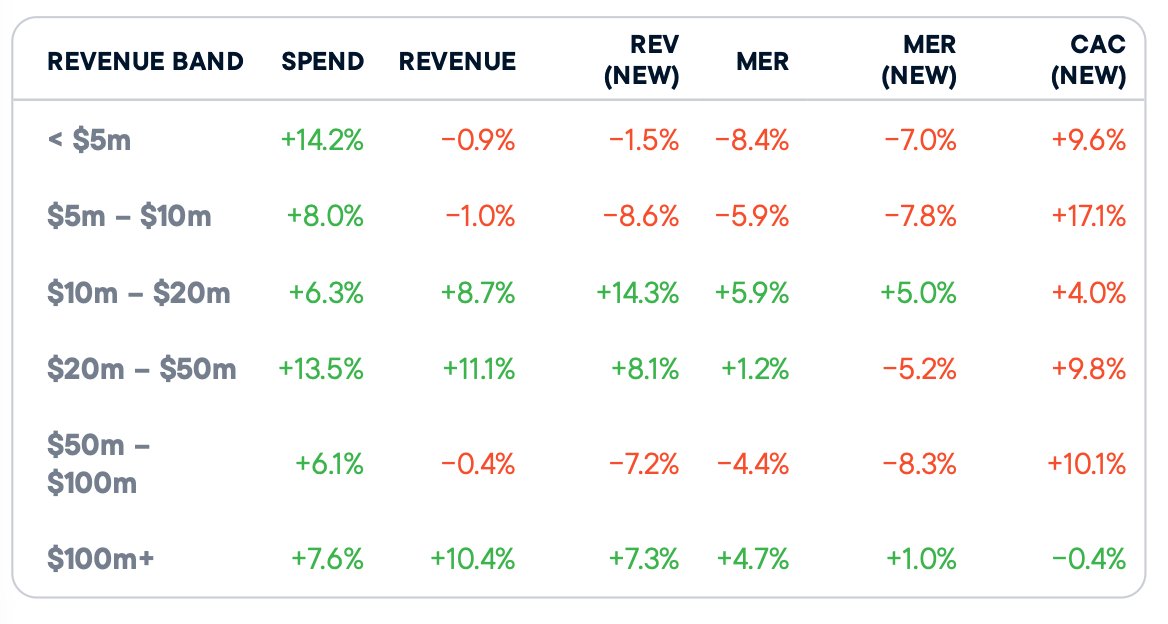
💀 May was terrible for SMBs, especially in DTC and ecomm. Looking at @northbeam aggregated May data, compared year-over-year: 🔻 Businesses making under $10m a year spent a lot more than others, but saw horrible decreases in MER and CAC, with paltry revenue returns. 🤔 To nobody's surprise, CAC got more expensive for all types of businesses - but iconic $100m+ businesses mostly dodged the pain. 💸 In tough economic environments, consumers buy what they know. Disrupters can't break in when there's no disposable income. Full report forthcoming. What numbers do you want to see?
bryan 🧉 tweet media
English
5
0
13
1.4K
Sam Ragsdale
Sam Ragsdale@samrags_·
Instant settlement is the key. Card networks are optimized for the consumer: the merchant takes all the risk. The merchant delivers the goods now and accepts T+30 settlement. They're extending credit to an agent. They must believe at the end of the month, they'll be made whole In practice, they might want to: - Calculate the agent's historical payments, historical chargebacks - KYC / KYB / KYA - Warm up period for unknown agents - Require an enterprise service agreement - Get a credit report Or... they could just use stablecoins. Instant settlement. No merchant risk. Sell to any agent today.
Dimitri Dadiomov@dadiomov

I don't understand the premise that "agents must use stablecoins." Why can't an agent remember the 16 digits of a credit card? Sorry maybe I'm a payments n00b. Stablecoins have a lot of great use cases, but ecommerce shopping is pretty well optimized already for cards.

English
9
4
59
27.5K
Jim Morales, CFA
Jim Morales, CFA@The10XCFO·
@clayyroy This just confirms my M&A thesis there are lots of future diamonds out there if you know what to look for.
English
0
0
1
341
Clay
Clay@clayyroy·
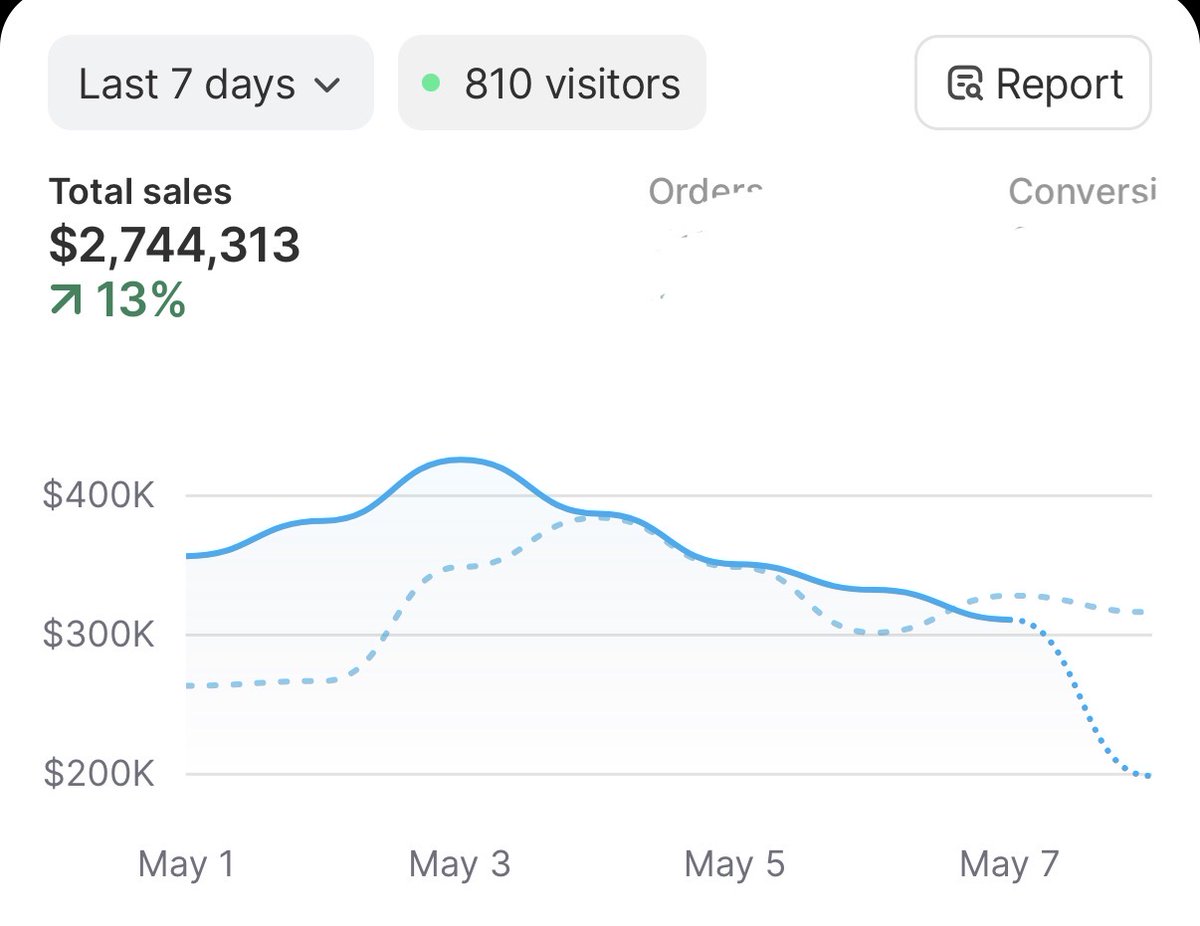
Four years ago, I listed my brand on Flippa for $1.1M A buyer was close to taking it, but after too much back and forth, I gave up on the deal and just kept going. Last week we did $2.7M in 7 days. The hardest part of building something isn’t the work. It’s staying in it when it feels like nothing is working. When the numbers are flat, when you start questioning every decision you made before. That’s where most people quit. That’s exactly where you have to stay.
Clay tweet media
English
28
6
286
10.4K
AP
AP@aryanpour·
Most Fintech banks sacrifice long term sustainability over short term growth. And there are still Fintechs following the EXACT same strategy that led Parker to bankruptcy. If an offer sounds too good to be true, it probably is.
Jason Mikula@mikulaja

🚨SCOOP: YC-backed Parker, which claimed to have raised "over $200 million in funding," officially filed for Chapter 7 bankruptcy yesterday, I can be the first to report. The news follows the abrupt shutdown of the ecom-focused banking & credit card startup earlier this week.

English
5
2
31
38.6K
Jack Zhang
Jack Zhang@awxjack·
The next generation of U.S. B2B founders will choose A2A because startups have to go global on day one, and bank-to-bank payments are already the default in the world's fastest-growing markets. Businesses that build on A2A rails from the start won't just reduce costs, they'll have the payment infrastructure to scale across borders without rebuilding from scratch.
Shannon Scott@scott_shannon

Credit cards are like an added tax for B2B companies in the US. They’re so prevalent that many businesses use them to transact, but at B2B volumes those 2-3.5% card acceptance fees add up quickly. Account-to-Account (A2A) payments change the math by connecting bank accounts directly. The cost is typically 40-50 cents per API call, so for a single $50k invoice that’s $1,500+ in savings. And that’s just part of it. A2A also creates value through: - Cash flow: faster settlement and less working capital cost - Operations: rich payment data for reconciliation and ERP integration, less fraud and chargeback overhead - Avoiding payment failure: card credentials degrade; bank accounts remain valid A2A payments already account for more than 50% of total payment volume in regions of Europe, APAC and LatAm. But in the US, real-time payments are just ~1.5% of TPV — a rounding error in a multi-trillion-dollar market. Airwallex delivers A2A on a global scale by standardizing how bank transfers are structured, reconciled, and integrated. B2B businesses can route repeatable flows onto the most efficient rails and protect margin on each payment. Businesses that still rely on credit cards are literally paying the price. A2A on Airwallex is the answer.

English
8
5
88
23.8K
Jim Morales, CFA
Jim Morales, CFA@The10XCFO·
@pephufen Depends on what you’re selling Supplements? Cool Stuff for 60 year old women? Ehhhh they’re prob not on candy crush
English
1
0
0
75
Pep
Pep@pephufen·
I believe AppLovin will overtake Google's share of wallet for most D2C brands in 2026/2027. Here’s why: 1. Cold audience at scale AppLovin's consumer platform only rolled out about 18 months ago. For our clients Axon is already the third largest ad channel, behind Meta and Google. Our clients spend roughly 70 percent of their ad dollars on Meta because Meta converts cold audiences with no buying intent. A good product, a strong algorithm, and good creative can persuade someone who was not looking to buy. That means scale is possible. Google does not do this well. It captures demand. It does not create it. So the scale is limited. The only platforms that tap the same cold audience layer are TikTok and AppLovin. That is the gap Axon walks into. 2. The pixel is the moat. And Axon's runs on a different graph than Meta's. For an ad algorithm to predict who will convert, it needs to tie web events back to a known identity. Without that, the model is guessing. Meta does this through its logged in user graph. Every event captured by the Meta pixel gets tied back to a Facebook or Instagram profile with years of behavioral history. That is what makes the model work. The pixel without the user graph is useless. From what I understand, AppLovin built a different kind of graph. They spent years running their SDK inside thousands of mobile apps, mostly in gaming. They know which device played a game last night, downloaded an app last week, made an in app purchase last month. When the Axon pixel fires on an advertiser site, the conversion gets tied back to a device with a real behavioral history. The model trains on that. Two things follow from this. First, the Axon graph is independent from Meta's and resilient to the iOS privacy changes that broke parts of Meta's attribution. Second, it compounds with every new pixel install. Right now, Axon's pixel is on a small fraction of US ecommerce sites. When AppLovin opens the platform to all advertisers, that footprint scales fast. More pixels means more web events tied back to the device graph, which means a more accurate model. That is what compounds. 3. More advertisers means a better model. yrevEbuyer types. This is the same flywheel Meta rode for a decade. We have already seen a meaningful step up in ROAS across our Axon accounts since the latest model update a few weeks ago. The model improves every quarter. I see no reason to believe that stops. 4. The team is the variable that does not get priced in. The AppLovin team is one of the sharpest I have watched operate. Driving incremental revenue at a CPA or ROAS that works for an SMB is the only thing that matters in this business. They get that So the setup is: cold audience platform, expanding pixel footprint on a graph independent from Meta's, sharp team shipping model improvements every quarter. That is the gap that compounds.
English
5
1
45
2.1K
Ian Macomber
Ian Macomber@iandmacomber·
Today, @AnthropicAI added @tryramp Data as a connector in Claude. You can now ask Claude what 50,000+ businesses are actually spending on and get an answer grounded in real spend data. Vendors, categories, growth, switching patterns, and more. For decades, @Rich_Barton companies have focused on "turning the lights on." Homebuyers have @zillow, job seekers have @Glassdoor. But how companies actually spend, operate, and make decisions has stayed dark. Today, that's changing. The people best served by transparent market data aren't the ones who can afford Bloomberg terminals. They're the founder sizing a first contract, the procurement lead negotiating a renewal, the researcher studying AI adoption, the agent booking software on a user's behalf. AI has made those users far more capable but only if the data they need is actually available. Ramp Data is live in Claude today, and accessible via API, MCP, and CLI. Every market gets better with information transparency. B2B software is next.
Ian Macomber tweet media
English
30
53
845
292.6K
Jim Morales, CFA
Jim Morales, CFA@The10XCFO·
@willnitze copy product and ads easy... now try to copy sourcing, pricing, measurement, inventory optimization etc...
English
1
0
2
70
Will Nitze
Will Nitze@willnitze·
"Copycat" brands invariably run into a huge issue: They don't know what, specifically, to copy. Because they don't know which specific combo of variables drives value for the brand they're copying. So they guess. And, predictably, their guess is way off.
English
9
2
45
3.1K