

Abey Zachariah
11.9K posts
Abey Zachariah
@abezack
Banking, Online bus ticketing, Ecom- Entrepreneurship, Logistics, Digital Public Infrastructure. Building https://t.co/9SMms0itRi
Bangalore Katılım Ekim 2009
2.1K Takip Edilen1.3K Takipçiler
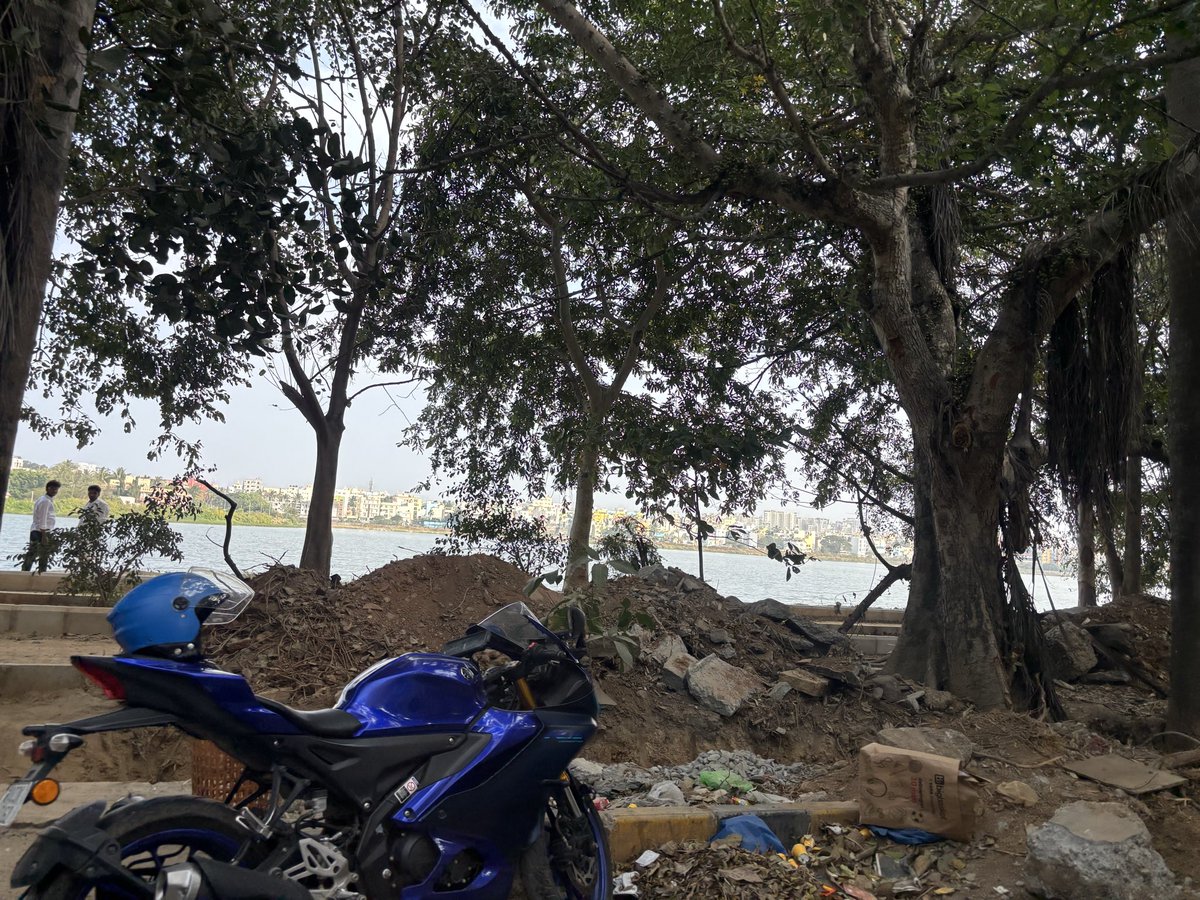
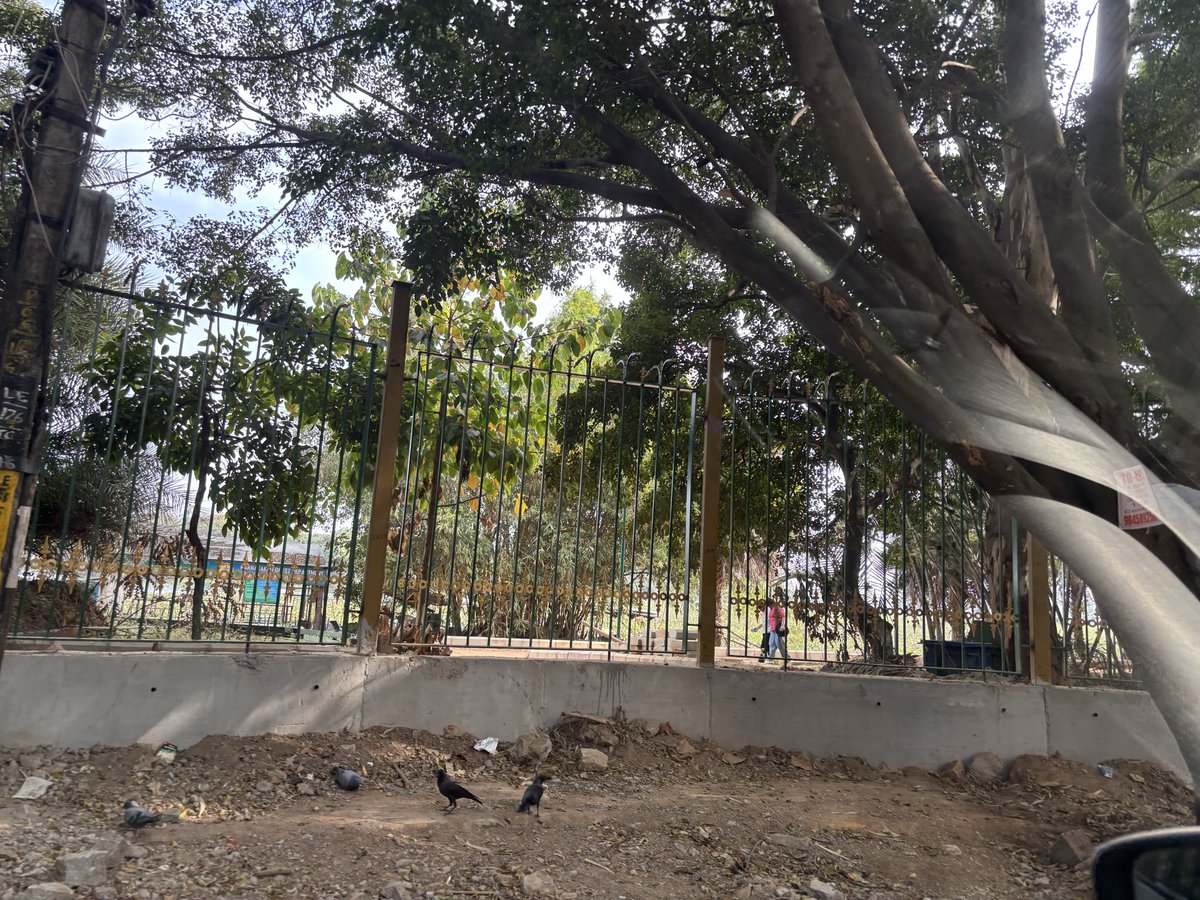
@GBAChiefComm now the full lake is covered, and this is when water scarcity is a reality. Water hyacinths result in higher evapotranspiration of water.
Abey Zachariah@abezack
Some cleaning seems to have been done but still a large portion is infested with water hyacinths which increases water loss. @GBAChiefComm Come summer, we will be worrying about water shortage. Save water by removing these invasive weeds.
English
Abey Zachariah retweetledi
Some cleaning seems to have been done but still a large portion is infested with water hyacinths which increases water loss. @GBAChiefComm Come summer, we will be worrying about water shortage. Save water by removing these invasive weeds.


English
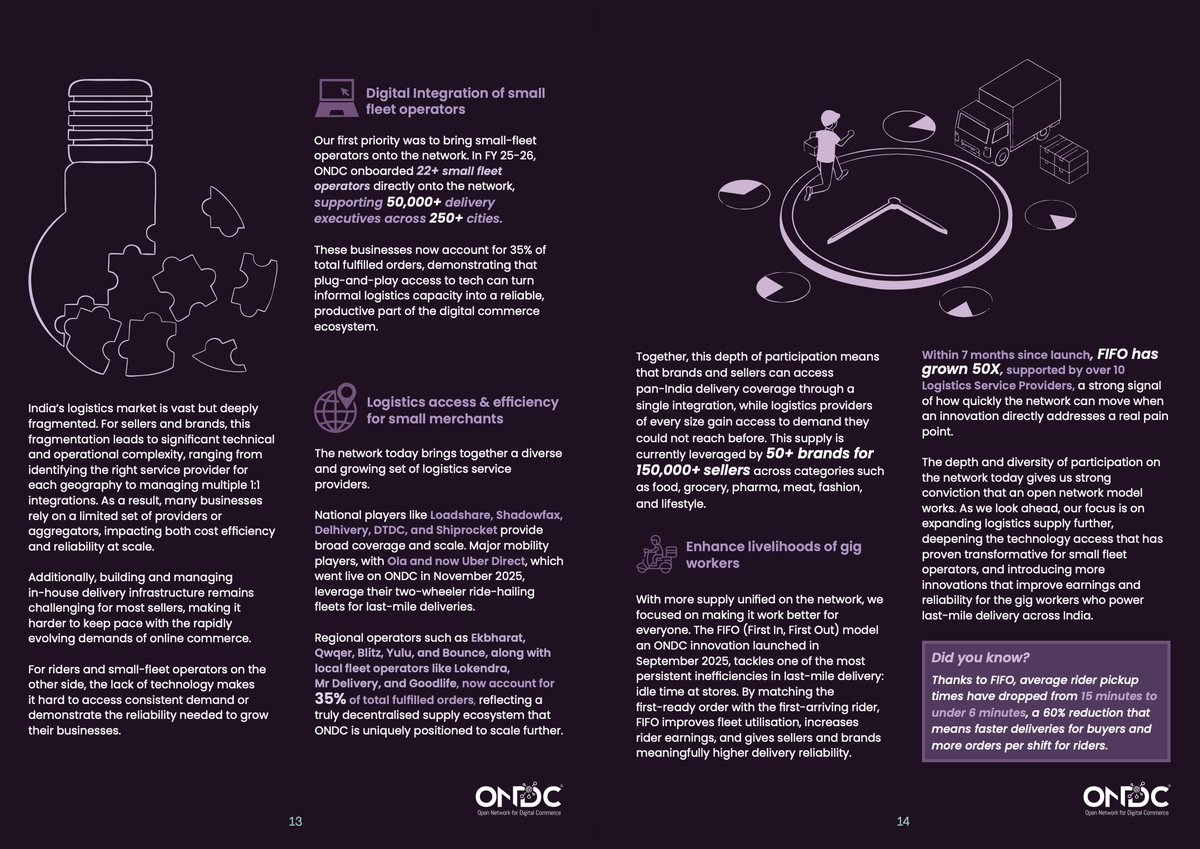
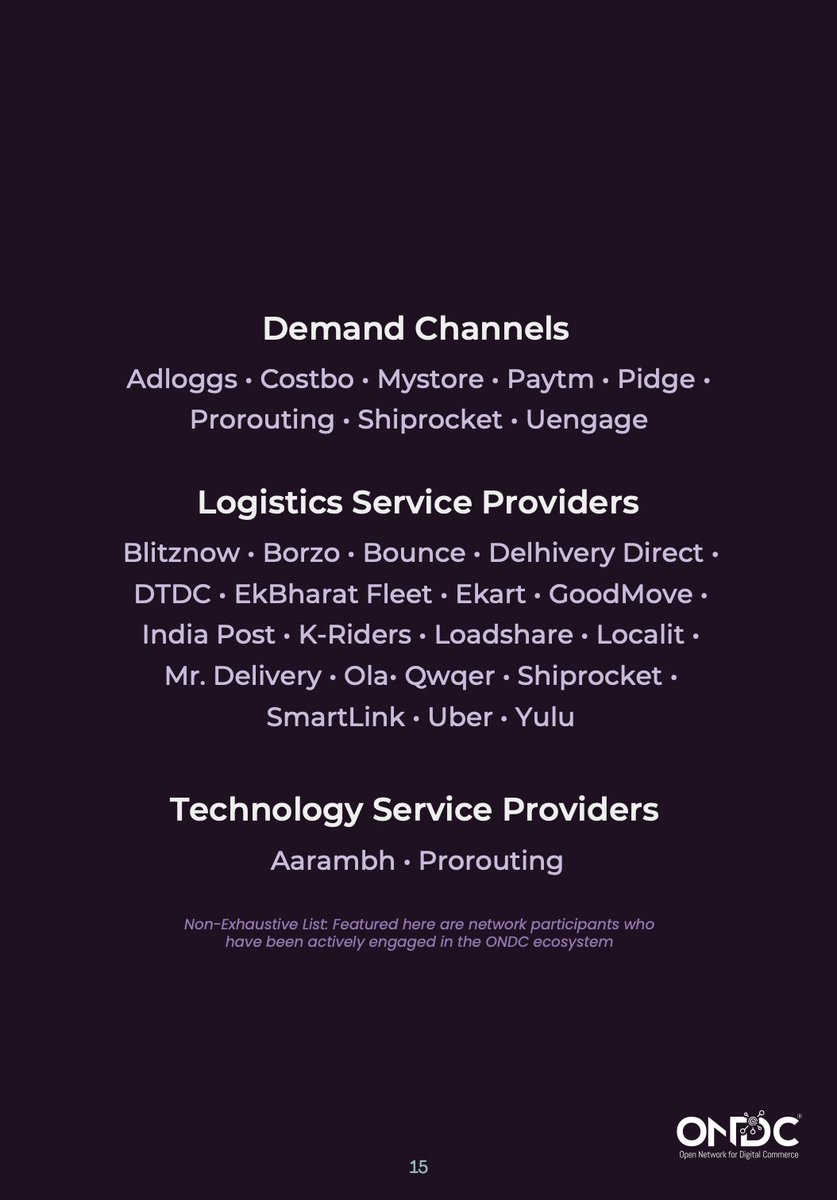
Prorouting.in mentioned in the ONDC FY 2025-26 newsletter. 2026-2027 will be a massive year! Great work by team ONDC and we will continue to work closely with them to make the segment achieve higher level this year.
English
Abey Zachariah retweetledi

Mark Cuban just described the largest wealth transfer of the AI era.
Almost nobody understood what he said.
Cuban: “There are 33 million companies in this country. Aren’t going to have AI budgets. Aren’t going to have AI experts.”
Not tech startups.
The shoe store. The regional trucking outfit. The accounting firm with 12 employees.
The businesses that actually run the physical economy.
They know AI is coming. They have no idea what to do with it.
Cuban: “You’ve got the head of Microsoft saying software is dead because everything’s going to be customized to your unique utilization.”
Software is dead.
The SaaS era ran on one rule. Build a generic product. Force millions of companies to bend their workflows around it. Charge rent forever.
AI ends the contract.
The business stops bending to the software. The intelligence bends to the business.
But customized by whom.
The third-generation manufacturer cannot tell Claude from Gemini. The county hospital is staring at a reactor asking where the light switch is.
Cuban: “Who’s going to do it for them?”
That question is worth more than the frontier models themselves.
Hundreds of billions are being burned to build the foundation. The smartest engineers alive are locked in a bloodbath over who owns the base layer.
Let them fight.
Let them burn the capital. Let them drive the cost of raw intelligence toward zero.
Because the wealth does not collect where the brain is built.
It collects where the brain meets the business.
Every ambitious kid in college right now thinks survival means a seat at OpenAI or Anthropic.
Cuban is staring at the other 99 percent of the economy.
Learn the models. Then learn the messy, unglamorous reality of how a 50-person company actually operates.
Walk through the door. Understand their problems. Wire the intelligence directly into their revenue.
That is not a job title. That is an entire economic class being born.
You do not need to build the brain. You need to build the nervous system.
The biggest winners of the electricity era were not the engineers who built the generators. They were the ones who walked into dark factories and showed the owners where to plug in.
33 million companies are standing in the dark right now.
Silicon Valley is racing to build the god. The fortunes will belong to whoever teaches him a trade.
English
Abey Zachariah retweetledi

Bengaluru's green cover has fallen from 78% to 6%, its natural cooling systems are gone, and the city is baking.
#KarnatakaNews #Bengaluru
deccanherald.com/india/karnatak…
English
Abey Zachariah retweetledi

Perplexity just hit $500M in revenue. $100M to $500M with only 34% headcount growth. That means the product scaled 5x while the team barely moved. In any prior era of tech, 5x revenue required roughly 3-4x headcount. Perplexity did it at 1.3x.
This is the math that rewrites how startups get valued. Revenue per employee at Perplexity is approaching territory that only algorithmic trading firms and app stores have ever touched. The reason is structural: the AI model IS the workforce. Every query Perplexity answers would have required a human researcher, a content editor, and a distribution team at a traditional media or search company. The model replaces all three at inference cost.
Google needed 30,000+ people to build Search into a $200B revenue line. Perplexity is on pace for $650M+ this year with a mass fraction of that headcount. The leverage ratio of AI-native companies has no precedent in software. SaaS scaled better than services. AI scales better than SaaS.
And in February, Perplexity launched Computer: an agent that shops, books, sends emails, and runs research workflows on your behalf. Usage-based credits on top of $20/month subscriptions. That's the shift from answering questions to completing tasks. The revenue ceiling on search is bounded by ad load and query volume. The revenue ceiling on task completion is bounded by how much of your day you'd pay to automate.
Aravind Srinivas confirmed the $500M number today, and started this with 4 people and a question: "What would you like to search for?" Three years later the answer is everything, and the team required to deliver it keeps shrinking relative to the output. That ratio is the entire story of AI.


English
Abey Zachariah retweetledi

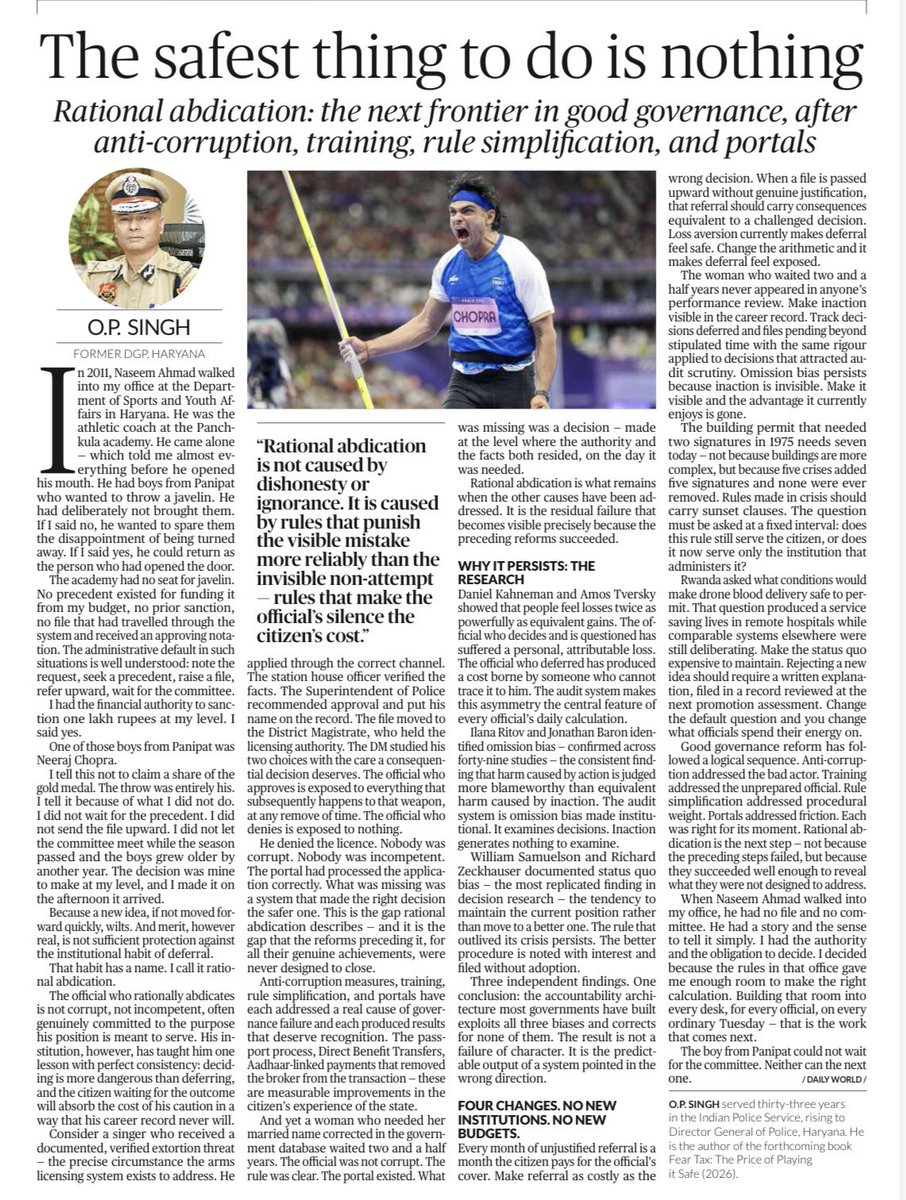
Neeraj Chopra almost didn't happen.
Not because of corruption. Not because of incompetence.
Because of a file that in summer noon of 2011 could have gone upward, a committee that could have met, and a season that could have passed.
One official decided instead. Same afternoon. No precedent. No committee. Rs 1 lakh for javelins.
Refer. Defer. Wait. He didn't.
The boys were practising by the evening at Panchkula athletic track. They did so there for next five years before moving to more competitive circuits.
One of them did exceptionally well. India got an #Olympic gold.
We blame governance failure on corrupt officials. Or incompetent ones.
There is a third failure — the honest, competent official who has learned that deciding is more dangerous than not deciding.
Kahneman showed people feel losses twice as powerfully as gains. The status quo is the system's default — and the official's shelter. The harm of his action is traceable to him. The harm of his silence is traceable to no one.
So he refers. Defers.
Performs just enough to stay invisible.
I call it rational abdication.
It is costing India more than corruption ever did. And it can be fixed by making inaction visible and bonafide mistakes absorbable.
Read my article in #Dailyworld
The Neeraj Chopra story is the lucky version. You have been that citizen whose file went upward and never came back. What was yours? Tell me. ⬇️
#RationalAbdication #Governance #NeerajChopra
English
Abey Zachariah retweetledi

India’s reservoirs are running low, river basins are shrinking, and in some places, water has already disappeared altogether. New data shows levels have dropped sharply since February, raising fresh concerns as the summer heat sets in. @rajusajwan explains what the latest numbers reveal about the country’s growing water stress:
downtoearth.org.in/rivers/dry-riv…
English
Prorouting.in We processed more than 4 million Hyperlocal and quick commerce deliveries last financial year which was our first year of operation. We should do 10X of that in the current FY.
English
Abey Zachariah retweetledi

Yesterday i met a founder who graduated from Yale and came back to India to build a biotech company. They're trying to make vaccines for liver and pancreatic cancer and other infectious diseases that kill 80-90% of patients within five years. Team of 100+ scientists, AI engineers and medical specialists based in India who got research grants from some of the world's most credible institutions. But they're unable to raise VC money from Indian investors because most can't underwrite a 7-10 year bet on deep science. So they're moving the legal entity outside India to access international investors.
Another issue is the slow regulatory framework. India holds 17% of the world's population and 20% of its disease burden, but runs barely 1.2% of global clinical trials. Getting regulatory approval for a clinical trial takes a few years sometimes versus a few weeks in the US or China. So this company is doing their first phase of trials outside of India.
We need two things to change. First on funding, we need a dedicated health fund which is government backed with a 10-15+ year horizon, willing to take the early risk that commercial VCs can't model. This is something we're trying to do at Rainmatter across all our investments. If we want a better healthcare , we need a system to support innovators.
On regulation, maybe add more staffing bandwidth and bring updates to clinical frameworks at CDSCO with a 30 day timeline and a parallel ethics review that moves fast.
We've the talent and science here and the patients are here. What's missing is the institutional will to back them. We just keep making it someone else's problem to fund. It's shouldn't be acceptable that Indian talent runs the science but India won't own the upside.
English
Abey Zachariah retweetledi

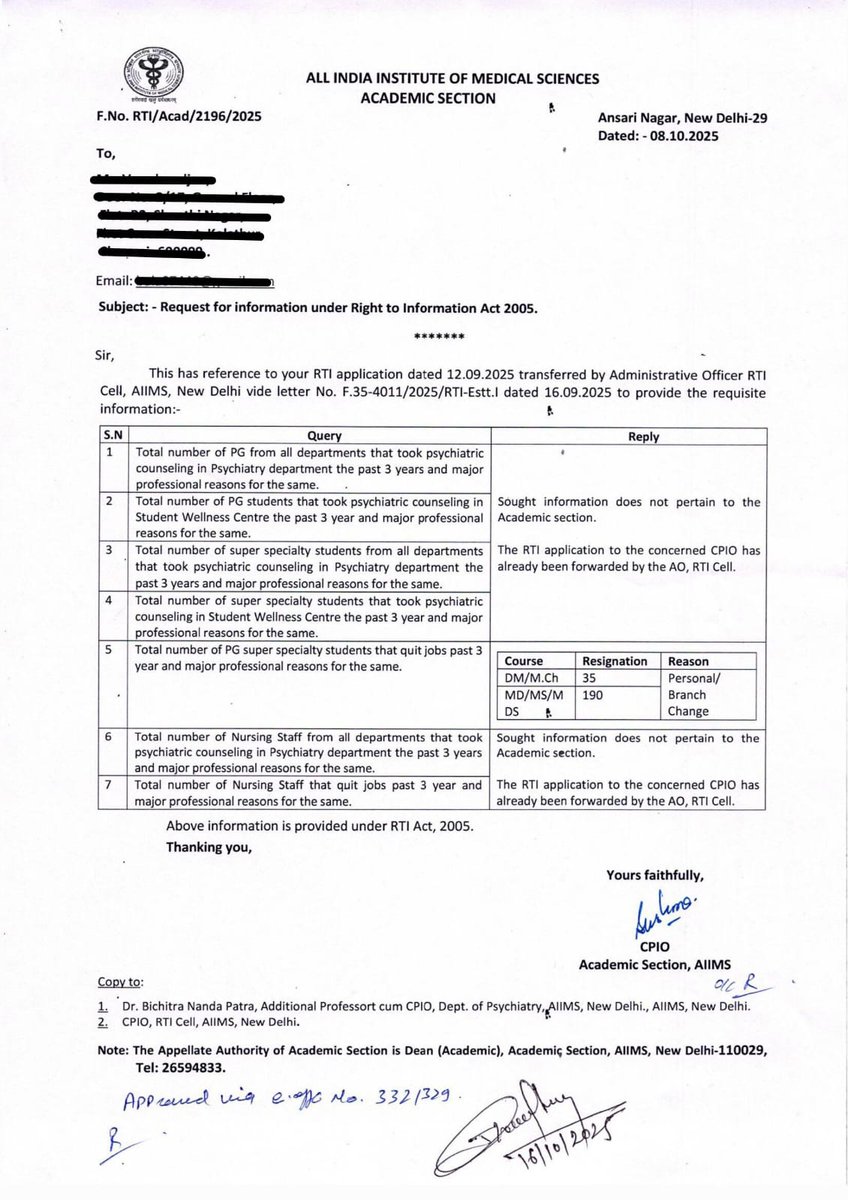
190 PG Resident Doctor ran away from AIIMS Delhi due to alleged toxicity in a span of 3 years.
AIIMS claims reasons as personal and branch change.
AIIMS Delhi preaches mental health to whole world but never practices
#MedTwitter
English
Sometimes it may seem that entire market is taken and when you explore keenly you will find a gap in the market you can play in. Play in the gaps and grow into the larger adjacent markets.
English
Abey Zachariah retweetledi

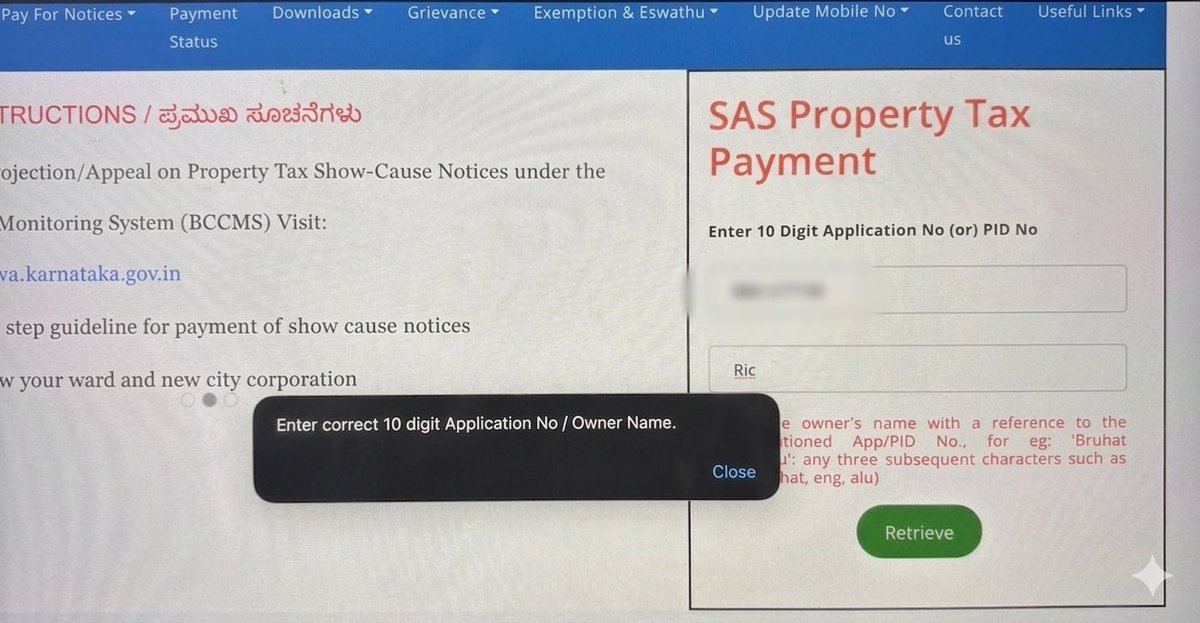
🚨 ₹60,000 bribe + ₹25,108 official fees for e-Khatha in Doddathoguru.
Still can’t pay current property tax.
• ₹30,000 cash
• ₹30,000 UPI
→ Total bribe: ₹60,000
Official payments:
• ₹24,008 Property tax
• ₹1,000 Khatha transfer
• ₹100 Khatha extract
System took every rupee.
Now:
❌ PID not mapped
❌ Online payment blocked
Panchayat excuses:
Day 1: “Server down”
Day 2: “Server still down”
Today: “Staff gone for census. Come Monday.”
The system works flawlessly for bribes and collecting taxes.
It completely fails for basic service.
This isn’t delay. It’s designed dependency.
Simple questions:
• Why issue e-Khatha without mapping PID?
• Why collect tax if the system can’t support it?
• Why is the only solution “come again”?
Basic fixes needed:
• Map PID before issuing e-Khatha
• Make online tax payment reliable
• Provide real fallback, not repeated visits
• Clear ownership: BBMP or Panchayat
Doddathoguru doesn’t need announcements.
It needs systems that work.
Requesting action:
@bbmpcommr @UDDeptGoK @DCBangaloreR @krishnabgowda
@krishnabgowda @GBA_office
@GBAChiefComm
@SouthEastBlr
@comm_blr_south
@RLR_BTM
@EASTCITYCORP
@BNCCofficial
@BWCCofficial @theuglyindian
@BPACofficial
@CitizenMattersX
@WFRising
@ECityRising
@GBITCIA
@BAFBLR
@0RRCA
@bengalurupost1
@CitizenMattersX
@kiranshaw
@Namma_ECity
@ecitycredence
@ECityRising
@prajavani
@bengalurupost1
@Bangalorereal1
@CivicOp_india
@ChristinMP_
@NayanaJhawar
@Maheshbr4U
#FixingBengaluru #Doddathoguru #eKhatha


English
How many orgs in India are thinking like this. I have also personally become a builder now. That was unthinkable 6 months back. Startups that leverage AI have a massive advantage and will win over incumbents.
Ivan Burazin@ivanburazin
The founder of Postman says you have to kill your existing org chart, especially if you're still operating with a pre ai hierarchy arrangement. The modern org chart, according to @a85: - wide span of control (even within exec team) - work directly with ICs, not through layers - either you're building, or you're selling Projects are led by staff/principal engineers with high agency. They see across the board as well as deep in the stack. Product managers are building APIs and prototyping in Claude instead of writing PRDs. Designers are shipping PRs through Cursor directly instead of relying solely on Figma. Everyone is building. And the management's job is to develop better judgment.
English
Unbelievable power in the hands of software builders now. Moving on from BI tool to our own custom solution now. Took hardly an hour to set it up.
English
Abey Zachariah retweetledi

@SebastianCaliri Thanks Sebastian! For people interested in the video of the event please see forum.openai.com/public/videos/…
English
Abey Zachariah retweetledi

Airbnb CEO @bchesky says more AI founders should be starting consumer businesses.
"I'm on the board of Y Combinator. 87% of companies are enterprise companies per batch."
"Enterprise is awesome... but the biggest prize is consumer. That is what's going to reach daily life for billions of people."
"Think about all the little parts of daily life that are kind of annoying. Pay attention to whoever's in your life and ask: 'How could their daily life be a little bit easier?'"
From his appearance on the show in January.
English
@prakdadlani @law_ninja If your use case involves logistics, then I will be happy to expose what we have built. I am quite sure you will find it useful. Can discuss if interested.
English
Spot on!! @law_ninja 🔥
I am living this reality as an Desi SME founder myself.
We’ve been actively hunting for AI solutions to automate our workflows.
Quotes range from ₹2.5 lakhs per month from one, ₹20 lakhs for a single project from another.
For most MSMEs, that’s simply not feasible.
We run on WhatsApp, Excel, and Jugaad. Tools are cheap or free. The talent exists. What’s missing are individuals who actually come in, understands our processes, and builds practical, AFFORDABLE automation.
63 million MSME's. 250 million jobs.
This is not a niche, it's India’s biggest untapped AI opportunity.
AI Workflow Architects, builders, and solution providers if you’re reading this, the market is waiting.
Come talk to real SMEs like us. Take a reasonable monthly retainer and become our go to AI solutions partner. Build practical proof of concepts with us, learn from real use cases, and then scale those solutions across millions of businesses.
The upside for Bharat is enormous.
The gap is massive. Let’s fill it.
DMs open.
Ramanuj Mukherjee@law_ninja
Indian MSMEs run on WhatsApp, Excel, and trust. AI hasn't touched them. Yet. India has 63 million MSMEs. 31% of GDP. 250 million jobs. Ask any owner in Surat, Ludhiana, Tirupur, or Nagpur if they use AI in their business. Most will say yes. They mean WhatsApp. Or someone on their team opened ChatGPT once. That is not automation. That is not a workflow. That changes nothing about how the business actually runs. Real AI deployment, the kind where a process runs without a human triggering it, where data moves between systems automatically, where follow-ups go out without someone typing them, that is essentially at zero in Indian MSMEs. Not 7%. Not 2%. Essentially zero. Why this is the biggest untapped market in India right now. India's large enterprises are moving fast. 47% of them have AI running in production (EY-CII, 2025). Their MSME suppliers, distributors, and vendors? Still on Excel. Still on manual data entry. Still on phone calls to confirm orders. The gap between enterprise and MSME on AI is not a technology problem. It is a deployment problem. The tools exist. n8n, Make, Claude API, GPT-4, Zapier. All available. Most either free or under Rs 5,000 a month. What doesn't exist is a person who walks into the MSME, understands the workflow, and builds it. That person is the AI Workflow Architect. What this person actually does. Real example. A garment exporter in Tirupur processes 200 orders a week. Each order needs: Buyer email parsed PO data entered into Tally - Production schedule updated - Shipping documents generated - Buyer follow-up sent Currently: 2 data entry operators. 8 hours each. 5 days a week. - An AI Workflow Architect builds this in 4 weeks: - Email parser using Claude API or GPT-4 - Tally integration via API - Auto-generated shipping docs - WhatsApp follow-up bot Cost to client: Rs 2-3 lakh one-time. Rs 15,000 per month to maintain. Savings to client: Rs 40,000 per month in salaries. ROI in 6 months. This is not complicated. It is not being done because nobody is walking in to do it. The IT crisis and the MSME gap are the same story. Fresher IT hiring: 600,000 in FY22. Down to 120,000 by FY25. An 80% drop in three years. (Source: Xpheno) TCS cutting 12,000 jobs. NITI Aayog warns of 15-20 lakh IT jobs at risk. Everyone is looking at that number and panicking about what's ending. Nobody is looking at the 63 million businesses that need someone to deploy AI into their operations. The same disruption that kills the BPO seat creates the AI deployment market. These are not separate events. They are the same event, viewed from different angles. The skill set is learnable. In months, not years. - No CS degree needed. No advanced Python. - Prompt engineering learning time: 2 weeks - One automation platform like n8n or Make: 3-4 weeks - API basics, connecting tools to each other: 3-4 weeks - Reading a business process and mapping it: ongoing Three months of focused learning. Then you go find one MSME that has a painful manual process and you fix it. This is the time, this is the opportunity. India's future for next 3 decades will depend on this.
English