Ashish Sharma

309 posts

Ashish Sharma banner
Ashish Sharma

Ashish Sharma

@asharma313

Postdoc @WashUNeurology with @ErikMusiek studying circadian rhythm and sleep in Alzheimer’s disease

St Louis, MO Katılım Şubat 2018
619 Takip Edilen235 Takipçiler
Ashish Sharma retweetledi
Xin Jin, PhD
Xin Jin, PhD@xinjin·
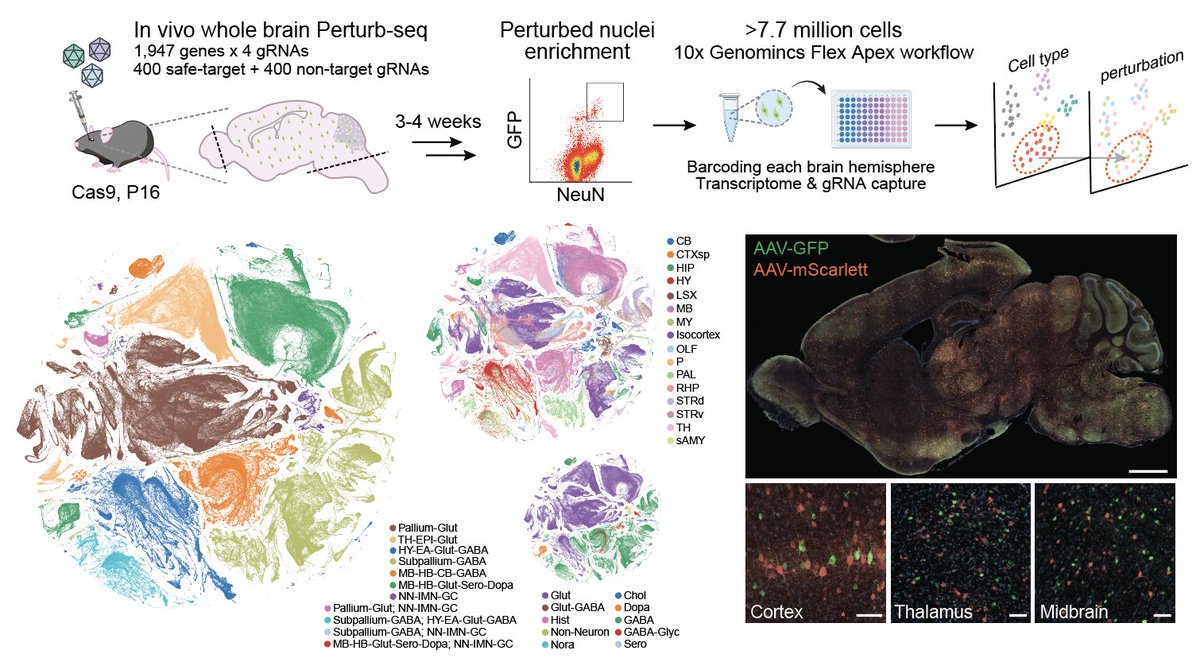
📢 Preprint: we present a whole-mouse-brain in vivo Perturb-seq atlas, 7.7 million cells, 1947 disease-associated perturbations, moving toward direct readout of how human genetics rewires cell states & circuits in vivo. Grateful for the Team! @NVIDIAHealth biorxiv.org/content/10.648…
Xin Jin, PhD tweet media
English
7
99
401
26K
Ashish Sharma retweetledi
Jason Sheltzer
Jason Sheltzer@JSheltzer·
AI is cool and all... but a new paper in @ScienceMagazine kind of figured out the origin of life? The paper reports the discovery of a simple 45-nucleotide RNA molecule that can perfectly copy itself.
Jason Sheltzer tweet media
English
180
1.1K
6.2K
866.3K
Ashish Sharma retweetledi
Joseph Takahashi
Joseph Takahashi@CircadianClocks·
Genetics of human longevity more important than was previously thought! Heritability of intrinsic human life span is about 50% when confounding factors are addressed | Science science.org/doi/10.1126/sc…
English
0
3
17
767
Ashish Sharma retweetledi
nature
nature@Nature·
Evidence suggests that transcriptionally similar cells can be functionally diverse go.nature.com/3MOHJqp
English
9
116
430
54.1K
Ashish Sharma
Ashish Sharma@asharma313·
*60 sec drumroll*
Parmita Mishra@parmita

“Show me the mechanism of action.” “Uh. from the p-p-perturb seq? right here. Knocks down Gene X, and the cells shift into Cluster 7." “You used fkn UMAP again. FUCK. Zoom in.” “Sorry?” “Zoom. The fuck. In.” “…Okay.” “Do you see it?” “…See what?” “He doesn’t see it. The cell biology postdoc from Stanford does not know how to see a cell. He stares at a two-million-cell embedding and doesn’t see the conflations he just planted in my S3 bucket. WHERE is the temporal resolution?” “The… what?” “Where is the time? You hit the cell with a perturbation and you measured it once. Once. That’s not a mechanism. That’s a fucking POSTCARD!” “We sequenced at 72 hours. That’s standard.” “Standard is not the same as correct. You are aliasing causality. You compressed a dynamic process into a static endpoint and you’re think you will cure metastatic cancer.” “But the differential expression is significant.” “WOW! DIFFEWENTIAL EXPRESSION IS SIGNIFICANT! WOW! WHEN THE FUCK IS IT NOT. Yes, because statistics is Mario Kart. A fantasy land where causality is optional and variance disappears if you collect enough cells. Real biology has inertia. Feedback. Competing pathways. Do you understand the difference between correlation and mechanism? Or did you flunk out of STAT 101?” “…I mean, we saw Gene X regulate Pathway Y.” “No. You saw Pathway Y exist in the same cell after you kicked it down the stairs and waited three days. That’s not even a crime scene, you dimwit. That is a post-mortem autopsy.” “The model inferred a trajectory--” “STOP the buffoonery. Do not blame the model. The model is a mirror. In this particular case, you can see it mirrors the clusterfuck you just created in my biosafety cabinet. If the reflection is warped, it’s because your measurement is warped.” “Pull up the raw counts.” “…Okay.” “Scroll. Cell 14,982. Read it to me. What does it say?” “Uh… mitochondrial genes up, ribosomal genes down-” “And?” “…And stress response markers?” “Yes. Because you poisoned the cell and waited long enough for it to panic. Where is the early signaling? Where is the metabolic inflection? Where is the first irreversible decision?” “We don’t capture that.” “Exactly. You built a platform that cannot see the mechanism. YOUR PLATFORM IS FUCKING BLIND.” “The virtual cell...showed the perturbation effect cleanly.” “Yes. because your VIRTUAL CELL IS VIRTUAL. it assumes the cell is a bag of transcripts. Do you think metabolites show up? OR AN ISOFORM? AN ISOFORM, THAT WILL DEGRADE IN THE CELL BEFORE YOU EVER REACH YOUR SENSOR? THAT ONE? YOU THINK THAT'S HOW CELLS WORK?” “So what do you want me to do?” “Delete the atlas.” “What?” “Delete it. The whole thing.” “But that’s the core result.” “It’s three weeks of garbage narrative built on a blind instrument. Delete it.” “…Now what?” “Now you rebuild the measurement. You observe the cell while the perturbation propagates. You track chemistry, not just transcripts. You capture the first divergence, not the final corpse.” “That’s… not perturb-seq anymore.” “Exactly.” door slams

Polski
1
0
2
345
Ashish Sharma retweetledi
Erik Musiek
Erik Musiek@ErikMusiek·
Our new paper by Melvin King @MKing629 is out! GABAergic Bmal1 KO reduces amyloid plaques and p-tau in 5xFAD mice- but only in LD! In DD, 5xFAD mice have fewer plaques and GABergic Bmal1 KO has no effect. Suggests light-clock interaction controls Abeta. alz-journals.onlinelibrary.wiley.com/doi/10.1002/al…
English
2
5
24
3K
Lee, Jiyeon
Lee, Jiyeon@Jjiyeon_lee·
I'm thrilled to share my 2nd story about REV-ERBs in @NatureAging! We reported NAD+ regulatory mechanism under the REV-REBalpha control in astrocyte via CD38 and it's impact on Tau pathology.
Erik Musiek@ErikMusiek

I'm excited that @Jjiyeon_lee's 2nd paper from the lab is out in @NatureAging. We found that the circadian gene REV-ERBalpha regulates brain NAD+ by controlling CD38 in astrocytes. REV-ERB KO or pharmacologic inhibition mitigates tau pathology in mice. nature.com/articles/s4358…

English
3
3
26
1.5K
Ashish Sharma retweetledi
Erik Musiek
Erik Musiek@ErikMusiek·
Excited to announce our collaboration with Ron Anafi at Penn is out in @Neuron! Congrats to first authors Henry Hollis & @asharma313. Our team examined circadian rhythms in human snRNAseq data from AD patients using CYCLOPS, implicating ribosomes. sciencedirect.com/science/articl…
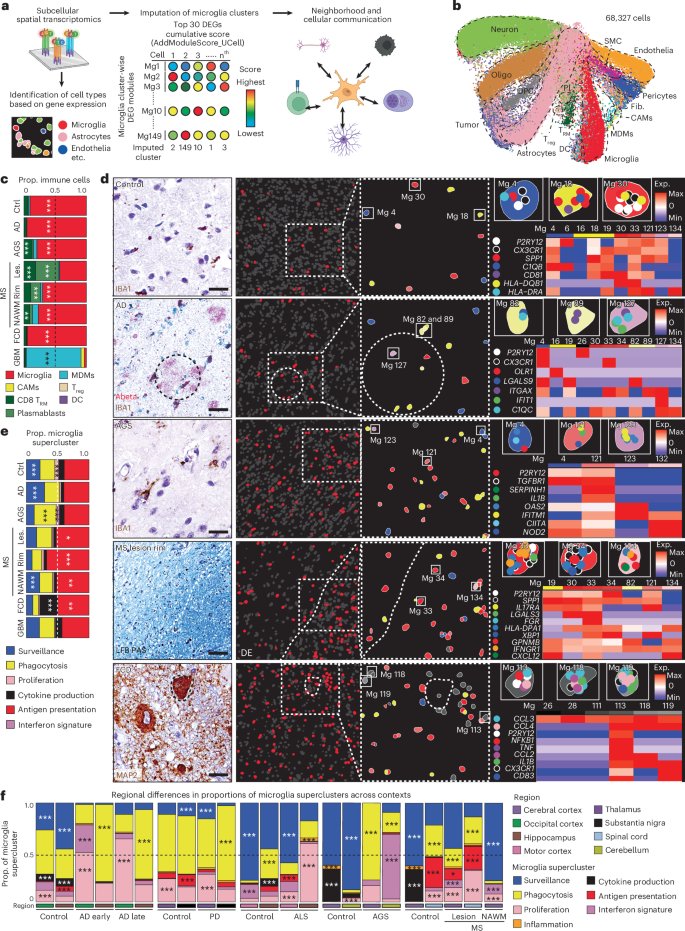
Erik Musiek tweet media
English
1
4
37
2.1K
Ashish Sharma retweetledi
Suzanne E Schindler
Suzanne E Schindler@SuzanneESchind1·
As biomarker tests for Alzheimer’s disease are increasingly being used in clinical care, there are some key differences to note about biomarkers in clinical care and research: 1️⃣ Clinical amyloid PET scans are not the same as research amyloid PET scans. In clinical practice, amyloid PET scans are visually interpreted as positive or negative by a person and only the positive/negative result is provided in the clinical report; quantitative values are rarely provided, although some expert centers are working to add quantitative values. A recent large study showed ~86% agreement between clinical amyloid PET visual reads and quantitative values. 2️⃣ Tau PET scans are almost never performed in clinical practice in the US because they are rarely reimbursed by insurance and extremely expensive. 3️⃣ Clinical tests are primarily indicated for clinical decision making that impacts patient management (e.g., to aid with diagnosis, which may affect further testing and treatment), not to “follow” patients. For example, clinicians do not periodically perform a brain MRI or PET scans just to “follow” disease progression because we do not expect that additional scans would affect patient management. 4️⃣ In research, blood biomarker panels are analyzed using algorithms, but in clinical practice, interpreting multiple blood biomarkers is challenging due to their varying diagnostic importance. For example, p-tau217 is highly accurate in identifying amyloid pathology, while p-tau181 and Aβ42/40 offer minimal or no added value. Most clinical blood test panels (unlike PrecivityAD/PrecivityAD2, which use weighted algorithms) do not prioritize biomarkers, potentially causing confusion about amyloid status due to unclear interpretation of individual test results when results are discordant. A single, high accuracy test is often best and easiest to interpret. 5️⃣ Performing more test modalities is not necessarily better, especially if the certainty of Alzheimer’s is very high following the first test. Performing a second test in patients with a very high likelihood of Alzheimer’s may lead to a significant number of false negative results. 6️⃣ A test doesn’t have to work perfectly in everyone, as long as we know who is at risk for an inaccurate result. For example, it is very simple to identify patients with severe chronic kidney disease, which affects plasma p-tau217 levels, and choose CSF or PET for those patients. 7️⃣ Continuous values are important to clinical certainty and data on the distribution of values is helpful.  This helps clinicians to know whether a value is borderline abnormal or very abnormal. 8️⃣ Diagnostic accuracy is not just based on the biomarker test sensitivity/specificity. Clinicians can integrate biomarker values with clinical information to achieve high diagnostic accuracy/positive predictive values for Alzheimer’s disease. Amyloid-PET Quantification and Real-World Visual Reads jamanetwork.com/journals/jaman…
English
2
34
92
7.6K
Ashish Sharma retweetledi
nature
nature@Nature·
The brain activates front-line immune cells in response to the mere sight of a sick person go.nature.com/4f8TPF0
English
15
212
829
81.6K
Ashish Sharma retweetledi
Eric Topol
Eric Topol@EricTopol·
Amyloid-beta(Aβ) accumulation is not common in centenarians, but, when present, is linked to reduced cognitive performance jamanetwork.com/journals/jaman…
Eric Topol tweet media
English
2
25
138
25.1K
Ashish Sharma retweetledi
Katie Galloway
Katie Galloway@GallowayLabMIT·
So you want to change transgene expression: just change your promoter, right? Changing the promoter increases RNA and thus protein levels. What more could be happening? [1/n] Well, promoters don’t just set RNA levels; they uniquely transform how RNAs are transmitted into protein levels. 🧵
Katie Galloway tweet media
English
11
114
580
81.4K
Ashish Sharma retweetledi
Sarah Naguib, PhD
Sarah Naguib, PhD@naguib_sarah·
So proud to share my first first-author paper from my postdoc in @LiGanLab out yesterday in @ImmunityCP! We characterized a model of the APOE3 Christchurch mutation on a tauopathy background and found downregulation of cGAS-STING-IFN pathway as a source of protection!
Sadaf Amin@SadafAmin24

The new paper from the Gan lab out today in Immunity shows the Christchurch mutation in the APOE3 gene confers resilience against tau pathology via inhibition of the cGAS-STING-IFN pathway. Congrats to @naguib_sarah , @EiRuTorres, @ChloeLopezLee et al! cell.com/immunity/fullt…
English
8
9
60
9K