
Greg Docter
1.1K posts
Greg Docter
@gregdocter
10+ years studying startups and building strategic ops @ vc-backed startups. I care more about learning than being right.
Katılım Haziran 2014
692 Takip Edilen641 Takipçiler

Thing that should exist but (i think?) doesn't:
- Shared company brain that you connect to any agent
- Nice UI for viewing pages
- Permissions / suggest changes mode
- Versioning
- Works with company SSO / RBAC
- Also bundles connectors to tools
Is this a thing?
English
@albertwenger @Ada_Palmer that was ~8 year journey for you, if i'm remembering right!
English

I finally finished the Terra Ignota series by the formidable @Ada_Palmer with tears in my eyes. A profound epic for anyone with an interest in the future of humankind (and not afraid of a Solzhenitsyn-scale character set) adapalmer.com/series/terra-i…
English

Lots of people have been debating why college grads are booing AI and tech execs. So I called one of the booers. Don't think we need to read between the lines here...
English
Greg Docter retweetledi

Applications are open until June 1st for the 2026 Roots of Progress Blog-Building Intensive! Launch a blog and improve your progress-focused writing with expert guidance and an amazing community progress builders, writers and intellectuals.
You'll learn from a phenomenal advisor lineup including @tylercowen, @_brianpotter, @elidourado, @vpostrel, @_alice_evans, @kesvelt, @glukianoff, @akoustov, @Brendan_McCord, and Elle Griffin.
RPI fellows are now leading conversations on AI policy, transportation, agriculture, biotech, housing abundance, and more—with work appearing in major outlets like the Washington Post, the Wall Street Journal, The New York Times and the Atlantic.
What you'll get: Launch/re-launch a blog/Substack, develop consistent writing habits, improve your craft, build your audience, and connect with progress studies leaders and build community with engaged, thoughtful fellow writers.
During the 10-week program, you'll write and publish 4 essays with feedback from our developmental editor @MikeRiggs, the RPI team, and your fellow writers.
This year features two tracks, in addition to our general progress track: human flourishing & potential and security & resilience. We welcome fellows writing on ANY progress topic, but a handful of spots will be reserved for these tracks.
BONUS: Attend a 3-day in-person retreat in Pennsylvania and receive a free ticket to the invitation-only 2026 Progress Conference with ~400 authors, technologists, policy experts, academics, and nonprofit leaders. Meet your peers and your heroes!
This is for you if: You're passionate about progress studies and love writing. Maybe you want to explore a writing career, join a think tank, write to build community around a cause area, and of course take your existing blog to the next level.
Commitment: 10–15 hours weekly for 10 weeks (July 27–Oct 2). The weekend retreat is August 20–23. There is no cost to participate.
Applications close June 1st!

English

@nbaschez don't forget about sunny days☝️
open.spotify.com/track/0aPgAvLQ…
English
Songs about beers and trucks are good
abet@abetblessings
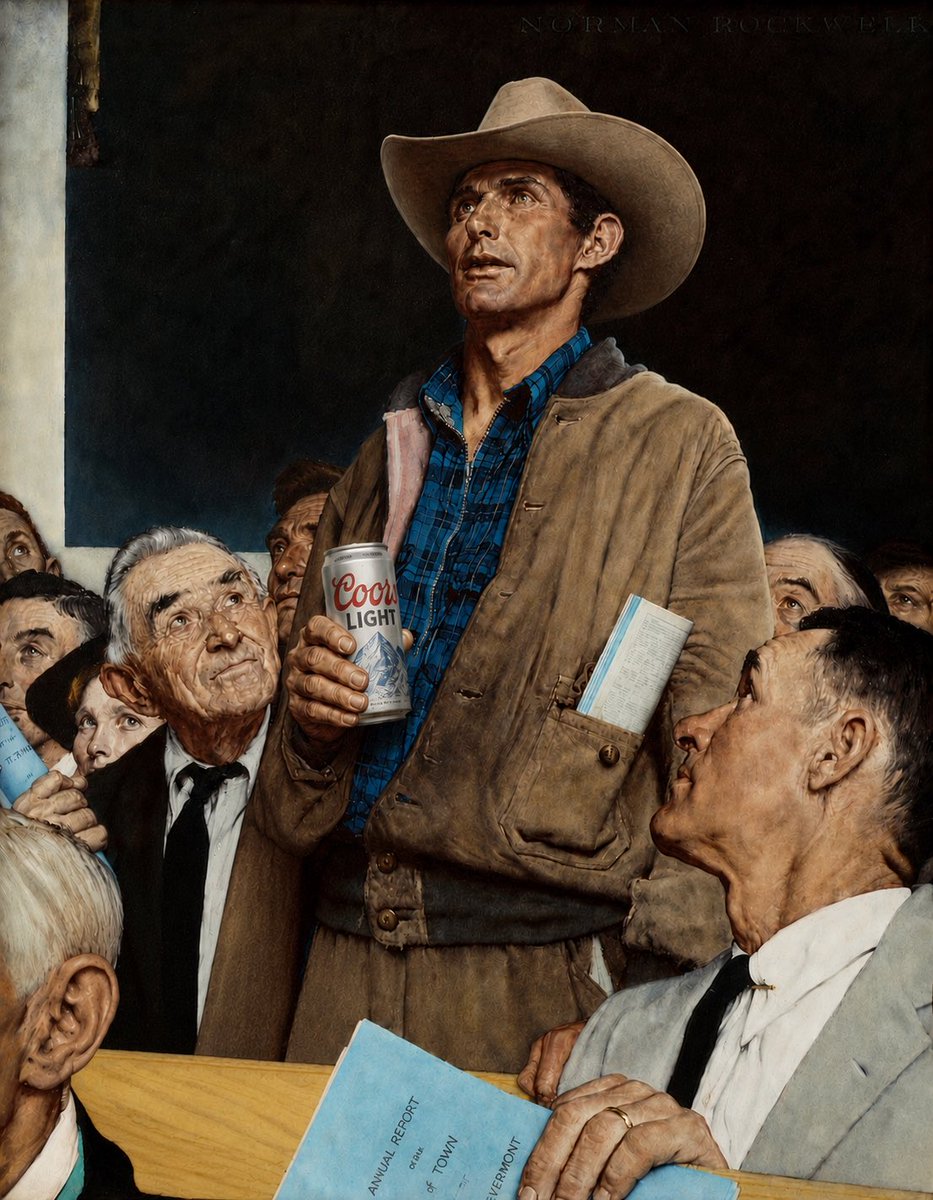
y’all have to give country music a chance, listen to the right artists who don’t just sing about beers and trucks.
English
@jazer Paul acknowledges it, but seems like it really comes down to their pivot away from jetliner and towards turbines
English

Great illustration of narrative vs evidence at work
Paul Graham@paulg
Boom always used to have hard time raising money. Investors are terrified of funding anything that's not like existing hot startups. And now, after 10 years of lean times, I'm getting unsolicited offers to buy Boom shares. It's so great.
English
Greg Docter retweetledi
Announcing Progress Conference 2026
Hosted by @rootsofprogress with @abundanceinst @foresightinst @JoinFAI @HumanProgress @IFP @TheIHS and @WorksInProgMag.
Speakers include @tylercowen @dmitri_dolgov Michael Kremer, John Martinis, Stephen Winchell.
Oct 8-11 • Berkeley, CA
Other fantastic speakers: @A_G_I_Joe @jasoncrawford @erika_alden_d @kesvelt @_alice_evans @bobbyfijan @Gena_I_Gorlin @akoustov @moxie @AndrewMillerYYZ @Brendan_McCord @patio11 @ryanzip @UrbanCourtyard @KelseyTuoc @brianpotter @rSanti97 @noor_siddiqui @mspringut @Vernon3Austin @Scott_Wiener … and more to come.
A big thanks to our early sponsors: @coeff_giving @AsteraInstitute @JaneStreetGroup Ken Broad @WorksInProgMag @LENSDetect @MNX_fi @ArchbridgeInst @GoodSciProject @TheIHS @CirculateSD @feeonline (Sponsorship opportunities still available).
Four days of intellectual exploration, inspiration, and interaction that will help shape the progress movement into a cultural force.
Tracks this year explore Human Talent & Potential, AI & Robotics, and Security & Resilience. Participants will attend talks on topics ranging from drone delivery to housing construction to psychology and philosophy of builders, organize and run unconference sessions, mingle in garden, and more. Thursday and Sunday are add-on days, with optional gatherings for interest groups and other activities like factory tours to Bay Area startups.
We're excited to continue this regular gathering of the progress community. Let's get together again in Berkeley this fall!

English
Greg Docter retweetledi
Announcing the 2026 Roots of Progress Blog-Building Intensive
Apply to the 4th cohort of this highly-regarded program for progress writers and intellectuals!
newsletter.rootsofprogress.org/p/announcing-t…
English
The year was 2006.
An obscure syntax for formatting plain text files, called Markdown, was all the rage among a certain nerdy subculture.
By writing in Markdown, you could leverage the power of your computer's file system and the command line, to organize, search, and process your work.
This humble markup language found surprising traction with developers, writers, researchers, and tech enthusiasts - and an entire ecosystem of tools, plugins, frameworks, scripts, and apps sprang up around it.
.
.
.
.
.
.
.
.
The year is 2026...
English

I can’t get any AI Lab app to do this:
- check for certain things on a schedule
- eg. news about something, change on some website, availability of some new flight
- but only send a push alert if it finds something new
They all send “nothing found” alerts.
English
@petergostev it already happened
support.claude.com/en/articles/13…
English
Enjoy this brief period of time when agents are powerful but they are not fully workable via mobile yet. Soon there will be no escape and the psychosis that Karpathy talked about won't leave you. Right now you can go to the park, go for drinks, meet your family and you can be safe in the knowledge that there's not much you can do productively.
In a matter of weeks this will go away, Anthropic and OpenAI will build out their mobile offerings properly and you'll have no excuse not to check in on your agents and see what else they can do for you - whether you are in shopping, walking your dog or on the toilet.
English
Greg Docter retweetledi


English

This is not a moat btw
Larsen Cundric@larsencc
Hot take: the moat in software isn't your code or how fast you ship anymore. Everyone can code and code fast now. The moat is how well you wire up the loops and processes. Hooking up your entire stack (e.g. Datadog, AWS, Terraform, repos, Slack...) to agents that can monitor, find bugs, fix them, and deploy 24/7. That's hard (at least for now). Making those pipelines reliable and safe at scale is the actual engineering challenge now. The companies that nail these end-to-end loops first will be genuinely impossible to compete with. At @browser_use we are making bets.
English
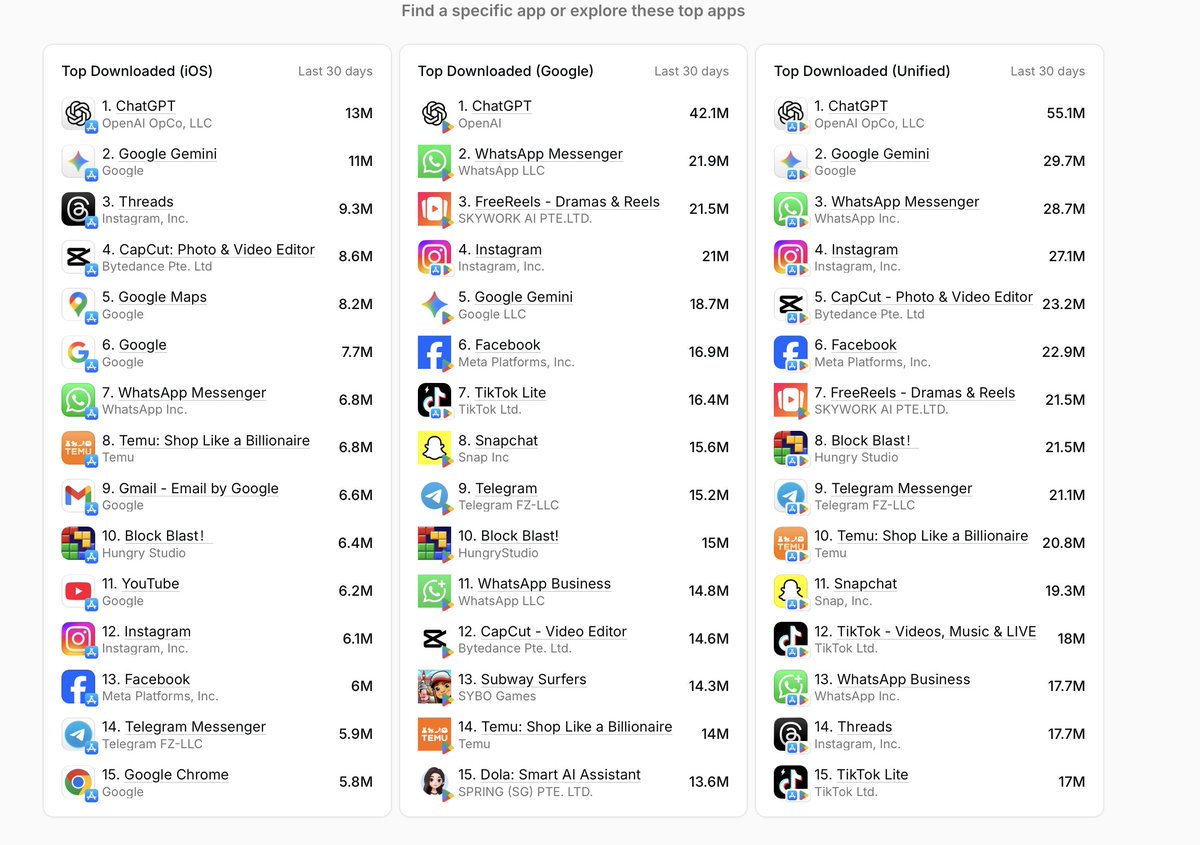
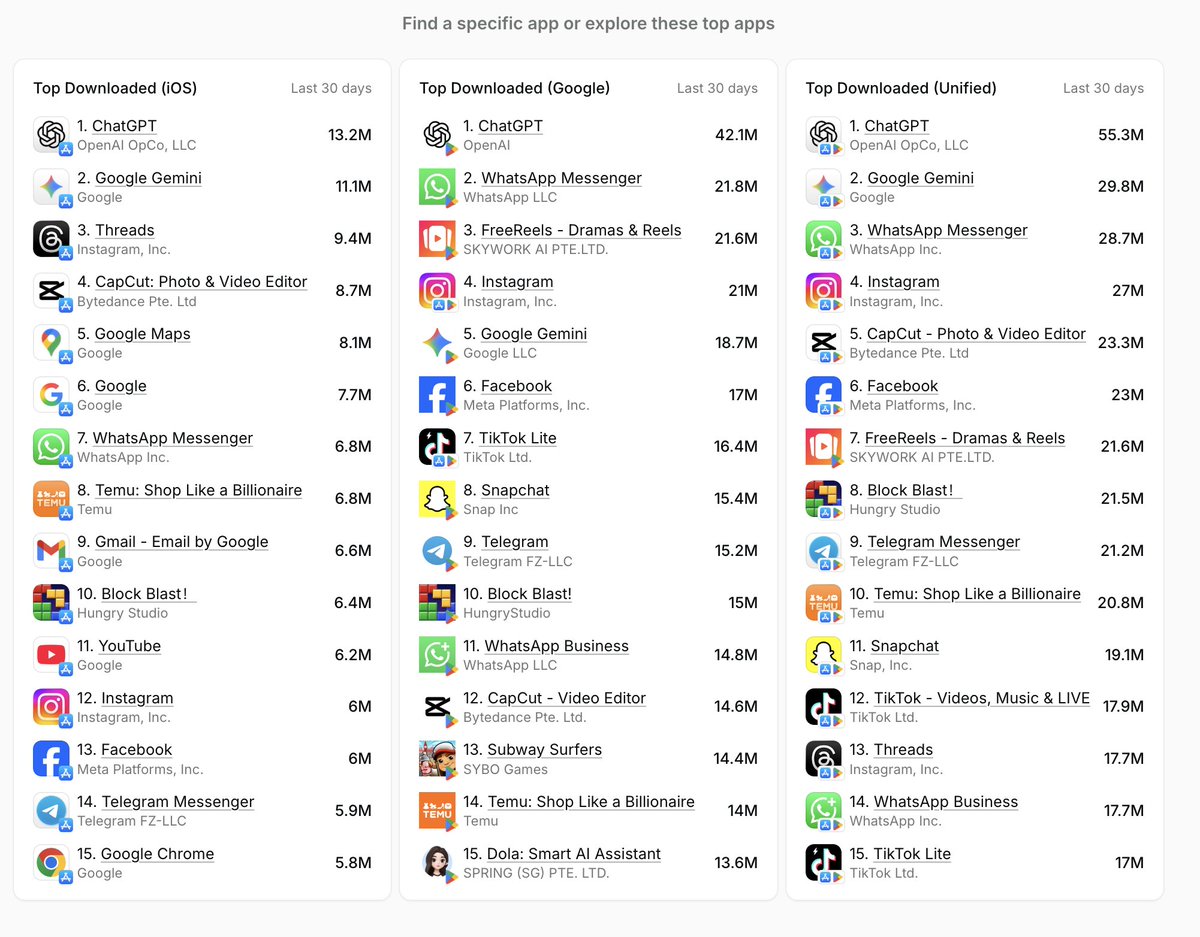
@mgsiegler still does not appear to be cracking any 30-day lists
via appfigures.com/reports/app-pr…
English

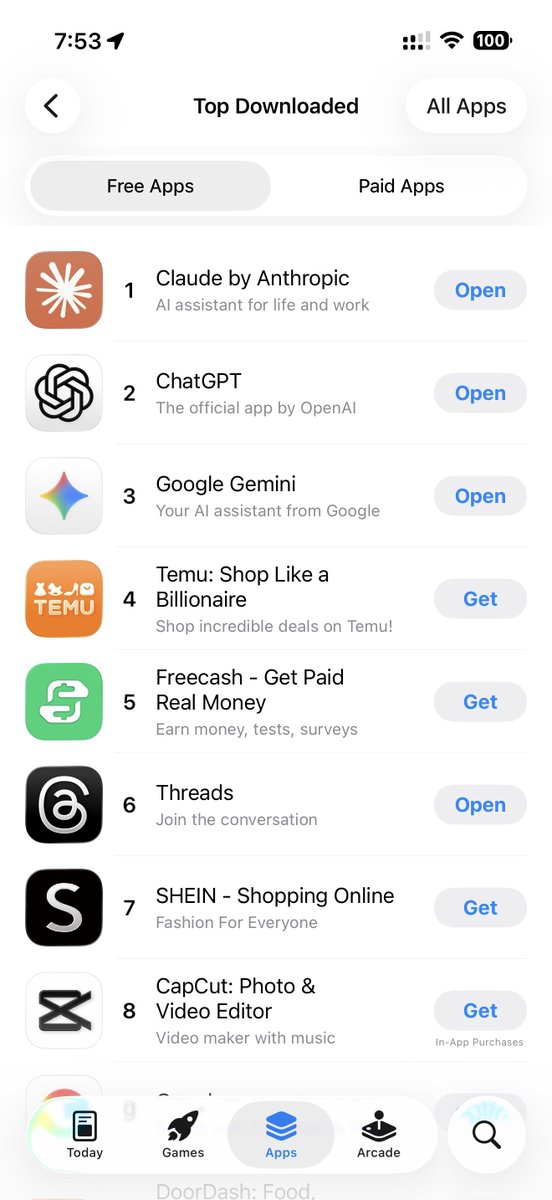

Awesome but why is Dick's #3???
Robert Bye@RobertJBye
We’re #1! Thank you everyone for you support 🎉
English
Decision-making is an under appreciated skill for founders.
There's so much chatter about how to build, how to launch, how to sell, how to test…
All of these activities generate information, but there are few tools for using what you learn to make good decisions about what to do next.
Which is crazy, because that's the whole point of a startup! Do something, learn something, adjust and repeat.
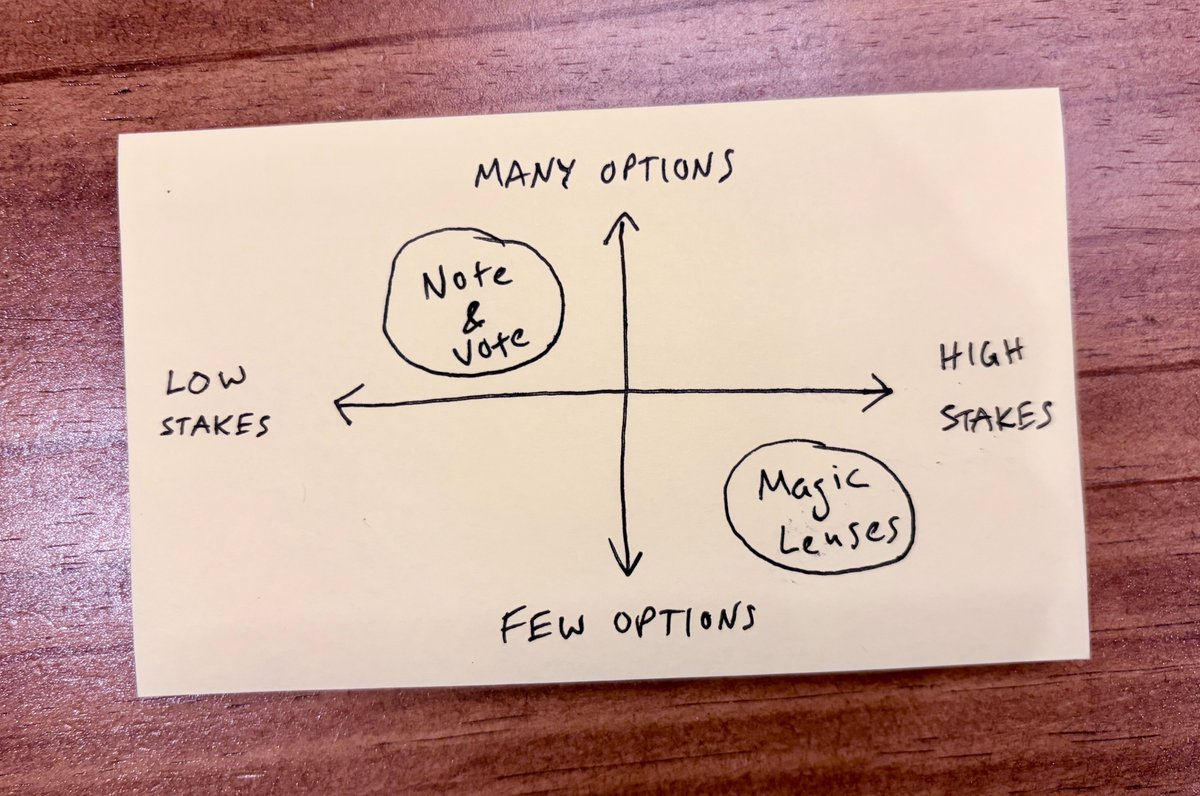
We have created two powerful tools for decision making: Note-and-Vote and Magic Lenses.
These are straightforward methods for making good, opinionated, fast decisions alone or with a team. We have used them hundreds of times with startups and for our own internal decisions at @CharacterCap
They are based on our observations from work with 300+ teams, and on behavioral research about decision-making.
📝 NOTE-AND-VOTE
When to use it:
- You need to make a low-stakes decision, selecting one or more items from many options (>10)
- Naming things, choosing headlines, picking dates, narrowing a broad list to a narrow set, etc
How it works:
1. List all the options
2. Vote on the best options
3. Optional: Vote again with a limited set of votes per person
4. Decider makes the final call
We often use Note and Vote in place of brainstorming — to generate and capture lots of ideas from the group, then narrow it down to a set of final options we can take as inputs to this next method.
🔎 MAGIC LENSES
When to use it:
- You need to make a high-stakes decision, selecting one or a few items from a set of up to ten options
- Prioritizing what to do next, making strategy decisions, choosing between multiple approaches to solving a problem, etc
How it works:
1. Create summary of each option
2. Write down the positive attributes for each option
3. Vote to select the most important attributes
4. Combine the attributes into natural pairings and construct 2x2 charts; these are your "lenses"
5. Plot each of the options on each of the 2x2 lenses
6. Zoom out and see which options are consistently in the upper right
7. Decider makes the final call
Magic Lenses is really good for complex decisions. Teams often struggle with multifaceted decisions because they don't have a way to consider every angle without causing a cognitive "buffer overflow." So they debate and talk and spin and talk and debate...
This technique fixes that.
Both of these tools are integral to our sprints — we use Note and Vote repeatedly throughout every sprint, and Magic Lenses anchors the second day of the Foundation Sprint. But you can certainly use them on their own; we do it all the time!
And they fit together nicely: A powerful combination is Note and Vote to capture everything and narrow to a strong set, then Magic Lenses to analytically zero in on one or final choices.
Lots more to say / show about both techniques... I'll share a couple links below, and I'm happy to answer questions in the replies!
English
Greg Docter retweetledi

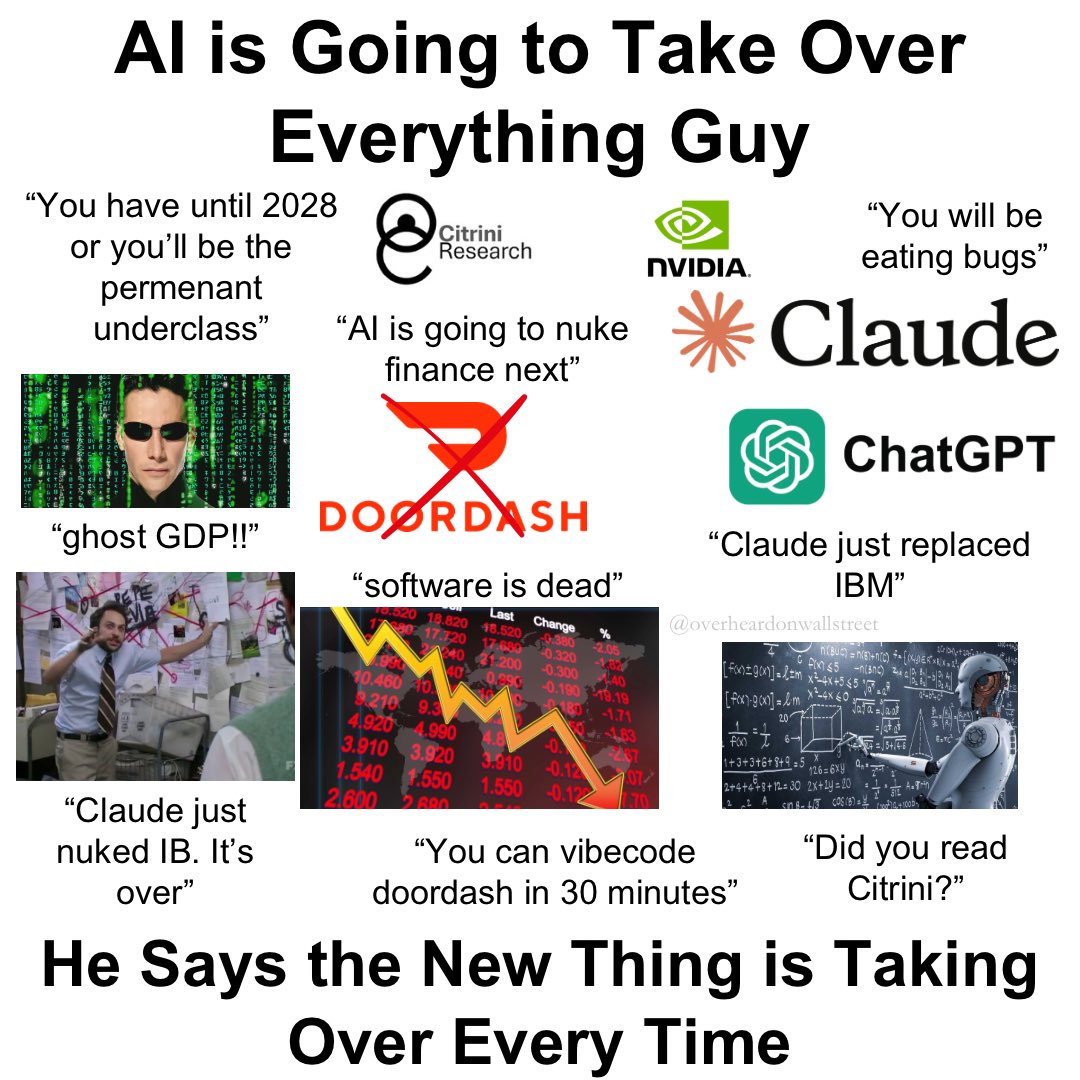
@lennysan there is nothing new about distribution being important
x.com/justinkan/stat…
Justin Kan@justinkan
First time founders are obsessed with product. Second time founders are obsessed with distribution.
English