aaron 🇦🇺

1.3K posts

aaron 🇦🇺 banner
aaron 🇦🇺

aaron 🇦🇺

@TanksAaron

Dev,Dr,Dad,Sim,Cloud,Crypto,CTO. map≠territory. Forgiveness+discernment. Jesus showed how to live. Universe is relational. E8 universe + geometry. Let's collab!

Perth, Western Australia เข้าร่วม Şubat 2021
2.5K กำลังติดตาม285 ผู้ติดตาม
aaron 🇦🇺 รีทวีตแล้ว
Jeremy Boreing
Jeremy Boreing@JeremyDBoreing·
Autism has stopped being a diagnosis and has now become an identity. Christina Buttons (@buttonslives) was diagnosed at 30. It brought her relief — but it also gave her permission to stop becoming the person she was capable of being. I was struck by the piece she wrote for @TheFP, so I sat down with her this week to talk about the diagnosis-as-identity trap, the California machine turning public schools into mental-health clinics, and why agency is the most counter-cultural idea in modern American life: youtube.com/watch?v=e31FY5…
YouTube video
YouTube
English
58
121
1K
303.5K
Thariq
Thariq@trq212·
HTML is the new markdown. I've stopped writing markdown files for almost everything and switched to using Claude Code to generate HTML for me. This is why.
Thariq@trq212

x.com/i/article/2052…

English
827
915
10.9K
3.7M
aaron 🇦🇺
aaron 🇦🇺@TanksAaron·
@sircalebhammer As a kid I loved to read the local street maps for hours on end. I'm glad Google maps wasn't a thing back then. Just autistic things...
English
0
0
1
650
oakleigh 🫡
oakleigh 🫡@oaklleiigh·
if australian pies are so much better why can’t i find steak and cheese pies
English
27
0
55
9K
aaron 🇦🇺
aaron 🇦🇺@TanksAaron·
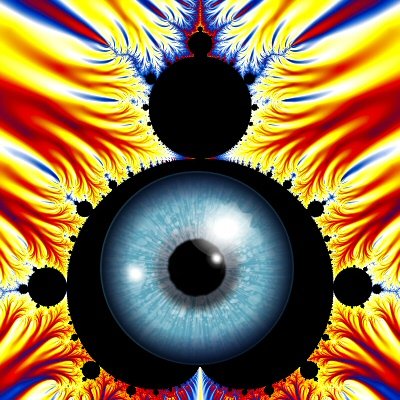
Just learning about Kondo physics for the first time...
aaron 🇦🇺 tweet media
English
0
0
0
9
aaron 🇦🇺
aaron 🇦🇺@TanksAaron·
Imagine: one celebrity walks into a crowd. Nearby people orient toward them. Then people orient relative to those people. Eventually a whole social pattern forms around one individual. The cobalt atom causes a quantum social network among electrons.
English
0
0
0
10
aaron 🇦🇺
aaron 🇦🇺@TanksAaron·
@exQUIZitely I'm old enough to remember the controversy around 6.2 which is why they had 6.21 and 6.22!
English
0
0
1
5
exQUIZitely 🕹️
exQUIZitely 🕹️@exQUIZitely·
I know it's easy to discard gaming from the 80s, 90s, and even the early 2000s as nothing more than nostalgia viewed through rose-tinted glasses. One aspect that often gets overlooked in that debate is actually based on facts, not just overly sentimental nostalgia. Having a computer and wanting to get the most out of it - and sometimes even just to get it working at all - required you to be far more invested, curious, and hands-on, so maybe that's why anyone who experienced that era feels a stronger connection to it. You had to read up on things, learn, and tinker with both software and hardware. If you had a PC in the 80s or 90s, it wasn't a "one and done" purchase. There was constant upgrading: swapping out a crappy sound card for a better one, replacing a small/slow hard drive, installing a CD-ROM drive, doubling your RAM from 1 MB to 2 MB… the list went on and on. It meant installing and updating drivers so everything actually worked. It meant understanding compatibility issues - all without the internet in the early days - so you relied on magazines, manuals, and friends who had "been there, done that." And that was just the hardware side. Then came the software: getting drivers, configs, and setups tuned perfectly so you could squeeze every last bit of performance out of the machine. Some games simply wouldn't run unless you freed up those final kilobytes of conventional memory. There was even a whole industry built around "managing your PC" with tools like Norton Commander and countless others. These days, there is... No more fiddling with AUTOEXEC.BAT or CONFIG.SYS files. No fine-tuning HIMEM.SYS. No IRQ conflicts with your sound card. No more boot disks. Juggling hard drive space? Forget it - drives now come in terabytes, not megabytes. Dealing with a 5.25" floppy, a 3.5" floppy, and a CD-ROM drive all crammed into one case? What a drag. Saving up for that shiny new VGA card to replace your old EGA? Not a thing anymore. And yet, if you ask older gamers who lived through the 80s and 90s, most of us actually enjoyed customizing and troubleshooting our machines. It was part of the experience - part of the joy and excitement. Sure, it involved plenty of trial and error and frustrating "OMFG, why isn't this working?!" moments… but when it finally worked, the reward was so much sweeter. Finally freeing up those last couple of kilobytes of your 640K base memory? Glorious. Replacing that pathetic PC speaker with a real sound card? Pure ecstasy. To all you old-school gamers out there, I hope you experienced it the same way. I always felt that the need to tinker endlessly made the whole experience more rewarding. You were more connected to your machine and understood it on a deeper level. These days, you just click a button and the game downloads and installs itself. I have a modern PC, of course. It's been over 20 years since I last had to do any real tinkering. That's convenient, sure… but the magic and curiosity is gone.
English
126
65
671
34.1K
Nina Miolane 🦋 @ninamiolane.bsky.social
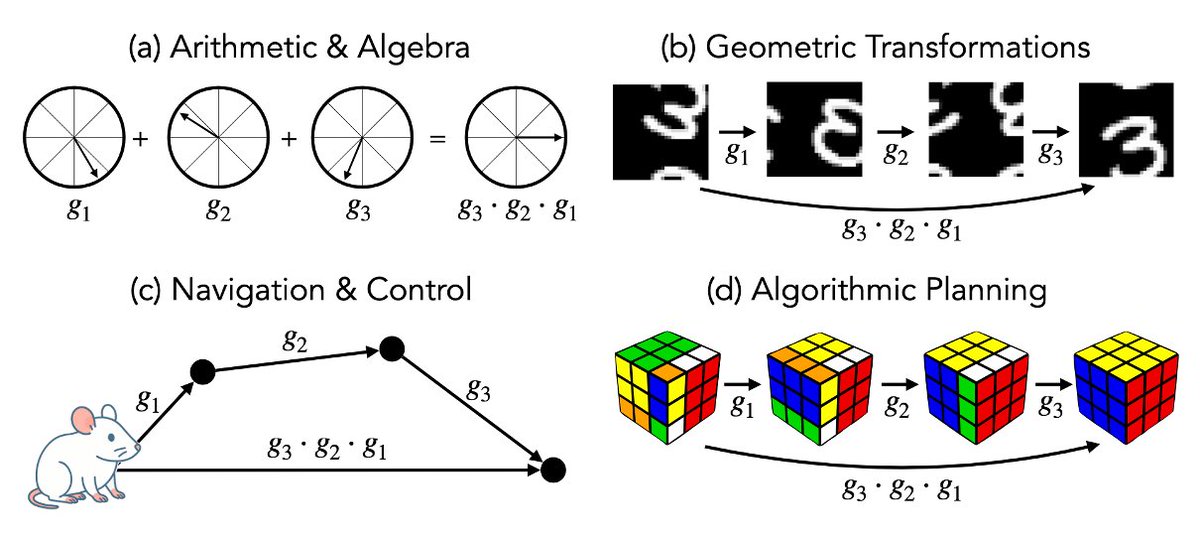
Arithmetic. Vision. Navigation. Planning. What if they're all the same task? We introduce group composition as a unifying abstraction for many learning problems & show neural networks crack it using Fourier! Led by @KuninDaniel @giovannimarchet @AdeleMyersPhD @hopfbifurcator🌟
Nina Miolane 🦋 @ninamiolane.bsky.social tweet media
Daniel Kunin@KuninDaniel

Excited to share that our paper “Sequential Group Composition: A Window into the Mechanics of Deep Learning” was accepted to ICML 2026 in Seoul! Co-led with @giovannimarchet and @AdeleMyersPhD @hopfbifurcator @ninamiolane Paper: arxiv.org/abs/2602.03655

English
23
136
820
61.7K
aaron 🇦🇺
aaron 🇦🇺@TanksAaron·
@mimibirch Meaninglessness Adelaide goal that's technically 1% better late in the season. That's the Freo way.
English
0
0
1
157
aaron 🇦🇺
aaron 🇦🇺@TanksAaron·
@AMerchantmoh Whether YIG works or not, there is a zoo of material science waiting to be discovered (superconductivity, heat harvesting, dynamic catalysts, antigravity, etc.). The future awaits! x.com/i/status/20494…
aaron 🇦🇺@TanksAaron

Here is the Manhattan project: Best material classes to look at ClassExample materialsGeometry-controlled signal 2D topological insulatorsHgTe/CdTe, InAs/GaSb, WTe₂quantized / softened Hall or edge transport Weyl & Dirac semimetalsTaAs, NbP, Cd₃As₂, Na₃Bianomalous Hall, chiral anomaly, circular photogalvanic response Kagome magnetsFe₃Sn₂, Co₃Sn₂S₂, Mn₃Sn, AV₃Sb₅Berry-curvature Hall effects, flat-band correlation effects 2D TMDsMoS₂, WSe₂, MoTe₂, WTe₂valley Hall, nonlinear Hall, Berry-curvature dipole Twisted / moiré systemstwisted bilayer graphene, TMD moirésflat-band quantum geometry, anomalous Hall, superconducting stiffness Topological magnets / skyrmion hostsMnSi, FeGe, Cu₂OSeO₃topological Hall from real-space spin texture Topological magnon systemsYIG films, kagome ferromagnets, pyrochlore magnetsmagnon thermal Hall, chiral magnon edge modes AltermagnetsMnTe, RuO₂, CrSb candidatesanomalous Hall-like effects without conventional ferromagnetism MultiferroicsBiFeO₃, TbMnO₃electric-field control of spin/transport geometry Phononic / acoustic crystalspatterned Si, GaAs, metamaterialschiral phonons, phonon Hall-like transport The hottest “geometry transport” areas right now are nonlinear Hall effects, quantum geometry in flat bands, kagome magnets, and magnon/phonon topology. Recent reviews explicitly connect nonlinear Hall transport to Berry curvature and quantum metric, especially in 2D materials. Quantum geometry is also now being tied to optical responses, Landau levels, fractional Chern insulators, superconducting weight, spin stiffness, exciton condensates, and electron–phonon coupling. Most promising “next bets” 1. Nonlinear Hall materials Look for systems with broken inversion but preserved time-reversal symmetry. The signal is a transverse voltage at second harmonic, often tied to the Berry-curvature dipole. Good candidates: WTe₂, MoTe₂, strained TMDs, polar semimetals. 2. Kagome magnets These are probably the closest cousins to the “YIG + geometry” idea, because they combine magnetism, topology, flat bands, and Berry curvature. Kagome materials are highlighted as especially suited to study topology, magnetism, and correlations together. 3. Magnon topology This is the cleanest YIG-adjacent path. Instead of searching for gravity effects, look for driven magnon Hall / thermal Hall / nonreciprocal microwave transport controlled by magnon band geometry. Kagome antiferromagnets and magnon-polaron bands are active candidates. 4. Altermagnets Very interesting emerging class: no net magnetization like antiferromagnets, but spin-split bands and Hall-like effects can appear from symmetry and Berry curvature. Recent theory even proposes magnon-driven anomalous Hall effects in altermagnets. The “so what” experiment family A good general recipe: Measure a transverse response while scanning a knob that reshapes geometry. Knobs: strain gate voltage magnetic field microwave/THz drive optical Floquet drive disorder/noise temperature Signals: Hall conductivity nonlinear Hall voltage thermal Hall conductivity spin Hall signal microwave nonreciprocity Kerr/Faraday rotation photocurrent helicity response The best “smoking gun” is not merely an anomaly. It is an anomaly that moves predictably with the calculated Berry-curvature or quantum-metric hotspot. Practical shortlist For a serious but feasible project, I’d shortlist: 1. WTe₂ / MoTe₂ — nonlinear Hall, Berry-curvature dipole. 2. Co₃Sn₂S₂ or Fe₃Sn₂ — kagome Berry-curvature transport. 3. YIG or Bi:YIG patterned magnonic crystal — driven magnon topology. 4. InAs/GaSb quantum well — tunable topological gap. 5. MnTe / CrSb / RuO₂-type altermagnet candidates — emerging Hall-like geometry effects. The YIG connection becomes strongest if you pivot from “gravity” to: driven magnonic quantum geometry and nonreciprocal/thermal transport.

English
0
0
1
47
Mohamad Al-Zawahreh
Mohamad Al-Zawahreh@AMerchantmoh·
Here I describe to Jack and Felicity what Ark is - and how you my dear reader - can also use AI to your advantage, in the best way possible.
Jack Sarfatti@JackSarfatti

On Apr 29, 2026, at 3:40 PM, Mohamad Al-zawahreh  wrote: Felicity, One more thing — I gave you the AI side of Ark but there's a physics side that, as a sci-fi writer, you might find even more interesting. Jack's life work — and what I've been helping formalize with the AI tools I just described — is an extension of Einstein's General Relativity that makes warp drives and wormholes physically possible. Not in the "maybe someday with unobtainium" sense. In the "tabletop experiment with existing materials in an existing lab" sense. Here's the short version: Einstein's gravity is absurdly weak. The gravitational constant G is so small that to bend space enough to open a wormhole — using standard GR — you'd need the mass of Jupiter compressed into exotic negative-energy matter. That's why every physicist says wormholes are "theoretically possible but practically impossible." The energy cost is insane. Jack's framework says: that's only true if you're using mass to bend space. There's another channel — spin. Specifically, the quantum spin angular momentum of electrons in certain magnetic metamaterials. When you work through the gauge theory (SO(2,4) — the conformal group, an extension of Einstein's symmetry group), the coupling constant for spin-torsion gravity isn't Newton's G. It's a different constant, G*, that depends on the charge-to-mass ratio of the electron and the electromagnetic properties of the material. And G* is approximately 10^42 times larger than Newton's G. What does 10^42 mean practically? The exotic matter required for a Visser wormhole portal drops from the mass of Jupiter to the weight of an apple. About 440 grams. The power requirement drops to half a megawatt — less than a diesel locomotive. The material that does this already exists. It's called Yttrium Iron Garnet — YIG. It's a magnetic crystal used in microwave electronics. When you pump it with microwaves at a specific frequency (~45 MHz), the magnetic excitations (magnons) condense into a single quantum state — a Fröhlich condensate. That condensate is the spin source that couples to G* instead of G_N. The experiment to test it is straightforward: put a YIG sphere on a precision torsion balance (the same kind of instrument Cavendish used to measure G in 1798). Pump it with microwaves. Turn the pump on and off. If the theory is right, the torsion balance deflects when the pump is on and returns to baseline when it's off. The predicted signal is enormous — not a subtle statistical effect. A clear on/off switch. The equipment costs less than a postdoc's salary. If it works, it means: - Warp drives are engineering problems, not physics problems - Traversable wormholes ("stargates") are buildable with known materials - UAP propulsion has a physical explanation within extended GR - SpaceX becomes obsolete If it doesn't work, we know within a week of turning on the experiment. Clean falsification. No decades of ambiguity. Now — here's where Ark connects both halves: I used the AI methodology I described in my last email to do the symbolic tensor algebra (SymPy verification of the field equations), the numerical simulations (warp bubble solutions, metamaterial optimization), and even the experimental design. The AI tools don't replace the physics intuition — Jack has 50+ years of that. But they let a two-person team produce the equivalent output of a departmental research group. That's what Ark does: it takes human insight and amplifies it through properly-instructed AI until the output is indistinguishable from a well-funded institutional effort. A 29-year-old with no physics degree and an 86-year-old former Cornell/UCSD physicist, using AI as a cognitive amplifier, producing manufacture-ready blueprints for technology that would reshape civilization. That's the Ark story. If that's not sci-fi made real, I don't know what is. ~Mo nytimes.com/1986/02/11/sci… sfgate.com/news/article/S… nybooks.com/articles/1979/… 'On Apr 29, 2026, at 3:51 PM, JACK SARFATTI @icloud.com> wrote: jacksarfatti.academia.edu Begin forwarded message: From: Mohamad Al-zawahreh Subject: Re: You just got 106 views on "Tversky Neural Nets, Conscious AGI and Hawking's Mind of God" Date: April 29, 2026 at 3:35:08 PM PDT To: JACK SARFATTI @icloud.com> Cc: Felicity Harley Ark is applying systemizing logic and epistemology to Artificial intelligence in an attempt to make them capable of ethical, beneficial, intelligent, nuanced and verified output. Essentially, AI is broken. It lies, it makes things up, it doesn't really understand - it's not conscious - it doesn't know what it is doing and doesn't understand reasoning it PERFORMS reasoning. There is a huge gap of epistemology that stops AI from being useful - one that can be patched with natural language instruction and vigilance - plus outside tools (Sympy, Numpy, Formal verification methods etc) - the key insight: When you clearly define what "right" is and what "wrong" means - the LLM can perform the task adequately - the general population assumes that because the AI responds eloquently and they understand what it is saying - that it understands nuance - that it has "common sense"- an assumption of intellect that is misinformed. AI "understands" the definition of a word - but until you articulate it in a prompt - a framework "You must tell me if my writing here is good, and by good I mean that, were it to be entered in a writing competition - one of a high standard - let us say X - it would likely win Gold - the definition of "good writing" is something that is well paced, and causes a visceral reaction in the reader etc" You literally make an entire "skill" file - by having an LLM research deeply the topic of "What makes good writing "good" - then you attach that file in a prompt and say "This file defines what is good writing, use it and the information therein to analyze my book and tell me how good it is - where it could be improved and any other advice that is NOT generic - but targeted and very well informed - based on the actual content of my book and the target demographic" See Felicity? One prompt "Tell me how good my writing is" You'll get a trash generic response - likely bad advice even. Another prompt with a smart method (Creating a skill file/report containing the definition of what "good writing" is deeply and eloquently articulated with examples and so on and techniques people use to judge writing quality and examples of the best and most popular books of all time - and everything people broke down to understand WHY those books did so well - attaching that file to the prompt with explicit instructions) The response: Absolute gold - on a level no one could likely recieve except by being expert writers a lot of money for deep eloquent advice - even with that - who will go page by page - sentence by sentence in your books and give you such deep advice? You gonna hire Stephen King, Branden Sanderson, Pierce Brown and a dozen other writers to give you deep pointers on every single line in your books? Yeah. No. But AI? AI will do whatever you want, as long as you want - pretty much for free. The method I described above is an example - deeply relevant to your own work Feliciity - to show what AI can be used for in a way that is relevant to you. That is what Ark is - it is my ability to articulate - to teach - to use AI concentrated in a methodology - automated as much as I can -- but with me at the helm - pointed in the direction of any problem - I find a way to fix it. Having ingenuity - knowing exactly what you would need to know to do something effectively and how you would go about doing that something - and providing that to the LLM - a mixture of Prompt engineering and Context engineering - so that the AI can do what it was made to do - assist you. Become a reasoning partner - a exocortex - an extension of your own cognition. Now take the method I just described and apply it to Patent law, to medicine, to relationship advice - anything. You'll get the same outcome. Output - results - from the AI that is highly accurate, highly valuable and highly effective in making YOU better at whatever it is you are trying to do. Hope that helps. ~Mo On Wed, Apr 29, 2026 at 5:36 PM JACK SARFATTI @icloud.com> wrote: Ask Mohamed I do not understand AI LLMs.jacksarfatti.academia.edu On Apr 29, 2026, at 2:32 PM, Felicity Harley wrote:I’d like to write something on ARK but I don’t quite understand it - if you have time to put down a few sentences I can further research it and check it out with Mohammad .On Apr 29, 2026, at 5:10 PM, JACK SARFATTI @icloud.com> wrote: Interesting that Sam Altman and Elon Musk suing each other in Oakland.The AI tech we have may put them both out of business. Too soon to tell.Also if my SO(2,4) G* >> G local gauge gravity extension of Einstein’s General Relativityworks that puts Space X out of business. x.com/i/grok/share/9… Technological Surprise x.com/i/grok/share/c… x.com/i/grok/share/5… x.com/i/grok/share/0… jacksarfatti.academia.edu Begin forwarded message:From: "Academia.edu" @academia-mail.com> Subject: You just got 106 views on "Tversky Neural Nets, Conscious AGI and Hawking's Mind of God" Date: April 29, 2026 at 1:44:37 AM PDTTo: jacksarfatti@gmail.com Hi Jack,Congratulations! You uploaded your paper 2 days ago and it is already gaining traction. Total views since upload: You got 106 views from France, Germany, the Netherlands, Saudi Arabia, the United States, Brazil, Nigeria, Spain, Greece, India, the Russian Federation, Italy, Israel, Canada, the United Kingdom, Ukraine, Kazakhstan, Taiwan, Argentina, Belgium, Hong Kong, Algeria, and China on "Tversky Neural Nets, Conscious AGI and Hawking's Mind of God". Upload Another Paper Thanks, The Academia.edu Team You can update your preferences or unsubscribe. Academia.edu, 580 California St., Suite 400, San Francisco, CA, 94104

English
1
1
4
488
The DarkHorse Podcast
The DarkHorse Podcast@thedarkhorsepod·
Bret Weinstein's case for religion: "One of the functions that religion serves best, and in fact maybe uniquely or almost uniquely, is solving deep game theory problems." - @BretWeinstein
English
23
28
199
17K