Holocaust Art Recovery Initiative

603 posts

Holocaust Art Recovery Initiative banner
Holocaust Art Recovery Initiative

Holocaust Art Recovery Initiative

@ArtRecoveryInit

Exposing Holocaust-era art theft. Public evidence, provenance research, and restitution documentation.

Detroit, MI Katılım Temmuz 2025
4.3K Takip Edilen208 Takipçiler
Sabitlenmiş Tweet
Holocaust Art Recovery Initiative
🖼️🕯️ The Révai Rippl-Rónai: Why is ‘Girl in a Green Dress’ Still Hiding in the Hungarian National Gallery? This is a direct, document-to-object match. The 1944 seizure record of the Révai family’s collection aligns perfectly with the Rippl-Rónai pastel held today by the Hungarian National Gallery. 📜 THE 1944 RECORD From the official wartime protocol documenting the seizure of the Révai collection (Kelenhegyi út 21, Budapest), confiscated under Decree 1830/1944 and transferred to the Szépművészeti Múzeum: “Zöldruhás nő pasztell, papírlemez 43,5 × 32,5 cm” — József Rippl-Rónai (“Woman in a green dress, pastel on paperboard, 43.5 × 32.5 cm”) The Magyar Nemzeti Galéria’s own 1997–2001 Évkönyv republishes this same entry—slightly expanded but unchanged in substance—as: “Zöldruhás nő (Zöldruhás leány). Pasztell, papírlemez; 43,5 × 32,5 cm” (“Woman in a green dress (Girl in a green dress), pastel on paperboard; 43.5 × 32.5 cm”) In other words, the museum’s own scholarly publication preserves the exact wording, medium, and dimensions from the 1944 seizure record—quietly confirming the continuity between the wartime inventory and the work held today. 🖼️ THE WORK TODAY — Hungarian National Gallery Zöldruhás leányka (Girl in Green Dress) József Rippl-Rónai · 1901 Pastel on paper · 43 × 32 cm Signed lower left: Rónai Inventory no. 54.433 Collection: 19th–21st Century Collection / Painting Department Currently not on display. 🔗 mng.hu/mutargyak/5219… 🔍 ALIGNMENT - all key identifiers. • Artist — identical, never shifted • Title — consistent across the 1944 inventory, the Évkönyv, and the current museum record • Medium and support — pastel on paper, exact in both records • Dimensions — 43.5 × 32.5 cm (1944) vs. 43 × 32 cm (today). A 0.5 cm variance is entirely normal when comparing a wartime field measurement with a modern sight size taken under glass or after conservation • Institutional path — the 1944 record explicitly documents transfer to the same museum system where the work remains today • Independent confirmation — the museum’s own publication reproduces the original entry with the same data There is no better alternative candidate that fits this combination. ⚠️ THE PROVENANCE GAP The museum’s public entry for Inv. No. 54.433 contains no ownership history prior to 1945 — no donor, no acquisition route, no mention of the Révai collection. The inventory number itself suggests a post-war formal accession, likely in the 1950s, when works already held in state custody were administratively absorbed into permanent collections. This was a pattern, not an anomaly. That absence is not neutral. Under the Washington Principles on Nazi-Confiscated Art, provenance gaps of this kind create an obligation to investigate and disclose. 👤 THE VICTIMS The Révai family were established Budapest collectors whose home was systematically inventoried and emptied in 1944 under state authority because they were Jewish. Their collection included numerous works by major Hungarian artists, recorded in precise detail. 📣 CALL FOR TRANSPARENCY Magyar Nemzeti Galéria must: 1️⃣ Publish the full 1944 Révai inventory and transfer documentation 2️⃣ Release the complete accession file and any back-of-work documentation — labels, stamps, markings — for Inv. No. 54.433 3️⃣ Disclose any provenance research conducted since the 1997–2001 Évkönyv 4️⃣ Add a public note acknowledging the 1944 seizure context 5️⃣ Engage with researchers and potential heirs in line with international standards 🕯️ JUSTICE IS NOT OPTIONAL This pastel was never "lost." It was systematically seized, measured, and transferred through official channels. In line with the Washington Principles, silence is no longer an option. It is time for full disclosure and formal restitution. #HEARAct @marcorubio @nytimesarts @JohnCornyn @SenBlumenthal @RepLaurelLee @RepJerryNadler @WorldJewishCong @nytimesarts @raydowd @lauder_ronald @USAmbHungary @MayaKadosh
Holocaust Art Recovery Initiative tweet mediaHolocaust Art Recovery Initiative tweet media
English
0
0
0
32
Holocaust Art Recovery Initiative
📚🇺🇸 An American Poetry Anthology, Stolen in Budapest in 1944 — and Never Returned In 1944, a Nazi-aligned Hungarian government seized a Jewish scholar’s library of over 4,500 books. One of them was an anthology of American poetry, compiled by one of America’s most celebrated literary figures. It has never been returned. 📜 THE 1944 RECORD Dr. Gáspár Endre was a Jewish scholar in Budapest. In June 1944, under Decree 1830/1944 M.E., his entire private library was confiscated and transferred to state custody. His collection — meticulously inventoried on microfilm (attached) — included works by Shakespeare, Joyce, Keats, Kipling, Byron, Pearl S. Buck, and Endre Ady. Entry #3203 reads: “Conrad Aiken – American Poetry 1671–1928” This is the 1929 Modern Library edition: a landmark anthology spanning over 250 years of American verse — from Anne Bradstreet to Walt Whitman, Emily Dickinson, Edgar Allan Poe, T. S. Eliot, Ezra Pound, and E. E. Cummings. An August 1944 receipt records its transfer to the Győrffy István Collegium in Budapest. There is no public record it was ever returned. 🇺🇸 WHY THIS MATTERS TO AMERICA Conrad Aiken was a Pulitzer Prize-winning American poet, novelist, and critic — one of the defining literary voices of the 20th century. The anthology he compiled is a monument to American literary identity: the full arc from the earliest colonial poets to the modernist revolution. That book ended up on a Nazi-era seizure list in Budapest. It was taken from a man who valued it enough to own it — a Jewish intellectual in Central Europe who reached across an ocean for American poetry, only to have it stripped away by the state. This is not only a Hungarian story. It is an American one. The Holocaust Expropriated Art Recovery Act (HEAR Act) exists because cases like this remain unresolved. Cultural property — books, art, objects of intellectual life — was stolen systematically and has never been fully accounted for. American institutions, American legislators, and American readers have a stake in what happens next. 🔎 CHECK YOUR SHELVES Records show that many looted books were not destroyed. They were redistributed — into institutions, private collections, and secondhand markets. If you locate a copy of American Poetry 1671–1928 (Conrad Aiken, Modern Library, 1929), look for: • Bookplates or ownership stamps (e.g., Győrffy István Collegium) • Handwritten inscriptions or signatures (Dr. Gáspár Endre) • Hungarian library or institutional markings from the 1940s You may be holding a piece of this story. 📣 OUR OBLIGATION The records survived. The inventory is precise. The chain of custody is documented. What is missing is the will to act. @ArtRecoveryInit calls for: 1️⃣ Full archival access to records documenting the seizure and transfer of Dr. Endre’s library 2️⃣ Provenance review of institutional holdings that may include these volumes 3️⃣ Engagement with researchers and potential heirs 4️⃣ International cooperation — including from American institutions — to address unresolved Holocaust-era cultural losses 🕯️ HISTORY IS NOT FINISHED The 1944 inventories are not abstractions. They are administrative records of dispossession — line by line, volume by volume, person by person. Dr. Gáspár Endre reached for American poetry. It was taken from him. That is the outstanding problem. Restoring it — even in part, even in record — is our obligation. @POTUS @VP @marcorubio @JohnCornyn @SenBlumenthal @RepLaurelLee @RepJerryNadler @nytimesarts @nytimesbooks @librarycongress @tedcruz @bookcritics @POETSorg @AmPoetryReview @Poetry_Society @washingtonpost @ForeignPolicy @SmithsonianMag @MonumentsMen @lauder_ronald @raydowd @AIPAC @SenFettermanPA #Holocaust #Books #CulturalHeritage #HEARAct #AmericanPoetry #MuseumEthics #poet #Budapest #ConradAiken #USA
Holocaust Art Recovery Initiative tweet mediaHolocaust Art Recovery Initiative tweet media
English
0
0
0
34
Holocaust Art Recovery Initiative
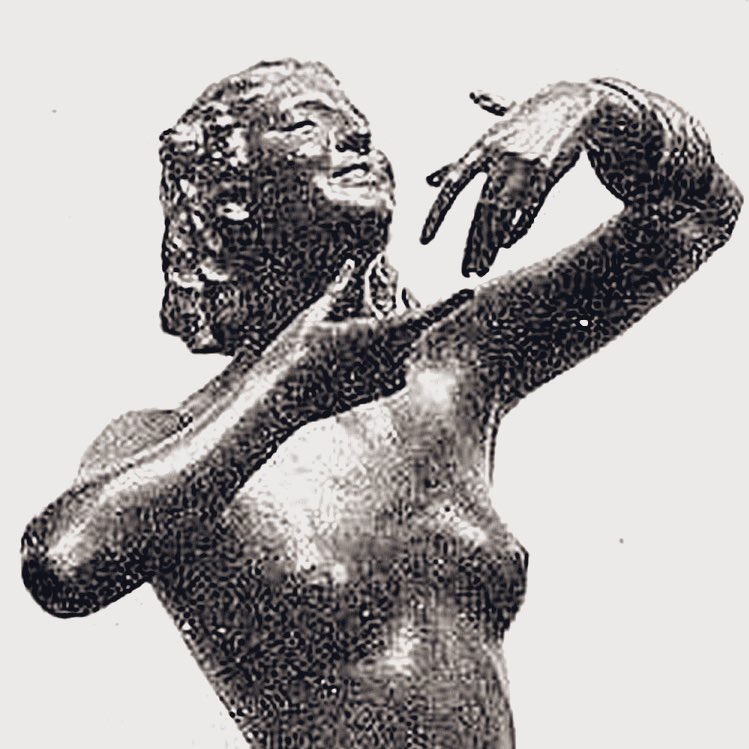
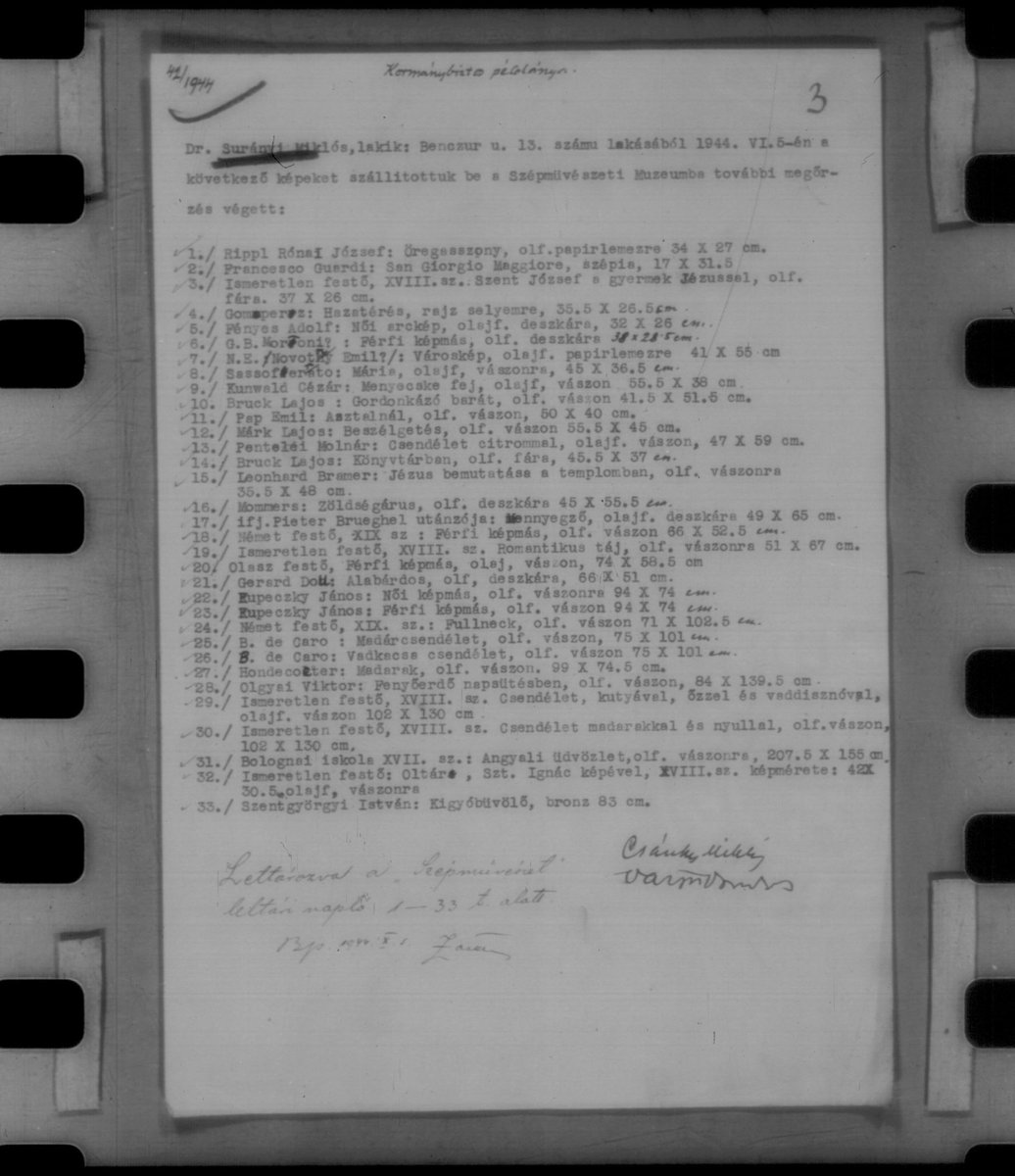
The 83cm Evidence: Tracking a 1944 Stolen Bronze to a 2026 Budapest Museum Pedestal A single bronze sculpture stands out in the 1944 seizure inventory of Budapest lawyer, writer and collector Dr. Surányi Miklós. It is the only non-painting object in the entire 33-item inventory — and today, it appears to remain exactly where it was sent eight decades ago. 📜 THE 1944 RECORD The official Hungarian wartime inventory records Entry #33 as: “33./ Szentgyörgyi István: Kígyóbűvölő, bronz 83 cm.” This description aligns precisely with a work currently held by the Szépművészeti Múzeum: **Kígyóbűvölő (Snake Charmer)** Artist: István Szentgyörgyi Medium: Bronze · Height: 83 cm Inventory: SZO_3967 3D model (hosted by the Museum of Fine Arts, Budapest): sketchfab.com/3d-models/szen… 🔍 A ONE-TO-ONE ALIGNMENT Unlike paintings, bronze sculptures do not undergo relining, trimming, or dimensional drift. An exact height match of 83 cm for this specific artist and title is a direct physical identifier — not a probability. The 1944 records document the transfer of Dr. Surányi’s collection to state custody under Decree 1830/1944 M.E. The museum currently publishing a 3D model of SZO_3967 is the same institution named in the wartime transfer files. That is a clear and unbroken chain of custody. This is not a circumstantial match. It is a one-to-one alignment across every recorded category: artist, title, medium, dimension, and institutional destination. ⚠️ THE PROVENANCE GAP Public records for SZO_3967 do not document ownership prior to 1945. That absence matters. It aligns precisely with the systematic seizure of Jewish property under state authority — collections taken under the pretext of safekeeping while their owners faced persecution. Under the Washington Principles on Nazi-Confiscated Art, such gaps require investigation and transparency, not silence. 👤 THE COLLECTOR Dr. Surányi Miklós was a Budapest lawyer, writer and collector whose home and entire collection were inventoried and confiscated in June 1944. He was one of thousands. The records of what was taken survived, and so does much of his property. 📣 CALL FOR TRANSPARENCY We respectfully call on the Szépművészeti Múzeum to: 1️⃣ Release the full accession and wartime transfer files for SZO_3967 2️⃣ Publish the complete 1944 Surányi inventory documentation 3️⃣ Conduct and disclose provenance research on all items from this seizure 4️⃣ Engage with researchers and potential heirs in good faith This is not about accusation. It is about seeking the truth. 🕯️ JUSTICE Dr. Surányi’s collection was dismantled by a meticulous bureaucratic process, object by object. Restoring the record requires the same rigor — entry by entry, institution by institution. Artist, title, material, height, and institutional path: every recorded variable matches exactly. For the only sculpture on a 33-item seizure list, that is not coincidence. SZO_3967 is a place to start. #HolocaustArtRecovery #ProvenanceResearch #NaziLootedArt #MuseumEthics #BudapestHistory #ArtRestitution #WashingtonPrinciples #Szentgyorgyi #SzepmuveszetiMuzeum #HEARAct @nytimesarts @marcorubio @JohnCornyn @RepLaurelLee @SenBlumenthal @RepJerryNadler @artnet @hyperallergic @CathyHickley @USAmbHungary @USAmbUN @UnescoGeneva @WorldJewishCong @lauder_ronald @MonumentsMen @raydowd @realDonaldTrump @VP @jaredkushner @Isaac_Herzog @elonmusk @France24_ar @bbcarts @guardianculture @EUintheUS @ahistoryinart @arthistorynews @brand_arthur @brandeiscenter
Holocaust Art Recovery Initiative tweet mediaHolocaust Art Recovery Initiative tweet media
English
0
0
1
95
Holocaust Art Recovery Initiative
🖼️ 🔍 IDENTIFIED: Finoglia’s Annunciation Linked to 1944 Seizure from Dr. Surányi Miklós 🕯️ A major Baroque painting confiscated from a Jewish lawyer/writer/art collector in 1944 appears to remain today in the very museum to which it was delivered during the Holocaust. This is not conjecture. The documentary record and the object align. 📜 In the official 1944 Hungarian government seizure inventory of Dr. Surányi Miklós (Benczúr u. 13, Budapest), Entry #31 records: “31./ Bolognai iskola XVII. sz.: Angyali üdvözlet, olajf. vászonra, 207,5 × 155 cm.” (Bolognese School, 17th c., Annunciation, oil on canvas) The collection was confiscated under Decree 1830/1944 and transferred to the Szépművészeti Múzeum. 🖼️ Today, in that same institution’s Old Masters collection: Paolo Domenico Finoglia — The Annunciation c. 1635–1645 Oil on canvas · 216 × 154 cm Inventory no. 92.2 mfab.hu/artworks/18812/ 🔍 Why this match candidate is strong ⛪ Subject — identical: “Angyali üdvözlet” (Annunciation), unchanged from 1944 📐 Dimensions — 207.5 × 155 cm (1944) vs. 216 × 154 cm (today) An approximate 4% difference in height and 1 cm in width. For a canvas of this scale, this falls within the normal range of variation between wartime field measurements and modern conservation records. In 1944, works were measured rapidly, often including or excluding stretcher elements. Later relining, trimming, and remounting routinely account for differences of this magnitude. This is consistent with a match. 🎨 Attribution — “Bolognese School” (1944) → Paolo Domenico Finoglia (current) Finoglia trained in Bologna but worked in Naples, making the 1944 classification historically plausible. Attribution refinement of this kind is a standard pattern for works catalogued under duress and later properly researched. 🏛️ Institutional continuity — the 1944 record documents transfer directly to the same museum that holds the painting today This convergence of subject, scale, attribution history, and institutional path is exactly what provenance research seeks. ⚠️ The provenance gap The museum’s public record for Inv. No. 92.2 contains no documented ownership prior to 1945. That absence is not insignificant. It aligns precisely with the 1944 seizure of Jewish property under state authority. Under the Washington Principles on Nazi-Confiscated Art, such gaps trigger a duty of transparency, not an assumption of clean title. 👤 The collector Dr. Surányi Miklós was a Budapest-based Jewish lawyer, writer and art lover whose home and collection were systematically inventoried and confiscated in 1944. Like thousands of others, his property was absorbed into state custody under the administrative language of “protection.” The records survived. The restitution largely did not. 📣 Call for transparency 1.Release full accession and wartime transfer records for Inv. No. 92.2 2.Publish the complete 1944 Surányi inventory file 3.Conduct and disclose provenance research for this and related works 4.Engage with researchers and potential heirs in good faith This is not about accusation. It is about completing the historical record and seeking long overdue justice. 🕯️ Conclusion This case is not based on resemblance. It reflects a convergence of documentation, dimensions, subject, and institutional history. The 1944 inventories are not abstract artifacts. They are administrative records of dispossession — line by line, object by object. Bringing them into dialogue with museum collections is how that history is restored. Gerrit Dou’s The Halberdier from the same inventory: x.com/artrecoveryini… #WashingtonPrinciples #Finoglia #SzepmuveszetiMuzeum #HEARAct @realDonaldTrump @VP @marcorubio @USAmbHungary @PGC_of_UNESCO @JohnCornyn @RepLaurelLee @tedcruz @EliseStefanik @IvankaTrump @cnni @bbcarts @guardianculture @raydowd @lauder_ronald @MonumentsMen
Holocaust Art Recovery Initiative tweet mediaHolocaust Art Recovery Initiative tweet media
English
0
0
0
191
Holocaust Art Recovery Initiative
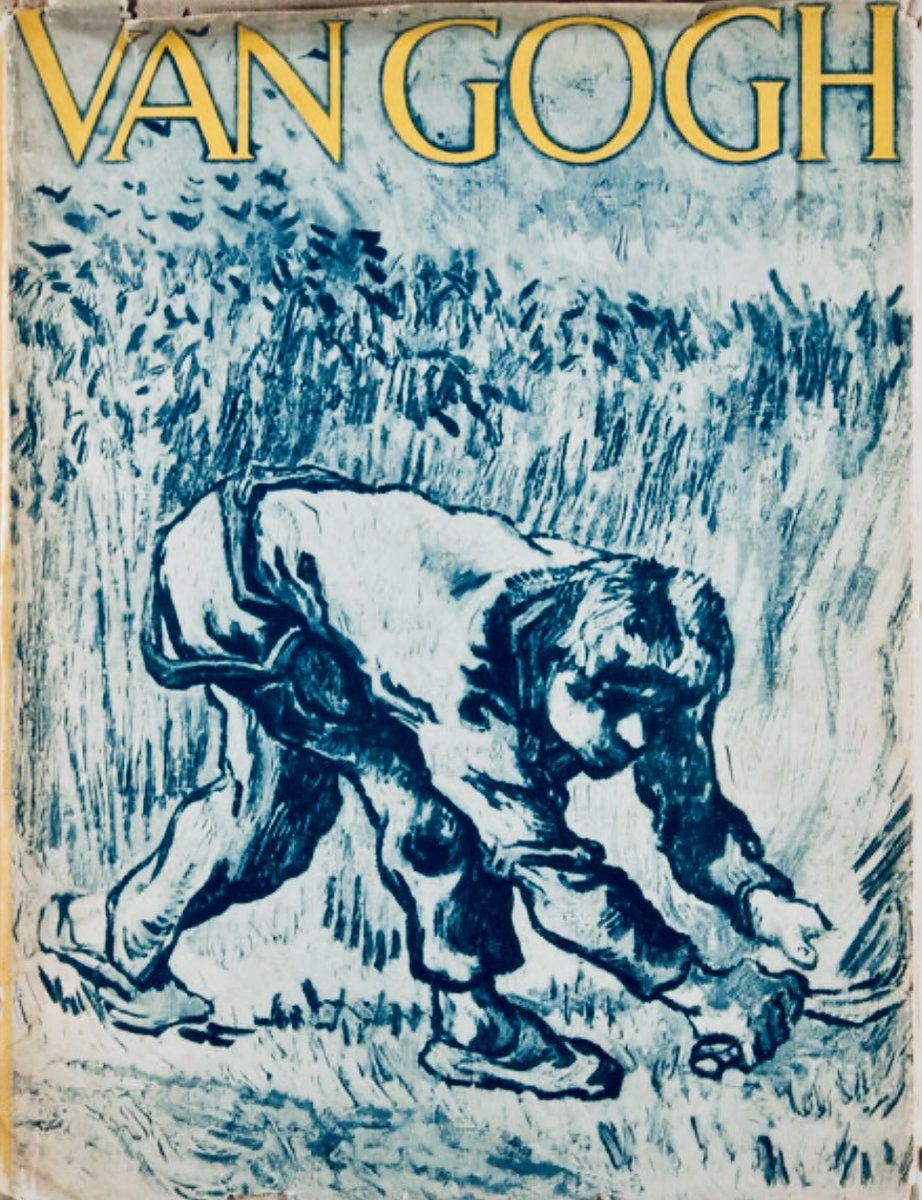
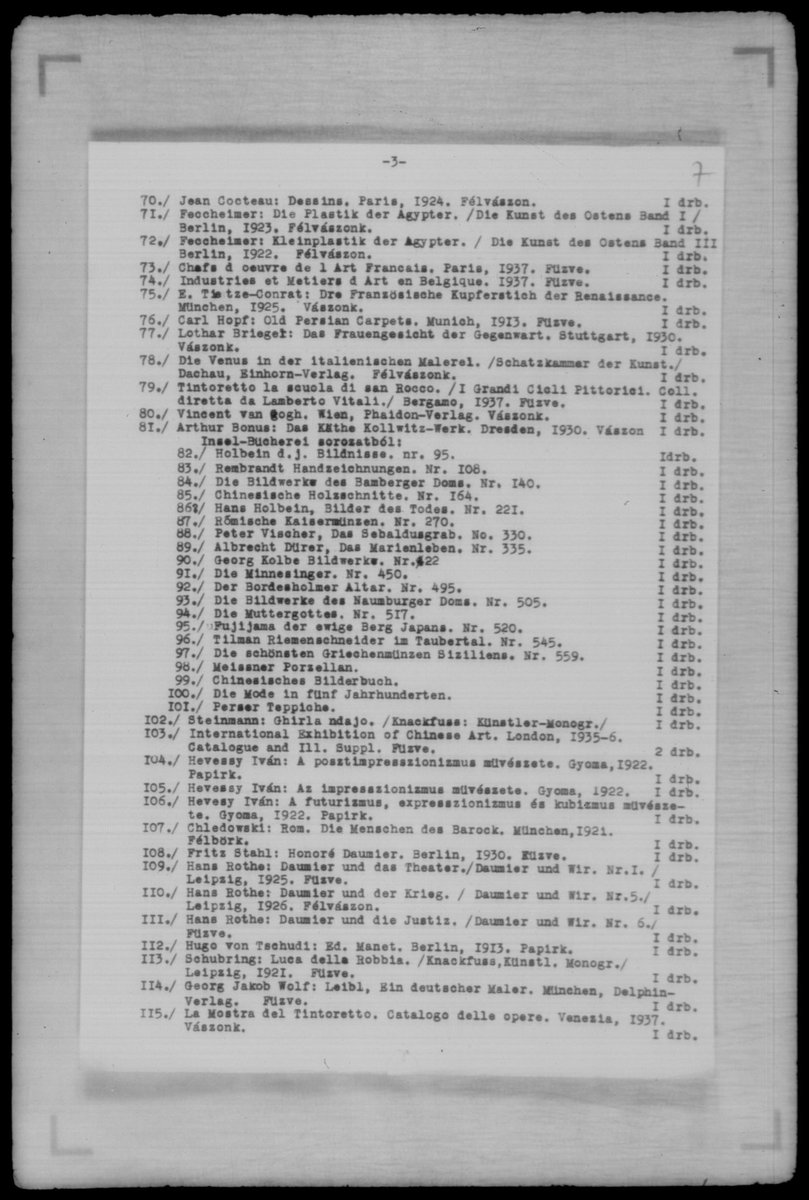
📚 Van Gogh Monograph Seized: The Case of Sándor Fleischel (1944) “80./ Vincent van Gogh, Wien, Phaidon-Verlag. Vászonk. I drb.” One cloth-bound book. One line in a ledger. This single entry from a 1944 Hungarian state inventory reveals the mechanics of cultural looting with stark clarity. This wasn’t wartime chaos — it was a systematic, state-authorized emptying of Jewish homes. 👤 The Owner The book belonged to Sándor Fleischel (Alexander Fleischl), a Jewish resident of Budapest (Csávi út 3). His home and library were meticulously inventoried under state authority, with participation from institutions including the Szépművészeti Múzeum. Every object was recorded, processed, and transferred through official channels. 📖 The Book The entry refers to the 1936 Vienna edition of Vincent van Gogh, published by Phaidon Verlag — a substantial plate volume, cloth-bound (“vászonkötésű”), exactly as described in the inventory. ⚖️ The Irony Phaidon Verlag was founded by Jewish publishers who were forced into exile after the Anschluss. Within a few years, one of their books appears in a Hungarian state seizure record — taken from a Jewish home and absorbed into the same cultural system that claimed to preserve European art. 🔎 The Status Today We have searched extensively. Copies of this 1936 Phaidon monograph exist in libraries and private collections worldwide. But this specific copy — documented and tied to Fleischel — has never been publicly traced or restituted. Which raises a broader question: How many books — working libraries, catalogues, monographs — taken from Hungarian Jewish homes in 1944 remain on institutional shelves today without provenance review? Almost certainly, thousands. 📜 Why This Matters These inventories are not abstract history. They are administrative receipts for dispossession. Each entry marks a precise break in ownership — one that, in many cases, has never been repaired. Under the Washington Principles framework, such documented gaps are not incidental — they trigger a duty to investigate and disclose. 📣 Call to Action We call on Hungarian cultural institutions, libraries, and museums to: 1️⃣ Cross-reference wartime holdings against documented 1944 seizure inventories 2️⃣ Conduct and publish provenance research on library collections — not only artworks 3️⃣ Make acquisition and transfer records from the 1944–1950 period publicly accessible 🕯️ The past isn’t lost. It was recorded — carefully, deliberately — line by line. #HolocaustArtRecovery #VanGogh #PhaidonVerlag #Hungary1944 #FleischelCollection #WashingtonPrinciples #HEARAct​​​​​​​​​​​​​​​​ @CathyHickley @marcorubio @RepLaurelLee @JohnCornyn @RepJerryNadler @SenBlumenthal @vangoghmuseum @vangoghartist
Holocaust Art Recovery Initiative tweet mediaHolocaust Art Recovery Initiative tweet media
English
0
0
0
106
Holocaust Art Recovery Initiative
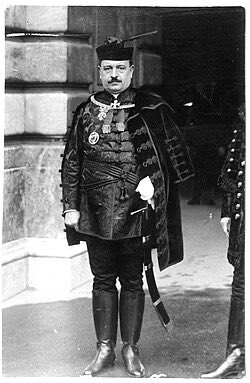
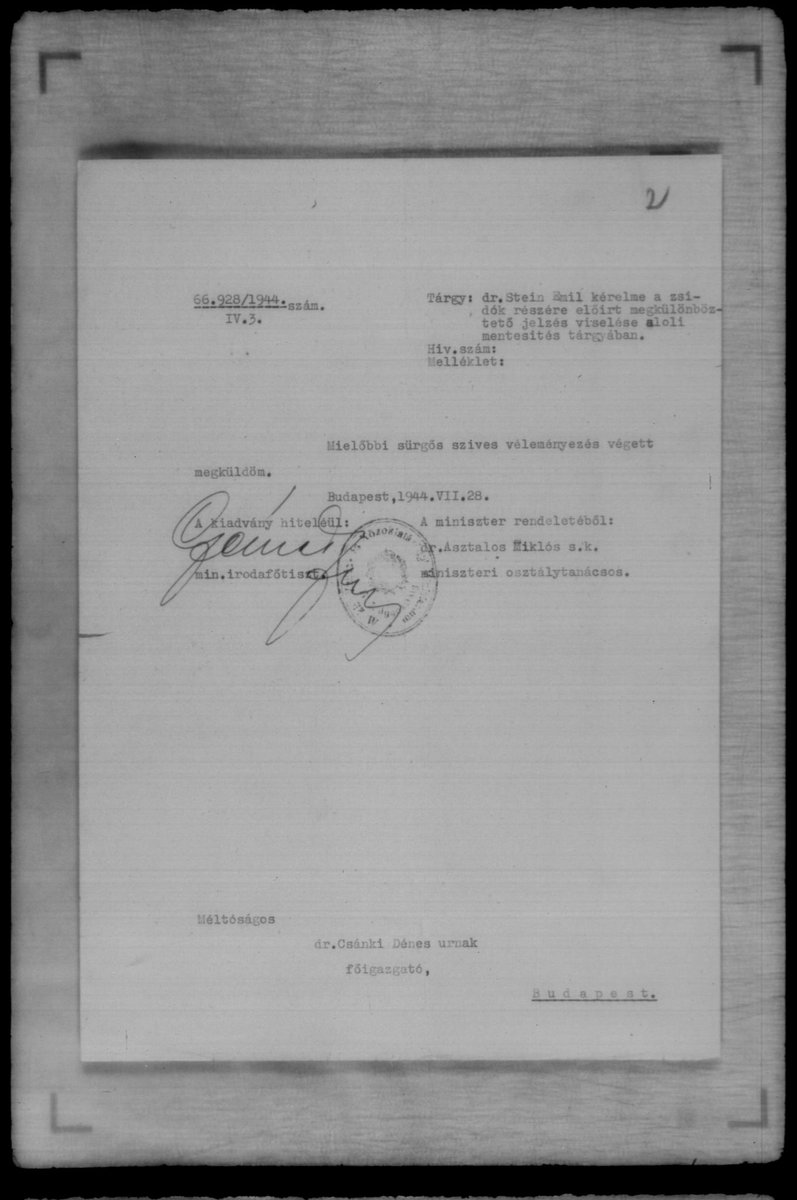
🕯️📜 Dr. Emil Stein Helped Build Hungary’s Cultural Institutions — The Man Who Ran Hungary’s Art Looting Machine Denied His Plea for Protection Dr. Emil Stein (1874–1945) helped build Hungary’s financial and cultural life. In 1944, Dénes Csánky — the official who orchestrated Hungary’s systematic seizure of Jewish-owned art, and the director of the very museum Stein had personally supported at Csánky’s own request — dismissed Stein’s petition for protection as insufficient. Within months, Stein was dead. The documents survive at the @HolocaustMI. Dr. Stein was born in Pozsony (today Bratislava) and rose to become one of Hungary’s most prominent bankers, ultimately serving as managing director of the Pesti Magyar Kereskedelmi Bank. His influence extended well beyond finance into Hungary’s industrial and economic development during the interwar period. He was also deeply engaged in cultural life. In 1937, at the personal initiative of Dénes Csánky — then director of the Szépművészeti Múzeum — Stein organized a fundraising effort among his circle to support the museum’s picture gallery expansion. His contribution was formally acknowledged in an official letter from Minister of Religion and Education dr. Hóman Bálint. It is in the archive. That life unraveled rapidly in 1944. Following the German occupation, Csánky was appointed Government Commissioner for Jewish Art Collections — coordinating the systematic seizure, inventory, and redistribution of thousands of Jewish-owned artworks and cultural artifacts, targeting families including the Hatvanys, the Herzogs, and many others. Archival records confirm his direct oversight of the entire process: he gave orders for inventorying, corresponded with museum directors about receiving shipments, and ensured that prized collections were secured for the state. At the same time, Stein — then in his seventies — was forced into a yellow-star house. Facing escalating persecution, he submitted a formal petition for exemption from the compulsory Jewish badge: file ref. 66.928/1944.IV.3., later cross-referenced as Kb. 277/1944. In it, he documented his decades of service — and specifically cited the 1937 museum campaign that Csánky himself had initiated. The ministry routed the petition directly to Csánky for his opinion. Csánky’s response, dated August 17, 1944, acknowledged that Stein had indeed shown interest in the museum in 1937 and had organized the fundraising effort. Then he dismissed it. The contribution, he wrote, could not be compared to those of earlier donors — not even the lesser ones — and therefore carried insufficient weight to support an exemption. He signed as m.kir.kormánybiztos, Royal Hungarian Government Commissioner, and főigazgató of the Szépművészeti Múzeum. The man who initiated the campaign Stein had joined declared that campaign too small to save him — while simultaneously signing orders to seize the cultural property of Jewish families across Hungary. The full file — Stein’s original petition, the ministry routing sheet, and Csánky’s denial — survives. Within months, as Budapest descended into violence during the final siege, Stein was murdered by Arrow Cross forces on January 15, 1945 — weeks before liberation. He was seventy years old. Amid rising postwar scrutiny, Csánky quietly fled Hungary in 1949, settling in São Paulo, Brazil, where he lived freely until his death in 1972. He was never investigated nor held accountable. Far from being remembered as a perpetrator, he is still honored in Hungarian cultural circles — as an artist. The Hungarian National Gallery’s official website lists Dénes Csánky as a featured artist, with no mention of his central role in the looting. Dr. Emil Stein petitioned the very man running that machine — a man he had helped, at that man’s own request. The answer was no. 🕯️ Photo caption: Hóman Bálint, Hungarian Minister of Religion and Education, in official ceremonial dress. #HEARAct @VP
Holocaust Art Recovery Initiative tweet mediaHolocaust Art Recovery Initiative tweet media
English
0
0
0
66
Holocaust Art Recovery Initiative
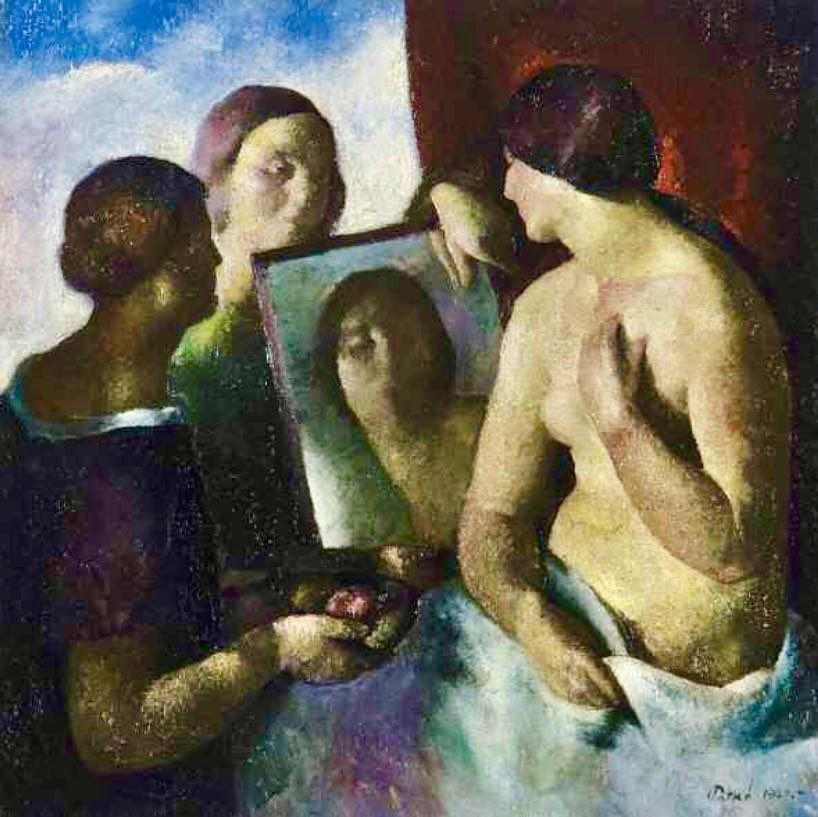
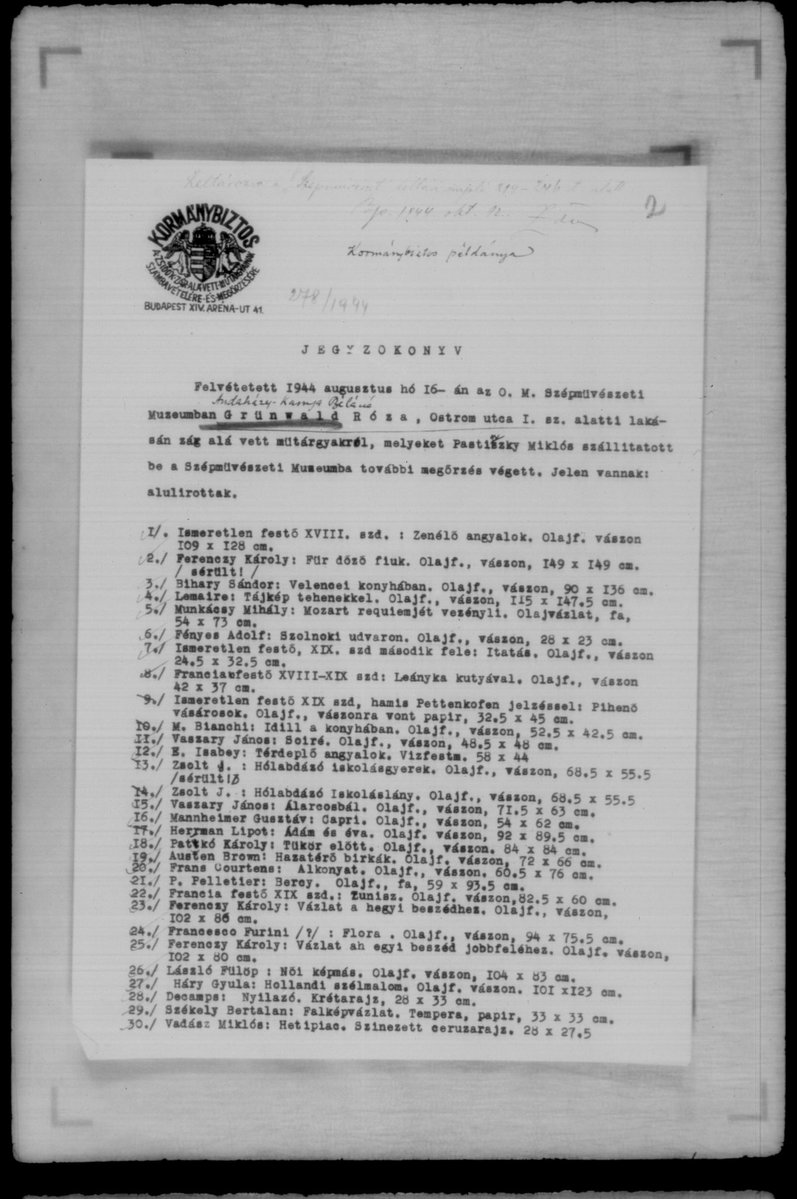
🔍🎨 FOUR EXACT MATCHES. ONE 1944 SEIZURE. A PATKÓ MASTERPIECE IN PRIVATE HANDS WITHOUT A DOCUMENTED PAST. On August 16, 1944, Hungarian authorities entered the Budapest apartment of Grünwald Róza — widow of Andaházy-Kasnya Béla, Ostrom utca 1 — and systematically removed more than 30 artworks into state custody. The stamped government protocol, Document 3728/1944, records each work with bureaucratic precision. Entry 18 reads: “Patkó Károly: Tükör előtt. Olajf., vászon, 84 × 84 cm.” Today, a painting matching this entry on every measurable point exists — in private hands, with no publicly documented provenance bridging 1944. 📦 The 1944 Protocol — Document 3728/1944 ∙Owner: Grünwald Róza (özv. Andaházy-Kasnya Béláné), Ostrom utca 1, Budapest ∙Entry: 18 ∙Artist: Patkó Károly ∙Title: Tükör előtt (In Front of the Mirror) ∙Medium: Oil on canvas ∙Dimensions: 84 × 84 cm ∙Transfer: Into custody of the O.M. Szépművészeti Múzeum, August 16, 1944 The protocol is attached. The entry is precise. The owner is named. 🖌️ The Artist — Károly Patkó (1895–1941) One of the defining figures of Hungarian interwar modernism — celebrated for powerful figurative compositions, monumental nudes, and intimate interior scenes. Tükör előtt belongs to his 1923 Roman scholarship period, among the most significant phases of his career. Patkó died in 1941 — just three years before this seizure. The painting was already a recognized work of a recently deceased master when it was taken. 🖼️ The Painting — Private Collection ∙Artist: Károly Patkó ∙Title: Tükör előtt (In Front of the Mirror) ∙Date: 1923 ∙Medium: Oil on canvas ∙Dimensions: 84 × 84 cm ∙Signed: Patkó 1923 ∙Pre-1944 to postwar provenance: Not publicly documented 🔗 commons.wikimedia.org/wiki/File:Patk… 🔎 Why This Is an Exceptionally Strong Match Candidate ✅ Title: Tükör előtt — word for word identical in the 1944 protocol and all modern documentation. ✅ Artist: Patkó Károly — exact, no ambiguity. ✅ Medium: Oil on canvas — exact. ✅ Dimensions: 84 × 84 cm — exact. A large square format is highly distinctive. The probability of two separate Patkó canvases sharing this exact title, medium, and unusual square format is negligible. No competing candidate exists. The only other known version — a 1924 work, 50 × 50 cm, held in Pécs — is materially different in both date and scale and cannot correspond to this entry. 🕯️ Grünwald Róza The protocol records more than 30 works seized from her apartment in a single day — including multiple Ferenczy Károly paintings, a Munkácsy, works by Vaszary János and Herman Lipót. This was not a modest household collection. It was a serious, museum-quality assemblage built over decades. Her fate after August 1944 is not yet documented in accessible archives. Her name is in the protocol. It belongs in the record. The collection taken from her deserves a publicly documented history. ❗ The Provenance Gap Between the 1944 seizure and the painting’s reappearance in later 20th-century scholarship and private holdings, there is no publicly available ownership chain. That absence does not establish what happened — but it creates a precise, evidence-based question that can be tested. Under the Washington Principles on Nazi-Confiscated Art, a four-way exact match of title, artist, medium, and dimensions shifts the burden toward transparency and clarification. ⚖️ The Demand Current holders, researchers, and institutions connected to this painting are invited to disclose: 1️⃣ Any ownership records between 1930 and 1950 2️⃣ Exhibition or dealer history prior to its postwar reappearance 3️⃣ Verso documentation — labels, stamps, transport markings, or wartime inventory tags These details are often decisive in confirming or ruling out wartime trajectories. The archival record is clear. The question it raises is focused, testable, and overdue. @WJRORestitution @MonumentsMen @nytimesarts @realDonaldTrump @POTUS @marcorubio #HEARAct
Holocaust Art Recovery Initiative tweet mediaHolocaust Art Recovery Initiative tweet media
0
0
0
84
Holocaust Art Recovery Initiative
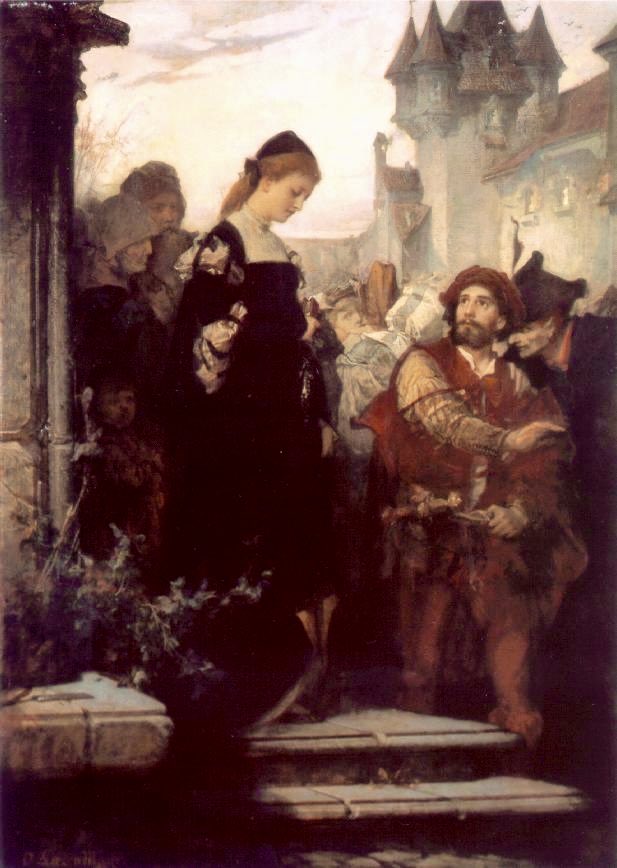
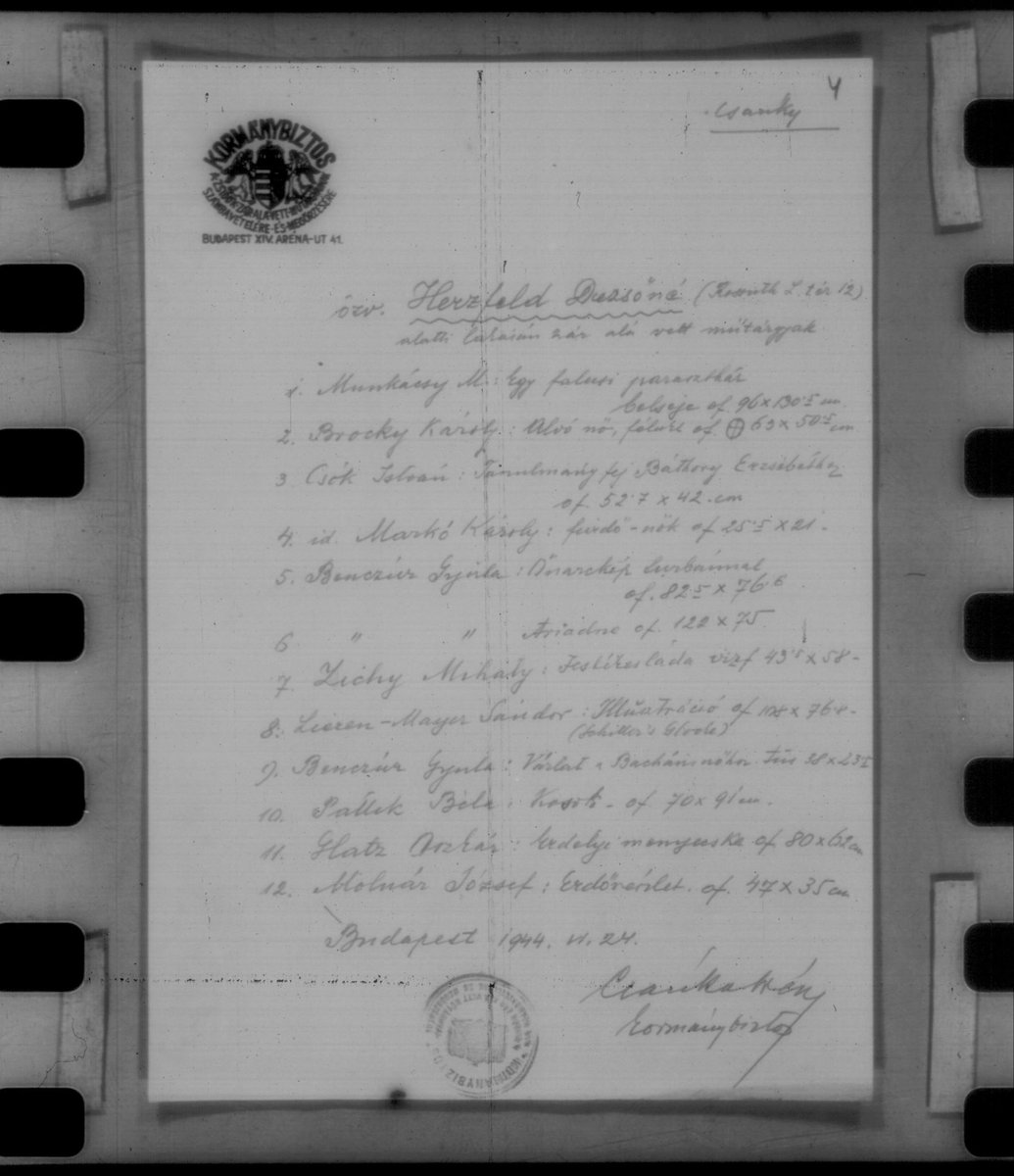
🔍🎨 THE HERZFELD PROTOCOL: NEW EVIDENCE LINKS A NATIONAL GALLERY MASTERPIECE TO A 1944 NAZI-ERA SEIZURE In the Hungarian National Gallery hangs a 19th-century masterpiece by Sándor Liezen-Mayer. Its official record is a blank slate — no owner, no acquisition history, no documented past before 1945. But 80 years ago, a government official standing in a Budapest apartment was already writing that history down in a seizure protocol that may haunt the museum today. On June 24, 1944, Hungarian authorities entered the residence of özv. Herzfeld Dezsőné at Kossuth Lajos tér 12 and removed her collection under wartime anti-Jewish decrees. The stamped government protocol records 12 paintings transferred into state custody that day. Entry 8 reads: “Liezen-Mayer Sándor: Műtermi (Schiller’s Globe?), olajf. vászon, 108 × 76.4 cm” 📄 The 1944 Protocol — Budapest, June 24, 1944 ∙Owner: Özv. Herzfeld Dezsőné, Kossuth Lajos tér 12 ∙Entry: 8 ∙Artist: Liezen-Mayer Sándor ∙Title recorded: Műtermi — “Schiller’s Globe?” ∙Medium: Oil on canvas ∙Dimensions: 108 × 76.4 cm ∙Transfer: O.M. Szépművészeti Múzeum, Budapest The protocol is attached. The entry is precise. The owner is named. 🎨 The Artist — Sándor Liezen-Mayer (1839–1898) A leading Hungarian academic painter celebrated for narrative literary compositions drawn from Goethe and Schiller. His works were widely collected in Central European Jewish households before the war. 🖼️ The Painting Match Candidate Today — Hungarian National Gallery ∙Artist: Sándor Liezen-Mayer ∙Title: Faust és Margit (Faust and Marguerite) ∙Date: 1873–75 ∙Medium: Oil on canvas ∙Dimensions: ~108 × 79 cm ∙Inventory: FK4191 ∙Pre-1945 provenance: Not listed ∙Museum note: “This record is subject to revision due to ongoing research.” 🔗 mng.hu/mutargyak/5447… 🔎 Points of Overlap ✅ Artist: Liezen-Mayer Sándor — named explicitly in the protocol. No ambiguity. ✅ Dimensions: Protocol: 108 × 76.4 cm. Museum: ~108 × 79 cm. Variance consistent with framed versus canvas measurement differences. ✅ Subject — A Fingerprint, Not a Discrepancy: While the 1944 protocol uses the shorthand Műtermi (studio interior), it includes a revealing parenthetical: “Schiller’s Globe?” The painting currently in the Gallery — Faust and Marguerite — is a quintessential literary interior. Given Liezen-Mayer’s fame for illustrating the works of Schiller and Goethe, this notation is not a contradiction. It is a fingerprint. ✅ No competing candidates: No other known Liezen-Mayer of comparable size, subject, and period aligns this closely in any public collection. ❗ The Open Question The museum record lists no pre-1945 ownership, no acquisition pathway, no reference to wartime custody. The museum’s own note acknowledges the record remains subject to ongoing revision. It is possible this is a different painting sharing the same artist, dimensions, and subject. Only the full accession records can confirm or rule that out. Those records must be published. 🕯️ Özv. Herzfeld Dezsőné A widow at Kossuth Lajos tér 12 — one of Budapest’s most distinguished addresses. On June 24, 1944, officials catalogued 12 paintings and walked out with them. What happened to her afterward is not yet documented in accessible archives. Her name is in the protocol. It belongs in the record. The paintings taken in her name deserve a publicly documented history. ⚖️ The Demand As a signatory to the Washington Principles on Nazi-Confiscated Art and the Terezin Declaration, Hungary has committed to just and fair solutions for Holocaust-looted art. Silence is a violation of that commitment. We call for the immediate publication of: 1️⃣ The full accession file for Inv. FK4191 2️⃣ All 1944–1945 transfer and custody records 3️⃣ A formal response to the connection between this work and the Herzfeld seizure protocol of June 24, 1944 @WJRORestitution @WhiteHouse #HEARAct
Holocaust Art Recovery Initiative tweet mediaHolocaust Art Recovery Initiative tweet media
English
0
0
0
82
Holocaust Art Recovery Initiative
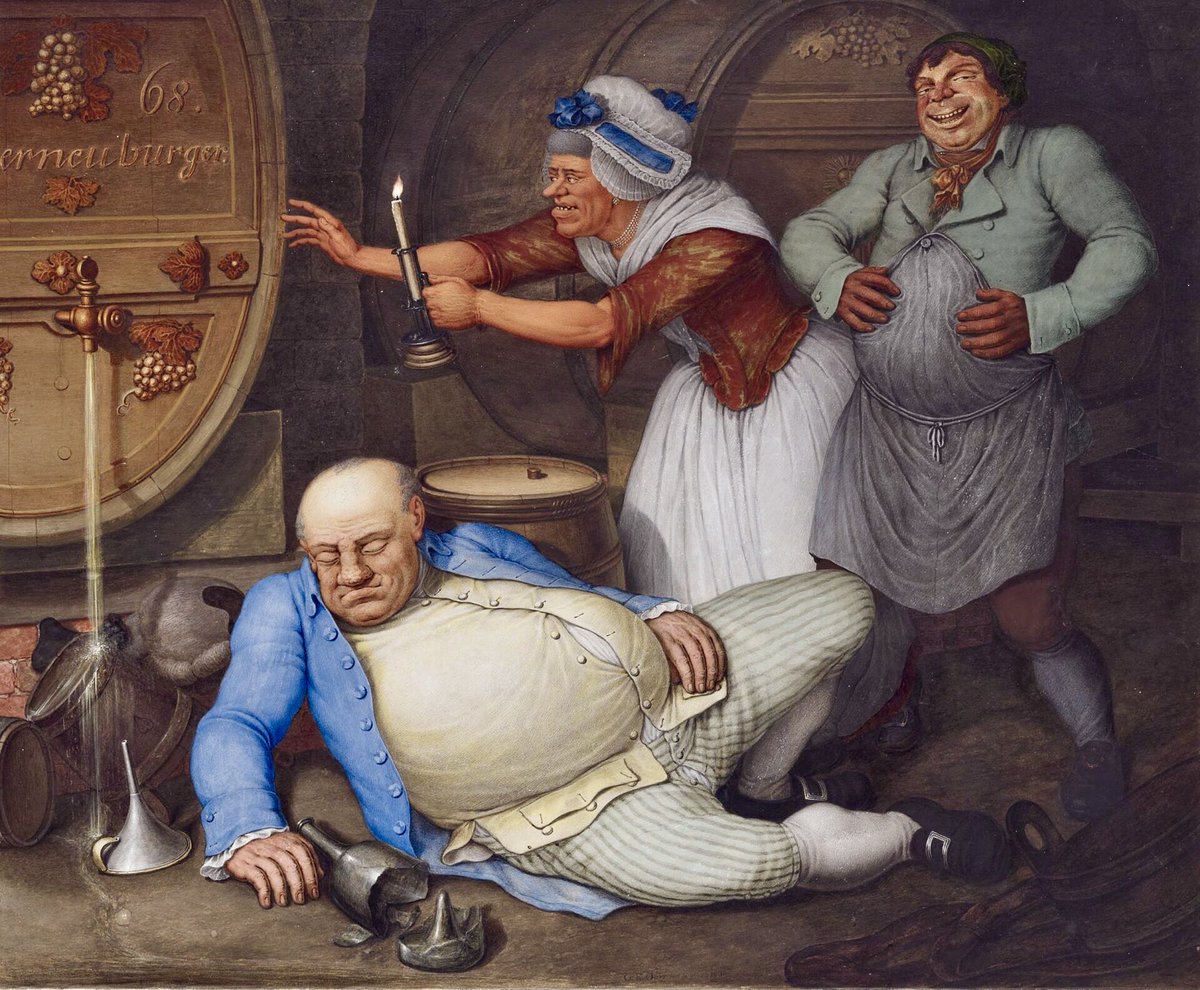
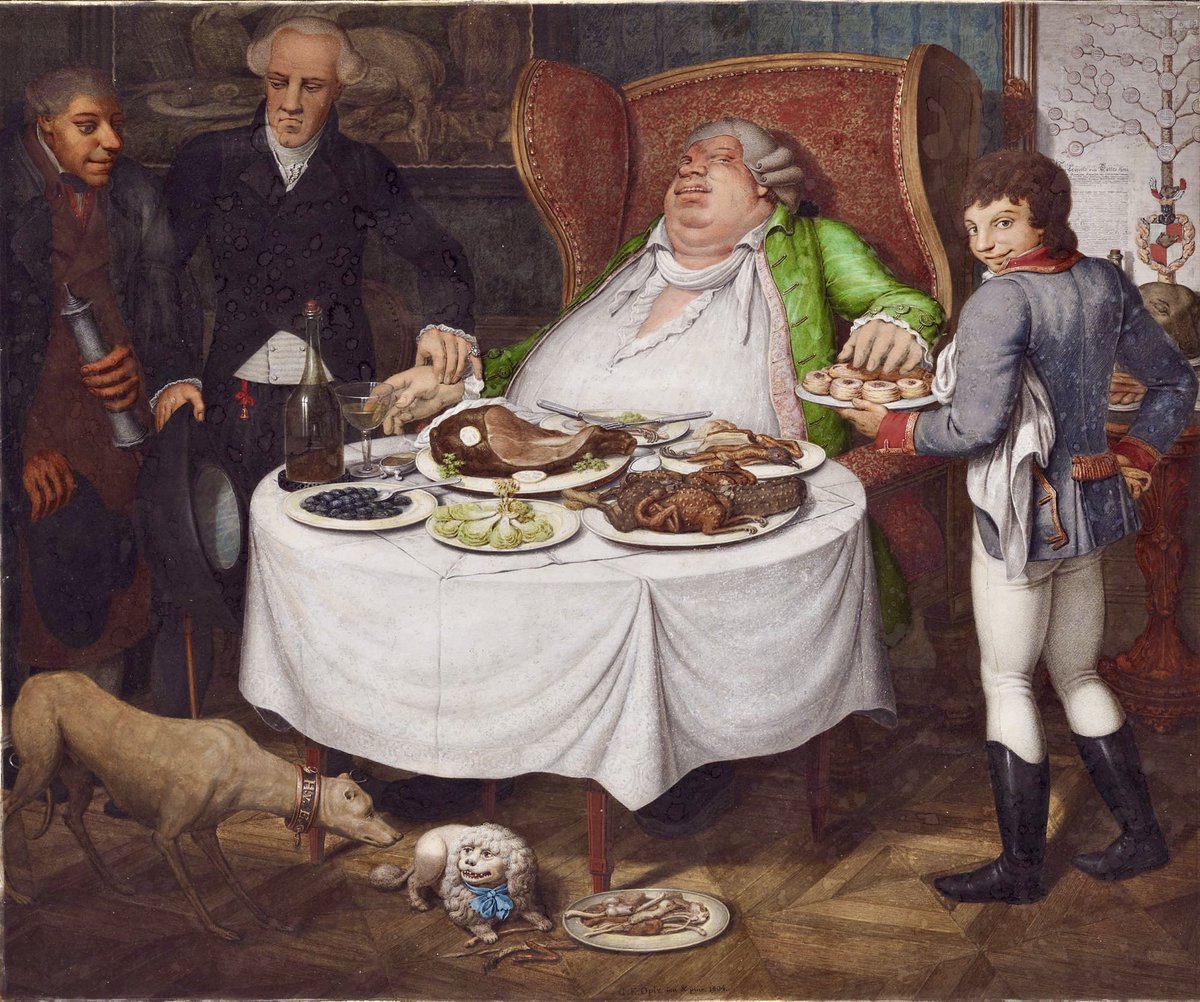
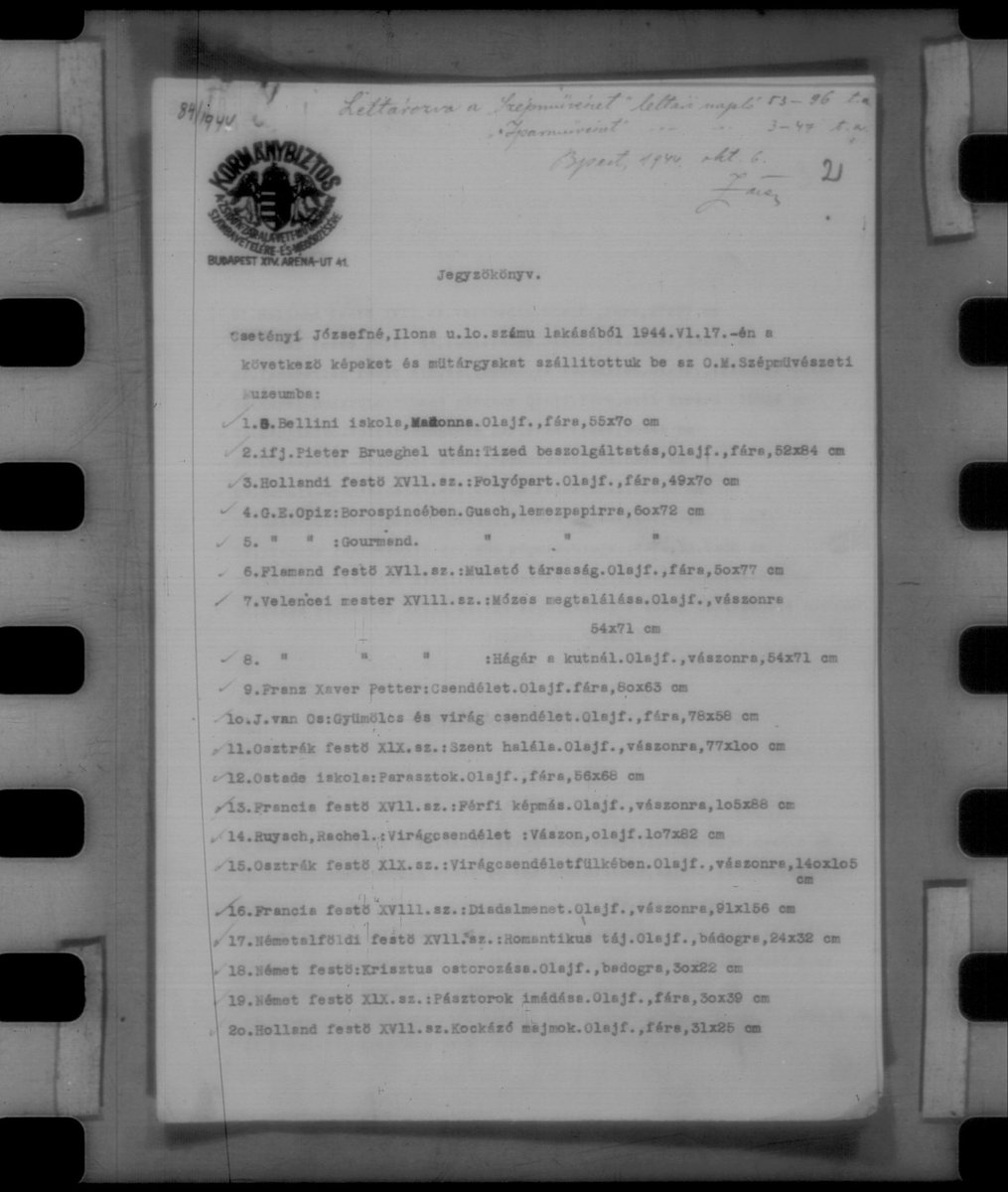
🔍🎨 MATCHED PAIR, MATCHING RECORDS: NEW EVIDENCE LINKS PRIVATE OPIZ WORKS TO THE 1944 CSETÉNYI SEIZURE On June 17, 1944, the Budapest Museum of Fine Arts seized 20 objects from the home of Csetényi Józsefné at Ilona utca 10. Among them were two rare satirical gouaches by Georg Emanuel Opiz. Today, two works matching those descriptions — identical in artist, subject, and scale — sit in private hands with a void where their 1944 history should be. This is not the first time works from this seizure have been identified. A Pieter Brueghel the Younger school painting and a Rachel Ruysch still life from the same June 17, 1944 protocol have been examined in prior threads: x.com/artrecoveryini… x.com/artrecoveryini… A pattern is emerging: documented 1944 seizure — institutional handling — absent or incomplete public provenance. 📄 The 1944 Protocol — Document 84/1944 ∙Owner: Csetényi Józsefné, Ilona utca 10, Budapest ∙Date: June 17, 1944 ∙Entry 4: G.E. Opiz — Borospincében (In the Wine Cellar) — Gouache on paperboard — 60 × 72 cm ∙Entry 5: G.E. Opiz — Gourmend (The Glutton) — Gouache on paperboard — same dimensions ∙Transfer: Into custody of the O.M. Szépművészeti Múzeum, Budapest The protocol is attached. Both entries are visible. Entry 5 repeats the artist, medium, and dimensions of Entry 4 via ditto marks — a deliberate pair, recorded as such by the seizing officials. 🎨 The Artist — Georg Emanuel Opiz (1775–1841) A Prague-born artist renowned for small-scale satirical gouaches — drinking scenes, gluttony, excess — rendered with remarkable precision and moral wit. Works of this subject, format, and scale by this artist are rare and distinctive. 🖼️ The Works for Comparison — Private Collections Der Säufer (The Drinker), 1804 ∙Gouache on paper, ~59 × 70 cm ∙Signed: G. E. Opiz inv. & pinx. 1804 ∙Depicts a man collapsed drunk in a wine cellar Der Völler (The Glutton), 1804 ∙Gouache on paper, same dimensions and signature format ∙Depicts a corpulent figure feasting at table, attended by servants Publicly available provenance for both currently omits the 1940s — leaving a critical gap that aligns precisely with the 1944 seizure protocol. 🔎 Points of Overlap ✅ Artist: G.E. Opiz named directly in the 1944 protocol. Matches known signature conventions precisely. ✅ Subjects: Borospincében (wine cellar) aligns with Der Säufer. Gourmend (glutton) aligns with Der Völler. The 1944 titles are descriptive — exactly how officials cataloguing under pressure would record works of this kind. ✅ Dimensions: Protocol: 60 × 72 cm. Known works: ~59 × 70 cm. The 1944 measurements likely included the original mount or frame, explaining the slight variance. This is not drift — it is the same objects measured differently. ✅ Medium: Gouache on paperboard vs. gouache on paper — consistent with typical mounting practices of the period. ✅ Pairing: Identical size, medium, and complementary moral themes in both contexts. Opiz produced works in deliberate pairs. This structural correspondence is significant. ❗ The Open Question The 1944 document establishes ownership, date of seizure, and transfer into state custody. Publicly available provenance for these private works currently omits the 1940s entirely — leaving an 80-year gap that aligns precisely with the Csetényi protocol. That absence does not establish identity. But it creates a specific, evidence-based provenance question that can be tested. It is also possible these are different works that share the same artist, subject, format, and dimensions. Only full provenance documentation can confirm or rule that out. We invite the current holders and the Hungarian archives to bridge this gap. Transparency is the only path to resolving whether these are the very works taken from Ilona utca 10. #WashingtonPrinciples #HEARAct @marcorubio @nytimesarts @POTUS @RepLaurelLee @sarahecascone @JohnCornyn @SenBlumenthal @RobertEdsel
Holocaust Art Recovery Initiative tweet mediaHolocaust Art Recovery Initiative tweet mediaHolocaust Art Recovery Initiative tweet media
English
0
0
0
97
Holocaust Art Recovery Initiative
🔍🎨 Evidence of Expropriation: Documenting the Looted Kontuly Self-Portrait In 1944, Hungarian authorities sealed the Budapest apartment of Dr. Béla Lázár — art historian, renowned critic, and former director of the Ernst Museum — and transferred his collection into state custody. The surviving protocol describes it as “önként beküldött.” Voluntarily submitted. In 1944 Hungary, voluntary often meant coerced. Entry 7 reads: “Kontuly Béla: Önarckép. Olajf. vászon, 80–80.5 cm.” Today, the Janus Pannonius Museum in Pécs holds a Kontuly Béla self-portrait — oil on canvas, 80 × 80 cm — with no pre-1945 provenance on record. 📄 The 1944 Protocol — Document 126/1944 B ∙Document: Kormánybiztos példánya — Government Commissioner’s Copy ∙Owner: Dr. Béla Lázár, art historian, V. ker. Zoltán utca 10, Budapest ∙Entry: 7 ∙Artist: Kontuly Béla ∙Title: Önarckép (Self-Portrait) ∙Medium: Olajf. vászon (oil on canvas) ∙Dimensions: 80–80.5 cm ∙Transfer: Into custody of the Országos Magyar Szépművészeti Múzeum, 1944 🖼️ The Match Candidate Painting Today — Janus Pannonius Museum, Pécs ∙Artist: Béla Kontuly ∙Title: Önarckép (Self-Portrait) ∙Date: 1932 ∙Medium: Oil on canvas ∙Dimensions: 80 × 80 cm ∙Inventory: Ltsz. 72.333 ∙Pre-1945 provenance: Not listed 🔗 kieselbach.hu/alkotas/onarck… 🔎 Points of Overlap ✅ Title: Önarckép — exact match in protocol and museum record. ✅ Artist: Kontuly Béla — identical, no ambiguity. ✅ Medium: Olajf. vászon — protocol abbreviation matches museum record precisely. ✅ Dimensions: Protocol 80–80.5 cm. Museum record 80 × 80 cm. The 0.5 cm variance is consistent with 1940s measurement practice, where stretcher bars or frame lips were sometimes included. Modern museum records typically round to the nearest whole centimeter for canvas alone. ✅ Transfer pathway: Protocol routes all items to the Országos Magyar Szépművészeti Múzeum. This work now sits in the Janus Pannonius Museum, Pécs — the same institution holding another Kontuly from the identical seizure list. ✅ No competing candidates: No other 1932 Kontuly Önarckép is documented in Pécs or major Hungarian public collections. This is not the first match from this seizure list in this museum. Entry 4 — Árvák: x.com/artrecoveryini… Two works from the same seizure list. The same museum. No provenance for either. That is a question that deserves a public answer. ❗ The Open Question The museum record lists no pre-1945 ownership, no acquisition pathway, and no reference to the 1944 Lázár seizure. That absence does not establish what happened — but it leaves a gap where documentation must exist. It is also possible this is a different painting that shares the same artist, title, medium, and dimensions. Only the museum’s full accession records can confirm or rule that out. Which raises the question that demands a public answer: Why do Entry 4 and Entry 7 of the same seizure list end up in the same museum without a recorded provenance? ⚖️ Washington Principles Obligation Hungary is a signatory to the Washington Principles on Nazi-Confiscated Art. The Janus Pannonius Museum must: 1️⃣ Publish the full accession file for Ltsz. 72.333 2️⃣ Disclose all 1944–1945 transfer records 3️⃣ Formally address why two works from the identical Lázár seizure list entered the same collection without provenance disclosure 🕯️ Dr. Béla Lázár He was not simply a collector. He was a nationally significant art historian, critic, and former director of the Ernst Museum — a man whose professional life was dedicated to understanding and documenting works exactly like these. The state did not only seize his property. It dismantled the intellectual and cultural life of a man whose entire identity was bound up in these objects. The protocol survived. The painting survived. The history that connects them belongs in the public domain. #HEARAct @WJRORestitution
Holocaust Art Recovery Initiative tweet mediaHolocaust Art Recovery Initiative tweet media
English
0
0
0
114
Holocaust Art Recovery Initiative
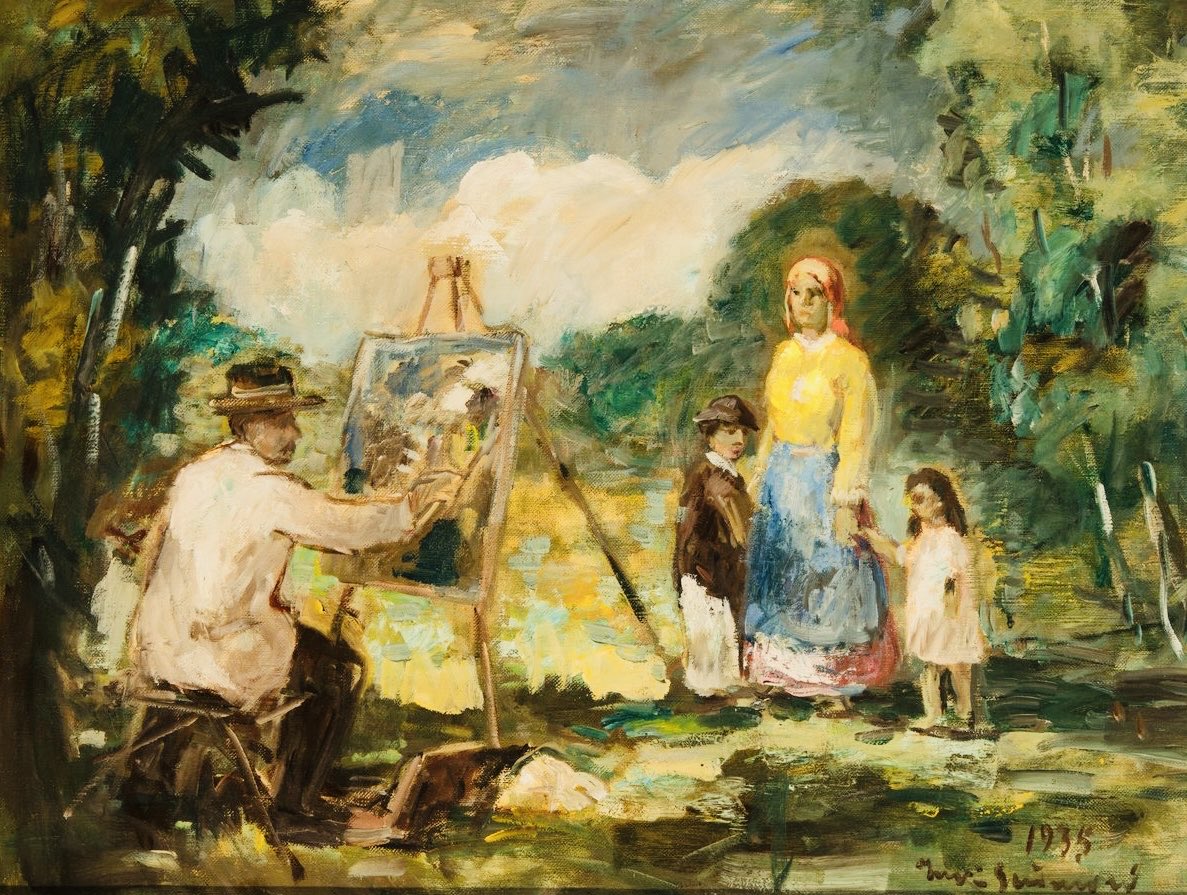
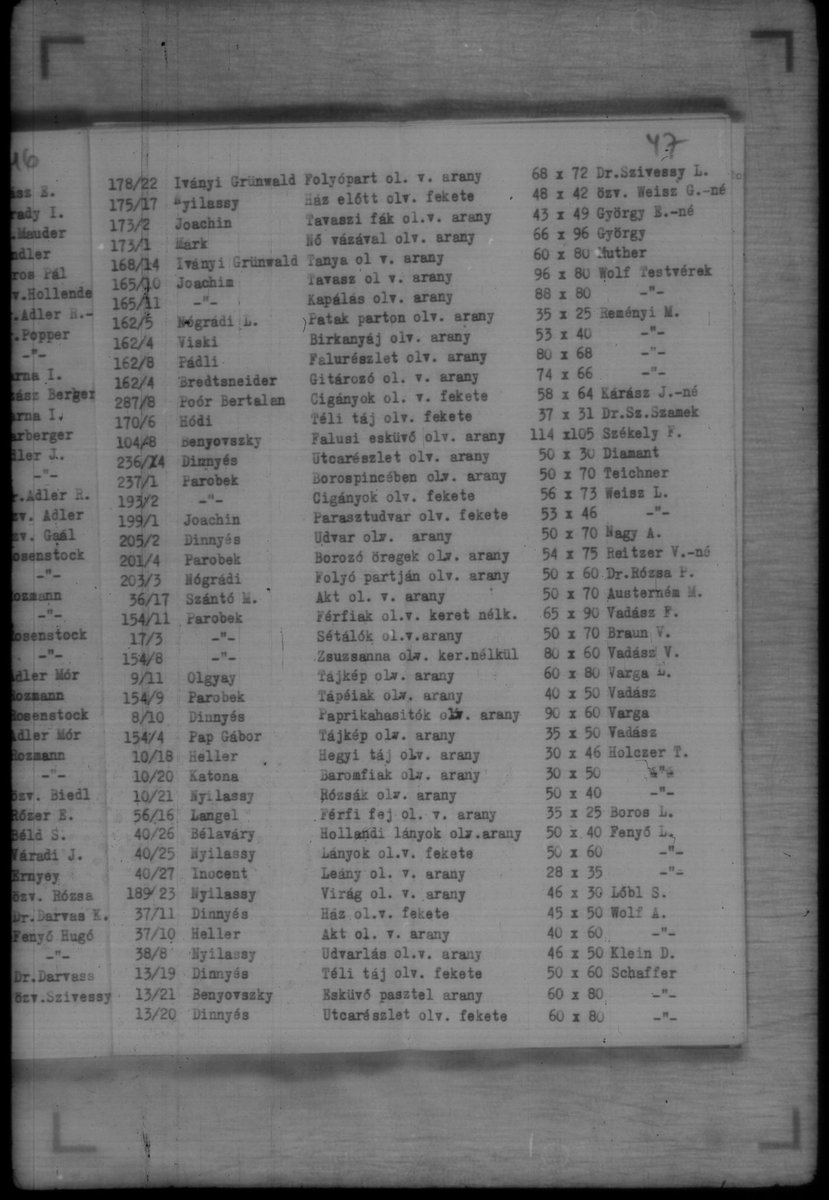
🔍🎨 A Seized Iványi Grünwald and a Matching Painting in the Hungarian National Gallery Without a Documented Past In 1944, Hungarian authorities confiscated a painting by Béla Iványi Grünwald from a Jewish resident of Szeged recorded in the ledger as Muther. Today, a painting by the same artist — matching the recorded dimensions — sits in the Hungarian National Gallery with no publicly listed history before 1945. Not a conclusion. A strong connection worth examining. 📦 The 1944 Record — Szeged Confiscation Ledger ∙Artist: Iványi Grünwald Béla ∙Title: Tánya (farmstead / rural scene) ∙Medium: Oil on canvas, gilt frame ∙Dimensions: 60 × 80 cm ∙Owner: Muther (Szeged) ∙Date: 1944 — wartime confiscation The entry is precise. The owner is named. The object is described. 🖼️ The Painting Candidate Match Today — Hungarian National Gallery ∙Artist: Béla Iványi Grünwald ∙Title: Festő a szabadban (Painter Outdoors) ∙Date: 1935 ∙Medium: Oil on canvas ∙Dimensions: 60 × 80 cm ∙Inventory: 78.71T ∙Pre-1945 provenance: Not listed 🔗 Hungarian: mng.hu/mutargyak/5353… 🔗 English: en.mng.hu/artworks/53532/ 🔎 Points of Overlap 📏 Dimensions: 60 × 80 cm in the 1944 ledger. 60 × 80 cm in the museum record. Exact. 🎨 Artist: Same painter. No ambiguity. 🌾 Subject: Tánya was likely a descriptive label for a rural outdoor scene. The museum painting depicts a plein-air figure within a farmstead landscape typical of the Nagybánya school. 🧭 Availability: No other widely documented Iványi Grünwald matches this exact size, period, and subject in any public collection. ❗ The Open Question The museum record lists no pre-1945 ownership, no acquisition pathway, and no reference to wartime custody. That absence does not establish what happened — but it leaves a gap where documentation should exist. Under the Washington Principles on Nazi-Confiscated Art, making that history visible is part of responsible stewardship. ⚖️ Why Transparency Matters There are multiple possible histories. The painting may have been restituted and later re-entered circulation. It may have remained in institutional custody after 1944. Or its path may simply not yet be fully reconstructed. It is also possible this is an entirely different painting that happens to share the same artist, dimensions, and subject. Only the museum’s full accession records can confirm or rule that out. That is precisely why those records should be published. 🕯️ A Name in the Ledger The 1944 document records Muther of Szeged. The painting remains. The archive remains. The connection between them deserves careful, public clarification. @WJRORestitution @nytimesarts @artnet @POTUS @marcorubio @JohnCornyn @RepLaurelLee @SenBlumenthal @RepJerryNadler @brand_arthur @raydowd @ahistoryinart #HolocaustArtRecovery #Art #Provenance #WashingtonPrinciples #IványiGrünwald #HungarianNationalGallery #OpenTheArchives #Szeged1944 #Restitution​​​​​​​​​​​​​​​​ #HEARAct
Holocaust Art Recovery Initiative tweet mediaHolocaust Art Recovery Initiative tweet media
Română
0
0
0
191
Holocaust Art Recovery Initiative
🔍 FROM SEIZURE TO RESTITUTION: The 1944 Hungarian Record That Followed a Gauguin Across the War In 1944, Hungarian authorities packed a Gauguin into a crate labeled “Herzog” — and thought history would forget. It didn’t. 📦 The 1944 Record — Smoking-Gun Evidence Exact entry (translated): “VIII. Gougin [sic] csendélet br. Herzog A.” jelzésű ládából Gougin [sic]: Csendélet, olajf. vászonra keretben, mérete: 46 × 35 cm (Ugyanabban a ládában: 1 db. török szőnyeg) ∙“Gougin” [sic] = Paul Gauguin (wartime spelling variant) ∙“Csendélet” = still life ∙Dimensions: 46 × 35 cm ∙“br. Herzog A.” = Baron Herzog family — the crate is explicitly labeled to its rightful owners 🎨 The Painting Identified Still Life with Profile of Laval (1886) ∙Oil on canvas, ~46 × 38 cm ∙Signed: P. Gauguin 86 One of Gauguin’s key early Pont-Aven works — depicting his close collaborator Charles Laval amid symbolic objects and ceramics. The dimensions align almost exactly with the 1944 record; the minor variance reflects standard frame-versus-canvas measurement difference. ⛓️ Provenance — Fully Reconstructed Prewar: Baron Mór Lipót Herzog collection → inherited by András Herzog 1942: András Herzog — deported to forced labor (munkaszolgálat) András Herzog: Murdered during the Holocaust. 1944: Painting seized by Hungarian authorities → transferred to the Museum of Fine Arts Budapest under the guise of “safekeeping” 1945: Evacuated west → recovered by Monuments Man Thomas Carr Howe Jr. → processed at the Munich Central Collecting Point 1948 — Full Restitution: Returned to Maria Izabella Parravicini, family representative. Lawful export authorized by Hungarian authorities. Postwar legitimate chain: Sándor Donáth → Wildenstein & Co. → Otto Spaeth → Walter B. Ford II → Christie’s (1980) → Samuel Josefowitz → Indianapolis Museum of Art at Newfields (1998) 💡 A Model of Transparency Unlike the silent records we too often see, the Indianapolis Museum of Art at Newfields chooses truth. They don’t hide the 1944 seizure — they document it. They don’t erase the Herzog name — they name it. This isn’t just curation; it’s accountability. ✔ Explicitly acknowledges the 1944 seizure ✔ Names the Herzog family ✔ Documents the Holocaust context ✔ Cites Monuments Men and MCCP records ✔ Provides archival footnotes 🔗 collections.discovernewfields.org/art/artwork/82… No gaps hidden. No ambiguity. Just evidence — exactly as it should be. 🔦 Why This Matters This case establishes three things clearly: 1.Archival records can directly identify looted works 2.Restitution is achievable when provenance is honestly acknowledged 3.Transparency is a choice — and a standard every institution can meet 💀 The Broader Context This Gauguin was returned. But the Herzog Collection — once more than 2,500 works — was largely destroyed, dispersed, or remains held in state institutions. Ongoing cases like de Csepel v. Hungary continue to seek recovery of works still in Budapest museums. The work is far from finished. ✊ Call to Action The records exist. The names are known. The only thing missing in many museums is the will to publish the truth. @Newfields @MonumentsMen @WJRORestitution @RepLaurelLee @JohnCornyn @marcorubio @POTUS @IvankaTrump @SteveWitkoff #HolocaustArtRecovery #LootedArt #ProvenanceResearch #WashingtonPrinciples #Gauguin #HerzogCollection #Restitution #HEARAct #OpenTheArchives #NewfieldsModel
Holocaust Art Recovery Initiative tweet mediaHolocaust Art Recovery Initiative tweet media
English
0
0
0
154
Holocaust Art Recovery Initiative
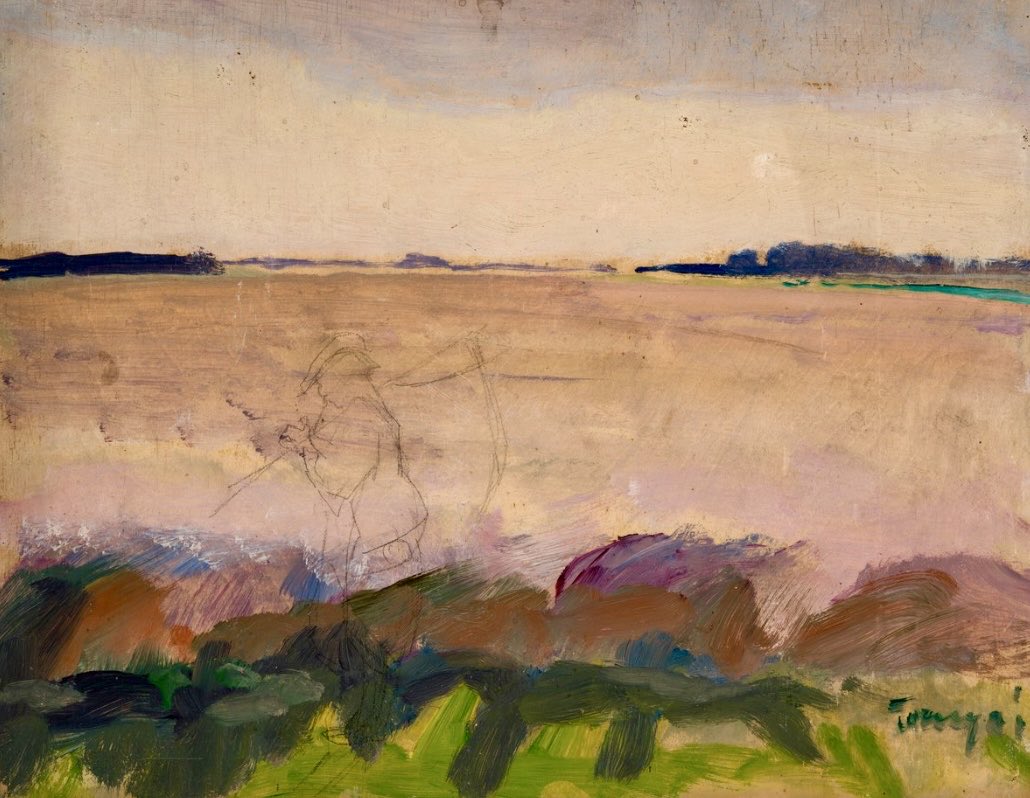
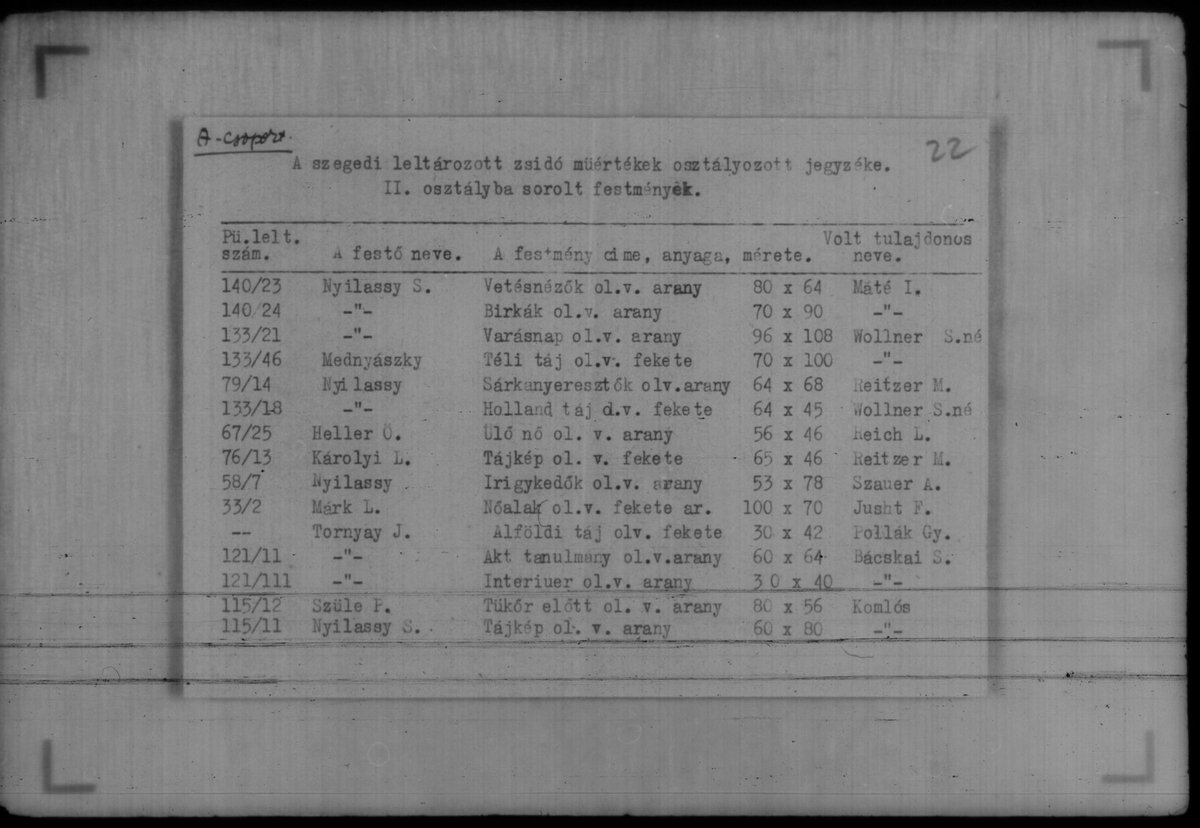
📜 A 1944 Seizure Record Names the Owner. A Museum Record Stays Silent. In 1944, a painting by János Tornyai was confiscated from Pollák Gy. in Szeged. Today, a near-identical work sits in the Hungarian National Gallery — with no disclosed early history. 🧑‍🎨 Who Was János Tornyai? János Tornyai (1869–1936) was one of Hungary’s most celebrated painters — born in Hódmezővásárhely, trained at the Académie Julian in Paris, and devoted to painting the landscapes of the Great Plain (Alföld) from his home in Mártély. The Alföldi táj was his signature subject. He died in 1936, eight years before this seizure. The painting taken from Pollák Gy. was a collected work — acquired by a Jewish family in Szeged and confiscated by the state while its creator was already in his grave. 🗂️ The 1944 Record “A szegedi leltározott zsidó műértékek osztályozott jegyzéke — II. osztályba sorolt festmények” (“Classified inventory of inventoried Jewish art objects in Szeged — Class II paintings”) ∙Artist: Tornyai J. ∙Title: Alföldi táj ∙Medium: Oil, black frame ∙Dimensions: 30 × 42 cm ∙Owner: Pollák Gy., Szeged Confiscated under Decree 1830/1944 M.E. 🖼️ The Museum Work Hungarian National Gallery, Inventory 2018.26T ∙Artist: János Tornyai ∙Title: Alföldi táj ∙Medium: Oil on wood ∙Dimensions: 30.2 × 40.2 cm ∙Status: Not on display ∙Provenance: Not disclosed 🔗 en.mng.hu/artworks/12098… 🔗 mng.hu/mutargyak/1209… The inventory number suggests registration or re-registration in 2018 — circumstances not publicly documented. 🔎 Where the Records Converge ∙🎨 Artist: Exact match ∙📋 Title: Exact match ∙🖌️ Medium: Oil — consistent ∙📏 Dimensions: 30 × 42 cm (1944, framed) vs. 30.2 × 40.2 cm (museum, unframed) — variance fully consistent with standard frame measurement differences A strong candidate match under standard provenance analysis. Precise identification requires the museum’s full object file — which has not been disclosed. 🔓 The Transparency Gap The MNG record for Inv. 2018.26T shows no pre-1945 ownership, no acquisition history, no transfer documentation. Only: “This record is subject to revision due to ongoing research.” ⚖️ Why This Matters Now The HEAR Act of 2025 passed the U.S. Senate and House unanimously and now heads to @POTUS’ desk. It removes the expiration date of the original 2016 law and eliminates procedural defences that have allowed institutions to outlast claimants for decades. Cases like this — a named victim, a documented seizure, a matching work in a national museum with a blank provenance record — are precisely why unanimous bipartisan action was required. The HEAR Act sends a clear message: that era is over. 🕯️ A name appears in a 1944 ledger. A painting sits in a national museum. The connection between them is not lost — only undisclosed. Pollák Gy. of Szeged deserves an answer. @ClaimsCon @WJRORestitution @ZacharyHSmall @CathyHickley @nytimesarts @USAmbHungary @RepLaurelLee @SenBlumenthal @JohnCornyn @UNESCO @RepJerryNadler @bbcarts #HolocaustArtRecovery #LootedArt #ProvenanceResearch #WashingtonPrinciples #TornyaiJános #Szeged1944 #MagyarNemzetiGaléria #OpenTheArchives #HEARAct
Holocaust Art Recovery Initiative tweet mediaHolocaust Art Recovery Initiative tweet media
English
0
0
0
128
Holocaust Art Recovery Initiative
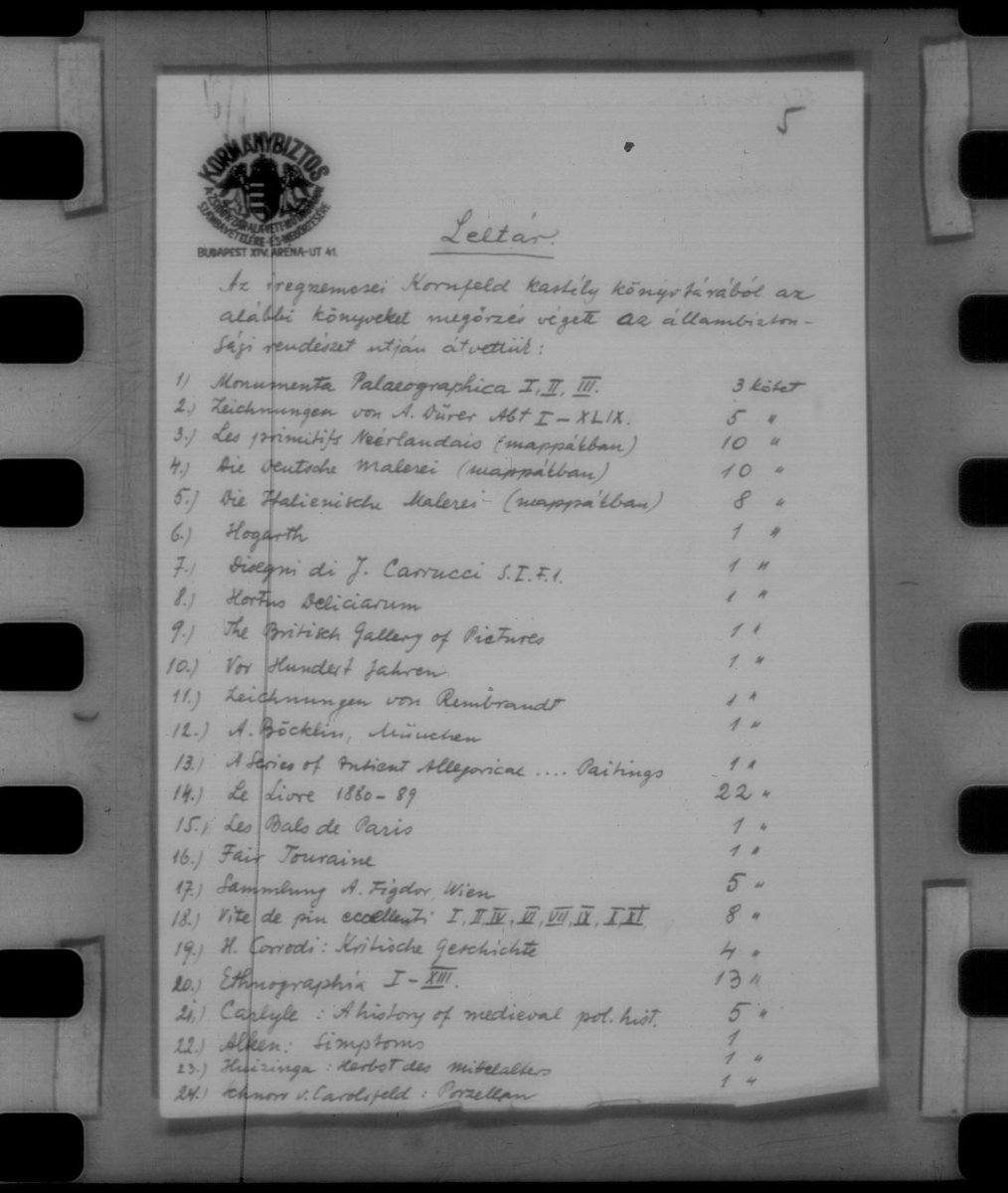
📚 Stolen Twice: Baron Móric Kornfeld’s Looted Library — from Budapest to Russia, and the Books That Exist Nowhere Else on Earth In 1944, the Hungarian state seized Baron Móric Kornfeld’s library of over 10,000 volumes. In 1945, Soviet forces took what remained. Today, unique surviving copies sit in a Russian library, still bearing Kornfeld’s bookplate. This is primary evidence that Hungarian Jewish cultural property traveled to Russia via Soviet trophy brigades — directly relevant to other unresolved cases. 📋 1944: The First Seizure In July 1944, under Decree 1830/1944 M.E., Kornfeld’s Andrássy út villa was sealed by Government Commissioner Csánky Dénes. The library’s most valuable portion — in waterproofed crates in the Budapest Commercial Bank vault — was confiscated. His ex libris — family pelican, motto BREVE EST TEMPUS — is still pasted inside the covers today. 🪖 1945: The Second Seizure Soviet trophy brigades removed Kornfeld’s books across a second border. A portion now resides in the Nizhny Novgorod State Scientific Library — 111 volumes identified, 74 bearing his ex libris. 📖 The Books That Exist Nowhere Else Bibliographer Judit V. Ecsedy (Magyar Könyvszemle, 2011) identified these Nizhny Novgorod volumes as unique surviving copies: ∙PESTI Gábor: Nomenclatura sex linguarum [Vienna, 1554] — shelf mark Ц 17.010.1 — only complete surviving copy ∙Ester dolga [Kolozsvár, 1577] — shelf mark Ц 16.846.1 — only complete title page; also only complete copy of SZTÁRAI M: Historia de vita ∙BORNEMISZA Péter: Ördögi kisértetekről [Detrekő, 1578/79] — shelf mark Ц 16.803.1 — only complete copy ∙PÉCSI Lukács: Lelki pais minden háboruk ellen [Nagyszombat, 1592] — shelf mark Ц 16.808.1 — only surviving copy; text unknown to scholarship ∙PÉCSI Lukács: Mindennapi lelki kenyér [Nagyszombat, 1593] — bound with above — only surviving copy; text completely unknown ∙Evangelia et epistolae [Lőcse, 1639] — shelf mark Ц 16.995.1 — only known copy ∙Nyomoruságnak idején…imádság [Nagyszombat, c. 1690] — shelf mark Ц 17.004.1 — unknown to bibliography until identified here Each: private library → 1944 seizure → Soviet trophy brigades → Nizhny Novgorod. 📄 epa.oszk.hu/00000/00021/00… 🔗 x.com/ArtRecoveryIni… ⚠️ Known Since 1997. Still Unresolved. László Nagy documented these holdings in Spoils of War in 1997. The 2007 catalogue identified them. Ecsedy named the unique survivors in 2011. The Széchényi Library pursued restitution on behalf of the heirs. Kornfeld’s son asked for a single book as a memento. To our knowledge it was never returned. Russia is one of 44 signatories to the Washington Principles (1998). Nearly three decades. No action. ⚖️ Why This Matters The 1944 inventory lists the crates. The 2007 catalogue lists the contents. The bookplates connect them. Proof — not theory — that the Soviet trophy brigade pipeline from Hungarian Jewish collections to Russian institutions was real, systematic, and traceable. The Kornfeld books are the documented case. They are not the only case. 📜 Memory persists in the objects that remain. 📚 What was taken can still be identified. ⚖️ And what is documented can still be addressed. #HolocaustArtRecovery #ProvenanceResearch #KornfeldCollection #BookRestitution #CulturalHeritage #HEARAc @RepLaurelLee @RepJerryNadler @JohnCornyn @SenBlumenthal @marcorubio @POTUS @USAmbUN @USAmbHungary @UNESCO @CathyHickley @artnet @nytimesarts @raydowd @USAmbGermany @CoryBooker @SenFettermanPA @SenTedCruz @WorldJewishCong
Holocaust Art Recovery Initiative tweet mediaHolocaust Art Recovery Initiative tweet media
English
0
0
0
137
Holocaust Art Recovery Initiative
📜Saved by Switzerland, Scattered by Exile: The Journey of the Delmár Collection from 1938 Bern to America’s Great Museums 👤 Who Was Dr. Emil Delmár? Dr. Emil Delmár (1876–1959): Budapest lawyer, vice-president of the Friends of the Art Museums society, published scholar in The Burlington Magazine and Gazette des Beaux-Arts. His collection spanned Persian bowls and Islamic textiles through European medieval, Renaissance, and Baroque gilt bronzes, ivories, chasubles, and wooden statues. Contemporaries ranked it alongside the legendary Herzog and Hatvany collections. He donated to Hungary’s greatest museums and loaned works internationally. A pillar of Hungarian cultural life — and a marked man by 1938. ✈️ 1938: The Escape Plan Sensing the antisemitic storm, Delmár acted. On November 28, 1938, he obtained official export permission — signed by Count István Zichy, Director-General of the National Museum — and shipped ~95 masterpieces to neutral Switzerland. Around 60 went to the Kunstmuseum Bern (“Kunst und Kunstgewerbe – Sonderausstellung,” 1939/40), where director Conrad von Mandach gave them their own dedicated gallery and Professor Hahnloser held university seminars on them. Legal. State-approved. Customs-paid. Documented at every step. 🚨 1944: Hungary Reaches Into Switzerland Delmár was by then in the United States, volunteering with the American Committee of Learned Societies compiling cultural property protection lists. Under Decree 1830/1944 M.E., Hungary retroactively voided his ownership rights — solely because he was Jewish. His Budapest attorney Dr. Pázsit István filed urgent petitions: the export had been fully legal and state-approved. The ministries were unmoved. The Bern works were declared “Jewish assets under state custody.” Hungary’s Bern legation was ordered to seize them. The Ministry of Religion & Education and the Finance Ministry coordinated the attempt. The same government that signed the export permit in 1938 was now reaching across an international border — into a neutral sovereign country — to confiscate legally exported Jewish property. Not domestic looting. Extraterritorial cultural confiscation. Documented in the Hungarian Archives at @HolocaustMI. 🇨🇭 Why It Failed Swiss neutrality held. The seizure attempt failed. Delmár’s pre-war planning — legal export, neutral country, institutional friendships — created protection the 1944 decrees could not penetrate. One of the very few documented cases in this series where the seizure failed. 🌍 Postwar: Survival at a Cost Delmár survived but was forced to disperse his collection piece by piece through dealer R. Stora & Co., New York to support himself in exile. He kept writing — his 1941 Denkmäler des Ungarischen Mittelalters in der Schweiz documented Hungarian medieval art preserved in Swiss collections. Art historian Andrea Rózsavölgyi (Budapest Museum of Fine Arts) reconstructed the full dispersal in her landmark 2013 CentrArt study and PhD thesis. 🏛️ Where the Pieces Are Today Confirmed via the institutions’ own public databases — all listing “Emil Delmar / Delmár, Budapest” with R. Stora & Co. provenance: Cleveland Museum of Art — largest single confirmed concentration: ∙ Christ at the Column, Johann Baptist Hagenauer (gilt bronze) → clevelandart.org/art/1953.286 ∙ Adam and Eve (gilt bronze) → clevelandart.org/print/art/1948… ∙ Fragment of a Tiraz-Style Textile → clevelandart.org/print/art/1950… ∙ Fragment of an Embroidery, Seljuk period → clevelandart.org/print/art/1950… Also documented in Rózsavölgyi’s research: ∙ The Cloisters, Met — 14th c. embroidered silk chasuble ∙ MFA Boston — Saint Christopher sculpture (Swarzenski curatorship) ∙ Dumbarton Oaks, D.C. — Byzantine ivory relief Cloisters, Boston, and Dumbarton Oaks attributions are from Rózsavölgyi’s scholarship (linked below). ⚖️ Why This Case Matters The 1944 files prove Hungary’s regime pursued Jewish art beyond its own borders — a distinct and underreported dimension of Holocaust-era cultural crime. The seizure failed. The attempt is documented. The harder truth is this: Delmár was never robbed in the conventional sense. He sold his own collection, piece by piece, to survive. That is what forced dispersal under Holocaust conditions actually looks like — not a single dramatic theft, but a slow, dignified dismantling of a life’s work to pay for existence in exile. No known restitution claim is pending. The pieces are where they are because he put them there, in order to live, one transaction at a time. The archives record what Hungary tried to do. The museum databases record what survival cost him. Both deserve to be read together. 📄 Sources ∙ Reel 143, Slides 54–60 (Zekelman Holocaust Center) ∙ Rózsavölgyi PhD: academia.edu/43007214/20_Ye… 🔗 Original @ArtRecoveryInit thread: x.com/ArtRecoveryIni… @USAmbHungary @USEmbassyBern @SecRubio @UNESCOEU @JohnCornyn @RepLaurelLee @SenBlumenthal @RepJerryNadler @nytimesarts @artnet @HolocaustMI @swissinfo_en @ArtBasel @artnet @ClevelandArt @metmuseum @mfaboston @DumbartonOaks @ClaimsCon @WJRORestitution @ARCA_artcrime @CathyHickley @BurlingtonMag @sarahecascone @archaeologymag @panyiszabolcs @Telexhu @smithsonian @WorldJewishCong @AJCCEO @ahistoryinart @ArtLawProgram @brand_arthur @raydowd @NicholasMOD @POTUS @SCOTUSblog @VP @WhipKClark @MikeJohnson @ZacharyHSmall @NZZ @nypost @swissinfo_en @tagesanzeiger @LeTemps @newlyswissed @jerrysaltz #Holocaust #EmilDelmar #ProvenanceResearch #Budapest1944 #KunstmuseumBern #WashingtonPrinciples #HEARAct #Switzerland1944
Holocaust Art Recovery Initiative tweet mediaHolocaust Art Recovery Initiative tweet media
English
0
0
0
167
Holocaust Art Recovery Initiative
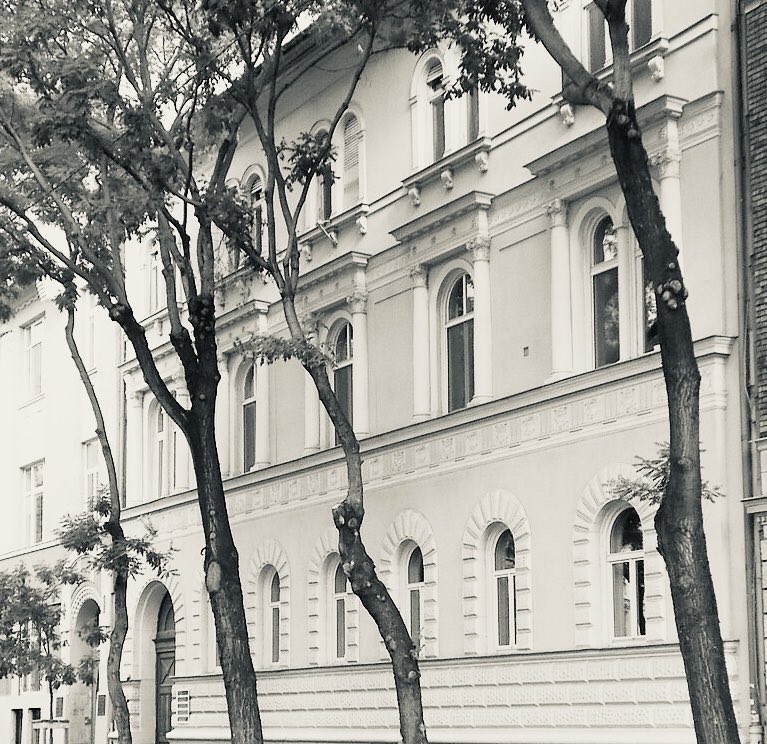
🏛️ Case Study: The József Fleissig Archaeological Collection — Fascist Seizure, Communist Consolidation, Permanent State Absorption 🧑‍💼 Who Was József Fleissig? József Fleissig (Pleissig; 1897–1944), retired director of the Anglo-Hungarian Bank, Benczúr utca 31, Budapest. Private collector of ~950 archaeological objects: prehistoric, Roman, Egyptian, Celtic, Avar, Hun, and ethnographic artifacts — Bronze Age, Celtic ceramics, Roman bronzes, Avar belt fittings, Germanic grave goods. Documented in Budapest Régiségei Vol. 13 (1943). No children. Sisters survived; mother and wife did not. Arrested March 21, 1944 (Gestapo, Astoria Hotel) → Kistarcsai → Auschwitz. Murdered; official death date August 15, 1944. 📁 The 1944 Seizure — Primary Sources Iktatószám 171/1944: issued under the Kormánybiztos a Zsidók Zár Alá Vett Javainak Számbavételére — overprinted on MNM/Szépművészeti stationery. Dr. Nándor Fettich appointed state seizure delegate, issued government credentials to act before all authorities. On July 19, 1944, Commissioner Csánky Dénes personally signed the order: seize three padlocked crates from the Benczúr utca 31 basement and a substantial Magyar Bank vault holding — urgent, as the property was under German military requisition. Framed in Csánky’s own text as cultural preservation. ✍️ A named commissioner, under anti-Jewish decree authority, seizing against a man already in Nazi detention. ⚖️ Two Court Victories — Then Nothing 🗣️ The Oral Donation: Kund Elemér’s notarized statement (March 18, 1947): while imprisoned together in 1944, Fleissig expressed his wish to donate the collection to the National Museum. MNM asserted ownership on this basis alone. Made under Gestapo detention, notarized by a single witness three years later. Both courts rejected it as legally insufficient. 🔨 Courts ruled for the heirs — twice: ∙November 22, 1948: oral donation invalid; return ordered ∙March 14, 1949: appellate court upheld 🔴 October 1949 — The Second Dispossession: Opening months of the Rákosi era. Despite two victories, heirs signed away all claims. What pressure they faced, if any, appears in no public record. Decision 3.292/1949 divided the collection permanently: ∙🏺 Archaeological core → MNM Régészeti Osztály ∙🖼️ Antiques → Szépművészeti Múzeum 🗜️ The Double Squeeze Fascism seized it. Communism kept it. Two courts said return it. The state ignored them. Hundreds of confirmed ex-Fleissig items remain in MNM and Szépművészeti today — documented by Kemenczei Ágota, Folia Historica 24 (2005–2006). 🏨 Benczúr utca 31 (pictured) is now a hotel. The crates left the basement in 1944. The collection never came back. 📣 Disclosure Needed 📂 Release Decision 3.292/1949, all inventories & leltár entries · 🔎 Publish ex-Fleissig provenances 📄 Sources: Kemenczei Ágota, Folia Historica 24 (2005–2006) · Magyar Múzeumok 2002/3 · HNA Reel 143, Iktatószám 171/1944 · HARI 2025 (unpublished) Prior @ArtRecoveryInit 🔗 x.com/artrecoveryini… #Holocaust #FleissigCollection #Provenance #Szépművészeti #RákosiEra #WashingtonPrinciples #HEARAct #OpenTheArchives
Holocaust Art Recovery Initiative tweet mediaHolocaust Art Recovery Initiative tweet mediaHolocaust Art Recovery Initiative tweet media
Română
0
0
0
131
Holocaust Art Recovery Initiative
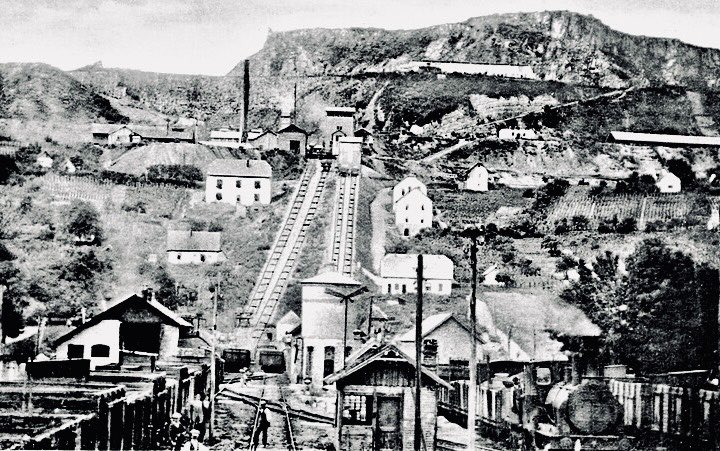
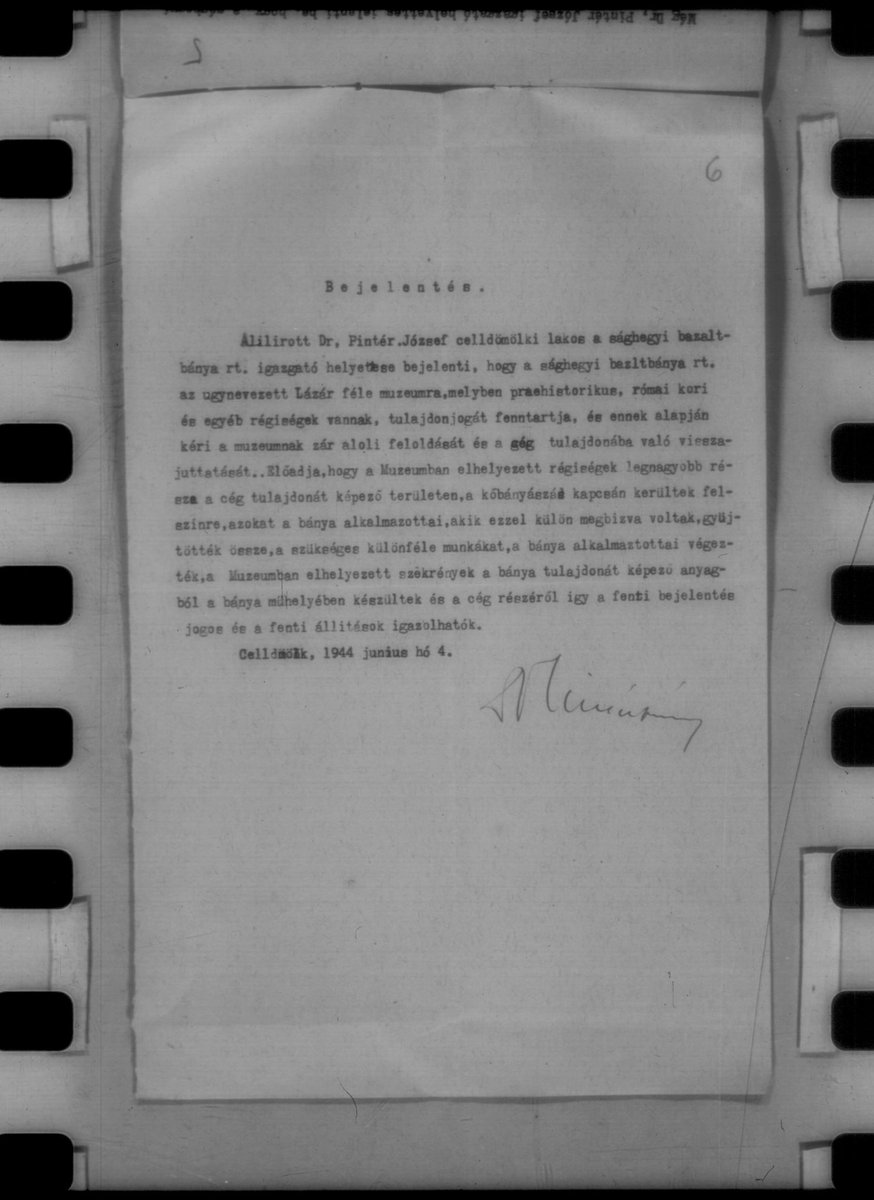
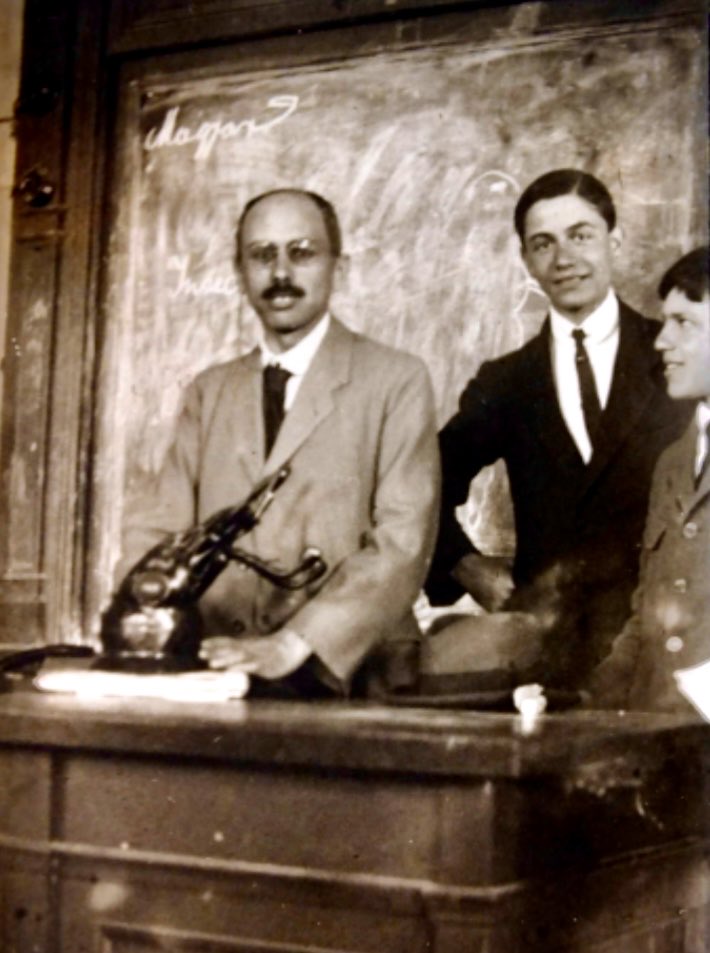
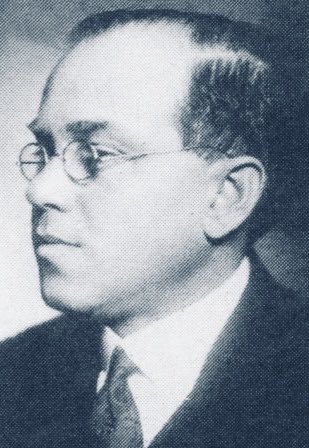
📜⛏️ Inventorying a Museum While the Founder Was in Auschwitz: The 1944 Seizure of the Lázár Collection at Ság-hegy 👤 Who Was Lázár Jenő? Lázár Jenő (1903–1964) was a mechanical engineer trained in Vienna who took over operations at the Ság-hegy Basalt Mine Company in Celldömölk. As quarrying cut through the volcanic slopes of Ság-hegy, it exposed layer after layer of ancient human history — Neolithic settlements, Bronze Age hoards and casting molds, Hallstatt Iron Age tumulus burials, Roman artifacts. Where another man might have seen rubble, Lázár saw a responsibility. He collected, documented, restored, and studied thousands of finds with the discipline of a trained archaeologist. He published on Bronze Age hoards in 1941 and 1943. He established a public museum at the mine site — displaying what he called the treasures of a 2,500-year-old advanced culture for the people of Celldömölk and beyond. In March 1944 he was arrested while returning from his brother-in-law’s funeral in Budapest. Detained at Kistarcsa internment camp. The Jewish Council interceded. It made no difference. He was deported to Auschwitz. He survived — described in contemporary accounts as nothing short of miraculous. 🗂️ What the Archive Records On 4 June 1944 — while Lázár was at Auschwitz — Dr. Csánky Dénes, Hungary’s government commissioner for seized Jewish art, ordered the official seizure of the Lázár Museum. Present were a museum director, a royal police inspector, finance officials, town officers, and representatives of the mine company itself. Excavation ledgers, diaries, and thousands of artifacts were seized. Fine art items — including an 18th-century Italian painting and Baroque wood carvings — were boxed and sent directly to Csánky’s office in Budapest. 🏭 The Corporate Claim Dr. Pintér József, deputy director of the mine company, then filed a formal declaration asserting the collection was company property — not Lázár’s. His argument: mine workers had unearthed the artifacts, so they belonged to the firm. This is a textbook Aryanization tactic — reclassifying Jewish property as corporate assets the moment the owner was rendered powerless by deportation. State authority, police enforcement, museum administration, and corporate opportunism converging on one man’s life work while he was in Auschwitz. 🏛️ What Followed Lázár returned. He kept publishing until his death in 1964. His name remains in museum databases and scholarly catalogues today. But he returned to a Communist Hungary. In 1948–1949 approximately 9,000 finds were transferred to the Magyar Nemzeti Múzeum — not as restitution but as nationalization. The postwar state absorbed what the Arrow Cross had seized. No public accounting of the chain of custody between 1944 and 1948 has ever been made. No public records indicate restitution to his heirs. ⚖️ He built the museum. The state took it twice — first under fascism, then under communism. His name appears in the catalogues. The chain of custody between his arrest in 1944 and the museum’s acquisition in 1948 remains a sanitized gap in the official record that has never been publicly explained. #HolocaustHistory #ArchaeologicalPlunder #LázárJenő #ProvenanceResearch #HungarianHistory #Archaeology #HEARAct #Restitution #JewishHeritage #Hungary1944 @POTUS @VP @marcorubio @USAmbHungary @UNESCO @nytimesarts @artnet @BBCWorld @Telexhu @guardianculture @NHM_London @SteveBrusatte @TomHoltzPaleo @kenlacovara @Dave_Hone @ChrisStringer65 @dustydino @NickLongrich @FlintDibble @smithsonian @BillAckman @BoardofDeputies
Holocaust Art Recovery Initiative tweet mediaHolocaust Art Recovery Initiative tweet media
Română
0
2
5
886
Holocaust Art Recovery Initiative
📜🌿 Dr. Sándor Polgár, Győr 1944: A Scholar Murdered, a Collection Seized, a Scientific Legacy That Endured Polgár (1876–1944) was Hungary’s foremost expert on the flora of Győr and the Kisalföld region. His 1941 monograph Győr megye flórája remains a landmark in Central European botany, cited in peer-reviewed publications as recently as 2025. He taught for 35 years at Révai Gymnasium. His students included Nobel laureate chemist Leslie Zechmeister. He hosted Béla Bartók — one of the 20th century’s greatest composers and Hungary’s most celebrated musical voice — at his home for Bartók’s last Győr concert. Over a lifetime of fieldwork he collected more than 20,000 herbarium sheets. In June 1944 he was deported to Auschwitz with his wife Margit. He was murdered there. 🗂️ What the Archive Records Five months later, on 24 November 1944, the Győr Municipal Museum reported to the Government Commissioner that it had seized and warehoused Polgár’s entire botanical collection. The letter claims that Polgár had previously expressed his intention to donate the collection to the museum. That intention was never honored on his terms. The collection was taken under Hungary’s wartime antisemitic decrees — from a man already dead. The letter closes: “Kitartás! Éljen Szálasi!” (“Stand firm! Long live Szálasi!” — the official salute of Hungary’s Arrow Cross Party, the Nazi-backed fascist regime overseeing the final deportations and murders of Hungary’s Jewish population.) Official city seal. Official procedure. Not hidden. 👨‍👩‍👧 A Granddaughter’s Testimony Anna Menzl’s 2025 memoir describes him as a diligent, moral, open-hearted scholar. The most devastating detail: leading botanists petitioned for his exemption from deportation. It was granted. It was mislaid until too late. “His brutal death at an early age still fills me with infinite sadness.” 🌿 What Survived Polgár had transferred portions of his collection to institutions throughout his career. Much survived: 5,254+ sheets at Debrecen University Herbarium — cited through 2025 ~15,000 sheets at the Hungarian Natural History Museum, Budapest Smaller holdings at ELTE, Szeged, Cluj-Napoca, and internationally His discovery of Ornithogalum ×degenianum — known only from Hungary — remains part of the scientific record. Science preserved what the state tried to erase. The same 1944 inventory also records the seizure of over 100 artworks — including a Renoir — alongside works by Mednyánszky, Rippl-Rónai, Csontváry, and others. None have been publicly traced since 1944. That is a separate and unresolved story. 🕯️ The herbarium survived. The monograph is still cited. The hybrid still carries his name. Sándor Polgár did not survive. That distinction — between the science that endured and the man who was murdered — is precisely what this document forces us to confront. Prior report: x.com/artrecoveryini… #HolocaustHistory #LootedScience #SándorPolgár #ProvenanceResearch #HungarianHistory #Botany #HEARAct @ClaimsCon @yadvashem @AuschwitzMuseum @MikeJohnson @JohnCornyn @RepLaurelLee @USAmbHungary @marcorubio @mr_plantgeek @ThePlantPros @Simplyplants @tabletmag @Commentary @NHM_London @WorldJewishCong @jfederations
Holocaust Art Recovery Initiative tweet mediaHolocaust Art Recovery Initiative tweet media
Magyar
0
0
0
126
Holocaust Art Recovery Initiative
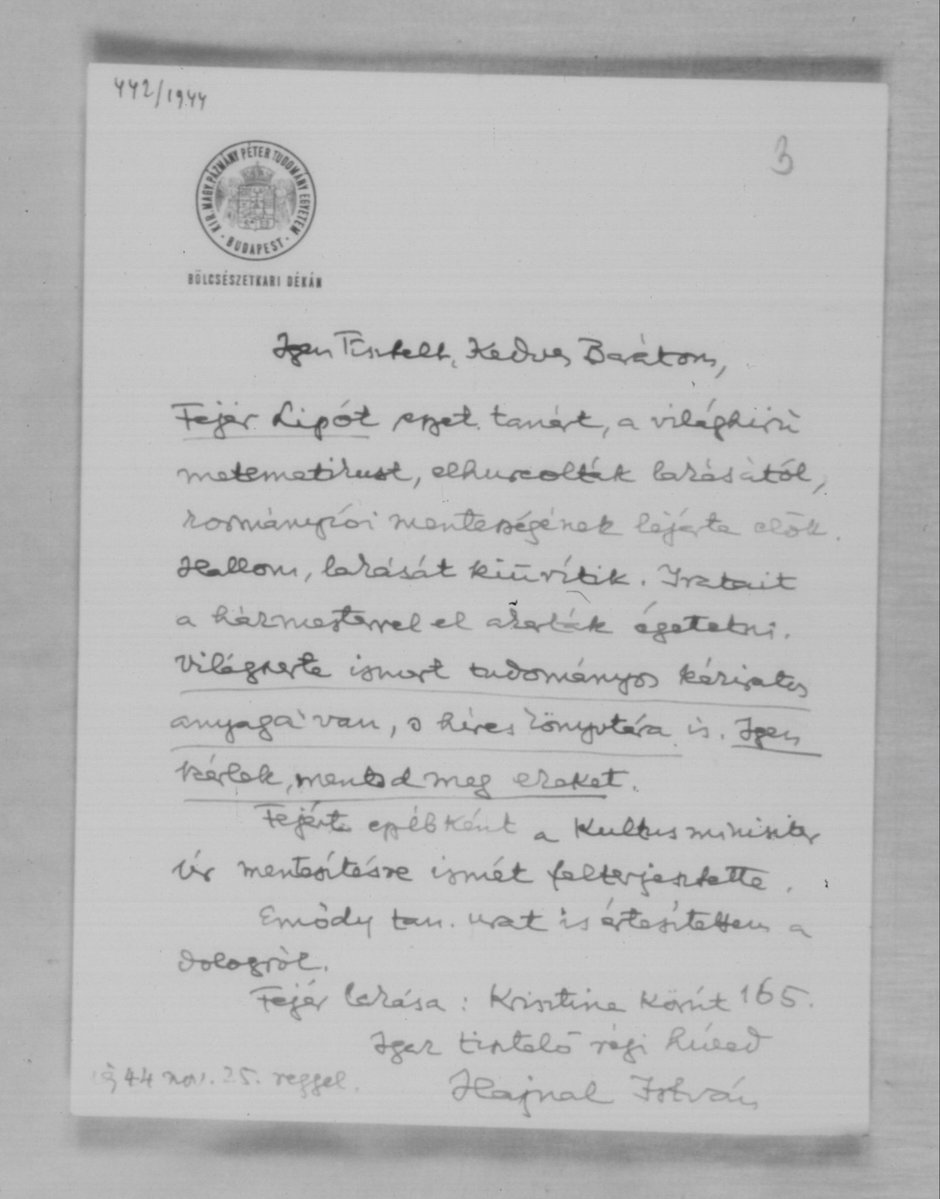
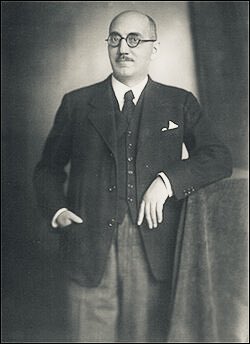
📚🔎 Budapest to Fukuoka, Japan: Tracing the Wartime Dispersal of Lipót Fejér’s Library In November 1944, officials affiliated with the Arrow Cross regime raided the Budapest residence of Lipót Fejér (1880–1959). Fejér was no obscure academic. He was a giant of 20th-century mathematics — the creator of Fejér kernels and Fejér sums, tools so fundamental to harmonic analysis that his name appears in virtually every serious mathematics textbook published in the last century. He was internationally decorated, a pillar of Hungarian intellectual life, and Jewish. In 1944, that last fact was the only one that mattered to the state. Arrow Cross officials seized his property — manuscripts, furnishings, and a substantial scientific library — as part of the structured confiscation of Jewish assets under state authority. Sealing orders and inventories document the process in bureaucratic detail: a system designed to erase a lifetime of scholarship, one crate at a time. Fejér survived the regime. His library was dispersed. 🔍 A Trace in Fukuoka One identifiable portion of Fejér’s library sits today at Kyushu University Library in Japan. Catalogued as the Fejer Collection, it consists of: 578 sets / 786 volumes Western-language scientific and mathematical works Explicitly identified by the university as the personal library of Lipót Fejér Hungary and Japan were both Axis powers during the war. That historical context exists. It does not explain how these books traveled. It does not substitute for documentation. But it is part of the world in which this dispersal occurred. 📖 The Provenance Vacuum The university’s public catalogue lists dozens of private collections — most with specific accession dates documented. The Fejer Collection has none. No acquisition date. No donor. No purchase history. No documentation explaining how nearly 800 volumes, seized by a fascist regime in Budapest in 1944, arrived at a Japanese university. That is not a minor administrative omission. It is a provenance vacuum that the institution has yet to address. 🧾 The Path — As Far As It Goes 1944 — Arrow Cross officials seize Fejér’s library from his Budapest residence 1944–Postwar — Dispersal path undocumented Present day — 786 volumes held at Kyushu University Library, Fukuoka, Japan, with no accession date or acquisition history listed ⚖️ Why This Matters Fejér lived until 1959, outlasting the regime that robbed him. Whether he ever knew his books had surfaced in Japan is unknown. What is known: a Japanese university holds the library of a Holocaust survivor, seized in 1944, and has not explained how it acquired it. Where a documented seizure meets identifiable surviving materials, the institution carries a moral and historical obligation to account for the gap. 🕯️ Lipót Fejér’s name is on the catalogue. His books are on the shelves. The silence between Budapest in 1944 and Fukuoka today must be broken. #HolocaustRestitution #LootedBooks #LipótFejér #ProvenanceResearch #CulturalHeritage #MathematicsHistory #HEARAct @nytimesarts @JohnCornyn @tedcruz @RepLaurelLee @RepJerryNadler @marcorubio @USAmbJapan @USAmbHungary @USAmbUN @nytimesbooks @MathHistFacts
Holocaust Art Recovery Initiative tweet mediaHolocaust Art Recovery Initiative tweet media
Română
0
0
0
122
Holocaust Art Recovery Initiative
📚🔎 Baron Móric Kornfeld’s Seized Library: Books Taken in Budapest in 1944, Identified Today in a Russian State Collection In our prior thread we shared original 1944 Hungarian government records documenting the confiscation of Baron Móric Kornfeld’s Budapest collection under Decree 1830/1944 M.E. Those records describe a significant private library alongside artworks — rare books, art volumes, and scholarly works seized during the Holocaust. We can now connect part of that documented seizure to identifiable books held today in a Russian state institution. 🔍 How This Connection Was Made The key evidence is Kornfeld’s ex libris — his personal bookplate, a unique ownership mark preserved inside surviving volumes. Books bearing this ex libris are held today at: ➡️ Nizhny Novgorod State Scientific Library, Russia A 2007 bilingual catalogue published by the library documents this group in detail — an institutional acknowledgment, in print, that these volumes carry Kornfeld’s ownership mark. 🧾 The Documented Path 1944 — Seized by Hungarian authorities under Decree 1830/1944 M.E. 1945 — Captured and transferred by Soviet forces Postwar — Relocated to Gorky, now Nizhny Novgorod 2007 — Russian state library publishes catalogue identifying the ex libris group 📖 What the Books Contain Subjects consistent with the 1944 inventory, including Hungarian history and literature, bibliographic and scholarly works, and art-related publications — a profile consistent with the collection of one of Hungary’s most distinguished prewar collectors. ⚖️ What This Means This is not a broad historical attribution. It is a specific, evidence-based identification linking a 1944 wartime confiscation record to volumes sitting in a Russian state library today — volumes that carry the original owner’s mark inside their covers. Baron Kornfeld’s bookplate survived the seizure, the war, the Soviet transfer, and eight decades of institutional custody. It is still there. It still says whose book it was. That is not a historical abstraction. That is a provenance claim with a name on it — literally. 🕯️ A Russian state library holds books it knows belonged to a Jewish collector seized by Hungary in 1944. The catalogue documenting that fact was published in 2007. The books are still there. What happens next must honor the memory of those they were taken from. #HolocaustArtRecovery #ProvenanceResearch #KornfeldCollection #BookRestitution #CulturalHeritage #HEARAct @CathyHickley @MikeJohnson @RepJeffries @RepLaurelLee @RepJerryNadler @marcorubio @POTUS @USAmbUN @USAmbHungary @UNESCOEU
Holocaust Art Recovery Initiative tweet mediaHolocaust Art Recovery Initiative tweet media
English
0
0
0
129