Ray Dowd

22K posts

Ray Dowd banner
Ray Dowd

Ray Dowd

@raydowd

Author #Copyright Litigation Handbook/Blog, #ip, #copyright, #artlaw, #trademark. International litigation. Trials & appeals. #NYC Views my own.

New York Katılım Ocak 2009
2.4K Takip Edilen7.9K Takipçiler
Ray Dowd retweetledi
Holocaust Art Recovery Initiative
Holocaust Art Recovery Initiative@ArtRecoveryInit·
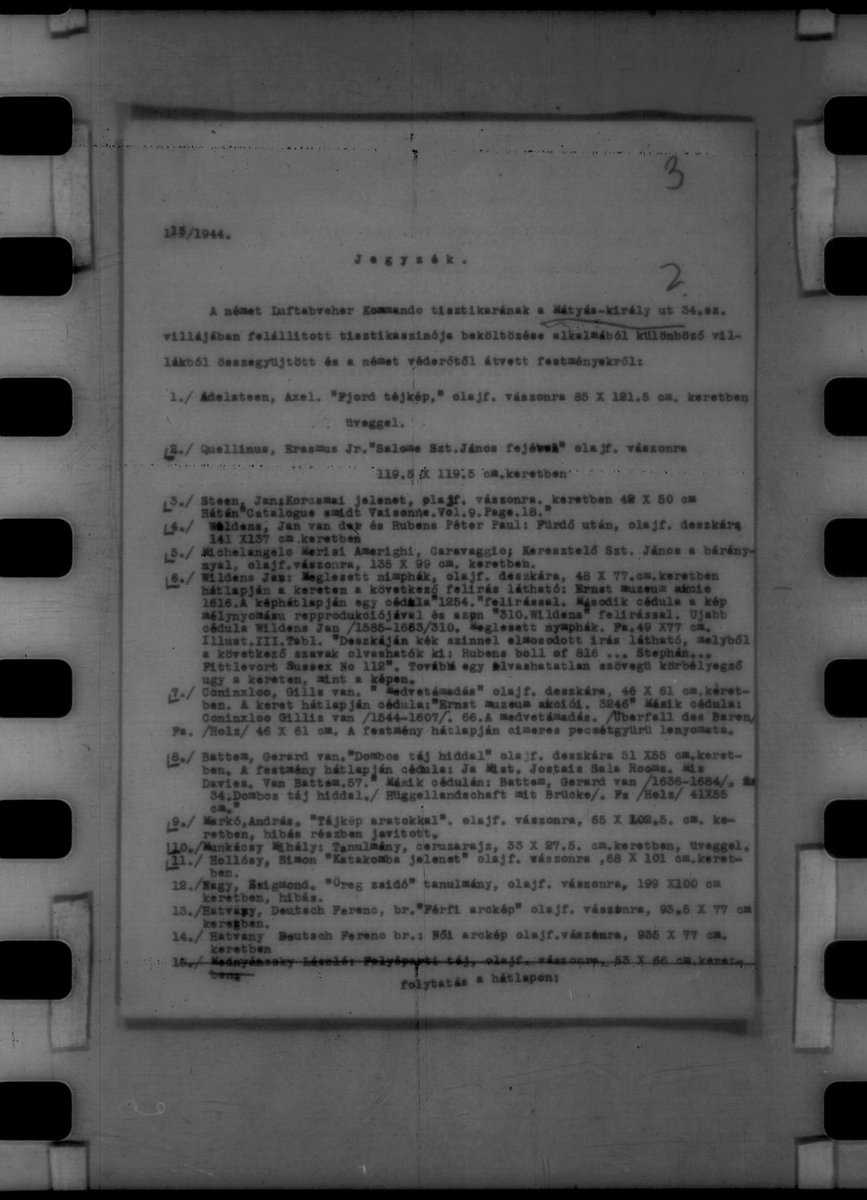
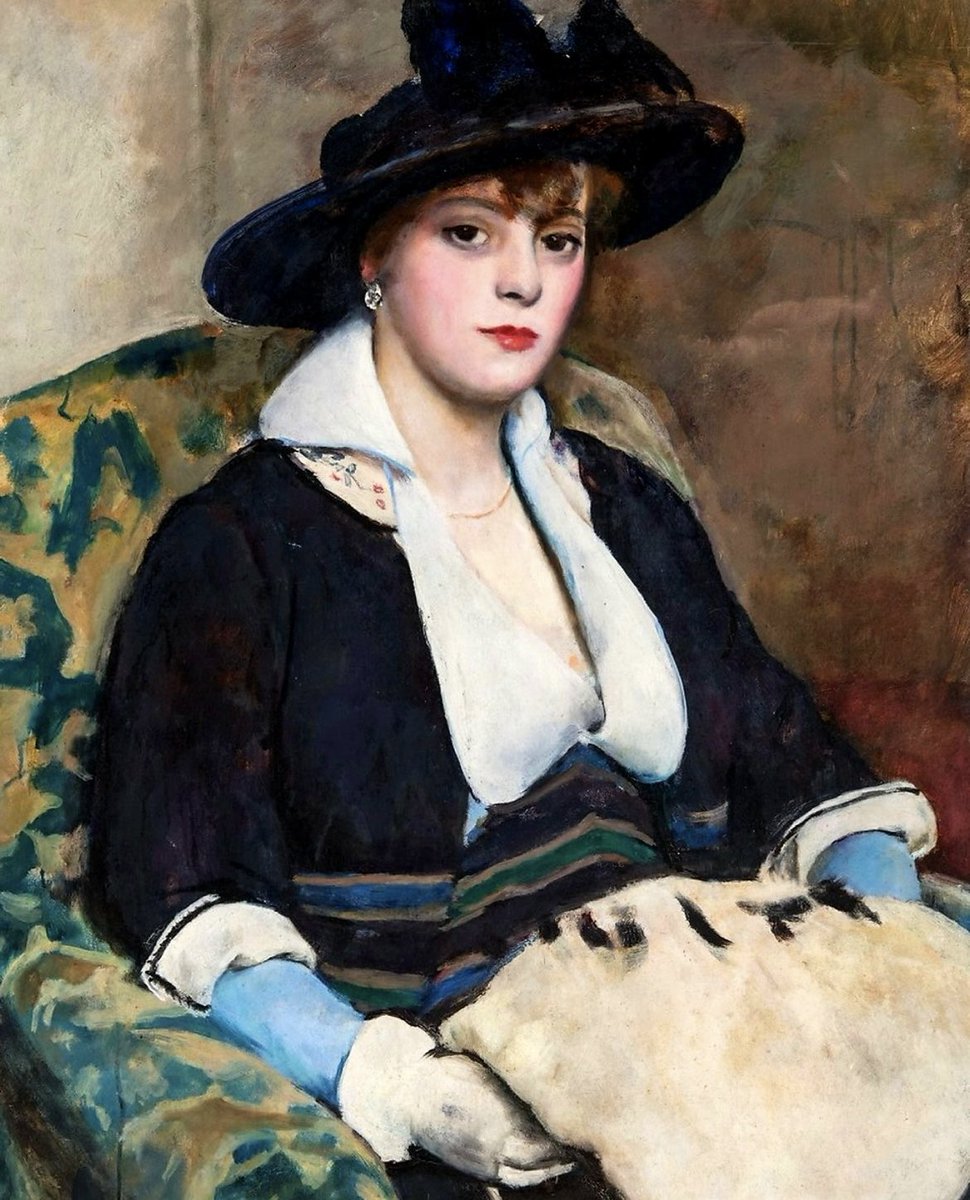
📜🖼️ BARON HATVANY’S PAINTING: SEIZED BY THE LUFTWAFFE IN 1944, HIDDEN IN PLAIN SIGHT AT THE HUNGARIAN NATIONAL GALLERY The Archival Record Hungarian government cultural property seizure records at the @HolocaustMI (File 115/1944) A typed inventory dated 12 May 1944 records paintings collected from Jewish-owned villas in Budapest and transferred under Luftwaffe authority during the German occupation of Hungary. The document lists fifteen works confiscated from multiple residences and deposited at the German officers’ facility at Mátyás király út 34. Entry #14 records: Hatvany Deutsch Ferenc br.: Női arckép Oil on canvas — framed 90.5 × 77 cm The Corresponding Object A closely matching painting is held today by the Magyar Nemzeti Galéria (Hungarian National Gallery): Női arckép (Portrait of a Woman) Baron Ferenc Hatvany — Oil on canvas Canvas: 80 × 65.5 cm — Frame: 88 × 74 × 3 cm Inventory number: 4878 Hungarian record: mng.hu/mutargyak/4782… English record: en.mng.hu/artworks/47826/ The 2.5 cm variance between the 1944 framed measurement of 90.5 × 77 cm and the current frame measurement of 88 × 74 cm is consistent with standard 20th-century reframing. Title, artist, medium, and dimensions correspond directly. The museum’s catalogue entry lists no pre-1945 provenance. The record carries the standard notation that information is subject to revision due to ongoing research. The Artist and His Looted Collection Baron Ferenc Hatvany (1881–1958) was both a significant painter and one of the most important art collectors in Central Europe before the war. After the German occupation of Hungary in March 1944, his collection was systematically looted. Recoveries have come from London and Paris. The Provenance Question The evidence is clear: a painting recorded in a 1944 Luftwaffe seizure inventory matches the artist, title, and dimensions of a work held by the Hungarian National Gallery today. The museum’s own record flags it as subject to ongoing research. That research needs to be made public. The Obligation The Hungarian National Gallery must publish the complete internal object file for inventory 4878 — including all acquisition records and any documentation covering the period between the 1944 confiscation and the painting’s entry into the national collection. Under the Washington Principles on Nazi-Confiscated Art (1998), documented evidence of Holocaust-era confiscation shifts the burden of disclosure to current holders. The United States has long supported that principle — and the HEAR Act reauthorization currently before Congress is the mechanism that keeps American pressure on foreign institutions meaningful. It must be passed. A painter’s own work was taken from him by an occupying army. Eighty years later it hangs in his country’s national gallery. His name is on the canvas and on the seizure document. The gallery owes him — and his heirs — an answer. #HolocaustArtRecovery #ProvenanceResearch #WashingtonPrinciples #HEARAct #HEARAct2025 #OpenTheArchives #HungaryMuseums #HatvanyCollection​​​​​​​​​​​​​​​​ @nytimesarts @ClaimsCon @RepLaurelLee @MikeJohnson @RepGoodlander @RepJerryNadler @JohnCornyn @SenBlumenthal @tedcruz @USAmbHungary @MayaKadosh @raydowd @ahistoryinart @IvankaTrump @hyperallergic @artnet @UNESCOEU @UNESCO @AlanDersh @BLaw @CathyHickley @HolocaustMI @AuschwitzMuseum @yadvashem @ArtLawProgram @JewishVLibrary @Jerusalem_Post @nypost @WSJ @WashPost @ForeignAffairs @ForeignPolicy @FT @cnni @bbcarts @BillAckman @elonmusk @grok
Holocaust Art Recovery Initiative tweet mediaHolocaust Art Recovery Initiative tweet media
English
0
1
2
277
Ray Dowd retweetledi
Holocaust Art Recovery Initiative
Holocaust Art Recovery Initiative@ArtRecoveryInit·
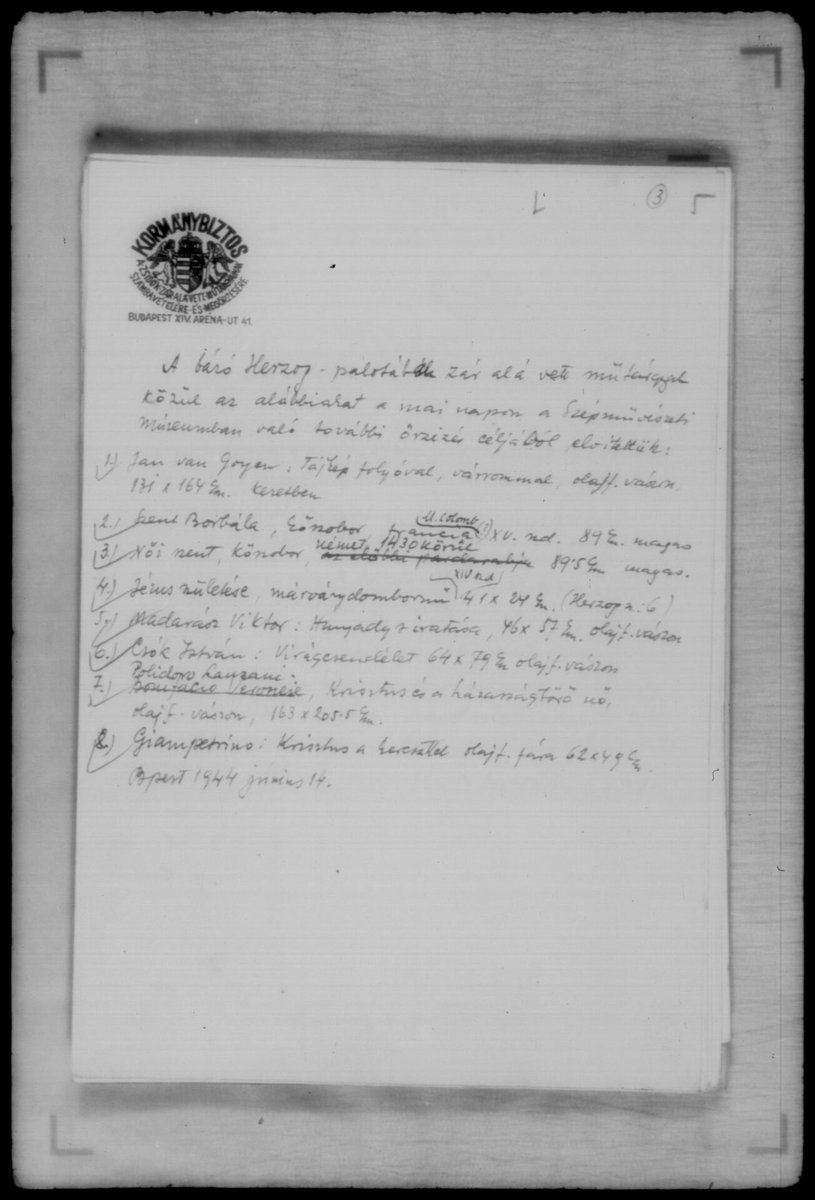
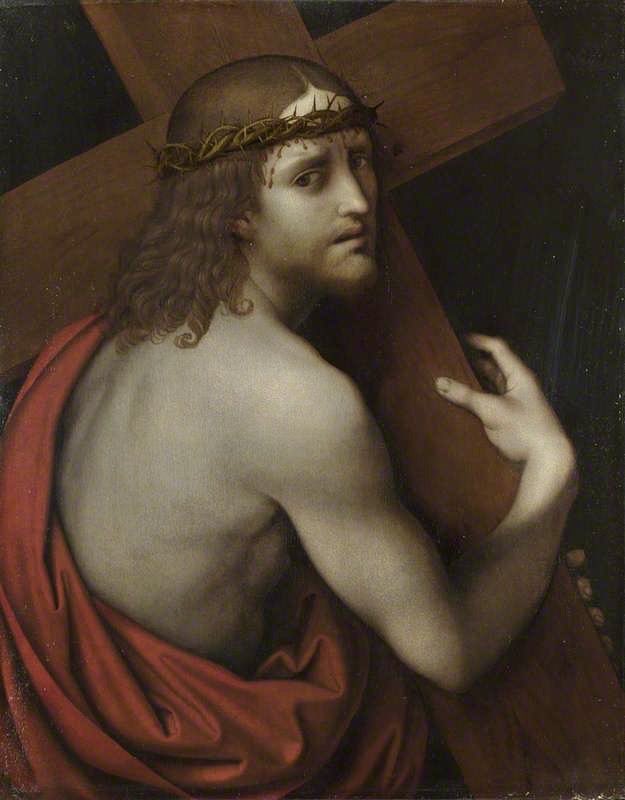
🎨 Christ Seized in 1944: A Giampetrino From the Herzog Collection Surfaces in a Budapest Museum New archival research into Holocaust-era art confiscations in Hungary has uncovered a precise wartime record for a Renaissance painting now in the Museum of Fine Arts, Budapest. 📜 Hungarian government seizure inventory – 14 June 1944 (Kormánybiztos office, Budapest XIV., Arena út 41) This official document lists artworks forcibly removed from the báró Herzog-palota (Baron Herzog Palace, Andrássy út) and transferred to the Szépművészeti Múzeum “for further őrzési célból” (“safekeeping”) — euphemistic language masking state-sanctioned seizure. Entry #8 records: “Giampetrino: Krisztus a kereszttel, olajf., 62 × 49 cm” (Christ with the Cross, oil painting; shorthand in context likely specifies wood panel) The Herzog collection was one of Central Europe’s most important private art holdings before World War II. This inventory page is a primary source documenting wartime confiscation from a Jewish family. A painting matching this entry survives today: 🎨 Giovanni Pietro Rizzoli (Giampetrino) Christ Carrying the Cross Inventory no.: 58.2 Dimensions: 62 × 49 cm Medium: oil on wood panel Museum page: mfab.hu/artworks/10854 The correlation is striking: • Dimensions identical (62 × 49 cm) • Exact subject: Christ carrying the Cross • Attribution consistent with Giampetrino’s workshop 📌 On the medium: In Hungarian, “fa” means wood, and the archival shorthand “olajf.” frequently served as shorthand for oil on wood (olajfa). This makes the 1944 record directly consistent with the museum’s wood panel support, strengthening the match beyond a generic “oil painting” label. Minor discrepancies in archival shorthand or rushed wartime documentation do not weaken the evidence. 📌 Pre‑1944 provenance: A review of publicly available records shows no documented pre‑1944 ownership or exhibition history for this work in the museum. The absence of early provenance strengthens the argument for transparent disclosure of wartime transfers and custody. 📍 Provenance question: Does the Giampetrino currently catalogued as inv. 58.2 correspond to the painting seized from the Herzog collection in 1944? The archival evidence and modern dimensions, subject, and attribution strongly suggest yes. 📜 International standards: Cases like this fall under the Washington Principles on Nazi-Confiscated Art (1998) and the Terezin Declaration (2009), which require full provenance disclosure, public transparency, and just solutions when works entered public collections through Holocaust-era dispossession. 🔎 After 80 years, the irony is striking: a painting of Christ, the central figure of faith and compassion, was forcibly taken from the hands of a Jewish family, only to remain in public view with no acknowledgment of its true owners. Full transparency, provenance disclosure, and restitution are long overdue — historical truth cannot remain hidden behind euphemisms of “safekeeping.” #Giampetrino #Herzog #HolocaustArt #ArtRestitution #art #SzépművészetiMúzeum #WashingtonPrinciples #UNESCO #HEARAct @WJRORestitution @nytimesarts @guardianculture @hyperallergic @artnet @bbcarts @HolocaustUK @HolocaustMI @artrecovery @WorldJewishCong @WhiteHouse @USAmbHungary @UN @SecRubio @tedcruz @Pontifex @USAmbIsrael @POTUS @MikeJohnson @RepLaurelLee @brand_arthur @raydowd @NicholasMOD @UNESCO @VaticanNews
Holocaust Art Recovery Initiative tweet mediaHolocaust Art Recovery Initiative tweet media
English
0
2
1
295
Ray Dowd
Ray Dowd@raydowd·
Care about Nazi-looted art not being returned to Holocaust victims? Urge Congress to pass the HEAR Act NOW! More about a Hungarian family of Holocaust survivors here that needs swift action from Congress, please pass it on: nypost.com/2026/03/02/wor…
English
0
0
0
24
Ray Dowd retweetledi
Vintage Maps
Vintage Maps@vintagemapstore·
Timelapse of the US Highway system
English
9
61
608
71.2K
Aakash Gupta
Aakash Gupta@aakashgupta·
The New York Times made news the loss leader for a $2 billion digital revenue machine, and this chart is the receipt. News-only subscribers dropped 65% since June 2022. Bundle subscribers grew 227%. That looks like a news collapse. But the NYT deliberately killed its standalone news product. They stopped marketing it. They made it nearly impossible to buy a news-only subscription on their website. They priced the full bundle (News + Games + Cooking + Athletic + Wirecutter) at $2/month introductory, cheaper than a standalone Games subscription. News-only ARPU is $13.33. Bundle ARPU is $12.92. Single non-news product ARPU is $3.36. Those 4.3 million single-product subscribers paying $3.36/month? They’re not the business. They’re the funnel. The NYT CEO said it explicitly on the earnings call: single products are “funnels to get people to subscribe” to the bundle. Games now accounts for over 50% of time spent inside the NYT app. Wordle, Connections, and the Mini pull 10+ million weekly players who never intended to read a news article. But half of all NYT subscribers now pay for the bundle, and bundle subscribers retain longer, engage more, and accept price increases. The bundle just went from $25 to $30/month. The result: digital revenue crossed $2 billion for the first time in 2025. Free cash flow hit $550 million. Adjusted operating margins reached 24% in Q4. Berkshire Hathaway just took a billion-dollar position. While the Washington Post cut 300 journalists last week, the Times added 1.4 million subscribers. This chart shows a news company that built an attention ecosystem where Wordle gets you in the door, Cooking keeps you at breakfast, The Athletic owns your commute, and by the time you think about canceling, you’d lose four products instead of one. The NYT figured out that the way to fund journalism in 2026 is to make sure you can’t quit the crossword.
Fiscal.ai@fiscal_ai

The New York Times is no longer a news company. $NYT

English
125
654
3.2K
1.1M
Ray Dowd retweetledi
Fordham Law
Fordham Law@FordhamLawNYC·
Fordham Law grad & restitution attorney Raymond Dowd '91 JD (@raydowd) shares his legal expertise on Nazi-looted art, on a PBS documentary titled "Plunderer: The Life and Times of a Nazi Art Thief." Part 1 re-airs tonight @ 9 pm EST (check local listings). pbs.org/wnet/secrets/e…
English
0
1
2
186
Ray Dowd retweetledi
Holocaust Art Recovery Initiative
Holocaust Art Recovery Initiative@ArtRecoveryInit·
🧾🖼️ Munkácsy’s Mozart Requiem Sketch — A 1944 Intake Record, and a Hungarian National Gallery Match Today? (Link Included) Roadmap: This is a serious, testable lead involving Hungary’s best-known 19th-century realist, Mihály Munkácsy, a named victim (Grünwald Róza, Budapest, Ostrom utca 1), and the Hungarian National Gallery. A 1944 Museum of Fine Arts intake protocol records a Munkácsy “Mozart/Requiem” oil sketch on wood with centimeter measurements taken under seal from Grünwald’s address; a public museum object record today appears consistent under a slightly shifted catalogue title and size; and the remaining task is straightforward but substantive: compare the museum’s intake ledgers, inventory/register numbers, and provenance notes to determine whether the present-day object intersects this 1944 custody trail—or whether it is a different work with a similar title. 1) Paper trail — intake into the museum system On 16 Aug 1944, a typed Jegyzőkönyv (official protocol) records objects taken under seal from Grünwald Róza, Budapest, Ostrom utca 1, and transported into the Museum of Fine Arts (O. M. Szépművészeti Múzeum) for “további megőrzés végett” (further safekeeping). This is not a later memory or a secondary list—it is internal wartime intake paperwork. 2) Munkácsy entry Item #5 in the intake list identifies a Munkácsy work with unusually strong matching keys (artist + specific subject + medium/support + centimeters): • Munkácsy Mihály • Recorded title/subject: “Mozart requiemjét vezényli” — literally “Mozart conducts his Requiem” • Medium/support: olajvázlat, fa — oil sketch, on wood/panel • Dimensions: 54 × 73 cm 3) The present-day museum record A strikingly close match appears in the Hungarian National Gallery (Magyar Nemzeti Galéria) online collection under a slightly expanded title—exactly the kind of catalog drift you’d expect over decades: • Munkácsy Mihály — “Mozart halála előtt requiemjét dirigálja (Vázlat)” (“Before Mozart’s death he conducts/directs his Requiem (Sketch)”) • Medium/support: oil on wood • Dimensions listed publicly: 56 × 75 cm • Public object page: mng.hu/mutargyak/5236… 4) Where the evidence converges The overlap is unusually tight on the elements that matter most for identification: • Same artist (Munkácsy) • Same subject (Mozart conducting/directing the Requiem; “vezényli/dirigálja” are near-equivalents) • Same format (sketch/vázlat) • Same support (oil on wood/panel, not canvas/paper) • Nearly identical size (54×73 vs 56×75) — a small variance consistent with later remeasurement conventions (paint layer vs support edge; rounding; different measurement points) This supports treating the MNG object as a credible candidate for the 1944 intake-listed work—while leaving final identification to the museum file and ledger record. 5) What the museum’s files should be able to show The 1944 protocol already establishes one hard fact: a Munkácsy sketch titled “Mozart conducts his Requiem” (oil on wood, ~54 × 73 cm) was taken under seal from Grünwald Róza (Budapest, Ostrom utca 1) and transported into the Museum of Fine Arts, Budapest for “further safekeeping.” In other words, this work entered Hungarian state museum custody during the period of persecution. The remaining question is verifiable and urgent: is the museum’s present-day work the same object taken from Grünwald Róza—and what does the record show happened after 1944? 🕯️This is a testable provenance case—one that calls for action and a documented answer. A 1944 intake record preserves the essentials for verification—Munkácsy, the Mozart/Requiem subject, oil on wood, and approximate dimensions—along with the source address and museum custody. A present-day museum record appears consistent, even with natural title and measurement drift. The next steps are concrete: publish the file citations and full provenance, identify heirs, and if the record confirms the match, pursue restitution and a transparent resolution. #HEARAct #OpenTheArchives #Munkácsy #Hungary #Mozart #UNESCO @WJRORestitution @RepLaurelLee @RepJerryNadler @RepRaskin @RepGoodlander @RepFitzgerald @RepRitchie @chiproytx @RepTenney @RepMoulton @RepMoskowitz @RepSchakowsky @MikeJohnson @nytimesarts @hyperallergic @artnet @artcrimeprof @raydowd @NicholasMOD @brand_arthur @artdetective @artrecovery @SenTedCruz @SenBlumenthal @BarakRavid @jacobkornbluh @bariweiss @JeffreyGoldberg @Nadav_Eyal @DrJackieMrsHajd @matthewkassel @antloewenstein @HenMazzig @SarahLDouglas @hragv @kennyschac @CathyHickley @ZacharyHSmall @jsf @alissamarie @marcatracy @MitchAlbom @panyiszabolcs @bodoky @andraspetho @eublogo @UNESCO @VP @USAmbFrance @StateSEHI
Holocaust Art Recovery Initiative tweet media
Română
0
1
1
623
The Intellectualist
The Intellectualist@highbrow_nobrow·
Q: If DOJ doesn't release the files it has by next Friday, is there anything Congress can do to compel that to happen? Rep. Thomas Massie (R): It's a crime if they don't. This is a new law with criminal implications if they don't follow it. @atrupar
English
14
172
792
117.4K
Ray Dowd retweetledi
Art Recovery International
Art Recovery International@artrecovery·
I'll believe it when I see it... "80 years after the fall of the Third Reich, not all looted assets have been returned to the victims’ descendants." The new body claims that Germany is “assuming its historical responsibility” Right. After 80 years. timesofisrael.com/liveblog_entry…
English
1
1
6
284
Ray Dowd retweetledi
Holocaust Art Recovery Initiative
Holocaust Art Recovery Initiative@ArtRecoveryInit·
A Jewish Painter’s “Venetian Kitchen” – From a 1944 Looting File to a 2017 Auction? 🍽️🎨 In 1944, a Jewish widow in Budapest, Grünwald Róza (özv. Andaházi-Kasnya Béla), had a roomful of art taken from her flat at Ostrom utca 1: works by Munkácsy, Ferenczy, Vaszary, Aba-Novák and others. One of them was a big interior scene by Bihari Sándor – a Jewish Hungarian painter from Nagyvárad who studied in Vienna and Paris and later helped found the Szolnok artists’ colony. 1️⃣ The 1944 museum record On August 16–17, 1944, the Hungarian Museum of Fine Arts (Szépművészeti Múzeum) drew up an intake protocol, File 278/1944 (Reel 144, slide 569). Entry 3 states: “Bihary Sándor: Velencei konyhában. Olaj, vászon, 90 × 136 cm.” For non-Hungarian readers: · the older spelling “Bihary” is the same painter now written Bihari Sándor · velencei = “Venetian” · konyhában = “in the kitchen” So, the 1944 file records a painting titled “In a Venetian kitchen”, oil on canvas, 90 × 136 cm, by a Jewish artist, seized from a Jewish home and entered into the custody of a national museum. 2️⃣ The 2017 Budapest auction On December 5, 2017, a Budapest auction house offered a work with an eerily similar description: “Bihari Sándor: Velencei konyha” oil on canvas, 90 × 135.5 cm, signed “Bihari Sándor Velencze 87” Here, the title is Velencei konyha, literally “Venetian kitchen.” Set side by side: · 1944: Velencei konyhában – “in a Venetian kitchen” · 2017: Velencei konyha – “Venetian kitchen” Same subject words, same artist, same medium, nearly identical size (90 × 136 vs. 90 × 135.5 cm), same city. The 2017 catalogue gives no provenance: nothing about Róza Grünwald, nothing about the 1944 seizure, nothing about any period in the Museum of Fine Arts. 3️⃣ What this does show❓ We do not yet have every link in the chain – that is exactly why this case matters. But the overlap we can already see is strong enough that it is reasonable and necessary to ask serious questions: · same Jewish artist (Bihary/Bihari Sándor) · same Venetian-kitchen subject and almost identical Hungarian title · same medium · dimensions that match within half a centimeter · a wartime museum protocol tying such a painting to Grünwald Róza and to the Szépművészeti Múzeum That is more than enough to justify careful provenance scrutiny. At this point the burden is on the museum, the auction house, the wider art market, the media, and the relevant government bodies to clarify what happened – not on survivors’ families to solve it from the outside. So the questions are straightforward: · Museum of Fine Arts / Hungarian National Gallery - What do your accession and deaccession cards show for File 278/1944, entry 3 – Bihary/Bihari Sándor: Velencei konyhában, 90 × 136 cm? - Was this canvas ever restituted to the Grünwald/Andaházi-Kasnya heirs? If it left museum custody, when, how and to whom? · Nagyházi Galéria and the consignor - What is the documented ownership history of the 2017 Lot 226? - Are there gaps between the late 1930s and the post-war decades that might intersect with state or museum holdings? And if one Bihari by a Jewish artist, taken from a Jewish home, may have resurfaced like this, where did the rest of Róza’s seized collection go – the Munkácsy Mozart Requiem, the Ferenczy Fürdőző fiúk studies, Vaszary’s Sétáló, Aba-Novák’s Szolnoki udvaron and the many other works recorded on the same pages? We’re not issuing a courtroom verdict here; we’re pointing to documented facts that clearly meet the threshold for public accountability. Until those wartime records are opened and systematically checked against what hangs in museums and appears in catalogues, paintings taken from Jewish homes in 1944 will keep resurfacing — either because researchers finally connect the dots, or because others are quietly allowed to profit from them, eight decades after the Holocaust.🕯️ #HolocaustArt #Provenance #Grünwald #Bihari #Budapest #SzépművészetiMúzeum #LootedArt #HEARAct #OpenTheArchives @WJRORestitution @ClaimsCon @HolocaustMI @SenBlumenthal @JohnCornyn @RepGoodlander @RepLaurelLee @nytimesarts @brand_arthur @raydowd @_BIAHS_ @he_ireland @USAmbFrance @USAmbUN @USAmbHungary @hyperallergic @artnews @artlaw @artcrimeprof @AAGDhillon @UnderSecStateP @CathyHickley @eurojewcong @JewishArtSalon @JewishTelegraph @JewishMuseumLDN @panyiszabolcs @pritipatel @TheNewPainting @ShabbosK @jacobkornbluh @DavidM_Friedman @michaeldickson @direkt36 @mdubowitz @bariweiss @EllieCohanim @SenFettermanPA @USAandEurope @BarackObama @GideonTaylorNY @VP @marcorubio @elonmusk @BHL @yadvashem @bbcarts @cnni @ForeignPolicy
Holocaust Art Recovery Initiative tweet mediaHolocaust Art Recovery Initiative tweet media
0
1
0
471
Ray Dowd
Ray Dowd@raydowd·
Important to get history right. An important and sensitive conversation.
Pilecki-Institut@PileckiInstitut

Dear Yad Vashem, In a time of widespread history distortion concerning the Second World War, National Socialist Germany, and the Holocaust, for example in popular podcasts listened to by millions, precise language and accurate historical facts are essential. Hans Frank’s decree of November 1939 was introduced in the Generalgouvernement: the part of occupied Poland that was seized by Nazi Germany and placed under a separate German administration led by Frank. These areas were subjected to extreme German terror, systematic mass violence, and racial segregation from the very beginning of the occupation. Below is the opening clause of the decree issued by Hans Frank on 23 November 1939 (English translation): “The Governor-General for the Occupied Polish Territories. Pursuant to § 5, Para. 1, of the Edict of the Führer and Reich Chancellor on the Administration of the Occupied Polish Territories of 12 October 1939 (Reichsgesetzblatt I, p. 2077), I order:” It is important to underline that there was no “Poland” on these territories in the sense of an independent state actor. The internationally recognised Polish authority that continued to exist after the September 1939 campaign was the Polish Government-in-Exile. Inside occupied Poland, the Polish Underground State also operated clandestinely and transmitted reports on German crimes to the Government-in-Exile. Both structures alerted the world to the fate of the Jews under German occupation, in particular the developing industrialised murder of European Jewry. Among those who contributed to this mission was Witold Pilecki, whose reports provided some of the earliest and most detailed eyewitness accounts of the German extermination policy.

English
0
1
2
159
Ray Dowd retweetledi
Joe Regalia
Joe Regalia@writedotlaw·
Judges and clerks tell us all the time: the briefs with the most compelling facts usually win the day. They’re easier to follow. They build trust. They create momentum long before the argument begins. Here’s how top advocates craft them: 🧵
English
1
4
30
3.6K
Ray Dowd retweetledi
Holocaust Art Recovery Initiative
Holocaust Art Recovery Initiative@ArtRecoveryInit·
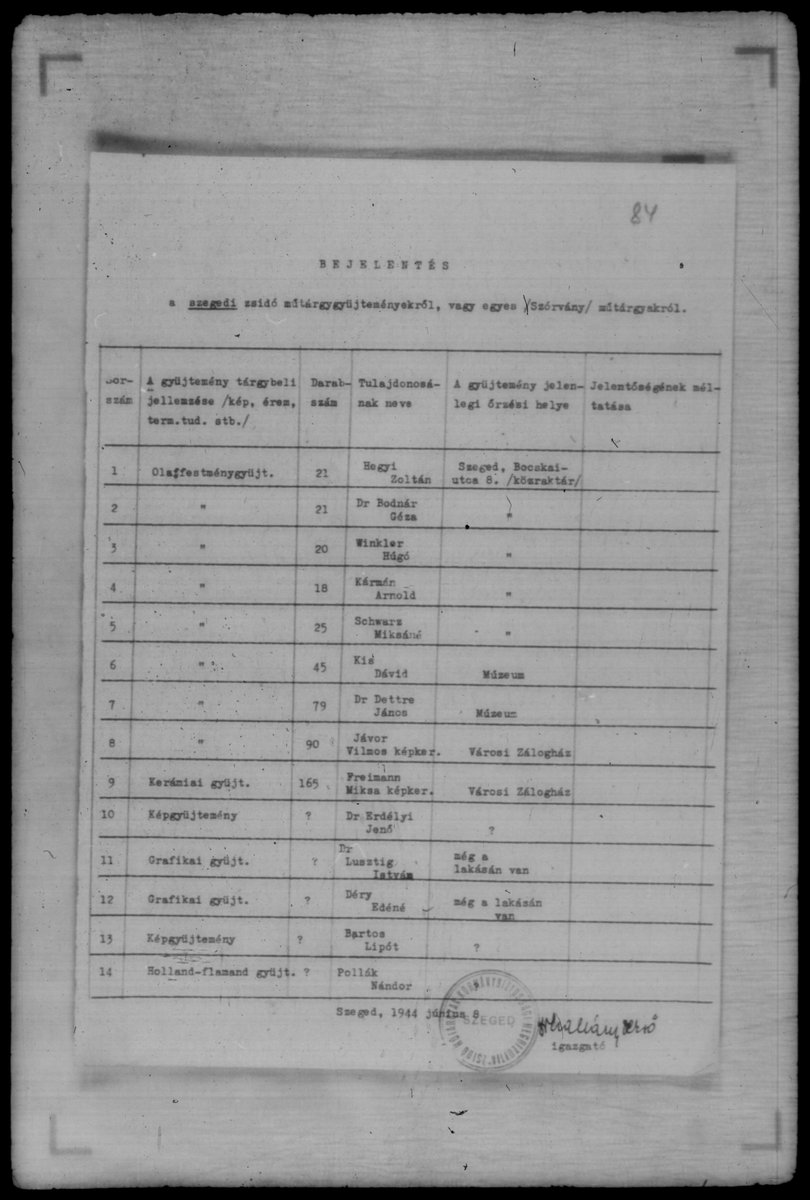
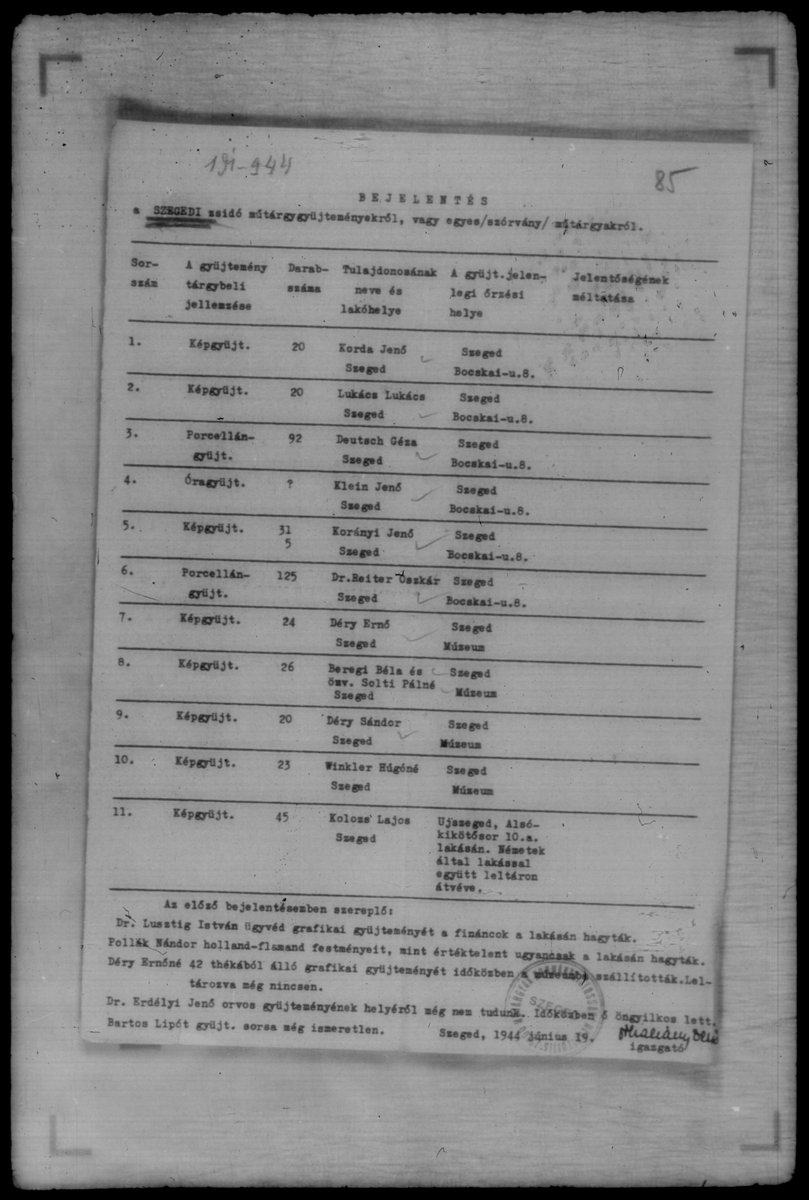
🕯️🖼️The Families, the Stolen Art, and the 1944 Files That Still Demand Justice (Szeged, Part III) With this post we reach the last pages of the 101-page Szeged dossier—Reel 144, slides 13–32—the closing reports that spell out which Jewish families lost which collections, where those works were taken, and how the state classified them. These are the pages that turn a wartime inventory into evidence for restitution, a record for remembrance, and a standing indictment that justice is still owed. In June–July 1944, Csallány Dezső (Szeged museum director and local executor of Csánky’s 1944 art-seizure directives) submitted “Bejelentés” (official seizure reports filed with the authorities) listing Jewish private art collections by owner, address, number of works, and where the seized objects were being held (Bocskai u. 8 depot, city pawnshop, or museum). It turns Szeged into a directory of Jewish families and the art stripped from their homes, line by line. From these forms and the linked inventories, we can name the Jewish families involved and see, in black and white, what was taken from each of them. • Korányi Jenő – 31 paintings • Hegyi Zoltán – 21 paintings • Dr Bodnár Géza – 21 paintings • Winkler Hugó – 20 paintings • Kármán Arnold – 18 paintings • Schwarz Miksa-né – 25 paintings • Kis Dávid – 45 paintings (transferred directly to museum custody) • Dr Dettre János – 79 paintings (the largest single private painting collection recorded) • Jávor Vilmos pictures – 90 works (stored in the city pawnshop) • Dr Reiter Oszkár – 125 porcelain pieces • Deutsch Géza – 92 porcelain pieces • Déry family – at least 20 paintings + a 9,059-piece graphic collection • plus additional entries for Winkler, Pollák, Klein, Faludi, Ausländer, Fenyő and others, each noted with “képek” (paintings) or “porcelán” counts in the dozens. Where the linked ledgers list specific works, we can go further and tie named canvases with dimensions directly to individual families. For example: • Nyilasy Sándor – Tiszaparton, oil, 40×34 cm — recorded under Liebmann B. • Krupka – Kocsmában, oil, 60×80 cm — under Frenkel I. • Szilbert – Kompozíció, oil, 65×92 cm — under Kőrössy I. • Benyovszky – Lovas rajz, 70×100 cm — under Spitzer • Parobek – Kukoricamorzsolás, oil, 70×100 cm — under Lővy E. • Erdősi – Falusi udvar, oil, 70×98 cm — under Müller • Berkes – Utcarészlet, oil, 70×100 cm — under Adler L. • Joachim – Interieur, oil, 60×80 cm — under Král S. These are serious museum-format pictures—40×60, 60×80, 70×100 cm and larger—tied on paper to specific Jewish families whose names are still legible today. The Dettre collection is especially important. Across the dossier, works explicitly linked to Dr Dettre János include: • Benczúr Gyula – Kompozíció vázlat, oil on canvas, 172×145 cm (frame 185×155) • Nyilasy Sándor – Leányok a fűben, oil on canvas, 80×100 cm (gold frame) • Tornyai János – Táj, oil, 46×38 cm • Rudnay Gyula – Kompozíció, oil, 48×40 cm • Mednyánszky László – head study, oil, 39×30 cm For one provincial Jewish doctor to assemble Benczúr, Nyilasy, Tornyai, Rudnay and Mednyánszky under one roof was a lifetime of taste and sacrifice; for all of them to survive only as entries in a state seizure file is precisely the kind of injustice restitution is supposed to confront. The Déry family graphics are a different kind of treasure. The records describe Déry Ernőné’s graphic collection as 9,059 items, broken into numbered folders (mappák) with artist names, genres and sheet counts. The categories include: • Ex libris albums (bookplates) grouped by designer • “Alkalmi grafika” (occasional/commemorative graphics) • “Vegyes grafika” (mixed prints) and “szabad grafika” (free graphic art) • portfolios of Austrian and German engravings and modern prints Among the folders are sets labelled with artists such as Hofer, Pingeten, Kislinger, Csernay, Michel—each accompanied by a lap-szám (sheet count), often in the dozens or more. In other words, Déry didn’t just own one or two nice prints; she owned entire artist portfolios and thematic print series. These works were fully catalogued into state custody in 1944, with no indication anywhere in the dossier that they were restored to their owner. By July 1944, Csallány reports that: • the Bocskai u. 8 depot holds roughly 441 Jewish paintings, • the Szeged City Museum (Somogyi Library & Móra Ferenc Museum, C-group) holds at least 122 additional paintings, plus porcelain and graphics, • the classification of all seized art in Szeged is complete, and • his team is moving on to Csanád and rural Csongrád to do the same. Taken together, the 101 pages are not just an inventory; they are a city-wide routing plan for stolen collections, where each line connects: Jewish family → number and type of artworks → dimensions and artists (where listed) → precise depot or museum holding. For museums, galleries and governments, this is actionable evidence. If your institution holds Hungarian paintings, prints or Dutch/Flemish works with a provenance gap in the 1939–1949 window—especially where names like Korányi, Hegyi, Bodnár, Winkler, Kármán, Schwarz, Kis, Dettre, Jávor, Deutsch, Reiter, Lustig, Déry, Pollák, Klein, Faludi, Ausländer, Fenyő, Liebmann, Frenkel, Kőrössy, Spitzer, Lővy, Müller, Adler, Král appear or can be tracked to your provenance records—you now have a duty to: 1️⃣ Systematically audit your holdings against these files — match every relevant work by artist, title, and exact centimeter size — and make those results public. Institutions should not be privately “reviewing”; they should be openly accounting for what they hold. 2️⃣ Release full, line-by-line provenance dossiers for suspect works — not just a donor name, but acquisition dates, purchase or transfer records, any link to wartime depots (Bocskai u. 8, the Szeged Somogyi Library & City Museum, the city pawnshop), and all gaps between 1939–1949. Donor and acquisition histories should no longer be treated as internal secrets but as part of the public record. 3️⃣ Proactively contact heirs and their representatives – don’t wait for families to somehow “find” these records. Use this dossier as a starting point to notify, consult, and negotiate with those whose names appear in it, and commit to real remedies where claims are substantiated. The paperwork survived even when many of the people did not. Page after page names Jewish families, counts their paintings, and records in cold detail how the state processed what it took. This dossier is a smoking gun of injustice, and it demands an answer. Its historical, moral, legal — and yes, foreign-relations — significance is unmistakable. What was done in 1944 still stands before us today — and it will keep standing there until those with the power to act finally do. ⚖️ (Names in Hungarian order: family name first.) #ArtRestitution #OpenTheArchives #Holocaust #Provenance #HEARAct #Hungary #UNESCO #EuropeanUnion #SCOTUS #artcrime @WJRORestitution @GideonTaylorNY @marcorubio @SenTedCruz @SenFettermanPA @SenateForeign @yadvashem @HMD_UK @UnderSecStateP @MayaKadosh @AuschwitzMuseum @howardlutnick @USAmbFrance @USAmbUN @USAmbIsrael @BBCSteveR @brand_arthur @TheJewishMuseum @ShabbosK @panyiszabolcs @IngrahamAngle @grok @JNS_org @JTVChannel @DRUDGE @ariannahuff @raydowd @RandySchoenberg @NicholasMOD @RobertIger @MikeBloomberg @Steven_Ballmer @finkd @elonmusk @MichaelDell @OpenAI @richardbranson @JeffBezos @BillAckman @jk_rowling @StephenKing @harari_yuval @444hu @Telexhu @piersmorgan @nytimesarts @guardian @nypost @bbcarts @CathyHickley
Holocaust Art Recovery Initiative tweet mediaHolocaust Art Recovery Initiative tweet mediaHolocaust Art Recovery Initiative tweet mediaHolocaust Art Recovery Initiative tweet media
English
0
2
2
414
Ray Dowd retweetledi
The OSS Society
The OSS Society@osssociety·
As early as October 1943, OSS founder Gen. Donovan was urging FDR to plan for post-war prosecution of the Nazi High Command. (The British government, US military, and the State Department were indifferent to the issue.) OSS gathered a vast amount of evidence that was used at the trials. Approximately 200 OSS personnel served on the prosecution team. Donovan was appointed as an assistant to the chief prosecutor. The OSS’s Visual Presentation Branch designed @Courtroom600. Its Field Photographic Branch secured a large hoard of films made by the Nazis of the death camps that were introduced as evidence at the trials.
English
0
2
1
76