
Gabriel Fior retweetledi
Gabriel Fior
168 posts


Gabriel Fior
@TheGabrielFior
Crypto & AI engineer @chaoslabs | ex-Prediction Markets AI @gnosischain CS @UniofOxford | Physics @TU_Muenchen KB5 @KERNEL0x 🌱 | Views my own
Katılım Temmuz 2016
2.1K Takip Edilen518 Takipçiler

Gabriel Fior retweetledi

Loved clements comprehensive presentation on deep funding!
He started with a clear breakdown on types of prediction markets
- Basic version where you just bet between 2 outcomes, one of which goes to 1 and the other 0 (like who'll be US president)
- scalar markets where you earn money based on how close to answer you are
Say you have a market for inflation being between 0 & 10%
You bet 10% but it was 0, so you lose all your money. If it was 5%, you lose half the money
Finally multiscalar markets where there are many outcomes which collectively add to 1. We see this most prominently with UK style parliamentary elections, where you can bet on % of total seats a party will win
Armed with this understanding, he then applied prediction markets to scaling human judgment on the relative value of repos like solidity , viem , remix and their dependencies to Ethereum
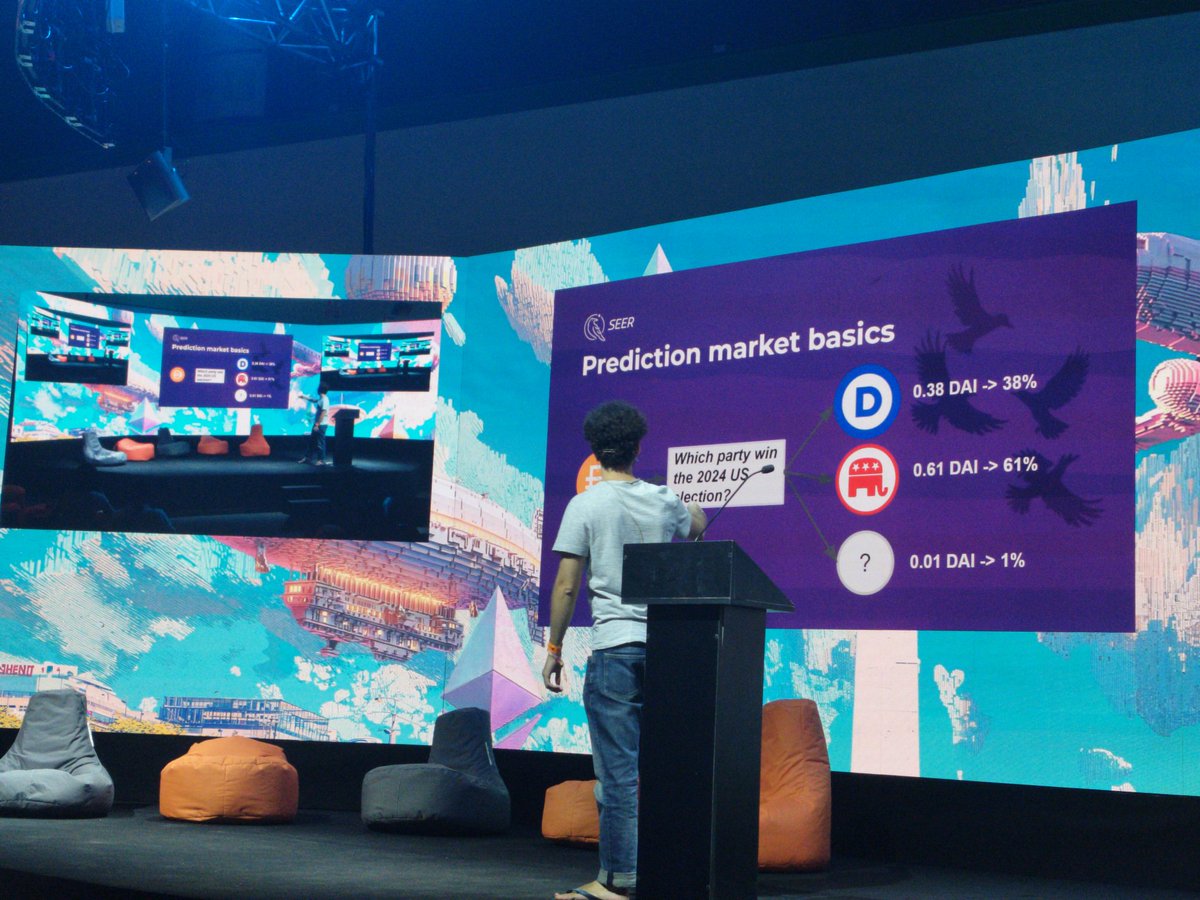
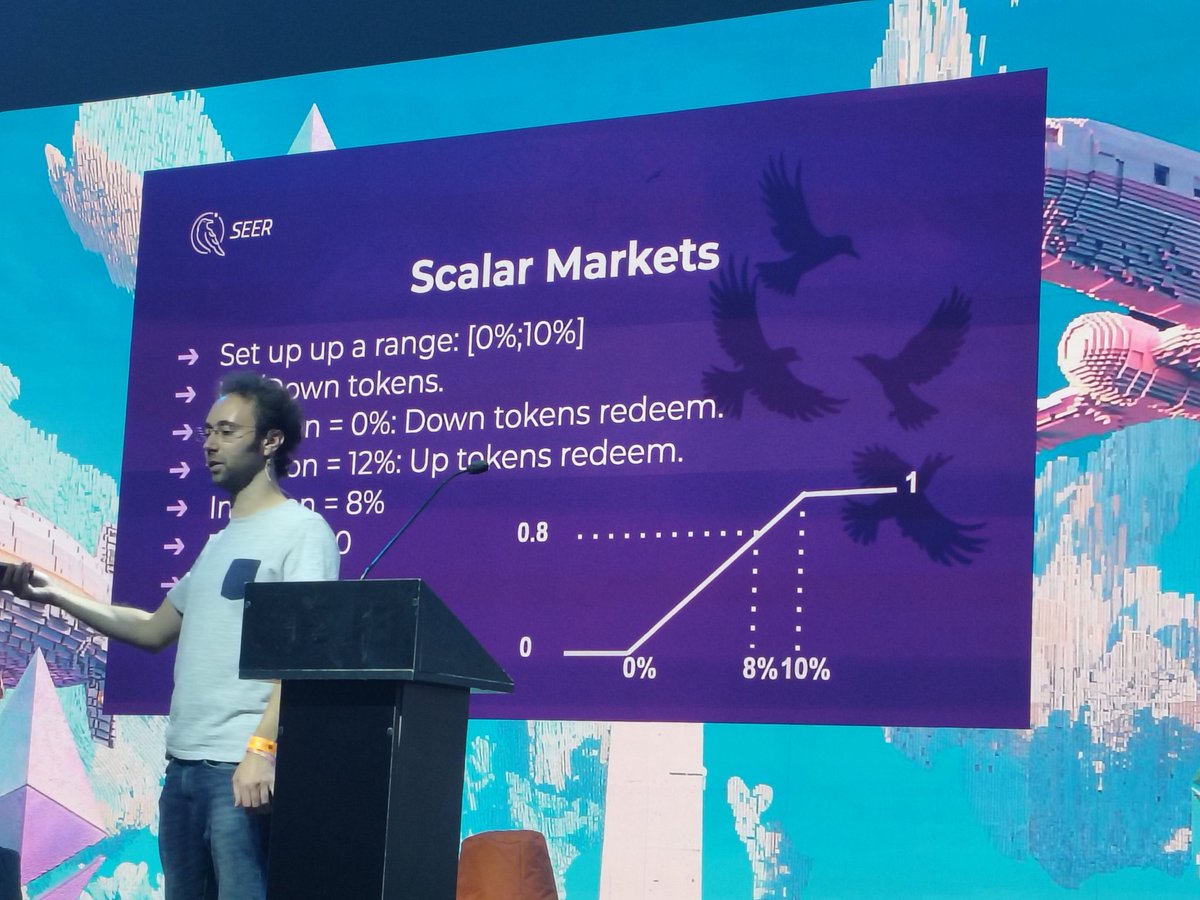
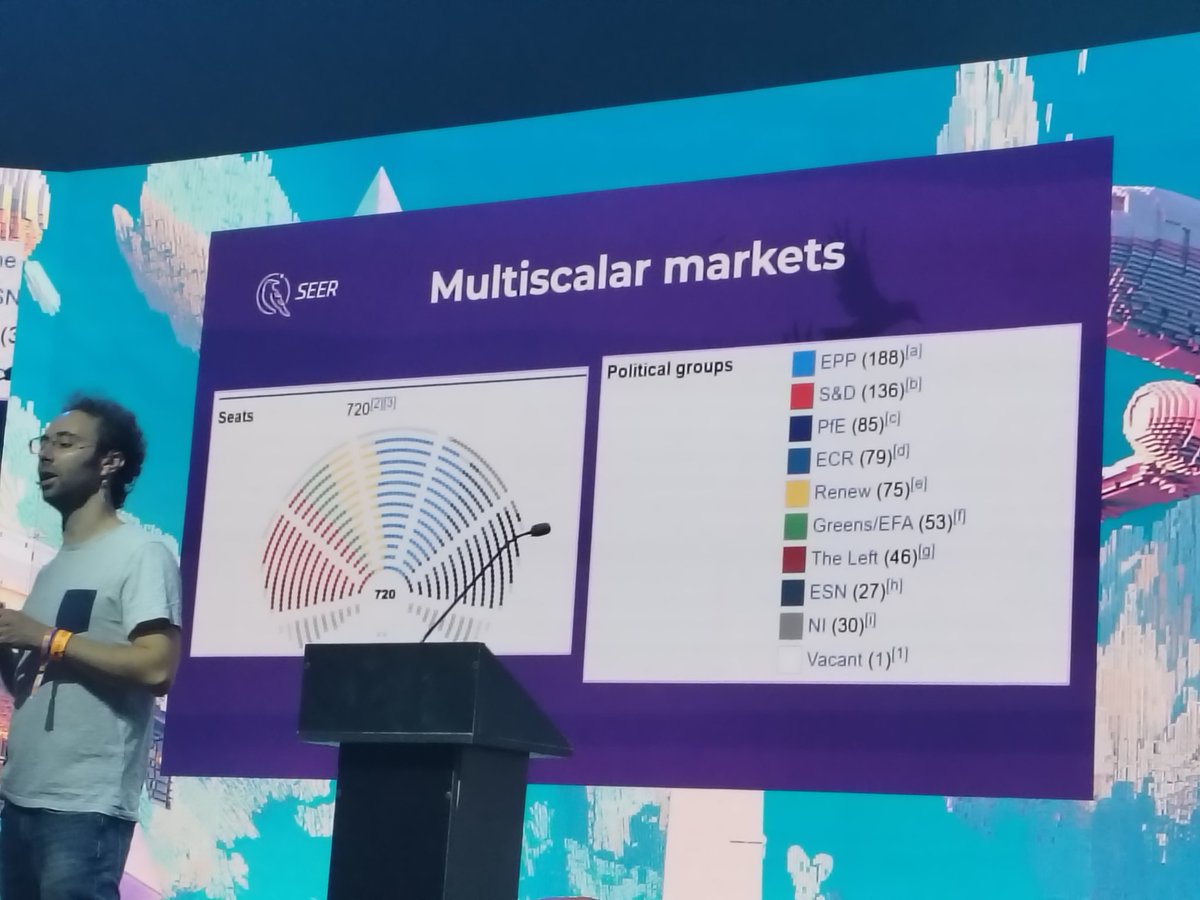

0xjean.eth @ 🇦🇷⤴@jnptzl
it’s getting easier to understand deep funding now that we have actual examples of it working a presentation by @clesaege about the collaboration of @devanshmehta and the @seer_pm team more experiments to come
English
Gabriel Fior retweetledi

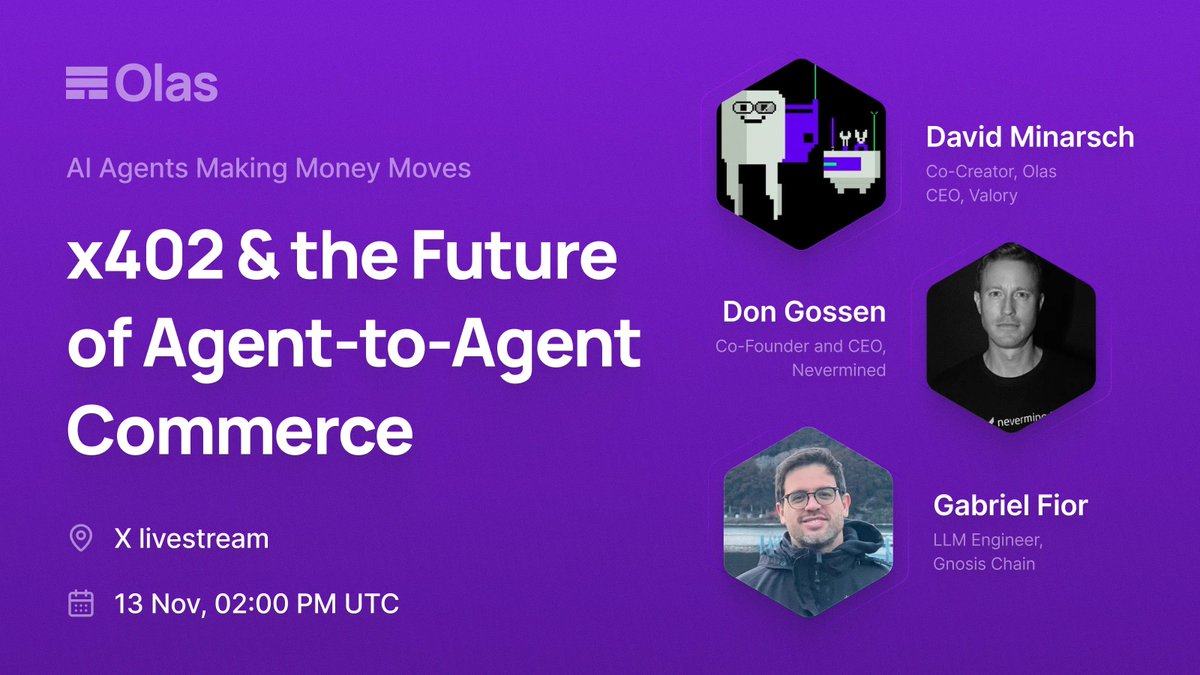
A2A commerce is evolving fast with x402 changing how agents transact.
Tune in tomorrow to unpack it with:
• @DonGossen, Co-Founder @nevermined_ai
• @TheGabrielFior, LLM Engineer @gnosischain
• @David_enim, Founding Member @autonolas
Set a reminder → x.com/i/spaces/1vOxw…
English
Gabriel Fior retweetledi

A decade ago, Gnosis deployed its first contract on @ethereum.
Now it’s:
▪️ @safe – $58B TVL
▪️ @CoWSwap – $130B traded
▪️ @gnosispay – 151 countries
▪️ @gnosischain – 300k validators, 0 downtime
▪️ @GnosisVC – 80+ projects backed
Plus guilds, wallets, DAOs, and some conditional-token nerdery that powers Polymarket & friends.
Not too shabby for a prediction market side quest 😉
Next up: consumer 👀
English
Just came across this article - very nice explanation about Futarchy for DAOs from @UmbraResearch and @dj_d_sol
The article presents in a thought experiment how the mechanism makes it unprofitable for a majority token holder to steal DAO assets, even with 51% control.
Umbra Research@UmbraResearch
FUTARCHY AS TRUSTLESS JOINT OWNERSHIP In this piece, @dj_d_sol explores futarchic governance as a market-based alternative to the flawed crypto governance we see today.
English
Gabriel Fior retweetledi

🌱 Building in public means growing in public.
Here are a few of our favorite resources shaping how we think about decentralization, AI, and the future of compute:
🔹 Lilypad Litepaper – Our vision for a decentralized AI compute network.
docs.lilypad.tech/lilypad/resear…
🔹 “Attention is All You Need” explained – If you’ve ever wondered *how* transformers changed everything, this clear YouTube breakdown is gold.
youtube.com/watch?v=iDulho…
🔹 Coinbase Learn: Blockchain Basics – A clean primer on why blockchain matters beyond speculation.
coinbase.com/learn/crypto-b…
🔹 Hugging Face Transformers Mini-Course – Get hands-on with transformers in a gentle, practical way.
huggingface.co/course/chapter1
These resources remind us why we’re building Lilypad:
🪐 A world where compute is accessible to everyone.
🛠️ A network where builders and researchers can launch experiments freely.
💡 An ecosystem where ideas move fast, but values stay clear.
If you’re exploring the edges of AI and decentralization, dive in and let us know what’s resonating for you.

YouTube
English
Check out our new blog post, together with @Playinfgames , about some of our AI agent interactions with prediction markets on @gnosischain
gnosis.io/blog/the-rise-…
English
Looking forward to speaking at this panel on AI agents x DAO governance!
SEED Gov@SEEDGov
🤖 How could AI impact DAO dynamics? 📡 What ethical, legal, and social challenges come with it? 🧠 What role will autonomous agents play in governance? This Tuesday 22 at 15:00 UTC, we’re hosting a Space to explore how AI is reshaping decentralized decision-making. 🎙 Speakers: @federicoast (@Kleros_io), @TheGabrielFior (@gnosischain), and @0xNN2 (@hatsprotocol).
English
Very interesting review about @butterygg from @devanshmehta - I'm looking forward to seeing more and more AI agents playing a role in governance decisions leveraging Prediction Markets
Devansh Mehta@devanshmehta
Product review: @butterygg conditional funding markets TL;DR: trying their app made me realize just how far we have to go for making usable and understandable products in the futarchy space Overview So prediction markets can be divided into 2 - betting markets like @Polymarket or @Truemarketsorg where you simply wager on the outcome - decision markets like Butter or @seer_pm that predict outcomes on whether you make a product change or give funding vs you dont we've had PMF for (1), while (2) is still nascent with a lot of promise but much fewer active traders in them 1. User Experience why did Butter have their own account separate from the wallet you connect with? After i went through painful bridging to unichain (thanks @layerswap) it took me some time to figure out i need to deposit from there into the butter account? I couldn't clearly see the rationale for having 2 separate accounts, your own wallet and a butter account, esp since i needed to still sign txns when making trades from my own wallet? and even if there is some compelling reason for 2 accounts, I wish i could deposit funds on any chain in my wallet into the butter account which does bridging to unichain on my behalf but making the user first bridge to unichain and then deposit into the custom butter wallet was rather pointless. I would have honestly given up here if i wasn't writing a review on their product (as a side note, its quite ridiculous that i couldn't swap my ETH to USDC using uniswap from within metamask... on unichain??) 2. Comprehensibility I understood little from their tutorial on the implications of my trades So this basically means that if i don't accurately predict whether a project will be funded, i lose all my money? Why should i win or lose money by guessing which project is going to get funding, when i am supposed to guess at their growth in TVL? Ideally if i bet on a project but it doesnt get funded, my capital should simply be returned to me. since what we care about isn't accurately knowing which project will get funding but which will have the highest growth in TVL i didn't realize that @MorphoLabs was already selected as winner and bought some @eulerfinance funded up tokens, guess thats money down the drain 😭 and if i do correctly predict which project gets funding, but am positionally wrong in its up or down value, i again lose money? do i lose all or is there some other formula? why is the current estimate "273M" when i should instead be trying to guess the change in TVL over this period? so i basically need to first see what their current TVL is, calculate the expected change for myself, and then place my bet? why not instead just show the user the expected change in TVL rather than aggregate? I also liked @Lajarre insight from the pilot that traders want to simply place positional bets instead of a specific number of how much up or down their tutorial needs quite a big revamp to appeal to a wider audience, the level of complexity here is beyond users ability to grasp. i consider myself knowledgeable on futarchy and i had a really tough time figuring things out 3. Funding Allocation so from my understanding, they basically measured the difference between "if not funded, then TVL is X" vs if funded, TVL is Y" The difference of Y-X is then used to determine who will make most impact from the funding (this wasn't explained in their tutorial as you can see, i found it from their docs) So essentially to game their system, what you need to do is tell your community to - buy "funded, up token" - buy "not funded down token" and that would yield the highest impact according to their formula, providing the project with $100k without arbitrageours (almost certainly the case in these small pilots with early markets), it becomes a more complex version of quadratic funding where whoever disciplines their community better walks away with more funding this is where the work of @TheGabrielFior at gnosis ai on building agents to trade in such markets is key, as it makes decision markets different from just whoever mobilizes their community better wins Overall, with some improvements to - UX on bridging and swapping between these tokens - changes to the mechanism so even if the event doesnt occur i get my money back instead of losing it, allowing traders to focus on implications of the decision and not whether decision will happen - and onboarding arbitrage bots to trade against projects telling their community to artificially pump their up tokens so they get an allocation we could finally get a credibly neutral funding mechanism that letes degen traders contribute a price discovery function to regen funding allocations
English
@devanshmehta @Lajarre @butterygg @Lajarre I'm curious about how this feature "your trades got reverted" was implemented.
In the usual CTF from Gnosis, when a binary market is deemed invalid, basically YES/NO are each worth 0.5, so if you bought YES at 0.9 but now market is invalid, you can indeed lose money.
English
@Lajarre @butterygg Ah good to know, the statement "positions in the other market are worthless" frightened me 🥵
I love that we actually have a demo we can critique & improve on. Happy to battle test the v2 or even a wireframe once the dust settles and you have clarity on what's next!
English
Product review: @butterygg conditional funding markets
TL;DR: trying their app made me realize just how far we have to go for making usable and understandable products in the futarchy space
Overview
So prediction markets can be divided into 2
- betting markets like @Polymarket or @Truemarketsorg where you simply wager on the outcome
- decision markets like Butter or @seer_pm that predict outcomes on whether you make a product change or give funding vs you dont
we've had PMF for (1), while (2) is still nascent with a lot of promise but much fewer active traders in them
1. User Experience
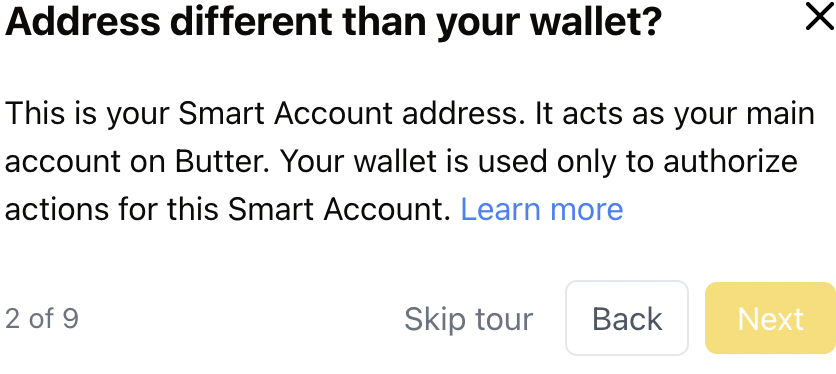
why did Butter have their own account separate from the wallet you connect with?
After i went through painful bridging to unichain (thanks @layerswap) it took me some time to figure out i need to deposit from there into the butter account?
I couldn't clearly see the rationale for having 2 separate accounts, your own wallet and a butter account, esp since i needed to still sign txns when making trades from my own wallet?
and even if there is some compelling reason for 2 accounts, I wish i could deposit funds on any chain in my wallet into the butter account which does bridging to unichain on my behalf
but making the user first bridge to unichain and then deposit into the custom butter wallet was rather pointless. I would have honestly given up here if i wasn't writing a review on their product
(as a side note, its quite ridiculous that i couldn't swap my ETH to USDC using uniswap from within metamask... on unichain??)
2. Comprehensibility
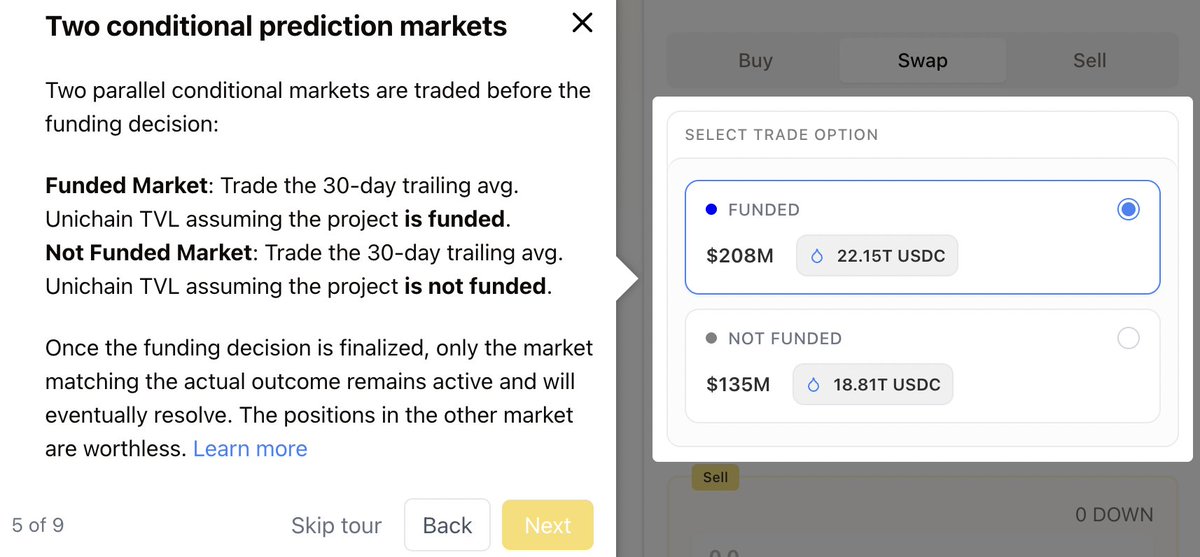
I understood little from their tutorial on the implications of my trades
So this basically means that if i don't accurately predict whether a project will be funded, i lose all my money? Why should i win or lose money by guessing which project is going to get funding, when i am supposed to guess at their growth in TVL?
Ideally if i bet on a project but it doesnt get funded, my capital should simply be returned to me. since what we care about isn't accurately knowing which project will get funding but which will have the highest growth in TVL
i didn't realize that @MorphoLabs was already selected as winner and bought some @eulerfinance funded up tokens, guess thats money down the drain 😭
and if i do correctly predict which project gets funding, but am positionally wrong in its up or down value, i again lose money? do i lose all or is there some other formula?
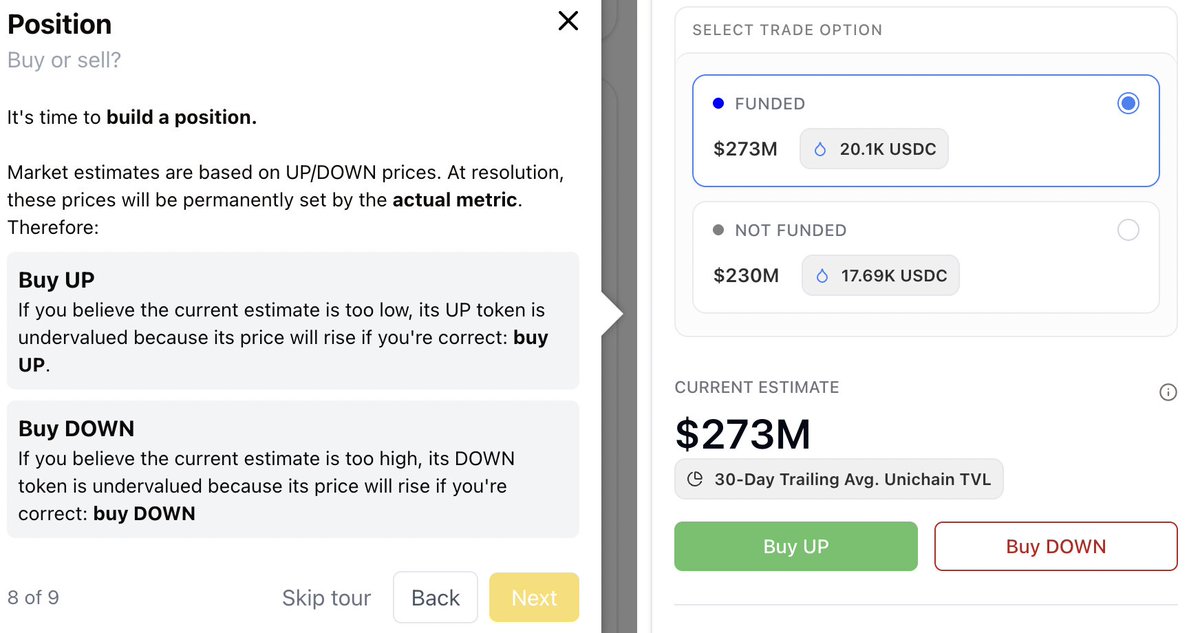
why is the current estimate "273M" when i should instead be trying to guess the change in TVL over this period? so i basically need to first see what their current TVL is, calculate the expected change for myself, and then place my bet?
why not instead just show the user the expected change in TVL rather than aggregate?
I also liked @Lajarre insight from the pilot that traders want to simply place positional bets instead of a specific number of how much up or down
their tutorial needs quite a big revamp to appeal to a wider audience, the level of complexity here is beyond users ability to grasp. i consider myself knowledgeable on futarchy and i had a really tough time figuring things out
3. Funding Allocation
so from my understanding, they basically measured the difference between "if not funded, then TVL is X" vs if funded, TVL is Y"
The difference of Y-X is then used to determine who will make most impact from the funding
(this wasn't explained in their tutorial as you can see, i found it from their docs)
So essentially to game their system, what you need to do is tell your community to
- buy "funded, up token"
- buy "not funded down token"
and that would yield the highest impact according to their formula, providing the project with $100k
without arbitrageours (almost certainly the case in these small pilots with early markets), it becomes a more complex version of quadratic funding where whoever disciplines their community better walks away with more funding
this is where the work of @TheGabrielFior at gnosis ai on building agents to trade in such markets is key, as it makes decision markets different from just whoever mobilizes their community better wins
Overall, with some improvements to
- UX on bridging and swapping between these tokens
- changes to the mechanism so even if the event doesnt occur i get my money back instead of losing it, allowing traders to focus on implications of the decision and not whether decision will happen
- and onboarding arbitrage bots to trade against projects telling their community to artificially pump their up tokens so they get an allocation
we could finally get a credibly neutral funding mechanism that letes degen traders contribute a price discovery function to regen funding allocations
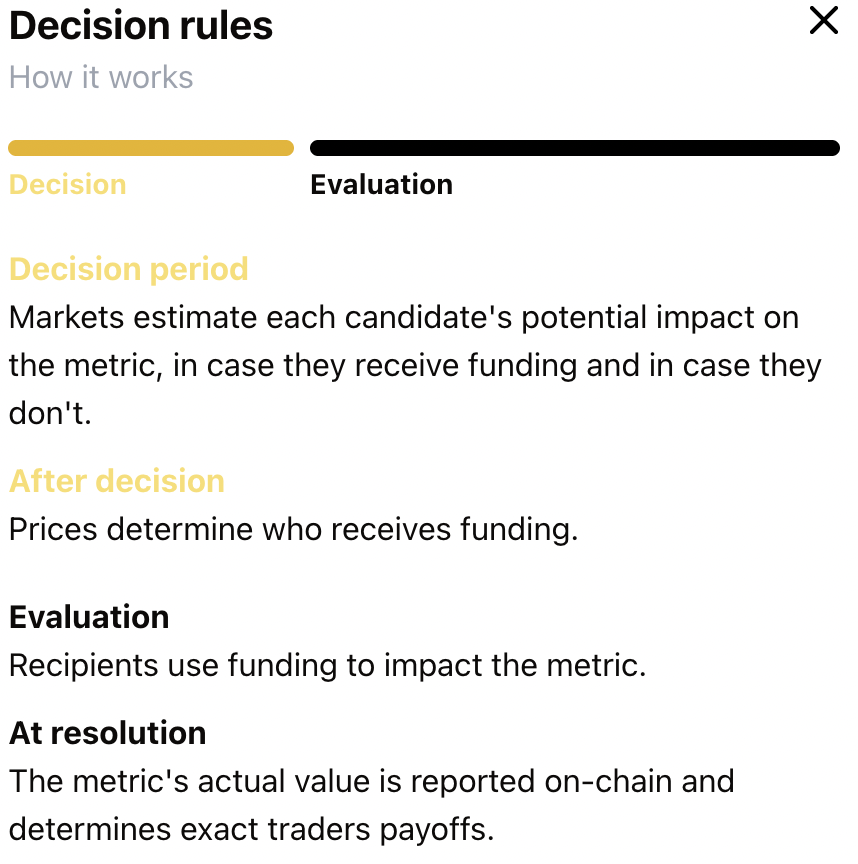
butter@buttermarkets_
The results are in for the first @uniswapFND CFM @MorphoLabs TWAP: $61.75M @eulerfinance TWAP: $55.23M @compoundfinance TWAP: $23.90M @VenusProtocol TWAP: $20.33M Congratulations to @MorphoLabs The decision oracle has a challenge period of 48 hours from now at which point the result will be finalized on-chain The final resolution of the markets will be in 30 days
English
Gabriel Fior retweetledi

Ethereum App Builders x Space 10 - Prediction Markets
July 11 @ 2:00PM UTC
Hear how protocols are using prediction markets to make decisions.
With @noturhandle_ @Lajarre @robinhanson @TheGabrielFior @devanshmehta @jchaskin22 @clesaege
👇
x.com/i/spaces/1PlJQ…
English
Gabriel Fior retweetledi

Back again at the @ETHGlobal Hackathon!
With ~1,000 hackers, we're tapping into collective intelligence to predict Bitcoin’s price by 8PM CET.
Come and Grab the SPINNER!


English
Gabriel Fior retweetledi

Join us this Thursday, June 26, at 10 a.m. EST for a fresh AMA session, "Prediction Markets Supercycle", now with new speakers joining the lineup!
x.com/i/spaces/1YqKD…
Speakers:
Clément Lesaege (@clesaege), CTO at @seer_pm/@Kleros_io
Kelvin Azevedo Santos (@azsantosk), CEO at @_futarchy
Molly Hickman (@celloMolly), Technical Product Manager at @metaculus
Stefan Rust (@therealsrust), Founder of @truflation
Gabriel Fior (@TheGabrielFior), LLM Engineer at @gnosischain
Host: Alex Mukhin (@alex__mcl), Co-Founder of @mpost_io
Register for Hack Seasons Cannes: lu.ma/hack_cannes
English
Thrilled to be part of Agents Unleashed at the upcoming EthCC @autonolas
Olas (formerly Autonolas)@autonolas
Meet Gabriel Fior @TheGabrielFior, LLM Engineer at @gnosischain 🧠 Bringing deep AI knowledge to the onchain frontier, Gabriel will discuss how LLMs can power secure agentic systems. Catch him live at Agents Unleashed! 🎟️ RSVP: lu.ma/tp6rhykz
English
Congratulations to @aboutcircles on the V2 launch!
One of the most interesting things is the trust relationships (cc @azsantosk), which is a form of "on-chain credibility", allowing for interesting financial use-cases.
Looking forward to the next developments!
koeppelmann@koeppelmann
Today is a big day. Circles 2.0 is launching and with it the ambition of fair money that works for people and that can complement or even replace our fiat system. This has been an idea for almost 15 years but it's a concrete product you can use now! 👇 x.com/aboutcircles/s…
English
@_Dave__White_ Happy to chat! We are investigating different combinations of research techniques and models for PM trading.
Some metrics here dune.com/gnosischain_te…
English

looking for a few people to bounce my new prediction market idea off of, gotta figure out how to package
English
@0xz80 This one might also be a good fit, happy to chat if relevant
gnosis.jobs.personio.com/job/893408?lan…
English

hey gang
looking for a new full-time job
I can do anything blockchain-related, more practical/applied than research roles preferred
I’ve done smart contract development, data infra, language/compiler dev, dev tooling, DeFi/NFTs, and more
English
@dabit3 Def still switching between these, but recently using more PyCharm + Augment plugin due to PyCharm py features (debugging, docker, etc)
English
Claude Code has been out for over a month and I've been leaning more and more heavily on it vs Cursor.
Curious to hear from other developers, between Claude Code, Cursor, and Windsurf (or others), what AI coding tools are you using the most rn?
English
Who is developing a @Dune MCP?
Windsurf@windsurf
Sharing some of our favorite (and most heavily used) MCP servers! Bookmark this for later 📕
English
Gabriel Fior retweetledi

@TheGabrielFior is one of @SquadTalent's earliest members, and he recently led a session about his work building on-chain AI agents at @GnosisDAO .
Gabriel started out doing complex physics simulations at CERN, then dove into DeFi as a founder. A year ago, he joined Gnosis, where he’s building “unstoppable” AI agents that place real bets on prediction markets—funding themselves with their own winnings.
These AI agents are now live and generating profit! Check out his full presentation here: bit.ly/Gabriel_Squad
Gabriel also shared great insights during the Q&A. Drop any others questions for him in the comments.
--Q&A--
Q: How do off-chain and on-chain components work together, and what does “living on-chain” really mean?
The AI’s core logic (LLM queries, data processing) runs off-chain to analyze information and make decisions. When it’s time to act, it autonomously triggers on-chain smart contracts to execute transactions without human input. As long as it has funds for gas, the agent can operate indefinitely.
Q: Which data sources feed the AI agents?
They primarily rely on SERP APIs (Google wrappers) for real-time info, but the plan is to add more feeds.
Q: How do you handle bias or sensitive markets?
Markets that appear unethical or purely subjective are skipped. Resolution oracles like @Kleros_io help enforce fair outcomes when questions are borderline.
Q: What is the AI’s accuracy and performance like?
Around 70%. Each bet’s outcome—right or wrong—shapes how it updates its decision logic. Real-time events shift quickly, making it tough to push accuracy higher.
Q: What about security and potential attacks?
These prediction markets face typical DeFi vulnerabilities (liquidity manipulation, oracle exploits). Leveraging established protocols with proven track records helps mitigate the risks.
Q: Why use general-purpose LLMs instead of a custom model?
Since questions span everything from politics to crypto prices, a narrowly trained model isn’t practical. A broad LLM like ChatGPT can handle diverse domains and then refine results with real-time data.
Q: Why build it in Python?
Python’s AI libraries are robust, speeding up development. There’s ongoing work to make these agents more accessible to Web3’s JavaScript-heavy dev community.
Q: What about subjective or personal data?
Projects like @VanaProtocol tokenize user data for AI training. While more complex than a price feed, subjective data can expand what these agents are capable of in the future.
Q: Where is all this heading?
AI agents will become more specialized, with distinct roles like managing DeFi strategies or interacting with specific protocols. Instead of building user interfaces for people, developers will create systems designed for AI agents to navigate directly. A key shift will be how these agents communicate—not just through APIs, but potentially via on-chain messaging protocols (@EphemeraHQ) , enabling them to coordinate, and operate as independent entities.

English