
brad robertson

21.6K posts

brad robertson banner
brad robertson

brad robertson

@bradrobertson

Husband. Dad of 2 Amazing Kids. Curious. Life Long Learner. Life is BEST Laughing With Those You Love. Live Music Please!!!

Venice, FL Katılım Ocak 2008
4.9K Takip Edilen1.8K Takipçiler
brad robertson retweetledi

Aaron Levie
Aaron Levie@levie·
Great post. The companies that are able to get their unique IP, institutional knowledge, and data into a format and architecture that lets them capture all of the gains and progress in AI are going to be in the best position in the future. “the real opportunity is not in picking the best model but instead in building a learning loop on top of models where human capital and token capital compound. You can offload a task, or even a job, but you can never offload your learning. The future of the firm is the ability to compound that learning across people and AI. This requires a new architectural approach where every business is able to build agentic systems that improve over time, while still retaining control over their IP. A company should be able to switch out a “generalist” model without losing the “company veteran” expertise built into their learning system.” We’re all collectively figuring out the right architecture for the future of AI. But it’s clear that so much of the power and value will accrue to wherever can best leverage any AI system against their information. This is also why the applied AI layer will also gain so much value over the coming years.
Satya Nadella@satyanadella

x.com/i/article/2065…

English
64
78
741
153.2K
FPL Invincible
FPL Invincible@FPL_Invincible1·
@bradrobertson You can switch to Raphinha after the Switzerland game if Embolo doesn’t score
English
1
0
1
154
FPL Invincible
FPL Invincible@FPL_Invincible1·
Top WCFantasy Captains (June 13) 🧢 ✅ Qatar v Switzerland - Embolo ✅ Brazil v Morocco - Raphinha Obviously there are other valid options (Vini for example) but they are my top options if you have them #WCFantasy
English
13
0
25
6.6K
brad robertson retweetledi
Tim Ferriss
Tim Ferriss@tferriss·
NEW blog post is up! "Has AI Already Killed How-To Nonfiction? Sales Trends, My Personal Data, and What It Might Mean for the Future" My head has been spinning after getting a spreadsheet roughly a week ago. Before we dive into my dirty laundry, let’s state the obvious: millions of people have a vague sense that AI is changing things. And LLMs sure are convenient for getting answers quickly. My team and I use Claude and other tools daily. But far fewer people have first-hand experience with the speed and intensity of disruption that’s happening. Not in a year, not in six months, but right now. So let me show you, using my own books as the cadaver on the table, what a fatality looks like. (Link below)
Tim Ferriss tweet media
English
60
57
440
183K
Mike Futia
Mike Futia@mikefutia·
I just built a plugin with Claude Fable 5 that turns Claude Code into a $5,000/mo SEO consultant 🤯 9 skills, one plugin: it connects straight to your Search Console + GA4 data, finds the wins, ships the fixes, and renders a live SEO dashboard that looks like a $200/mo SaaS product. All inside Claude Code. Perfect for DTC brands and agencies sitting on months of Search Console data nobody has time to read. Right now, you probably can't answer: Which keywords are sitting on page 2, one title tag away from page 1, Which pages are bleeding traffic to redirect chains and broken canonicals, Which blog posts rank for commercial terms but never link to a product page. This plugin answers all of it from your live data, then ships the fixes: → Finds your page-2 keywords and ships the fix: new title, headings, content, paste-ready → Clusters every query into a hub-and-spoke content map with the gaps flagged → Drafts posts from your actual search data, not guesses → Writes dev tickets for redirect chains and slow pages, ranked by traffic at risk → Builds the internal links between your blog and your money pages → Flags toxic backlinks and ranks outreach targets → Drops a Monday report with 3 priorities before the client even asks → Renders it all as a one-file HTML dashboard with a 0-100 SEO health score No dashboard staring. No CSV archaeology. No $5K/mo retainer for a PDF. What you get: → Page-2 keywords moved to page 1 → A content calendar that fills itself from data → Dev tickets that write themselves → A live SEO dashboard on command Built 100% in Claude Code with Claude Fable 5. I put the entire build into a step-by-step Playbook: all 8 workflow prompts (including the dashboard), how to turn them into a plugin, and the full Google setup (Including the 2 landmines Google doesn't tell you about). Want access for free? > Like this post > Comment "SEO" And I'll send it over (must be following so I can DM)
English
775
44
968
74.3K
brad robertson retweetledi
John Suh
John Suh@john_ssuh·
Increasingly, I believe companies may need to be rebuilt from the ground up, where you have a single timeline of all observability + product metrics + file changes laid out in a retrievable system, like Datadog + Posthog + Google Drive + Slack (really unified filesystem of Claude Code chats + Codex chats). This might be the new data foundation for any and all companies to maximize AI. Needs to be rebuilt because keeping track of diffs on existing system basically impossible to produce longitudinal information on decisions and rollbacks, something coding agent storage companies are actively trying to figure out, but this should extend to businesses as a whole. Highly skeptical existing businesses will adopt this though because it means overhauling everything about their instrumentation and business data, but I think businesses built on this foundation probably can execute 100x better and faster
English
208
180
2.3K
621.1K
brad robertson retweetledi
Alex Finn
Alex Finn@AlexFinn·
Hermes won. They just dropped their desktop app and it's excellent It's now the best way to use AI agents on your computer In this video I cover how to set it up, how to use it, and go through EVERY feature in the app Bye bye Telegram
English
198
234
3K
173.8K
brad robertson retweetledi
Chamath Palihapitiya
Chamath Palihapitiya@chamath·
If Chapter 1 was all about broad, open-ended experimentation, Chapter 2 may well be about realism and rationalizing the costs of Chapter 1 and what is sustainable moving forward.
Flo Crivello@Altimor

Pulled the trigger today and switched 100% of Lindy traffic to DeepSeek v4, churning from Anthropic models. Saves us millions of $ and we're actually seeing an *increase* in performance on many core use cases. Transformative for the business.

English
55
37
651
236.7K
brad robertson retweetledi
Mike Futia
Mike Futia@mikefutia·
I just built an AI Google Ads strategist inside Claude Cowork 🤯 Connect your account once and it reads your entire Google Ads setup like a senior media buyer, then answers anything you throw at it in plain English. All inside Claude Cowork. Perfect for DTC brands and media buyers buried in the Google Ads UI every single week. If you're spending hours clicking through campaign tabs trying to find where your budget is leaking, pulling search term reports by hand, rebuilding the same account audit in a spreadsheet every Monday, this strategist eliminates the entire loop: → "What's driving my CPA spike this week?" → "Which search terms are wasting budget?" → "Where am I overspending vs converting?" → "Run a full account audit and give me the top 5 fixes" → Answers in seconds, not spreadsheets No exporting reports. No digging through tabs. No guessing what to fix next. What you get: → A senior-strategist read on your account on demand → Wasted spend surfaced automatically → A prioritized fix list for the week → Plain-English answers to any account question Built 100% in Claude Cowork. Want the full walkthrough? > Like this post > Comment "ADS" And I'll send it over (must be following so I can DM)
English
272
26
345
24.2K
brad robertson retweetledi
Andrew Ng
Andrew Ng@AndrewYNg·
One of the new, buzzy jobs in Silicon Valley is the AI Forward Deployed Engineer (FDE), an engineer who is embedded within a client organization to help customize solutions, such as building and tuning agentic workflows that suit the client’s particular needs. I’ve heard from people who are wondering anew about the FDE career path since OpenAI and Anthropic started building new teams to place FDEs within client organizations. The rise of FDEs for AI workloads is one way AI is creating new jobs (and why the jobpolcalypse narrative of upcoming job market collapse is false -- there will be many AI and non-AI jobs). However, I believe there will be far more AI Engineer jobs than FDEs, as I explain below. The FDE role was pioneered about two decades ago by Palantir, which sent engineers to government locations to work on secure, air-gapped networks. In addition to having good technical skills, FDEs need communication skills and sometimes business skills. For example, they may need to speak with clients to understand their needs, formulate a strategy to prioritize projects, explain complex technology, and respectfully push back if a client asks for something unrealistic. They’re enjoying a resurgence because of the amount of work involved in taking an off-the-shelf LLM and building it into a custom agentic workflow that fits particular business needs. However, I believe the number of AI Engineer jobs will be far larger. A company might accept a few FDEs to be embedded within its organization. But most companies will want far more of their own employees working on their projects. While my organizations do hire FDEs, we hire far more AI Engineers! Also, a common client concern is that it is hard to find vendor-neutral FDEs — they are, after all, there to deeply integrate a particular vendor’s product into a company. In this moment when it’s hard to predict which AI service will be the best one in a year’s time, optionality (the ability to pick whatever vendor turns out to fit best in the future) is very valuable. In contrast, letting FDEs tightly bind a company’s processes significantly reduces optionality. Right now, I see surging demand for AI Engineers who can build software applications using AI software components (like LLM prompting, agentic frameworks, evals, etc.) and effectively use AI coding agents (like Claude Code, Codex, Antigravity CLI, and OpenCode). As the AI Engineer role matures, I expect it to fragment into more specialized roles, like the generic Software Engineer role from decades ago fragmented into frontend, backend, mobile, data engineering, devops, and so on. What will be the future, specialized AI engineering roles? I don’t know. Perhaps there will be AI FDEs, LLMOps Engineers, Evals Engineers, AI Data Engineers, Harness Engineers, and other roles we don’t have names for yet. But for now, I see a lot of AI engineers who are generalists create a lot of value. Skilled AI Engineers are in very high demand! As our field continues to mature over the coming decade, I look forward to new specializations within AI Engineering that create even more job opportunities. [Original text: The Batch newsletter]
Andrew Ng tweet media
English
320
729
4.5K
550.5K
brad robertson retweetledi
Jimmy Heaters
Jimmy Heaters@CathPoaster·
new grads often ask me what they should be doing so they don't fall behind in the ai space. there's a lot, but its honestly super manageable. become intimate with model internals. proof based linear algebra. non-convex optimization. this is stuff you could've done in undergrad. it definitely takes some time and work, but its doable. have taste, have opinions. train a small model, then train a big one. vLLM internals, tensor parallelism. hand roll kernels. cluster orchestration. do you have opinions on synthetic data? why don't you? SFT, PPO, you should know this. learn Triton. everyone is reproducing papers now so you need to be doing more. do you know the semi supply chain? where are the bottlenecks? hardware, man, hardware. your little gpu rig erector set in your basement isnt gonna cut it. build a cluster, a big one. pretrain a 800B model. now postrain it. serve it to millions of people. you should be able to beat deepseek on some benchmarks now. its a lot to take in but it all snowballs. this what job security looks like from now on. do you want to work in tech or not
English
103
250
4K
738.8K
brad robertson retweetledi
ericosiu
ericosiu@ericosiu·
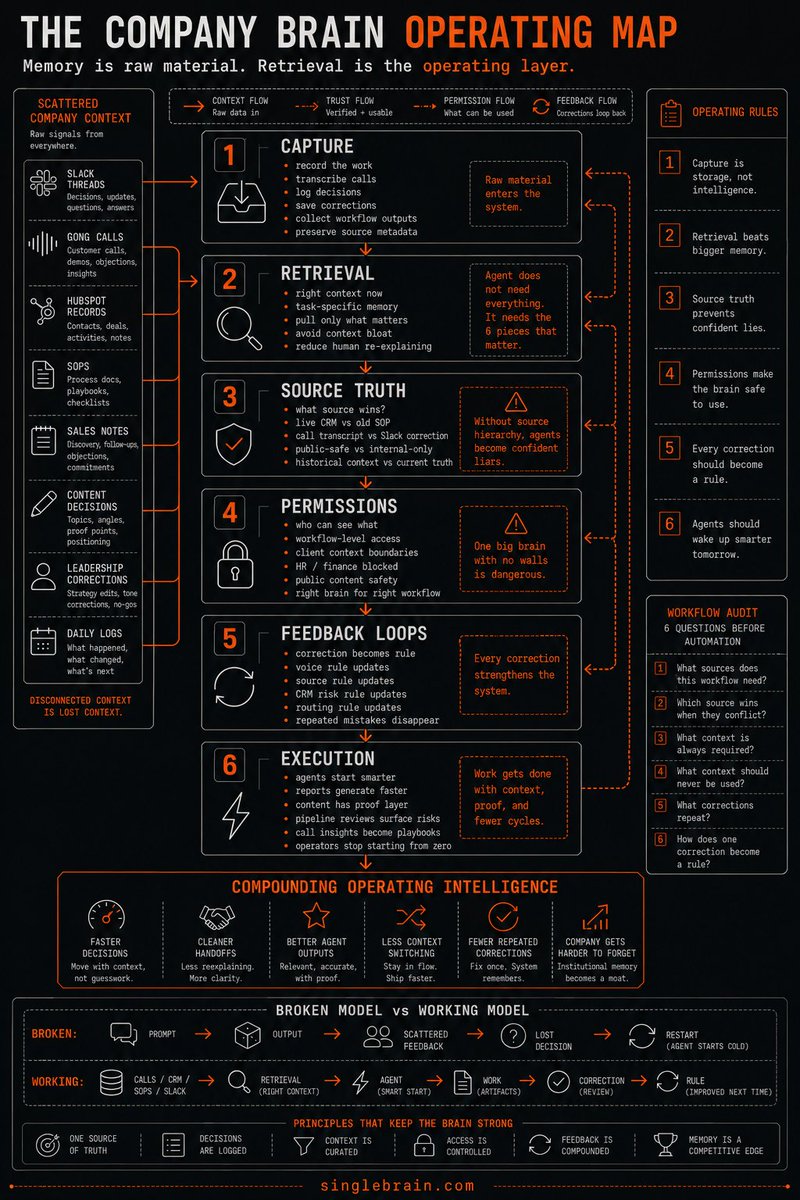
Every company is missing the same layer: A company brain. Right now, the memory of the business is scattered across calls, docs, Slack threads, dashboards, SOPs, and people's heads. That's the part people miss when they talk about a company brain. The value isn't a giant folder of company knowledge. Every company already has that. The real advantage is the intelligence layer that sits between all that context and the work your team needs done. This is the layer every AI-native company will need:
ericosiu tweet media
ericosiu@ericosiu

x.com/i/article/2056…

English
69
195
1.5K
295.7K
brad robertson retweetledi
Lenny Rachitsky
Lenny Rachitsky@lennysan·
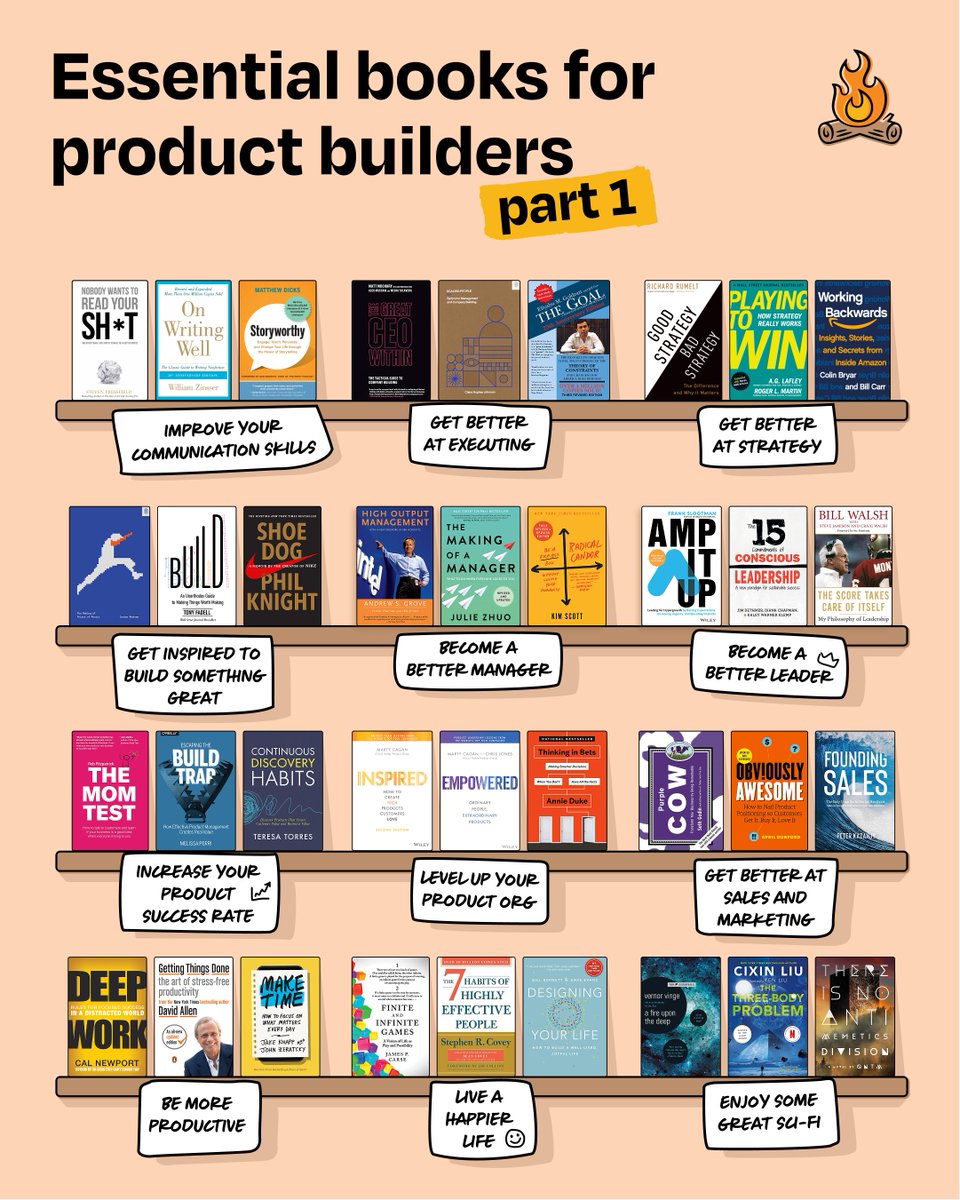
Essential books for product builders I've put together a collection of my all-time favorite books, organized by their jobs-to-be-done. When your manager tells you to work on a particular development area—or if you’re just feeling the itch for self-improvement—these are the books to read. To keep this list extremely high signal-to-noise, I forced myself to pick only three books per category (so hard!), and only books I’ve completed. The collection includes both classics and under-the-radar gems. I very much agree with @pmarca's take that you should mostly read books that are over 10 years old (because those are the books that have stood the test of time), so you’ll notice no super new books. There are so many great books that I didn’t include here, either because I haven’t had a chance to read them or they just didn’t make the cut. I’m sorry if I didn’t include your book, or a book you love. I probably forgot some important titles, too. That’s why we’ll have a part 2 (coming soon)! Here's the full collection: lennysnewsletter.com/p/essential-bo… P.S. What's a must-read that I missed (within these 12 categories)? Let me know in the comments. P.P.S. If you’re feeling like you have no time to read, I was in the same boat, especially after having a kid. @bryan_johnson's suggestion of reading a book for 10 minutes before bed changed my life. I started reading more books, and I got better sleep! Try it out.
Lenny Rachitsky tweet media
English
54
71
744
61.7K
brad robertson retweetledi
GREG ISENBERG
GREG ISENBERG@gregisenberg·
I just got back from SF and I FEEL INSPIRED. I spent 5 days with frontier AI model teams, AI startup founders, and 3 billionaires. My takeaways: 1. I had lunch with 3 billionaires. All of them are buying SaaS companies and rebuilding them agent-first. They were deeply inspired by Bending Spoons and Ryan Cohen's eBay deal. Buy the company, cut the headcount, rebuild the tech, add agents, add features, make more valuable experience, raise prices. 2. The frontier model companies are hungry for usage data from the field. They can see API calls and token counts. They can't see the actual workflows. If you're deep in a niche using these models in ways the model companies haven't seen, that understanding is incredibly valuable. Usage intelligence is the new alpha. 3. Consumer AI is massively underbuilt. Every billboard in SF is either B2B inference infrastructure or vertical agent companies. The entire city is optimized for enterprise. Meanwhile you have companies like Cal AI doing $50M ARR in 18 months as a consumer app. I met with a cool few teams doing consumer AI (@paulscherer / @ekuyda) 4. MCP came up in literally every conversation. The companies exposing their product as MCP endpoints are getting pulled into deals they never pitched for. The ones that aren't are becoming invisible to agents. This is the new SEO. If agents can't find you, you don't exist. Building products for agents is the new zeitgeist in general. 5. Not uncommon for hot seed rounds to be $25-50 million valuations. I saw a Series A at $450 million 6. If I had a dollar every time someone mentioned "forward-deployed engineer" this trip I could have funded a seed round. It's the hottest role in SF right now. The person who sits between the agent and the customer, making sure everything actually works. 7. The mood around open source shifted. A year ago it felt like open source was chasing the frontier models. Now founders are telling me Gemma and DeepSeek are good enough for 80% of what they need at a fraction of the cost. The "which model do you use" conversation is being replaced by "which model for which task." Model loyalty kinda feels dead. 8. Voice agents came up more than I expected. Multiple founders told me voice is the interface for the next billion users. The billion people who will never type a prompt will absolutely talk to one. 9. The Obsidian community in SF is weirdly intense. Multiple founders showed me their vaults unprompted. Like showing someone your home gym. It's a flex now. The quality of your knowledge base (second brain?) is becoming a status symbol among builders. 10. Maybe it was just the people I met but the age of the founders is shifting. I met more founders over 40 this trip than any trip before and more founders under age 21 than ever before. Founders getting older and younger at the same time. 11. I spoke to a lot of fast-growing startups, VCs and frontier models who are hiring content creators right now. 12. The restaurant scene in SF is actually better than it's been in years. Founders are going out more. Alcohol is out, not surprisingly. 13. SF doesn't feel like the only place anymore. We all have access to the same frontier models. We all read the same X feed. A founder in NYC or Lagos is calling the same APIs as a founder in SoMa. So in the past it felt like SF was always lightyears ahead, doesn't feel that way anymore. It's okay not to live in SF and have BIG DREAMS. 14. The coworking spaces in SF are half empty but the coffee shops are packed. People want to be around people. I had a few startup ideas here.... 15. Walking around the Mission I noticed something: the street-level businesses, the taquerias, the barbershops, the laundromats, none of them use any AI at all. 16. I heard the phrase "agent debt" for the first time. Like technical debt but for agents. When you hack together an agent workflow fast and never clean it up, the system prompts conflict, the memory gets polluted, the tools overlap. 6 months later the agent is doing weird things and nobody knows why lol. 17. Met a few people who carry two phones now. One for personal. One that's basically an agent terminal running Telegram or iMessage connections to their agent fleet. It's always amazing to get that dose of inspiration in SF. I FEEL INSPIRED. But I'm so happy to be back home, locked in and building. We're 12-18 months into a shift that will take 15 years to play out. The urgency in every conversation was real. What an incredible time to be building.
GREG ISENBERG tweet media
English
496
573
6.2K
635K
brad robertson retweetledi
Dwarkesh Patel
Dwarkesh Patel@dwarkesh_sp·
The @karpathy interview 0:00:00 – AGI is still a decade away 0:30:33 – LLM cognitive deficits 0:40:53 – RL is terrible 0:50:26 – How do humans learn? 1:07:13 – AGI will blend into 2% GDP growth 1:18:24 – ASI 1:33:38 – Evolution of intelligence & culture 1:43:43 - Why self driving took so long 1:57:08 - Future of education Look up Dwarkesh Podcast on YouTube, Apple Podcasts, Spotify, etc. Enjoy!
English
535
2.9K
18.6K
10.7M
brad robertson retweetledi
Lenny Rachitsky
Lenny Rachitsky@lennysan·
My biggest takeaways from @danshipper: 1. The future of work will happen inside Codex or Claude Code. Instead of putting AI into your SaaS tool, you’ll use your SaaS tools inside your favorite AI agents' in-app browser. Dan spends all his time in Codex now—writing documents, managing email, doing research, everything. He's using Google Docs, PostHog, and everything he needs within the agent's in-app browser. The agent can see what he’s doing, and has all of his context, so he and his agent collaborate quickly and super effectively. 2. Automation is a lie—every automation needs a human. Dan's company doubled in size this year despite being incredibly AI-forward. Why? Because in order to make automation work well, you need humans making sure everything keeps working. This is why benchmarks are misleading—they measure AI on problems we’ve already framed and can score, but there’s always a higher frame. 3. PMs will win the AI era. Marcus, a former PM who previously ran Axios’s writing product, joined Every after getting super AI-pilled. Now he runs their product Spiral, and ships faster than anyone on the team. He pairs technical knowledge with spiky product sense, deep user empathy, and an eye for what matters. Dan thinks any PM who gets really AI-native will be incredibly dangerous because the building is done for you—what matters is figuring out what to build and if it’s great. 4. Full-stack designers are becoming superheroes. Designers used to make beautiful interactions that engineers didn’t want to build or couldn’t execute properly. Now designers don’t need to hand things off; they can build it themselves. Designers are naturally creative people, and AI is the perfect tool for them because it lets them bring their vision to life without the traditional bottlenecks. 5. SaaS is not dead. In fact, Dan is bullish on SaaS stocks. When users bring their own AI (via Codex or Claude Code) to use SaaS products, the user—not the SaaS company—pays for tokens. This saves SaaS company’s margins. Since the agents need their own seats, Dan predicts that agents will create massive new demand for SaaS because there will be tons of agents using these products at high volume. 6. Every company will have one “super-agent” inside their Slack that every employee will use. Dan initially thought every employee would have their personal work agent, like a shadow AI org chart, but he’s completely flipped his view. He realized agents need humans who care about them. When someone gets tired of maintaining their personal agent, it becomes useless. The winning model is one forward-deployed engineer or AI-savvy person who maintains a company-wide agent (like Shopify’s River or Viktor), and then it trickles down to more specialized team agents as models improve and become less fiddly. 7. The AI job apocalypse is not happening, but you do need to evolve to stay relevant. Models make yesterday’s human competence cheap. But because everyone uses the same models, it all looks the same if you use it the default way; it becomes commoditized slop. Humans then take that frozen competence and use it to make something new and interesting for their specific situation. The key: “ride the models”—use them for everything you do, try new models when they drop, keep turning over rocks. 8. We will read way more AI-generated writing, and we will like it. Human writing is incredibly important for things that matter, but for internal docs, planning, and email, AI-generated is often better because most people are bad at writing strategy documents. 9. Build software for humans and agents to use together. The current model is building a CLI that an agent uses independently. Instead, you and your agent should be using the app together. This creates new design challenges—agents can make a billion requests in three seconds, so you need approval flows, inboxes that summarize what happened, logs, and easy rollback. 10. Forward-deployed engineers are the new most essential role. The big model companies have teams of people managing their internal agents, and those teams aren’t going away. It’s different from traditional software building, and certain engineers love it. As models get better, this role will evolve—you’ll be managing more agents doing more things.
Lenny Rachitsky@lennysan

Automation is a lie. CLIs are over. The SaaSpocalypse is dumb. A year ago @danshipper came on the podcast to predict where AI was heading. He was remarkably right—including the call that everyone was sleeping on Claude Code. Dan has a unique lens into where things are going because his team at @every is possibly the most AI-pilled group of people in tech. I always learn a ton talking to Dan. So I brought him back for round two. We'll score these in exactly a year: 🔸 Every company will have one “super-agent” in Slack. 🔸 Codex and Claude Code will become the new operating system for knowledge work. 🔸 The AI job apocalypse is not happening. 🔸 PMs and designers will thrive. 🔸 We will read way more AI-generated writing and we will like it. 🔸 "I would buy SaaS stocks right now." Listen now 👇 youtube.com/watch?v=4D3hDm…

English
152
238
2.1K
761.8K
brad robertson retweetledi
GREG ISENBERG
GREG ISENBERG@gregisenberg·
How to build a vertical AI agent cash-flowing startup: find painful workflow in a boring industry → talk to 10 people who do that workflow every day → map every step, every tool, every spreadsheet, every phone call → do the workflow manually first → be the agent before you build the agent → find the edge cases that break everything → document them in obsidian as structured markdown → set up your agent stack → hermes for the harness → obsidian vault as the knowledge base → composio for authentication across apps → build your first 1-3 skills that solve the core pain → use claude code or codex to build the product → use agents to set up other agents → use perplexity MCP and context7 for up-to-date docs → let the agent handle the scaffolding while you focus on the workflow logic → ship the agent to your first 5 customers for free → watch what they actually use it for → they will surprise you → the thing you built for isn't always the thing they need most → build content around the niche → not "building in public" content → useful content → the tips, the shortcuts, the pain points that only someone who does this workflow would know → become the person for that niche → charge per outcome not per seat → per lease renewed, per claim processed, per candidate sourced → the ROI conversation takes 10 seconds when it's tied to a result → set up watchdogs and alerts → your agent emails you when a cron job breaks or a skill fails → the customer should never have to tell you something is broken → connect to open router → see exact costs per model per task → use GPT 5.5 for tool calls → use open source for lightweight tasks → route the right model to the right job → watch your margins double → let hermes write to its own memory after every task → the agent compounds → the longer it runs the better it gets → that accumulated memory becomes your moat → a competitor can clone your product but they can't clone 6 months of context → expand the workflow → you started with one step → add the next → then the next → now you own the entire workflow end to end → you went from a tool to the operating system for that vertical → stack the agents → one agent is a side project → five agents across five customers is a business → each one runs in its own environment → you check in once a day → raise only if you need capital not credibility → most agent businesses should never raise → the margins are too good to give away equity → stay lean → stay profitable → repeat i'm rooting for you
English
159
117
1.3K
115.2K
brad robertson retweetledi
The Boring Marketer
The Boring Marketer@boringmarketer·
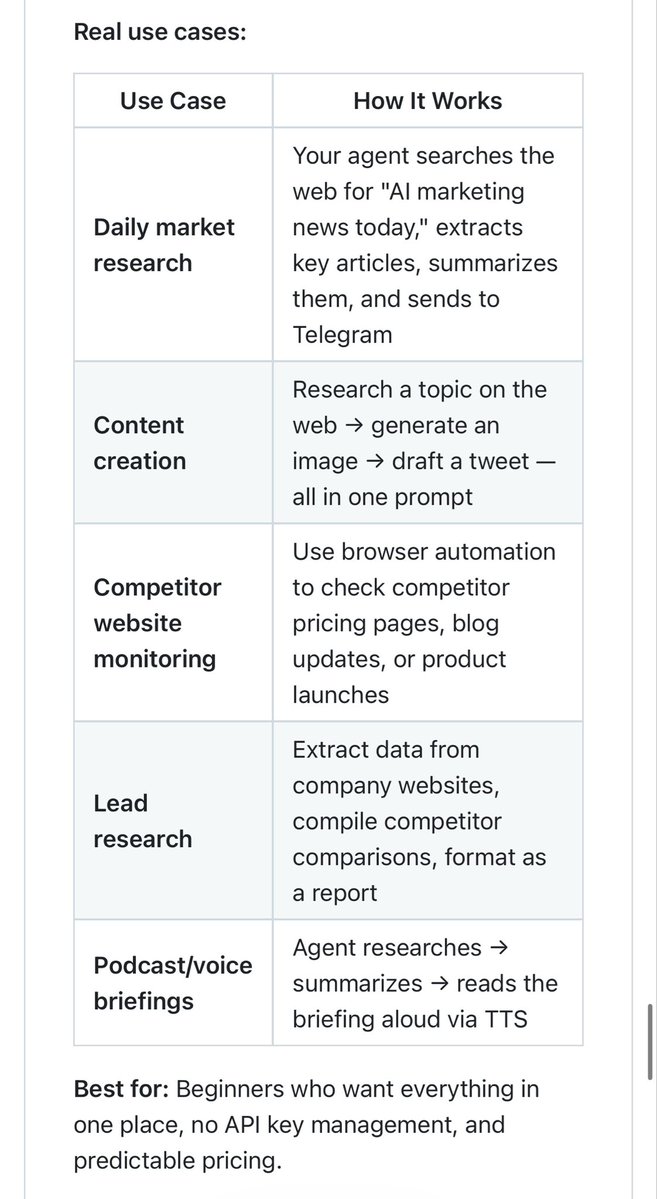
how to supercharge your Hermes agent for marketing you can just use Nous Portal to access 244 models, scraping, browser automation, etc without having to manage a bunch of API keys
The Boring Marketer tweet media
English
11
12
234
19.7K
FPLThorpey
FPLThorpey@FPLThorpey·
GW38 would be so much better if the deadline was at kick off
English
2
0
15
2.8K
Cody Schneider
Cody Schneider@codyschneider·
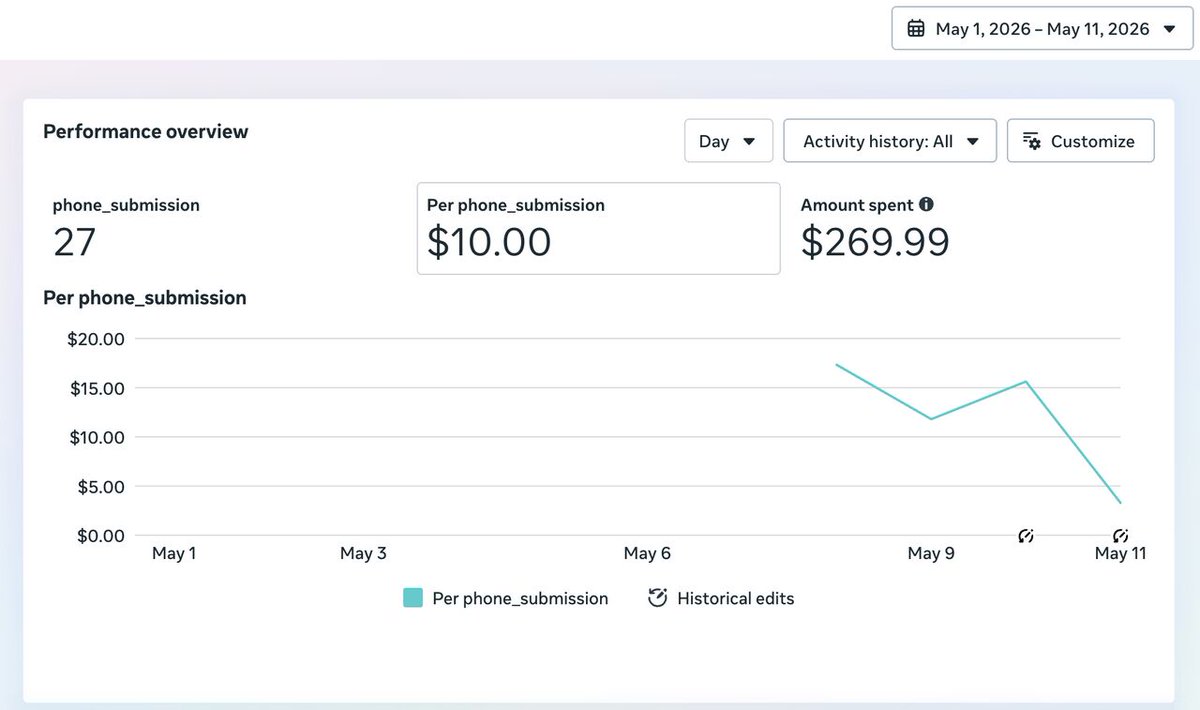
last Friday I deployed a Facebook ads agent for a startup and over the weekend it optimized itself from $17 phone number leads into $3 leads this is the real GTM engineering agents in the wild and I made a Notion document and a .md skill file so you can do this exact thing too it includes: 1. How to make on brand ads with nano banana 2 2. How to upload these to facebook ads via the API 3. Have an agent manage the ad account based on live data from the account via data pipeline + data warehouse Outcomes we deployed an AI agent for a startup last Friday to manage their facebook ads account day 1: the cost per phone number lead was $17 over the weekend this agent made and published 30 new pieces of ad creative, optimized the ad account, and reduced the cost per action Day 4: the cost per phone number lead was $3 this is a virtual employee that's working full time. like this post and comment "FBmanager" and I'll send you the Notion file and MD file
Cody Schneider tweet media
English
550
17
608
39.7K