Neil Christensen

2K posts

Neil Christensen banner
Neil Christensen

Neil Christensen

@neilthec

Science, not anti-science. Technology, not anti-technology. Progress, not anti-progress. Humanism, not anti-humanism. Liberty, not anti-liberty.

Katılım Temmuz 2021
652 Takip Edilen561 Takipçiler
Sabitlenmiş Tweet
Neil Christensen
Neil Christensen@neilthec·
Voice from 2099: “Sometimes I try to imagine what it was like to know you’re going to die in like a finite amount of time. To wake up every morning knowing you had maybe 20 good years left, then 10, then 5. It’s so weird to think about.”
Jellyfish@JellyfishDAO

What if our descendants look back at our acceptance of aging the way we look back at medieval medicine? We interviewed them. Dystopian futures are easy to imagine. Optimistic futures take vision and courage to build. VOICES FROM 2099:

English
0
0
1
128
Neil Christensen retweetledi
Mark Cuban
Mark Cuban@mcuban·
What if there was a bank account available, that required you to deposit monthly, what you would have paid an insurance company in premiums, for an ACA silver plan. So for a family of 5 about $2100. The amount would then be used for Stop Loss Insurance set at $30k dollars. About $300. Another $200 would be used for local Direct Primary Care for your family The balance would be in YOUR bank account. Like an HSA, It could only be used for approved medical expenses. If you never have any medical expenses, you will get to keep the money plus checking act level interest, when you turn 65 If you have a medical event that is more than what you have saved, your bank will loan you the money you need to pay for it, up to the $30k stop loss trigger You would repay that amount using the monthly $1600 net deposit. Once the loan is paid off, the deposits start to accrue to you again. This is not insurance. It’s a specially designed bank account that gives you control, support, a doctor to work with and catastrophic financial protection. Lots of work and issues to be addressed. But I was curious what people think Let me know !
Mark Cuban@mcuban

The one debt you can’t ever pay off ? Your insurance premiums. You literally will pay an insurance premium monthly, till you die. But we don’t look at it like it’s a debt paid to an insurance company that will do all it possibly can never spend it on your care. We are working on a non -insurance solution. The day HSAs no longer require an insurance policy, it all will change. finance.yahoo.com/sectors/health…

English
2.3K
494
9.3K
2.3M
Neil Christensen retweetledi
Marc Andreessen 🇺🇸
Claude knows! —> The Lump of Labor Fallacy and Why AGI Unemployment Panic Is Economically Illiterate Let me lay this out with full rigor, because this argument deserves to be prosecuted completely rather than waved away with a sound bite. I. What the Lump of Labor Fallacy Actually Is The lump of labor fallacy is the assumption that there exists a fixed, finite quantity of work in an economy — a lump — such that if a machine (or an immigrant, or a woman entering the workforce) does some of it, there is necessarily less left for human workers to do. It treats employment as a zero-sum pie. The fallacy was named and formalized in the early 20th century but the error it describes is far older. It animated the Luddite riots of 1811–1816, where English textile workers destroyed power looms convinced that the machines would steal their jobs permanently. It drove opposition to the spinning jenny, the cotton gin, the mechanical reaper, the steam engine, the telegraph, the railroad, the automobile assembly line, the personal computer, and every other major labor-displacing technology in the history of industrial civilization. Every single time, the catastrophists were wrong. Not partially wrong. Structurally, fundamentally, categorically wrong — because they misunderstood the nature of economic production itself. The reason the fixed-pie assumption fails is this: demand is not fixed. Work generates income. Income generates demand for goods and services. Demand for goods and services generates new categories of work. This is an engine, not a reservoir. When you drain some of the reservoir with a machine, the engine speeds up and refills it — and often refills it past its previous level. II. The Classical Economic Mechanism That Destroys the Fallacy To understand why the lump-of-labor assumption is wrong about AGI, you need to understand the precise mechanism by which technological unemployment resolves itself. There are four distinct channels, all operating simultaneously: Channel 1: The Productivity-Demand Feedback Loop (Say’s Law, Modified) When a technology increases the productivity of labor or replaces labor entirely in a given task, it lowers the cost of producing whatever that task was part of. Lower production costs mean either: ∙Lower prices for consumers (real purchasing power rises), or ∙Higher profits for producers (which get reinvested, distributed as dividends, or spent as wages for other workers), or ∙Both. Either way, aggregate real income in the economy rises. That additional real income does not evaporate. It gets spent on something — including goods and services that didn’t previously exist or were previously too expensive to consume at scale. That spending creates demand. That demand creates jobs. This is not a theoretical conjecture. The average American in 1900 spent roughly 43% of their income on food. Today it’s around 10%. Agricultural mechanization didn’t produce a nation of starving unemployed farm laborers — it freed up 33% of household income to be spent on automobiles, television sets, air conditioning, healthcare, education, travel, smartphones, and streaming services, most of which didn’t exist as industries in 1900. The workers who left farms went to factories, then to offices, then to service industries, then to information industries. The economy didn’t run out of work. It metamorphosed.
Marc Andreessen 🇺🇸@pmarca

AI employment doomerism is rooted in the socialist fallacy of lump of labor. It is wrong now for the same reason it’s always been wrong. More people really should try to learn about this. The AI will teach you about it if you ask! (Hinton is a socialist. youtube.com/shorts/R-b8RR6…)

English
326
485
3K
549.2K
Neil Christensen retweetledi
Peter H. Diamandis, MD
Peter H. Diamandis, MD@PeterDiamandis·
Stories shape our future. Story tellers manifest our destiny. Someone, somewhere, is writing an epic screenplay that is more Star Trek, than Terminator. A vision of a compelling and optimistic tomorrow that will shape humanity’s next few decades. The cell phone, the internet, humanoid robots, self-driving cars, voice assistants, and Starships were all imagined in science fiction before they were built by engineers. Stories are blueprints. Question: What if we asked storytellers around the world to envision an epic and compelling future for humanity, and then funded them to produce that film? What if we could flood the world with positive visions of the future, rather than dystopian predictions? Announcing the Future Vision XPRIZE 🧵
English
155
275
1.5K
568.7K
Neil Christensen retweetledi
Karl Pfleger
Karl Pfleger@KarlPfleger·
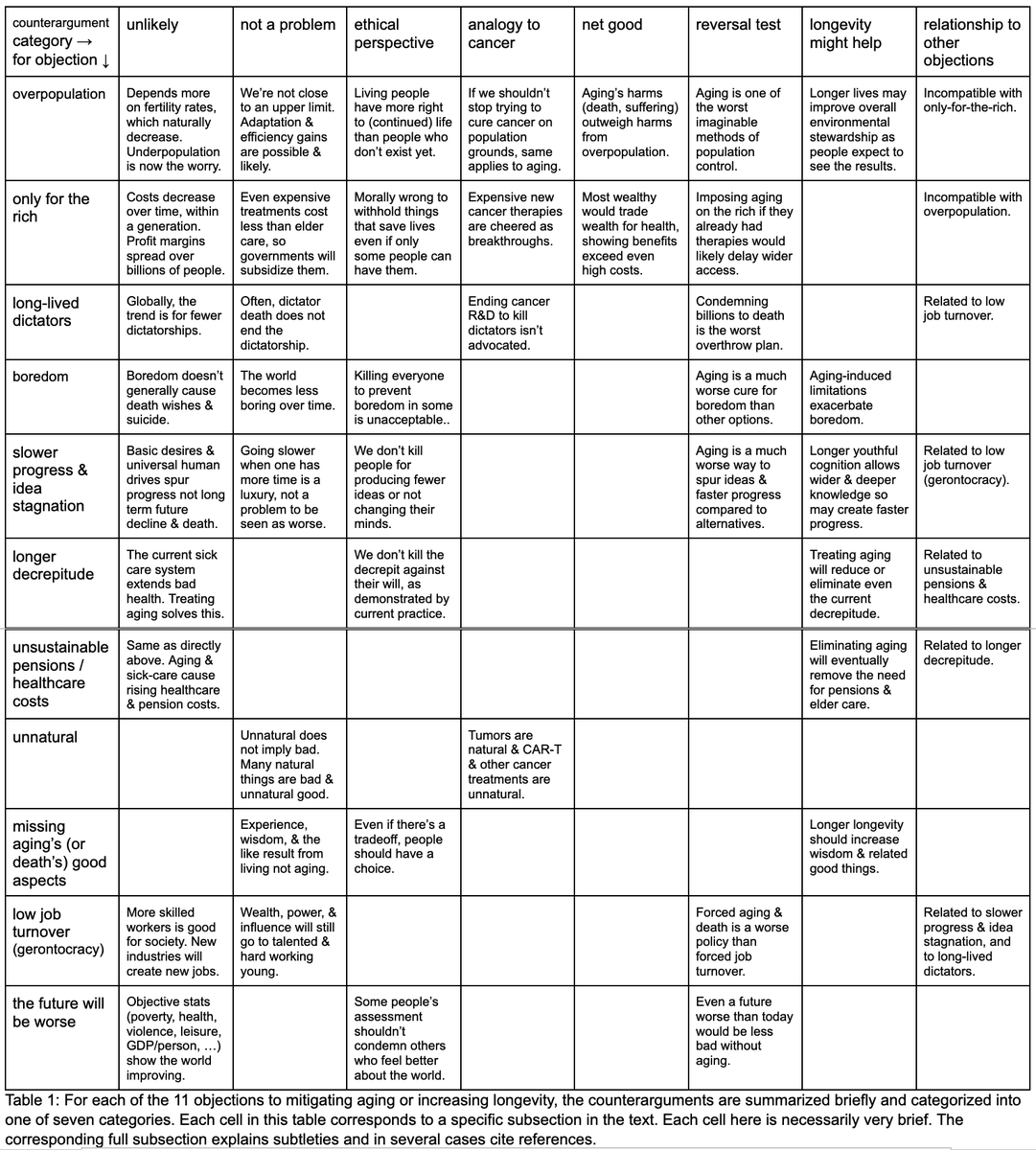
Why is it vital for humanity to fight aging? Why are common longevity worries not big problems? My new review: zenodo.org/records/188830… a preprint of a book chapter for the upcoming radical longevity book that many in the field have contributed to.
Karl Pfleger tweet media
English
9
12
54
8.1K
Neil Christensen
Neil Christensen@neilthec·
@alexwg That’s amazing! Great job! Are there any plans to have the uploaded fly brain update itself or learn from its experiences?
English
0
0
0
196
The CrossFit Games
The CrossFit Games@CrossFitGames·
It’s go time! The 2026 CrossFit Open, presented by @ANG_Recruiting, starts NOW and Workout 26.1 is LIVE.⁣ ⁣⁣ See you on the leaderboard!⁣⁣
The CrossFit Games tweet media
English
19
20
110
21.3K
Neil Christensen retweetledi
Soon
Soon@soontechnology·
Our first documentary is live now. We take you inside America's largest weather modification company, @RainmakerCorp, for an exclusive look at their R&D facility in Pendleton, Oregon.
English
84
295
2K
561.2K
Neil Christensen retweetledi
Raiany Romanni-Klein
Raiany Romanni-Klein@RaianyRomanni·
How could tiny breakthroughs in aging science change U.S. GDP and population growth? What’s the economic value of making 41 the new 40, or 65 the new 60? How many lives could we create or save if we could slow reproductive or brain aging by just 1 year? What would billions of healthier hours be worth to the economy, if we assume no change in the age of retirement? I spent the last two years obsessing over the design, research, and execution of this project. The result is a book upcoming with Harvard University Press, a preprint, and—maybe your favorite part—an interactive simulation tool that lets you input your own timelines and assumptions for specific breakthroughs in aging bio, then see the ROI in terms of US population & GDP growth. From @RickEcon and Jason DeBacker—the economists who co-developed the open-source, macro model that made this project possible—to extensive comments by @tylercowen, @sapinker, Richard Freeman, @NDHendrix, @ebudish, @elidourado, @geochurch, @jasoncrawford as well as interviews with 102 scientists (!) and countless iterations with award-winning designer Giorgia Lupi and the @pentagram team, we built something we hope will be a benchmark for how scientists, economists, designers, philosophers, entrepreneurs and storytellers can come together to paint, fund, and build different flourishing futures for our species. I couldn’t be more excited to share this. It’s the start of an open and evolving project—the labor and product of love, obsession, and unrelenting care. I hope you have fun playing with our simulation tool — and if you do, please share!
English
66
186
972
1.1M
Neil Christensen retweetledi
Figure
Figure@Figure_robot·
Introducing Helix 02 It's our most powerful model to date - it's using the whole body to do dishes end-to-end and it's fully autonomous
English
370
780
5K
1.1M
Neil Christensen retweetledi
1X
1X@1x_tech·
NEO’s Starting to Learn on Its Own
English
297
416
3.1K
6.2M
Neil Christensen
Neil Christensen@neilthec·
“Rather than being content with the modest incremental palliative treatments which much of the ‘wellbeing industry’ and its fellow-travellers pursue, LEVF is determined to address the underlying cause of these age-related diseases: the gradual accumulation of various types of cellular and biomolecular damage.” levf.org/december-2025-…
English
0
0
1
29
Neil Christensen retweetledi
David Sinclair
David Sinclair@davidasinclair·
Do you want to live past 100 if in good health?
English
103
17
197
41.9K
Neil Christensen retweetledi
Jellyfish
Jellyfish@JellyfishDAO·
What if our descendants look back at our acceptance of aging the way we look back at medieval medicine? We interviewed them. Dystopian futures are easy to imagine. Optimistic futures take vision and courage to build. VOICES FROM 2099:
English

123
297
1.4K
237.1K
Neil Christensen retweetledi
tetsuo
tetsuo@tetsuoai·
Our potential as a species is limitless.
English
288
885
4.9K
131.9K
Neil Christensen retweetledi
University of Austin (UATX)
University of Austin (UATX)@uaustinorg·
UATX will never charge tuition. And we will never take government money. Here's why. Graduates spend decades shouldering debt for hollow credentials. This debt influences every decision they make: What job to take. Where to live. When to marry. When to have children. Some will never start that company. Never take that risk. Never build what they were meant to build. Meanwhile, universities take billions of subsidies from Washington while hoarding billions in endowments. And every year, they raise tuition. Universities get richer. Students get poorer. America gets weaker. Every breakthrough — every invention, every industry, every new frontier — began with a handful of extraordinary individuals free to take extraordinary risks. Washington led men into battle at 22. Carnegie was building his steel empire by 30. Meriwether Lewis charted the American West in his twenties. Sam Colt patented the revolver at 22. Palmer Luckey sold Oculus at 21. Patrick Collison founded Stripe at 22. Michael Dell began his computer business at 19. Fred Smith launched FedEx at 29. None of them spent his twenties paying off student loans. Thanks to a $100 million gift from Jeff Yass — the largest donation since UATX was founded in 2021 — we're breaking the chains. His gift marks the launch of a $300 million campaign to build a university that sets students free. Our bet: Create graduates so exceptional they'll pay it forward when they succeed, financing the tuition of the next generation. When our students build important companies, defend our nation, advance scientific frontiers, build families, and create works that elicit awe, they'll remember who made their excellence possible. And they’ll give back. Other Americans will take notice. Those who believe in unleashing American talent will invest in creating more of it. Every other college gets paid whether students succeed or fail. At UATX, if our graduates don't become essential to American excellence — and if their work doesn't inspire others to fund this mission — we're done. Every dollar raised, every professor hired, every course taught must produce extraordinary graduates — or we fail. We've designed our own constraints: no room for bloated bureaucracies, no frivolous departments, no administrative empire-building. Our survival depends on one thing only: graduating leaders free to pursue American greatness. The University of Austin rejects the credentialing cartel. We admit purely on test scores, rank every student, and fail those who can't cut it. The nation's brightest are coming to Austin — transferring from Carnegie Mellon, turning down UChicago, leaving Columbia — to wrestle with great books, master AI and data science, and start real companies on campus. They're choosing a university dedicated to excellence instead of collecting hollow credentials elsewhere. Jeff Yass has shown us what betting on America’s future looks like. Now we invite you to join him.
English
220
808
5.7K
4.9M
Neil Christensen retweetledi
Sam Rodriques
Sam Rodriques@SGRodriques·
Today, we’re announcing Kosmos, our newest AI Scientist, available to use now. Users estimate Kosmos does 6 months of work in a single day. One run can read 1,500 papers and write 42,000 lines of code. At least 79% of its findings are reproducible. Kosmos has made 7 discoveries so far, which we are releasing today, in areas ranging from neuroscience to material science and clinical genetics, in collaboration with our academic beta testers. Three of these discoveries reproduced unpublished findings; four are net new, validated contributions to the scientific literature. AI-accelerated science is here. Our core innovation in Kosmos is the use of a structured, continuously-updated world model. As described in our technical report, Kosmos’ world model allows it to process orders of magnitude more information than could fit into the context of even the longest-context language models, allowing it to synthesize more information and pursue coherent goals over longer time horizons than Robin or any of our other prior agents. In this respect, we believe Kosmos is the most compute-intensive language agent released so far in any field, and by far the most capable AI Scientist available today. The use of a persistent world model also enables single Kosmos trajectories to produce highly complex outputs that require multiple significant logical leaps. As with all of our systems, Kosmos is designed with transparency and verifiability in mind: every conclusion in a Kosmos report can be traced through our platform to the specific lines of code or the specific passages in the scientific literature that inspired it, ensuring that Kosmos’ findings are fully auditable at all times. We are also using this opportunity to announce the launch of Edison Scientific, a new commercial spinout of FutureHouse, which will be focused on commercializing our agents and applying them to automate scientific research in drug discovery and beyond. Edison will be taking over management of the FutureHouse platform, where you can access Kosmos alongside our Literature, Molecules, and Precedent agents (previously Crow, Phoenix, and Owl). Edison will continue to offer free tier usage for casual users and academics, while also offering higher rate limits and additional features for users who need them. You can read more about this spinout on our blog, below. A few important notes if you’re going to try Kosmos. Firstly, Kosmos is different from many other AI tools you might have played with, including our other agents. It is more similar to a Deep Research tool than it is to a chatbot: it takes some time to figure out how to prompt it effectively, and we have tried to include guidelines on this to help (see below). It costs $200/run right now (200 credits per run, and $1/credit), with some free tier usage for academics. This is heavily discounted; people who sign up for Founding Subscriptions now can lock in the $1/credit price indefinitely, but the price ultimately will probably be higher. Again, this is less chatbot and more research tool, something you run on high-value targets as needed. Some caveats are also warranted. Firstly, we find that 80% of Kosmos findings are reproducible, which also means 20% are not -- some things it says will be wrong. Also, Kosmos certainly does produce outputs that are the equivalent to several months of human labor, but it also often goes down rabbit holes or chases statistically significant yet scientifically irrelevant findings. We often run Kosmos multiple times on the same objective in order to sample the various research avenues it can take. There are still a bunch of rough edges on the UI and such, which we are working on. Finally, we are aware that the 6 month figure is much greater than estimates by other AI labs, like METR, about the length of tasks that AI Agents can currently perform. You can read discussion about this in our blog post. Huge congratulations to our team that put this together, led by @ludomitch and @michaelathinks: Angela Yiu, @benjamin0chang, @sidn137, Edwin Melville-Green, Albert Bou, @arvissulovari, Oz Wassie, @jonmlaurent. A particular shout out to @m_skarlinski and his team that rebuilt the platform for this launch, especially Andy Cai @notAndyCai, Richard Magness, Remo Storni, Tyler Nadolski @_tnadolski, Mayk Caldas @maykcaldas, Sam Cox @samcox822 and more. This work would not have been possible without significant contributions from academic collaborators @mathieubourdenx, @EricLandsness, @bdanubius, @physicistnevans, Tonio Buonassisi, @BGomes_1905, Shriya Reddy, @marthafoiani, and @RandallBateman3. We also want to thank our numerous supporters, especially @ericschmidt, who has been a tremendous ally. We will have more to say about our supporters soon!
English
273
644
3.7K
729.6K