Ken Steinitz retweetledi

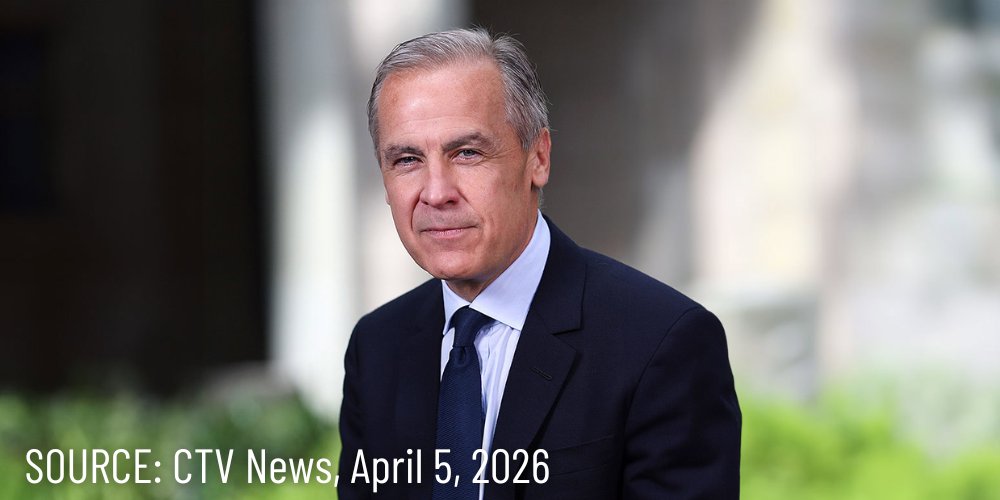
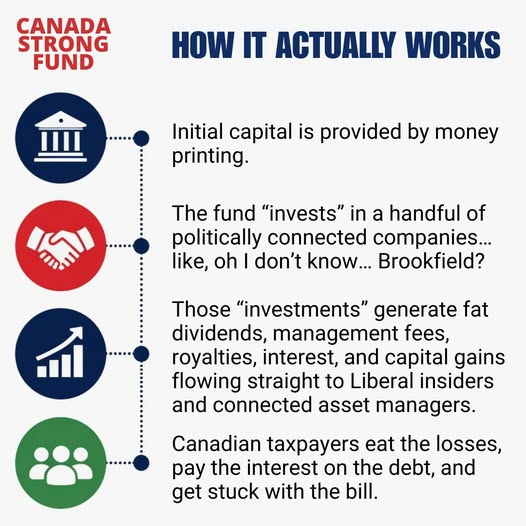
How the Canada Strong fund will work.
English
Ken Steinitz
8.4K posts

@SteinitzKen
Opinions, I have them. Author of Tweets.

EXCLUSIVE: BC Conservative leadership candidate Caroline Elliott (@NVanCaroline) pledges to BAN Land Acknowledgments in the BC public service and in schools. 🏛️📚
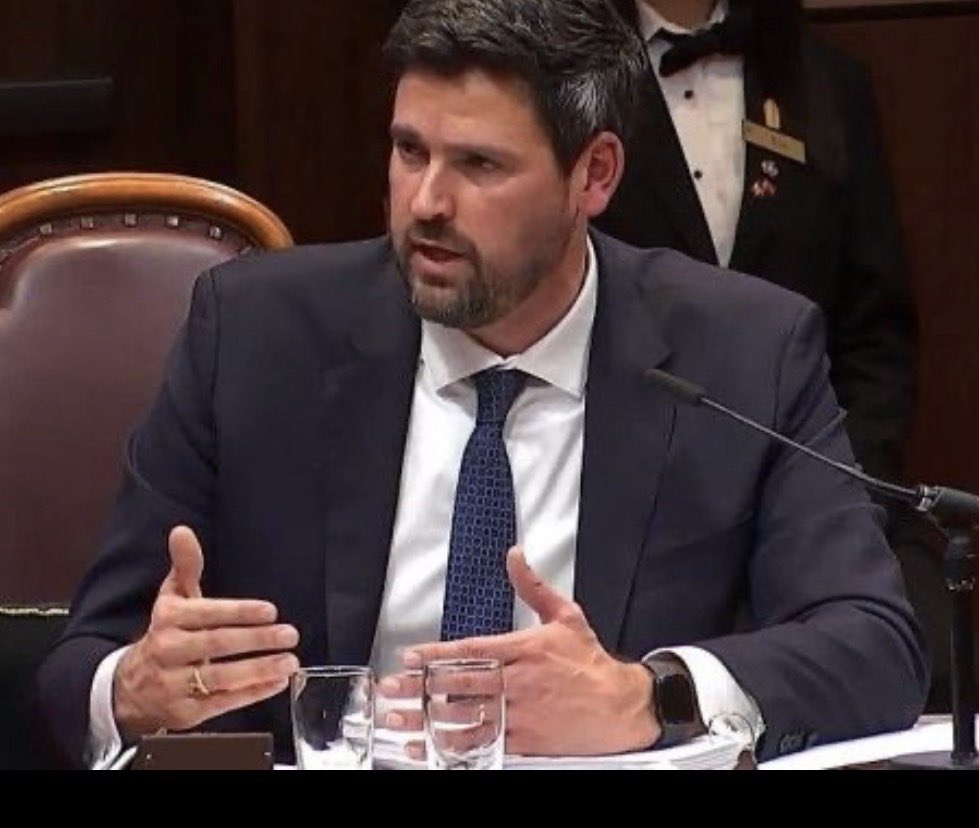
Cabinet will take majority control of all 26 Commons committees and no longer “play silly partisan games,” says Gov’t House Leader @stevenmackinnon. Move quashes all #ethics investigations, subpoenas and questioning of reluctant witnesses. blacklocks.ca/feds-to-quash-… #cdnpoli
The Pender Harbour Area Resident Association (@PharaBoard ) files updated legal action to strike down DRIPA (Declaration for the Rights of Indigeneous People Act) in BC: PHARA’s core claims are: A) Beyond provincial constitutional authority (ultra vires) — The province lacks the power under Canada’s Constitution to pass this kind of law. B) Breaches democratic rights (Charter s. 3) — DRIPA subjects citizens to governance by unelected Indigenous governments or entities that residents did not elect and that are not accountable to the B.C. Legislative Assembly or electorate. C) Violates parliamentary supremacy — The Act unconstitutionally “ties the hands” of future provincial governments and legislatures by requiring them to make all laws “consistent with” UNDRIP, which PHARA says improperly constrains future elected parliaments. D) DRIPA conflicts with existing Section 35 Indigenous rights protections in the Constitution and improperly transfers statutory decision-making powers (e.g., over land-use or dock permits as one example) via Section 7 agreements. ======= Excerpts from Lawsuit ===== CLAIM OF THE PLAINTIFF Part 1: STATEMENT OF FACTS 1. The Plaintiff seeks a ruling on the constitutionality of the Declaration of the Rights of Indigenous Persons' Act ("DRIPA") on several grounds, including whether a Canadian province can, on its own accord, legislate and implement Indigenous rights in a manner that conflicts with section 35 of the Constitution Act, 1982 and the related jurisprudence of the Supreme Court of Canada. 2. It also concerns the issue of whether a provincial government can authorize Indigenous governing bodies (as defined in DRIPA) -representing no more than a minute fraction of the province - to have statutory decision-making authority over non-Indigenous persons under provincial law. 3. The Plaintiff, a grassroots community organization, brings this case with a deep sense of responsibility as the case concerns fundamental questions about the rule of law and democratic principles, and is not a challenge to, or disrespect of, the constitutionally protected rights of Indigenous peoples recognized and affirmed under Canada's constitution. 4. PHARA is committed to building and maintaining strong relationships within its community, including with the shIshálh Nation. PHARA's concerns in this case are not directed at the shIshálh Nation but rather at the Province, and PHARA brings this litigation only after concluding it has been left with no other realistic options. ... 18. Canada is a constitutional democracy which, as noted in the preamble to the Charter "is founded upon principles that recognize the supremacy of God and the rule of law." Canada is one of the few countries in the world that includes provisions respecting Indigenous rights in its constitution. 19. The Supreme Court of Canada stated in Reference re Secession of Quebec (para 48) that " .. the evolution of our constitutional arrangements has been characterized by adherence to the rule of law, respect for democratic institutions, the accommodation of minorities, insistence that governments adhere to constitutional conduct and a desire for continuity and stability." 20. A foundation of Canadian democracy since 1867 is that electors chose who will represent them, and those elected are accountable to the electorate. [ Note by me: and not advocacy groups like indigenous councils .. see relief sought ] ... Part 2: RELIEF SOUGHT 1. PHARA seeks the following orders: A. A declaration that DRIPA is unconstitutional and inconsistent with section 35 of the Constitution Act, 1982 and is, to the extent of such inconsistency, of no force and effect. B. A declaration that the DRIPA is unconstitutional as it is in pith and substance a law related to "Indians, and Lands reserved for the Indians", as those terms are used in section 91(24) of the Constitution Act, 1867 and is beyond the legislative authority of the Province of British Columbia and thus of no force and effect. C. In the alternative, a declaration that section 7 of the DRIPA is unconstitutional because it: (ii) violates the democratic rights guaranteed by section 3 of the Charter by authorizing the transference of governance powers to an entity that is not responsible to the Legislative Assembly or the electorate of British Columbia; (iii) is not saved by section 1 of the Charter and (iv) is of no force and effect. D. An interim and interlocutory injunction preventing the Lieutenant Governor in Council of the Province of British Columbia, or a minister of the Crown, from entering into any agreements pursuant to DRIPA section 7; E. A declaration that section 3 of DRIPA violates the principle of parliamentary supremacy by purporting to direct the substance of legislation that must be passed by future governments; and F. Costs; G. Such further and other relief as this Honourable Court may deem just. More here: drive.google.com/file/d/1JVp8pB… #bcpoli #undrip #dripa fyi: @ezralevant @junonewscom @KahlonRav @AaronGunn @Randene4PRSC @WSOnlineNews @dsimieritsch @JasminLaine_ @Dave_Eby @PierrePoilievre @RebelNewsOnline @CBCNews @CTVNews @globeandmail @MetroVancouver @KenSimCity @christineeboyle @SteveSaretsky @mortimer_1 @Dallas_Brodie @NVanCaroline @iainblackbc @yuri_fulmer @TaraArmstrongBC @JohnRustad4BC @BCConservCaucus @CriticBC @One_BCHQ @Conservative_BC @bcndp @BCNDPCaucus @KerryLynneFindl @Khelsilem @cancivlib @AP


1921: Minister of Immigration J.A. Calder: "The Canadian Immigration Act prohibits the landing in Canada of the following: 1. Idiots, imbeciles, feeble-minded persons, epileptics, insane persons and persons who have been insane at any time previously." 🤣🤣🤣


The Conservative Party of BC MLA for Chilliwack-Cultus Lake is on a mission to “decolonize” all of us “one tongue at a time.” This is what you call a poison pill for a political party, my friends. The reconciliation industry’s tentacles run deep in our politics.