Nikolas Woischnik

6.1K posts

Nikolas Woischnik banner
Nikolas Woischnik

Nikolas Woischnik

@techberlin

Impresario @toaberlin in Berlin, CDMX & Tokyo. / Angel Investor / Founder @ahoyberlin @opnrs. Alumni @aws @amazon. RT ≠ Endorsement

Berlin, Germany Katılım Aralık 2010
2.2K Takip Edilen12.3K Takipçiler
Pavel Prata
Pavel Prata@pavelprata·
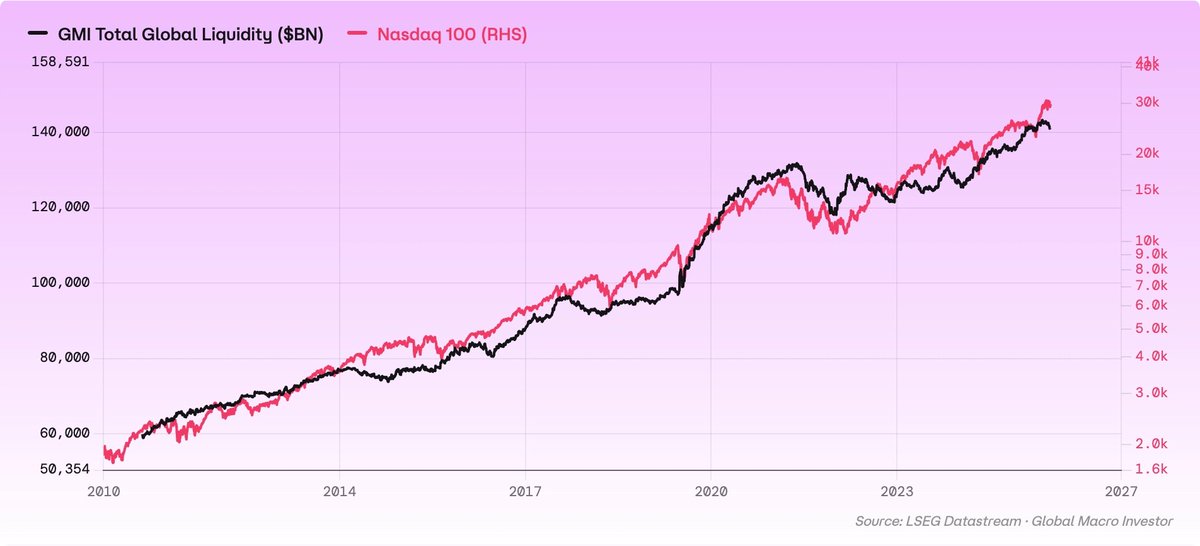
Monthly VC/LP debrief. What I actually saw in April, 2026: 1/ The market is basically collapsing into a single point. In Q1 2026, 5 firms captured 73.1% of all LP commitments (vs. 12 firms capturing 75% in 2025). Those same 5 firms are putting 75% of their capital into 5 companies. And those 5 companies are paying $1M+ comp packages and pulling the best researchers and operators out of the rest of the market. Capital, deals, and talent – all three concentrating into the same handful of names at the same time. 2/ Sovereign wealth funds owned 1.8% of venture's LP base in 2005. Today: 15.2% – $548B in committed capital. After 2022, distributions to traditional LPs collapsed from 29% of NAV to 11%. Endowments couldn't recycle. Pension funds hit allocation ceilings. Sovereign funds had no such constraints and kept writing checks while everyone else stopped answering the phone. (h/t @lananth) 3/ Large endowments are running SpaceX at 8-20% of NAV, often across 10-15+ funds simultaneously. When it IPOs, that capital has to go somewhere. The recycling effect into new VC commitments could be the single biggest LP liquidity event in years – and emerging managers fundraising in that window are going to be in a very different market than the one today. (h/t @MeghanKReynolds) 4/ The talent bifurcation is happening at the GP level too. Big platforms are pulling in the best partners – @lishali88, @mignano, @nikesharora, @Beezer232. At the same time, spinouts are accelerating – @kirbyman01, @suzannexie. The same dynamic compressing the LP market is playing out inside firms: strong platforms get stronger through talent, and the ones leaving are building emerging firms to play a different game entirely. 5/ Concentrated funds and diversified funds serve different moments in a company's life and the math bears it out. Concentrated funds are structurally risk-averse: total failure is too painful, so they come in after the fundamentals are derisked. Diversified funds take the moonshots early. The math: for every 100 concentrated funds in the market, there should be ~69 diversified ones. Most funds sit in the middle (neither particularly concentrated nor diversified) which is exactly where the structural alpha disappears. (h/t @credistick) 6/ @cartainc data: the 95th percentile seed-stage post-money valuation went from $65.6M in early 2022 to $173.6M in Q1 2026. The original angel investors in OpenAI put in ~$10M collectively and are sitting on ~$1.4B in paper at an $852B valuation – 140x on the most important company of the decade. If that's the ceiling on the biggest winner, the math on diversified seed portfolios is broken. The 1000x outcome is structurally disappearing. (h/t @lucasbagnocvaz) 7/ Alameda Research was Cursor's first check – $200K for half the company at pre-seed in 2022. Sold in FTX bankruptcy for $200K. Cursor is now tracking toward a $60B acquisition by SpaceX – zero to $60B in ~4 years. For @a16z and @ThriveCapital who led early rounds: ~150x on the Series A in ~2 years. A small group of firms, again, capturing one of the highest-quality outcomes. (h/t @daveclark85, @Jeffreyw5000) 8/ The quarterly update is no longer a one-way instrument. The 2020/2021 vintage funds made it obvious – inflated entry points, brutal macro turn, and suddenly a lot of managers weren't just navigating portfolio reality but managing how it was perceived. That's getting harder. A smaller FO can now open a $20 Claude and sanity-check the gap between what was promised 3 years ago and what actually got built – no analyst team required. The interpretation layer is no longer exclusively on the GP's side, and managers who relied more on narrative than substance are starting to feel it. 9/ Brand-name mega-funds and small founder-operator funds are not the same LP product and allocators who underwrite them with the same metrics are making the first mistake. Mega-funds are the "Blackstone-ification" of venture: scale, platform, brand. Small funds win on optionality – lead rights, co-invest, secondaries, faster DPI. Blending them into one "VC allocation" is where most LPs make the first mistake. (h/t @Noah_L) 10/ Nobody actually knows what makes a great founder or a great company – and that's exactly why seed funds will always exist. LP interest is lagging right now because of imminent IPOs in generational companies, but that's short-term. Multi-stage funds have too much capital to deploy small checks meaningfully. The bar is high, the market is brutal, and most people are wrong most of the time. Be a student to the job, don't get overconfident – and you'll likely thrive. (h/t @NWischoff) Every month I track new fund launches, LP events, market reports, and what's actually moving in VC/LP. All of it in the @murphcapital newsletter: murphcapital.substack.com/p/edition-12-2…
Pavel Prata tweet media
English
7
20
151
18.6K
Nikolas Woischnik retweetledi

Bryan Johnson
Bryan Johnson@bryan_johnson·
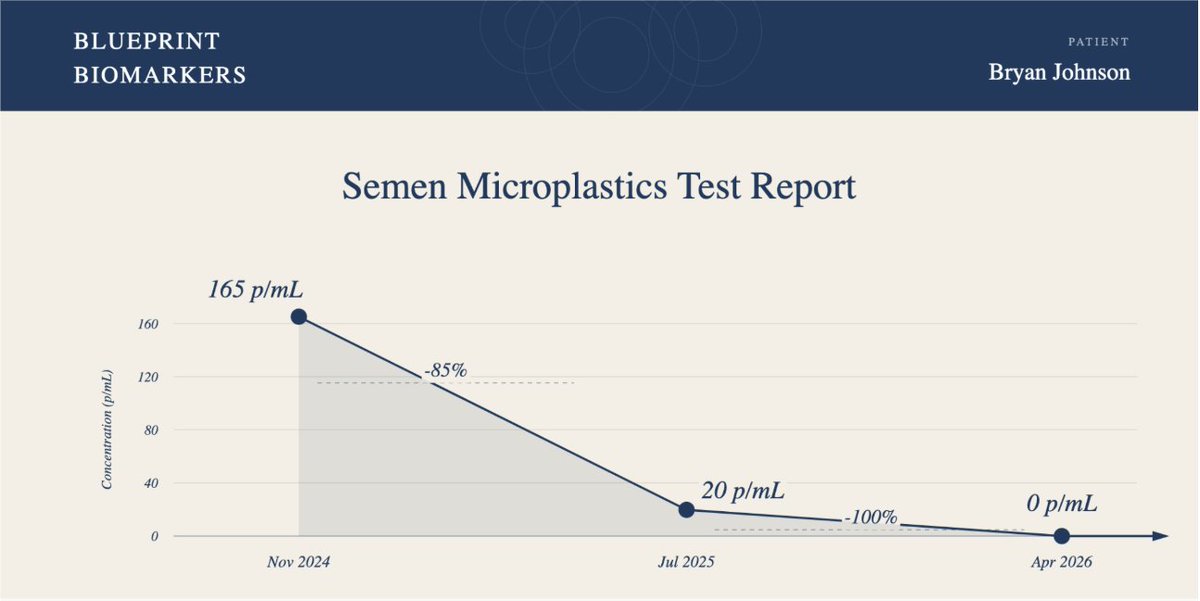
🚨 I HAVE NO MICROPLASTICS IN MY BALLS 🚨 This should not be possible. Studies show that 100% of men have microplastics in their semen. I am the first human ever to show a complete reduction to zero. This may be a world-first breakthrough in fertility research. I had 165 microplastic particles in my semen just 18 months ago. Now, I have zero. Five published studies have measured microplastics in human semen. Two found them in 100% of men. The other three found then in 44 to 76% of men tested, but those used methods that miss the smallest particles and the clear ones. Corrected for that, the real rate is likely 100%. Almost every man alive has plastic in his semen right now. The same applies to testicular tissue, testing 100% positive for microplastics. Microplastics hurt sperm. Human studies show the impact of various types of plastic, associated chemicals, and other toxins on male fertility: + 60% fewer normal shaped sperm (from PFAS) + 5x higher odds of low sperm count (from PTFE) + 10% lower sperm concentration (from PTFE) + 15% lower swimming ability (from PTFE) + 41% lower swimming ability (from PET) + 12% lower sperm swimming ability (from BPA) + 3x higher odds of low sperm count (from Phthalates) + 2x higher odds of poor swimming (from Phthalates) The effects compound: each extra type of plastic drops sperm swimming ability by about 21%. This matters even if you’re NOT trying to get pregnant. Sperm count is one of the cleanest biomarkers of overall health we have. And microplastics don't stop at the testes. The same particles are showing up everywhere we look. Studies show 4.5x higher rate of heart attack, stroke, and death in people with microplastics in their arterial plaque vs. those without. Microplastics were also found in 100% of human placentas tested. 100% of post-mortem human brains tested positive for microplastics. Brain concentrations rose ~50% between 2016 and 2024, and now sit at roughly 11x the levels found in the liver or kidney. Where do these come from? + PTFE, commonly in non-stick pans + PET, water bottles + Phthalates, makes plastic soft and bendy + BPA, can linings + PFAS, stain-resistant fabrics & food packaging Inside the body, plastic causes a kind of cellular rust. It triggers inflammation in the testicles, kills the cells that make sperm and drops testosterone. It's been confirmed across 39 animal and cell studies, then in human data. MY PROTOCOL: Note, what I did is n=1, not a controlled trial, I cannot prove cause. 1. Sauna (dry). My toxin blood panel confirms sauna clears plastic related chemicals: BPA, phthalates, PFAS, flame retardants, pesticides. The plastic particles themselves are too big to sweat out directly. Heat may activate other clearance routes: bile flow through the liver, the cell's internal cleanup system, and the gut barrier. Humans have almost no enzymes that can break plastic apart, so the body has to physically push it out. 2. Reverse osmosis water filter. Drinking water is likely a major source of microplastic getting into your body. A reverse osmosis filter pushes water through a very tight membrane and strains the particles out. I filter everything I drink. 3. Trying to rid my environment of the big plastic items: cutting boards, cups, plates, food storage containers, non-stick pans, cling wrap, tea bags, water bottles, kitchen utensils, kettles, and synthetic clothing. Note, as hard as I try, I'm always finding new plastic things in my life. This can be all-consuming thing so try to just knock out the big ones. I did all three interventions at the same time. I cannot say which one did the most work. What I can say is this: going from 165 to zero in 18 months is possible. Results: Nov 2024: 165 particles/mL Jul 2025: 20 particles/mL Apr 2026: 0 particles/mL The 18 month window also captures roughly 7 full spermatogenesis cycles.
Bryan Johnson tweet media
English
1.4K
1.4K
26.9K
6.4M
Nikolas Woischnik retweetledi
Ron Alfa
Ron Alfa@Ronalfa·
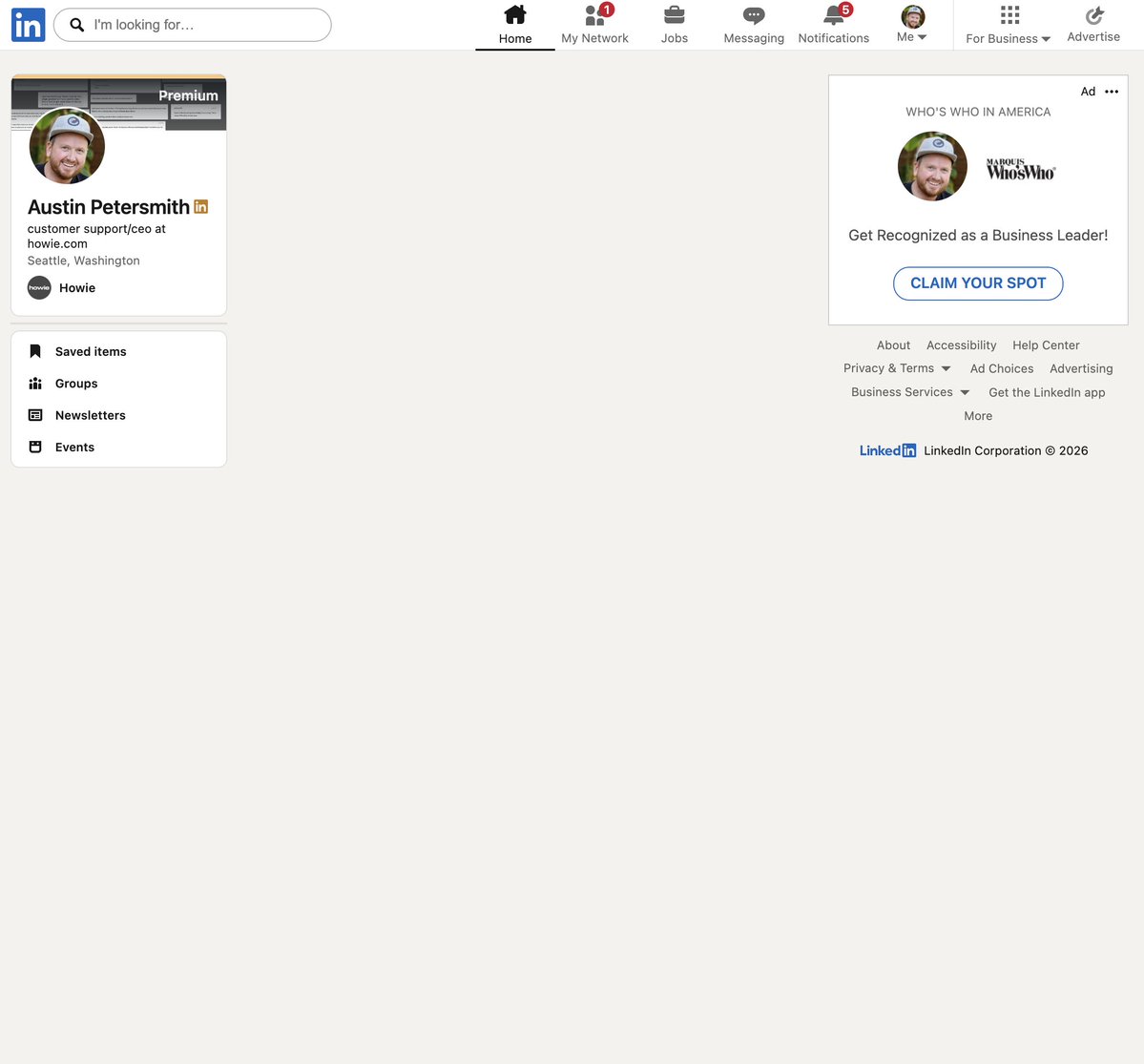
LinkedIn is basically Moltbook now.
English
166
418
5.1K
253.1K
Nikolas Woischnik retweetledi
austin petersmith
austin petersmith@awwstn·
i made a chrome extension that removes the AI slop from my linkedin feed
austin petersmith tweet media
English
382
2K
37.9K
615.8K
Nikolas Woischnik
Nikolas Woischnik@techberlin·
Runner finally launched to the public. Go give it a try and let me know what you think! (Disclosure: Invested in the company and am grateful to be a small part of the journey!)
yitong@yitong

Introducing @runneragent, the knowledge work agent that works across all your apps to get real work done It's simply the best way to stay on top of messages, project management, user feedback, and much more Runner has become a daily driver for me and I think you'll like it too

English
1
0
1
219
Nikolas Woischnik retweetledi
Camus
Camus@newstart_2024·
New UK screen time rules just dropped — and they’re stricter than most parents expected. From 27 March 2026, England says: zero solo screens for under-2s (except quick video calls with family), and max one hour a day for 2–5 year olds — no screens at meals or the hour before bed. Co-view everything, stick to slow-paced content, and ditch fast social-media clips and AI toys completely. The science is sobering: toddlers’ brains process info up to 10 times slower than adults. Fast-paced screens push them into fight-or-flight mode — racing heart, surging energy — while they’re sitting still. Researchers at the University of East London say this mismatch can wire kids for more tantrums and emotional struggles later. Using screens to calm meltdowns? It often backfires long-term. As a parent, it’s brutal — we all know that explosion the second you take the tablet away. But this feels like evidence finally catching up with what our gut has been telling us. How are you handling screens with little ones — strict limits, co-viewing, or mostly winging it?
English
238
697
3.7K
2.7M
Nikolas Woischnik
Nikolas Woischnik@techberlin·
“It’s tough to make predictions, especially about the future.” Yogi Berra
English
0
0
0
46
Nikolas Woischnik retweetledi
Paul Saladino, MD
Paul Saladino, MD@paulsaladinomd·
Lululemon is under investigation by Attorney General Ken Paxton. Throwback to a reel I posted 3 years ago...PFAs and other chemicals in your clothing are no joke.
English
49
283
1.6K
132.9K
Jon Lai
Jon Lai@Tocelot·
i'm opening my calendar for 1:1 office hours this Friday! a16z @speedrun applications open next week - founders, students, builders - would love to hear from you and talk startups, fundraising, help you build your app comment below and we'll DM a calendly link for 15min slots
Jon Lai tweet media
English
462
16
625
64.3K
Martin Varsavsky
Martin Varsavsky@martinvars·
Austin, inspiring city to build your start up. Gameto and Certuma are here. I come frequently. Love it.
English
9
5
56
4.9K
@levelsio
@levelsio@levelsio·
I said this I forgot to who but I said it BigTech will eventually come for all apps / startups / companies because they can fill the niches now that before could not because they were too small Those niches is where entrepeneurs hung out, nice parts of the market people could build a little SaaS with $100K/y to even $100M/y, notjing like the $100B/y revenue BigTech was doing, but worth it With AI now BigTech can fill those niches + they are the ones training and owning the best models, and keeping the best models for themselves they can outcompete anyone who doesn't own them (everyone except other BigTech) End game for their survival is simply trying to take every business, it's just capitalism This completely changes the prospect for entrepreneurs as there won't be much left, because BigTech is financially incentivized to have to take everything Because if they don't, their competitor will! x.com/marmaduke091/s…
can@marmaduke091

Another leak from Anthropic They created a lovable-like feature where you can build full-stack apps easily They are coming after everthing

English
223
297
4.3K
884.3K
Erik Torenberg
Erik Torenberg@eriktorenberg·
This is the part of my job at @a16z that most gets me up in the morning: building an incredible team. We’re hiring for a lot of roles at the moment: Chief of Staff: help me run all our initiatives at the intersection of investing, networks, and media. Senior role with a big impact. Marketings and Comms Leadership: own the narrative for the a16z portfolio and firm. We’re hiring a CMO and a Chief Comms Officer. Head of Podcasts: run, produce, scale our podcasts end-to-end. We’re also looking for a podcast host for new podcasts. Content: define the agenda for tech. Build the most well-read and high-taste tech publication in the industry as an editor, writer, or specialist in growth/operations. Social: build the biggest go-direct channels for the firm and top-tier CEOs, drive content strategy, design and audience growth. Research: help us curate the most important conversations in tech. Networks: Help build digital and IRL community across our extended networks of founders, investors, creators, and the tech ecosystem more broadly. Help run our VIP group chat operation. Help us source and identify amazing future founders at top companies today. College: help us build a network of talented young people on campuses across the country (and the world). Events: own flagship gatherings and summits that create moments people talk about. Video: we want to take flyers on creative directors, content generalists, and aspiring filmmakers in tech. More broadly, we’re interested in hiring anyone doing something exceptional at the intersection of investing and networks or content. People here love the work, the people, and the growth. a16z.fillout.com/new-media-hiri…
English
78
28
723
383.2K
Nikolas Woischnik retweetledi
Wall Street Apes
Wall Street Apes@WallStreetApes·
Man makes a visual demonstration of how American bread is actually made Many Americans know our bread is toxic by now but they don’t really understand what the process of making it actually looks like and how bad it really is This is eye opening
English
595
9.9K
27.3K
1.4M
Nikolas Woischnik retweetledi
GREG ISENBERG
GREG ISENBERG@gregisenberg·
sequoia put out a blog post called "services is the new software" look at this map of over $1T in services being replaced by AI agents
GREG ISENBERG tweet media
English
268
506
4.2K
623.2K
Nikolas Woischnik retweetledi
a16z crypto
a16z crypto@a16zcrypto·
E/ACC vs. D/ACC: THE DEBATE @VitalikButerin thinks slowing down AGI by four years is worth it. @beffjezos thinks that's exponential opportunity cost. They debated it live, moderated by @eddylazzarin and @shawmakesmagic. 00:00 Opening 07:02 Thermodynamics and first principles 16:04 Acceleration, entropy, and civilization 28:29 The core disagreement 32:42 Comparing and contrasting e/acc and d/acc 36:20 Open source, open hardware, and local intelligence 54:18 Should AI be slowed down? 1:02:35 Autonomous agents and artificial life 1:21:07 Crypto as the trust layer between humans and AI 1:35:37 Closing arguments
English
51
82
500
143.4K