Meka Asonye

779 posts

Meka Asonye banner
Meka Asonye

Meka Asonye

@BigMekaStyle

Partner @Firstround. Ex-@Stripe, @mixpanel, Bain, and @CleGuardians. Bears Fan 🏈, amateur golfer 🏌🏾‍♂️, pilot 🛩.

San Francisco, CA Katılım Ağustos 2010
1.5K Takip Edilen6.9K Takipçiler
Sabitlenmiş Tweet
Meka Asonye
Meka Asonye@BigMekaStyle·
1/ PUMPED to finally announce that I've officially joined @firstround as a Partner. I couldn't have imagined this when I joined their Angel Track program a few years ago, but now I'm on the team that's laser focused on helping Day 1 founders. firstround.medium.com/meet-meka-ason…
English
95
36
1.1K
0
Meka Asonye retweetledi
Liz Wessel
Liz Wessel@lizwessel·
Wow. Gumloop has gone from a side project out of a Vancouver bedroom to an AI platform that now automates daily workflows at companies like Shopify, Ramp & Instacart, and a new $50M Series B led by @benchmark (all in ~2+ years!!). It’s been a wild journey for the team, and I feel incredibly fortunate that @firstround led their 2024 seed round. If you tried it a while ago and still think of @Gumloop as just drag-and-drop workflows, I’d *strongly* recommend giving it another shot, as the product has evolved in massive ways. They’ve now added their agent builder, Gumloop Agents (lets anyone at a company build/deploy AI agents across workspaces in minutes) and Gumstack (a separate security product that lets IT teams monitor/control how agents use company data across the org). As a user of theirs said to me recently, ever since Gumstack launched, “Gumloop *IS* Gumloop for Enterprise.” As they’ve built out their product, the Gumloop team has stayed super focused on making it maximally useful to everyone – not just technical folks. IMO, this is a big part of why teams are getting hooked, and usage spreads wall-to-wall, instead of getting stuck in one department. @MaxBrodeurUrbas, @rbehal1729, and their entire team (who are all amazing btw) have been obsessed with this from day 1 and truly stay embedded with their customers, flying to their offices, running hundreds of workshops, shipping features same-day, and personally answering thousands of questions in customer Slack channels. They’re hiring across the board right now, more info below!
Max Brodeur-Urbas@MaxBrodeurUrbas

gumloop raised a $50m series b led by benchmark here's a video we had fun making about the journey back to work.

English
13
16
130
31.7K
Meka Asonye retweetledi
Matej Cernosek
Matej Cernosek@mateocernosek·
Solid-state batteries are changing naval warfare. And the threats they enable are far harder to detect. A post recently went viral claiming Iran's "Azhdar" UUV patrols at 18–25 knots with 4-day endurance and 600+ km range. This appears to be false, but the post went viral because the narrative is true. UUVs are a growing threat and maritime, as demonstrated by this crisis, is more important than ever. And the stakes are high. Iran has long held the Strait of Hormuz as a pressure point; roughly 20% of global oil supply flows through a 21-mile-wide chokepoint. UUVs capable of covertly laying mines in those waters would further threaten naval assets and escalate the conflict. UUVs are already being deployed by multiple nations. Today's lithium-powered vehicles cover hundreds of kilometers and patrol for days. Solid-state batteries at 400 Wh/kg, and climbing, mean that gets dramatically better, cheaper, and more scalable this decade. Sensing underwater is categorically harder than any other domain. cUAS has radars, cameras, RF, microwave. The electromagnetic spectrum works for you in air. Water kills RF. Acoustics are the primary detection modality, and littoral environments add clutter and complexity that open-ocean legacy systems were never built for. Those legacy systems were designed to find large submarines in deep water. Not swarms of small autonomous vehicles near ports, chokepoints, and critical infrastructure. As UUVs get cheaper, faster, and more autonomous - sensing is the defining gap. cUUV is going to be a massive market. Interdiction starts with detection. And detection underwater is still largely unsolved.
English
0
5
12
1.9K
Meka Asonye retweetledi
Todd Jackson
Todd Jackson@tjack·
Customs brokers are having a moment. “For the first time in history, our families know what we do for a living. Because all of a sudden, custom brokers became very, very important.” When a person crosses a border, they show a passport. But when a product crosses a border, it has to show thousands of data points, like materials, origin, safety certifications, and shifting duty implications. Nearly every product in your home was “cleared” by a human in a logistics office manually typing those details into a computer while racing against a clock. And with all the global trade chaos and rapidly changing tariffs, this job has gotten a lot more stressful recently. @sambuddha_basu and @ArushiVashist started Amari AI to build an AI workforce for global trade, starting with customs and compliance. Existing “AI tools” in the space just run OCR and scrape data. Amari has built sophisticated decision-making logic that “thinks” through a filing against the most up-to-date trade regulations, which these days can change on a Friday afternoon and go into effect the next Monday morning. Since we co-led their $4.5M seed last summer, the team has been on a tear, going from a handful of paying customers to over 30 U.S. customs brokers who have moved $15B of goods through the system, cutting clearance time in half and helping them stay more compliant. Excited for what’s next! Thanks to @sokane1 @TechCrunch for covering: techcrunch.com/2026/02/19/thi…
English
4
8
30
4.3K
Meka Asonye
Meka Asonye@BigMekaStyle·
Depending on which viral AI essay you agreed with on X this week, it’s already so over or we’re all playing a very expensive game of Farmville. As with most things, the real answer is a lot more unsatisfying. It’s all still messy and probably lies somewhere in the middle. While it does feel like things are shifting extremely quickly in a way that’s hard to dismiss, the hype is escalating every day. It’s impossible to tell where exactly we are on the curve. What has been more interesting to me than the debate over which camp folks are in is just how much traction these pieces are getting. I think we’re all kind of desperate to make sense of how uneven things are, and are all caught up in this moment of trying to process the whiplash. You’ll be scrolling through crazy OpenClaw workflows and mishaps that truly feel like scenes out of the future, but then skepticism starts to creep in about what’s true and what’s overengineered. And then anytime you step outside the tech bubble you can get an instant reality check on how much wood there still is to chop to get to widespread adoption. (Even if it’s just seeing how differently the ChatGPT vs. Anthropic vs. Google Super Bowl AI ads landed for tech folks vs. normies.) The gap between what people are posting about and what’s actually making a difference has never felt harder to figure out. The main thing I’ve found to be helpful as a counterweight is trying to stay diligent on spending my time as an investor where I think it matters most vs. getting caught up in the wild swings. For the past few years now, that’s meant meeting with builders who are focused on solving hard, real-world problems. To me that means taking on the biggest, most technically and operationally challenging issues in the physical world (aerospace, defense, robotics), or figuring out how to usefully inject AI into the painful, manual workflows in industries that actually make and move things. Not only because this is what personally gets me more fired up but also because it feels like this is the general direction our world is headed in. More and more of the founders I’m meeting are reorienting their approach to problem hunting and building in this way. @DideroAI is a great example here and is top of mind because they just shared their $30M Series A news today from @chemistry and @HeadlineVC. They found a problem space most of us know virtually nothing about. Procurement teams at manufacturers and distributors are managing thousands of supplier interactions across email, spreadsheets and ERPs. The bulk of this stuff is still done manually, even though it’s only getting more and more complicated as companies try to diversify their supply chains across more countries. When I led their seed in 2024, @tspencer15, @tcpetit, and @LPallhuber immediately felt like a team that was well-configured to the shape of the challenge here. They’ve been those people stuck in the mud of these workflows. (Between the 3 of them they’ve built companies, run procurement operations across countries, and dealt with the pain of trying to coordinate 100s of suppliers.) Spaces like these, where the team has the deep domain context and the agents are correctly applied, are where AI can and already is making a near-term, not-theoretical difference. In took less than a couple years, and Didero’s agents are now doing things like following up on 2K+ past due order line items that were sitting neglected, automating PO creation, and pulling info off physical bills of lading and getting it into the ERP so production doesn’t stall out waiting on someone to manually type it in. None of those are paradigm-shifting on their own, but stack up these small, boring, concrete wins week after week, company to company (and assume they continue to improve in capability at an explosive rate), and pretty soon we’ll all be surprised by just how much wood has been chopped.
English
4
6
37
5.7K
Meka Asonye retweetledi
Brett Berson
Brett Berson@brettberson·
This is Episode 2 of Executive Function with Ryan Lucas, VP of Design at Rippling and former Head of Design at Retool. For Ryan, everything begins with being very clear about what the job of design and a design function really is. In his words, “Useful, usable and desirable are the three things we need to deliver. And I think people often forget about the last bit, but it’s incredibly important to the practice of professional design, whether it’s physical products or software products. Henry Dreyfuss said the designer’s job is not done if the product doesn’t sell, and I’ve always believed that.” We go on to discuss: - Design leaders who "shield" their teams from organizational chaos are doing them a disservice, not a favor. - To truly scale quality, you probably need a benevolent dictator, one opinionated person who sets the bar. - Parker Conrad goes directly to the individual designer when he sees a problem, skipping Ryan entirely, and Ryan thinks that's great. - At Rippling, individual designers sometimes own a Series C company's worth of product by themselves. - Great creative work cannot come from fear because fight-or-flight shuts down the prefrontal cortex, which is where all creative thinking lives. - In the absence of a date, there is no commitment, and that rigor around commitments is what makes Rippling's speed possible. - One-on-ones should be jam sessions on hard problems, not status updates or career development chats. - He'd rather a young designer have opinions he completely disagrees with than no opinions at all. - The hardest skill in the job is knowing which balls are rubber and which are glass, and you only learn by letting some drop. - The most successful use of a design crit is when designers tell you upfront what feedback they actually need, otherwise everyone wastes time on things that have already been decided. - The perfectionism that makes someone a great designer is the same trait that will prevent them from becoming a great design leader. - The best designers steer the business, they see a problem, come out of their lane, and move the tiller without being asked. Timestamps: 03:29 The Useful, usable, desirable — and used — design framework 04:49 How design relates to engineering, product, and marketing 08:15 Measuring success as a design leader 12:40 The gap between director and VP-level design leadership 14:23 Why great design leaders jump up and down in altitude 19:26 The four pillars every design manager must master 21:34 Over-indexing on quality and the perfectionist trap 27:53 How to build judgment through pattern matching 34:31 Why Figma is not the source of truth 38:39 The "Do/Try/Consider" framework 44:05 Should one-on-ones exist? 46:45 How to scale judgment 50:49 What to look for when hiring your first design leader 54:54 Advice for young designers who want to lead 58:24 Demanding yet supportive: A balanced management style 01:02:43 What Rippling's operating system teaches about execution
English
2
9
71
31K
Jakob Diepenbrock
Jakob Diepenbrock@jakobdiepen·
America is the greatest country in the world. But we need more founders working on real problems. If you are in the early stages of building something that matters, you have to be in El Segundo.🇺🇸 Apply to the Spring Cohort in bio.  Deadline February 20th.
English
142
182
1.1K
285.9K
Meka Asonye
Meka Asonye@BigMekaStyle·
Working at @stripe with Jeanne was one of the highlights of my professional career. So fun to see it come full circle as she drops truth bombs on the @firstround pod
Brett Berson@brettberson

Today we’re launching our newest podcast, Executive Function. The question we’re trying to answer is: what is the difference between good and truly great scale up executives? We’re beginning this journey by sitting down with Jeanne DeWitt Grosser, who’s currently the COO @vercel and previously spent almost 10 years @stripe, where her final role was Chief Business Officer. So much of her perspective can be summed up in this observation: “Most executives have a playbook and won’t contextualize it. They over pattern match and lack the intellectual curiosity to figure out what’s different. They don’t actually get their hands dirty.” Hope founders, execs, and future execs find as much value in this conversation as I did. Timestamps: (5:04) What keeps star talent from ascending to the top spot in a company (19:59) How to balance being demanding and supportive as an executive (22:47) Jeanne’s interview process for hiring executives (29:04) The thread that ties together failed executives (34:57) How Jeanne uses “driver trees” to determine metrics (43:24) Why your executive peer set needs to be your first team (57:16) How Stripe got 30 execs to operate as one team (1:02:43) Why execs should be working themselves out of a job (1:09:26) The performance review from @collision that sticks out in Jeanne’s mind

English
0
0
16
939
Meka Asonye retweetledi
Karan Kunjur
Karan Kunjur@KaranKunjur·
As the founder of a space company, I like to think I’m pretty optimistic - but even I underestimated the rate of acceleration we’ve seen over the last few months. Almost four years ago, Neel and I started a company because we were excited about Starship. We saw the opportunity to build much bigger, much higher power satellites that could start humanity down the path towards being a Type 2 Kardashev civilization. We decided to call the company K2, we made our logo a Dyson sphere. Four years later, the Kardashev scale is a mainstream concept - with the ambition to make humanity a K2 civilization being broadcast by one of the greatest engineers in the world. Concepts that I thought were 5 to 10 years out, like orbital data centers - are now foundational capabilities for what could be one of the most significant IPOs ever. We’ve gone from people asking us “why would anyone need a 100kW satellite?” to people taking that number, asking their AI to put it into their orbital data center excel and having the lightbulbs go off. It’s honestly the best time ever to be building in space, we are truly fortunate to be building K2 today. For a big satellite company, we’re a small fish in a big big pond. We may end up being NPCs in a much bigger game - time will tell. All I know is I’m going to have the time of my life building alongside people I admire and respect. So up next, launching the 20kW satellite in two months, learning a ton, continuing designs on the 100kW satellite, scaling up the factory and doing our small part to help progress humanity up the curve. “K2 or you’re not even trying.”
Karan Kunjur tweet media
English
73
189
2.5K
145.7K
Meka Asonye
Meka Asonye@BigMekaStyle·
Happy last closing day of the Fiscal Year SaaS sellers (to those who celebrate)! Good luck getting those commits across the finish line.
English
3
0
12
921
Meka Asonye
Meka Asonye@BigMekaStyle·
I've recently seen one too many examples where VCs forget that we WORK for the founders, not the other way around. We are in a client services business. Your reputation is all you have. One damning founder reference could kill your career. 👀
English
2
2
10
515
Meka Asonye
Meka Asonye@BigMekaStyle·
Come work with one of the best in the biz!
Josh Kopelman@joshk

In 20+ years of building @firstround, I’ve never hired for this specific role before. I’m kicking off a search to hire an Investor who will work directly alongside me. They will share my obsession to meet with the highest potential founders as early as possible, often before they even have a clear “imagine if” yet. Although the role itself is still being defined, my commitment is to work closely with this person to help them build the foundation of their investing career. Here’s what’s probably true about you if you’re the right fit: - You’re enthusiastic and obsessive. Following your curiosity has taken you down often weird and winding paths. - You already know a lot of brilliant builders — and more importantly, they enjoy spending time with you. You have a unique ability to generate followership, likely because you give more than you take. - You actually enjoy the work of building relationships from scratch: the cold emails, the endless events, the persistent follow-ups, the months of coffee chats. It requires relentless execution, and that excites you. You go about this work in an authentic way that isn’t conventional “networking.” If you’re looking for a role where the title does all the heavy lifting for you, this isn’t it. - You don’t find it difficult to put unreasonable hours into your work because it doesn’t feel like work to you. You’d call yourself a “work enthusiast.” - You’ve been immersed in the startup world long enough to have real context. What matters most is you’ve been close enough to startups to understand how they actually work and what great looks like. - You obsess over markets, customers, and why some businesses work while others don’t, but you can also hang when a conversation goes deep into technical choices. - You’re an exceptional communicator who tends to be more of a “simplifier” than a “complexifier.” - We’ll work together incredibly closely, but you aren’t someone who needs to be managed. You learn best by watching, by doing, by asking well-calibrated questions — preferring to “take the wheel” instead of being a passenger. You’d rather shape a role than fill one. If you want to spend your time with builders at the very beginning — and learn this craft of early-stage investing alongside someone who’s been at it for two decades and still thinks it’s the best job in the world — I’d love to meet you. SF or NYC only, with long days and lots of travel in both directions. Apply below. jobs.ashbyhq.com/firstround/4f2…

English
1
0
4
410
Meka Asonye retweetledi
Brett Berson
Brett Berson@brettberson·
After nearly 8 years, Angel Track has become the place where serious angel investors come to sharpen their craft. We don’t open up applications very often, so today until January 15th is a rare window where you can put your hat in the ring to join the ranks of @lennysan, @cjc, @danshipper, @paraga, @clairevo, @jeff_weinstein, @ashleymayer and so many other epic founders, builders, creators, and full-time investors who we are lucky to count as alumni.
Brett Berson tweet media
English
7
14
116
42.6K
Meka Asonye retweetledi
Karan Kunjur
Karan Kunjur@KaranKunjur·
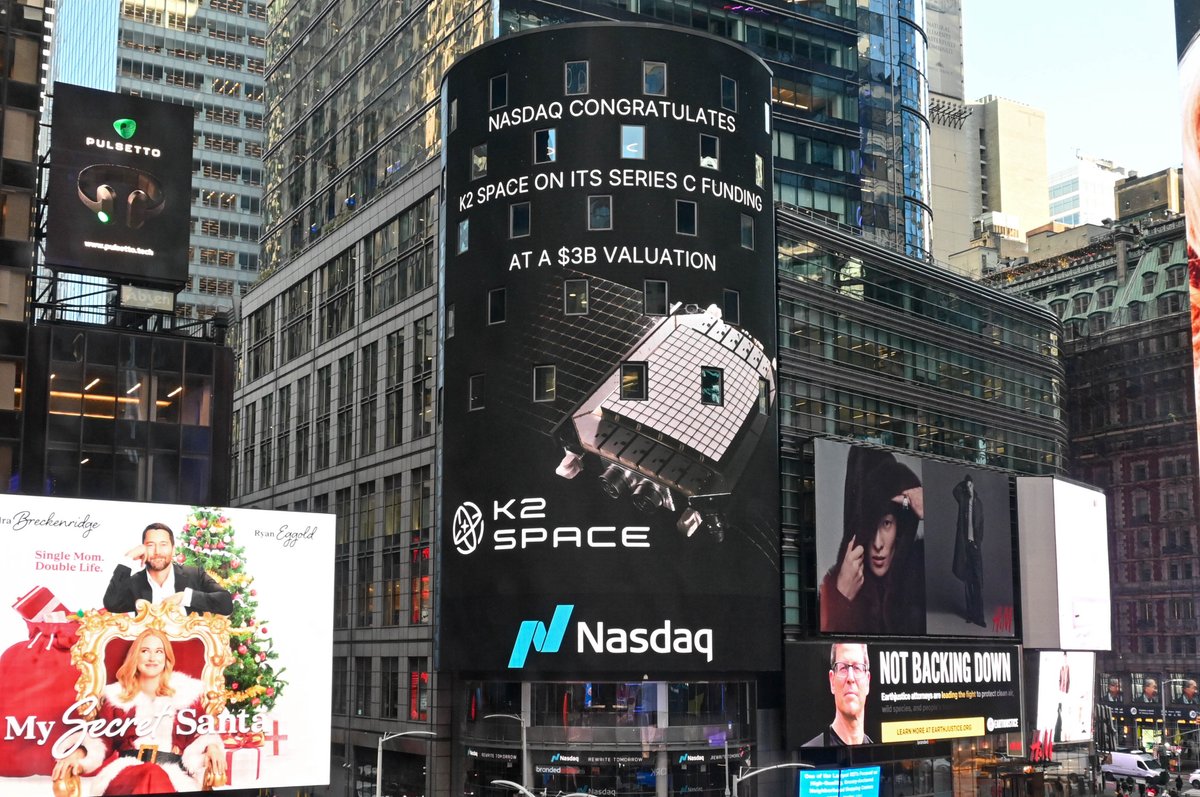
Once in a while, it is important to take a step back and appreciate how ridiculous life sometimes is. Seeing K2 show up in Times Square is one of those moments. A big thanks to @Nasdaq and everyone who else who supported us @K2SpaceCo over the last week - the feedback has been incredible. Now, back to work.
Karan Kunjur tweet media
English
5
6
89
8K
Karan Kunjur
Karan Kunjur@KaranKunjur·
Three and a half years ago, @neelkunjur and I decided to go from being Brothers, to being Co-Founders. Today, we’re excited to announce that @K2SpaceCo has raised a $250M Series C at a $3B valuation. This round comes on the heels of $500M in signed contracts across commercial and US Government customers. Our Series C is being led by @Redpoint, with participation from @TRowePrice, Hedosophia, @AltimeterCap, @lightspeedvp, Alpine Space Ventures and many others. We’re fortunate to be building at a unique time - launch vehicles are getting larger and the frequency of launch is increasing. When it comes to satellites, it’s now possible to Build Bigger, and we intend to be on the vanguard of doing just that. Building Bigger allows us to deliver a step change in power (20kW today, 100kW tomorrow), reliability, and redundancy. Our satellites are designed to deliver the maximum amount of capability wherever that capability is needed (LEO, MEO, GEO, cislunar space and beyond). Coming up next - 20kW satellite launch early 2026, three satellites launched early 2027, and many more to come after that as we scale up production in our 180k sq ft factory in Torrance, CA. We’re looking forward to sharing more on our progress over the coming months and years. -
English
78
136
1.2K
180.2K
Meka Asonye
Meka Asonye@BigMekaStyle·
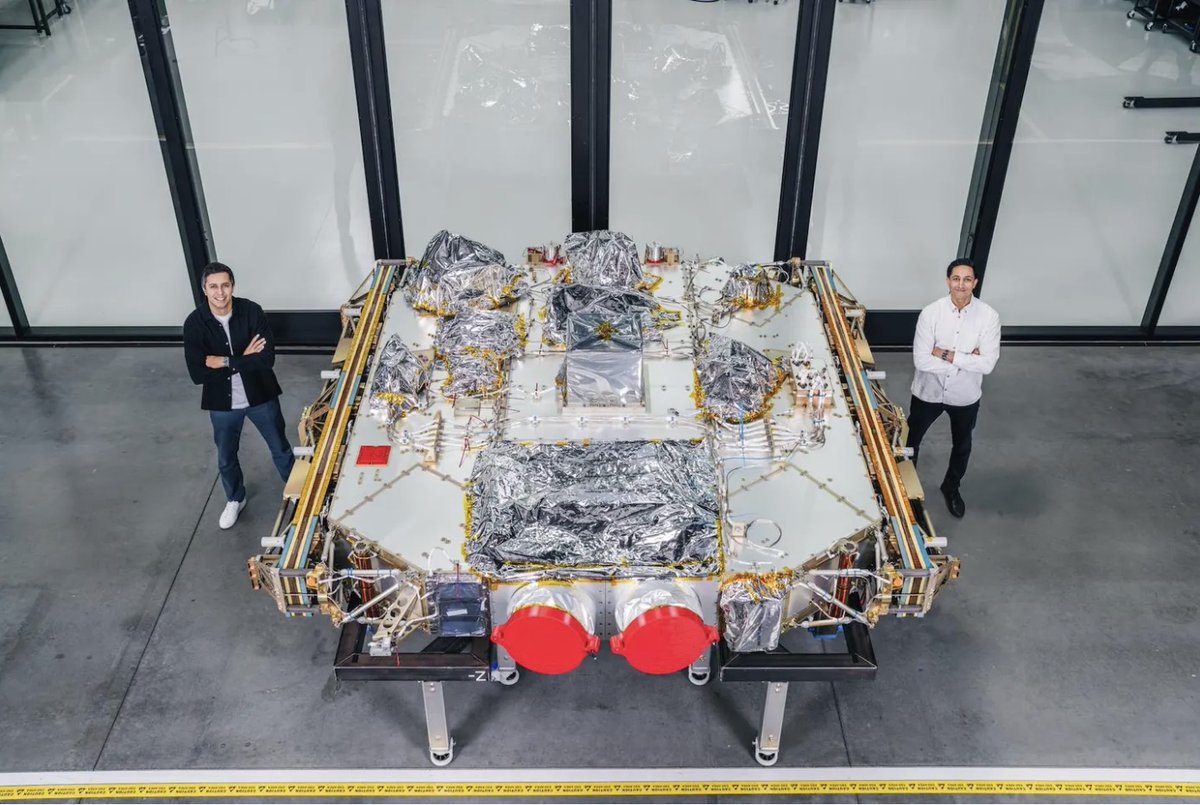
Three years ago, @KaranKunjur and @NeelKunjur pitched me on the idea of building bigger. Today, @k2spaceco has a new $3B valuation (with a $250M Series C round), a business that’s humming (with over $500M in contracts this year), a huge factory where 80% of each satellite is built in-house (right here in the USA), and a massive upcoming Gravitas launch (T-080d as the countdown clock on their slick new website shows). Couldn’t be more proud of all that this team pulled off in 2025. One of the highlights of my year was going down in person to watch the launch of their first mission flying hardware on SpaceX's Transporter-12. 2026 is going to be even bigger. LFG. 🚀 Great write up on all their progress today in Forbes below.
Meka Asonye tweet media
English
10
9
25
4.2K
Meka Asonye retweetledi
Ben Lang
Ben Lang@benln·
Results are in: • @varadh - angel investor • @cyantist - Long Journey • @vsodera - Supercharge • @DStrachman - 1517 • @alanaagoyal - basecase • @edsim, @etdurbin - Boldstart • @darian314, @brackin, @thezbg - Gradient • @jsngr - lil fund • @MaxClaussen - SystemOne VC • @jackmmcclelland - Aforevc • @yoheinakajima - Untapped VC • @BigMekaStyle - First Round • @AmberIllig - The Council Cap • @mashadrokova - DayOne VC • @lessin, @yrechtman - Slow • @taylor_w_c - Abstraction Capital • @jefielding - Everywhere VC • @TurnerNovak - Banana Capital • @calfonsorico - Cocoa VC • @erica_wenger - Park Rangers Cap • @andreasklinger - Prototype Cap • @AstasiaMyers - Felicis • @bryce - Indie VC • @Markgher - MXV Capital • @vedikaja_in - Weekend Fund • @sarahcat21 - Amplify • @hunterwalk - Homebrew • @KatieS - Moxxie Ventures • @kartiktalwar GP - a_capital • @stevenl - SevenStars VC • @reedmcbride - angel investor • @S27G_ - angel investor • @yanatweets - angel investor • @evancharles - angel investor • @NealMintz1 - Wischoff VC • @vaibhavbetter - Better Capital • @mmccauley - Garage Capital • @pgillian____ - Village Global • @soleio - angel investor • @ColinGardiner - Yonder Ventures • @SVenkatachalam - Axiom • @tgm - angel investor • @JamesTamplin - HF0 • @ashleymayer - Coalition VC • @sonyatweetybird - Sequoia • @JamesBorow - angel investor
Ben Lang@benln

Who are the pre-seed / seed investors every founder should want on their cap table these days?

English
115
106
1.3K
340.4K
Meka Asonye retweetledi
Brett Berson
Brett Berson@brettberson·
What does it take to build not one, but multiple multibillion-dollar enterprise companies? @jyotibansalsf has some of the clearest answers, starting with the foundation of any startup: product-market fit: “My definition of product-market fit isn’t about whether we’ve sold the product. It’s about whether we’ve delivered the value we promised after the sale. For most enterprise software products, I’ve found a useful rule of thumb: if you’ve truly delivered value to 25 customers, you have strong product-market fit. Not just sold to 25 customers, but delivered on the results you promised. When you made the sale, you said, ‘Here’s the problem we’ll solve and the ROI you’ll get.’ Three or six months later, if those customers have actually realized that ROI and your product has been successfully implemented, that’s real product-market fit.” In our conversation, we explore nearly every aspect of going from zero to one in the enterprise, from hiring your first salesperson to expanding into multiple products.
English
0
7
33
5.7K