Kagaba Hebert
1.3K posts

Kagaba Hebert
@HebertKagaba1
Just another day to make it happen! Way up! #TeamIneza


"Yo no tengo que pedir disculpas a Mbappé por decir que chupaba cocos en vez de leche materna y solo conocía a chimpancés. Yo vengo de una sociedad donde se le pegaba a los gays y decir negro de mierda era lo más usual". Celeste Amarilla, una senadora ultraderechista paraguaya, aseguró que no tiene que pedirle perdón al jugador francés Mbappé, después de insultarle gravemente de manera racista. Hasta donde llega la enfermedad racista en esta sociedad, para creerte aria por ser un poco menos negro que el de al lado.

Denying that @PaulKagame is the one who stopped the genocide and liberated Rwandans from genocide, is denying that a genocide occurred. For the last 30 years, Rwandans, under his leadership, have lived in peace, joy, and unity, and that is what you call “dictatorship”?


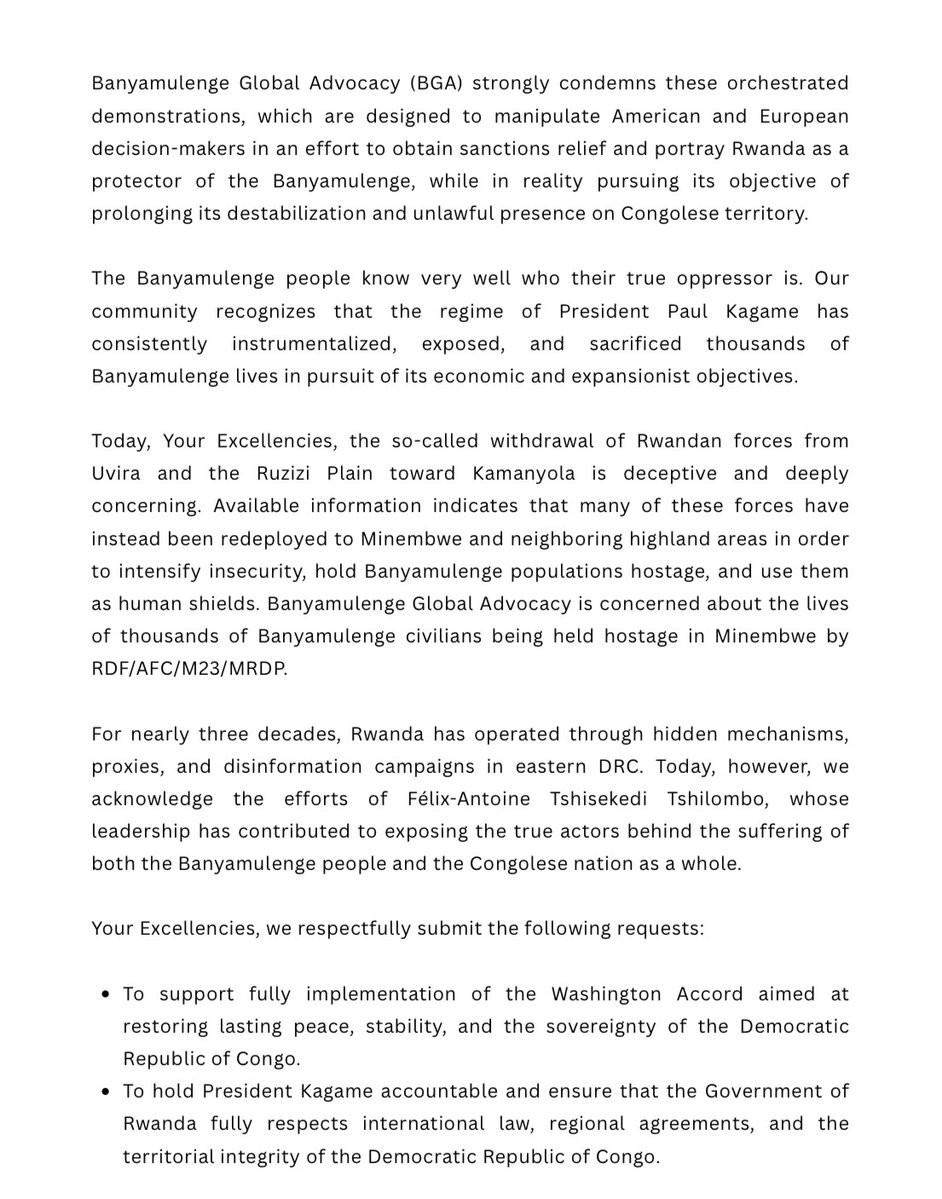
The P5 is described through two competing narratives. One presents it as a coalition of Rwandan opposition armed groups created with the support of the Kabila government through former FARDC intelligence chief Delphin Kahimbi. The other claims that P5 is actually a project established by the Kigali government itself to infiltrate and manipulate the genuine Rwandan opposition. According to testimonies presented before Rwandan courts, P5 forces were organized in Burundi before being deployed to the High Plateau of Minembwe to pretend to be preparing military operations against Rwanda. Kigali’s regime and the Kabila regime also created and infiltrated Burundian opposition groups, such as RED-Tabara and the FNL, deploying them to the High Plateau of Minembwe. These operations were planned in 2016 through cooperation between Kigali and Delphin Kahimbi. Kabila sought to weaken any future successor, build proxy armed groups in eastern DRC, and ultimately facilitate the balkanization of the region if his other objectives failed. Kagame’s objectives included creating a justification for Rwandan military deployment in Minembwe, eastern DRC, manipulating Burundian opposition groups, weakening the unity of the Banyamulenge community, and expanding regional influence through proxy armed groups in order to keep exploiting mineral resources in eastern DRC. Rwanda has repeatedly changed its justification for military involvement in eastern DRC. It first relied on the presence of the FDLR, then shifted to claims of protecting Congolese Tutsi from discrimination and killing. As these explanations lost credibility, Rwanda and its allies—including AFC/M23 and Twigwaneho—are now said to have revived the P5 narrative to justify the continued presence of the Rwanda Defence Force (RDF) in Minembwe and the surrounding areas. The renewed narrative raises several questions. P5 was created under Joseph Kabila’s government, and Kabila is now reportedly moving freely in Rwanda. Why has Kigali never sought to hold him accountable? It also points out that several alleged P5 members stated that the movement had already been dismantled after being relocated to North Kivu in 2016–2017, while senior Rwandan officials, including General Kabarebe, had previously declared that P5 had been completely eliminated. The Government of the Democratic Republic of the Congo, under President Felix Antoine Tshisekedi Tshilombo, does not cooperate with foreign armed groups to destabilize neighboring states. The DRC government maintains its objective of defending the country’s sovereignty, restoring peace and security, and maintaining good relations with its neighbors. The re-emergence of the P5 narrative is presented as an attempt to provide a new political and security justification for Rwanda’s continued military presence in eastern DRC, despite previous official claims that P5 had already been destroyed. @StateDept @SecRubio @US_SrAdvisorAF @USAmbUN @USUN @USEmbKinshasa @US_AU @HouseForeignGOP @SenateForeign @hrw @UNHumanRights @UKinDRC @unjhro @AsstSecStateAF

COMMUNIQUÉ : la #RDC a déposé ce jour devant la #CIJ une requête introductive d’instance contre le #Rwanda au sujet d’un différend concernant «des exactions attribuables au Rwanda sur une période qui s’étend de 1996 à nos jours». Lien vers le communiqué: go.icj-cij.org/4aq0wRX