Holocaust Art Recovery Initiative

638 posts

Holocaust Art Recovery Initiative banner
Holocaust Art Recovery Initiative

Holocaust Art Recovery Initiative

@ArtRecoveryInit

Exposing Holocaust-era art theft. Public evidence, provenance research, and restitution documentation.

Detroit, MI Katılım Temmuz 2025
7.5K Takip Edilen456 Takipçiler
Sabitlenmiş Tweet
Holocaust Art Recovery Initiative
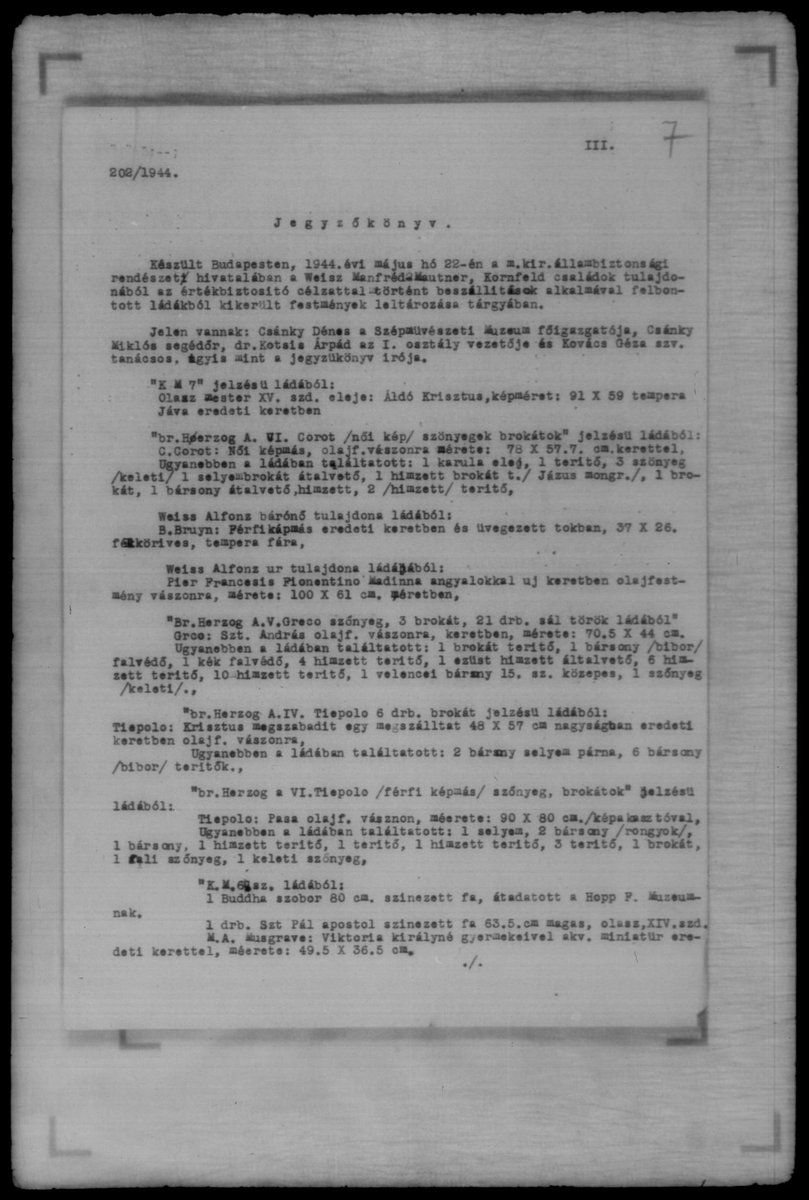
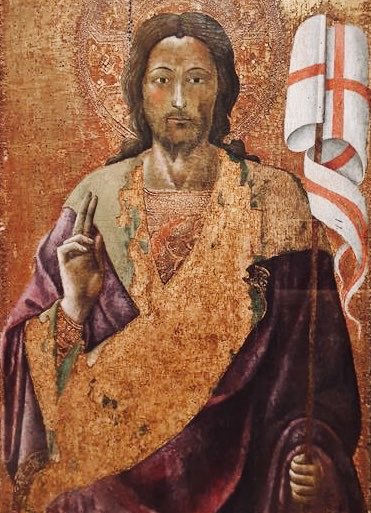
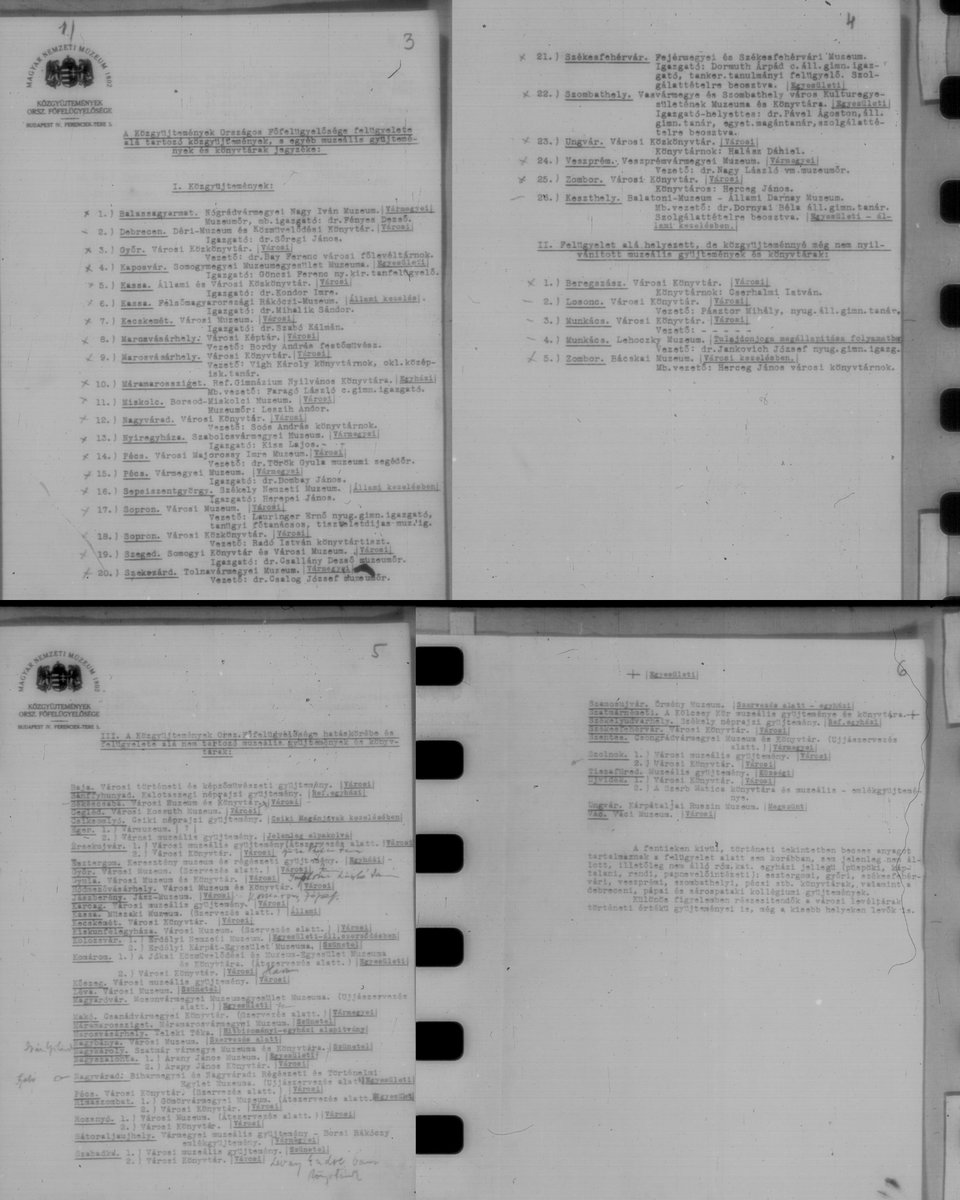
🏛️ THE “BLESSING CHRIST” CASE FILE — FROM A 1944 HOLOCAUST SEIZURE CRATE TO BUDAPEST’S MUSEUM OF FINE ARTS 📜 On May 22, 1944, amid the systematic dispossession and destruction of Hungary’s Jewish community, the Budapest State Security Police compiled protocol 202/1944 K.B. — a bureaucratic inventory documenting artworks removed from the interconnected Herzog, Weiss, Mautner, and Kornfeld collections, among the most important private art holdings in Central Europe. Within the inventory for crate “K M 7” appears the following entry: “Olasz Mester XV. szd. eleje: Áldó Krisztus, képméret: 91 × 59, tempera, jó eredeti keretben.” (“Italian Master, early 15th century: Blessing Christ. Painted surface: 91 × 59 cm. Tempera, in good original frame.”) Eighty years later, a strikingly corresponding Renaissance panel remains in the collection of the Szépművészeti Múzeum (Museum of Fine Arts, Budapest). 🖼️ THE MODERN MUSEUM OBJECT Alvaro Pirez d’Évora (Portuguese-born painter active in Italy, ca. 1410–1434) Title: A feltámadt Krisztus (“The Risen Christ” / “Risen Christ Blessing”) Inventory no.: 51.801 Date: ca. 1430–1435 Medium: Tempera and gold on ash wood panel Painted surface: 90.5 × 59.6 cm Museum records: Hungarian: szepmuveszeti.hu/mutargyak/8591/ English: mfab.hu/artworks/8591/ 📊 THE EVIDENCE OF CORRESPONDENCE This is not simply a general thematic similarity. Multiple archival and physical identifiers converge with unusual precision: • Dimensions:  1944 protocol: 91 × 59 cm  Museum painted surface: 90.5 × 59.6 cm  (a variance of millimeters consistent with wartime handwritten inventories versus modern cataloguing standards) • Subject & iconography:  1944 inventory: “Áldó Krisztus” (“Blessing Christ”)  Museum title: “The Risen Christ” depicted in blessing gesture before a gold ground • Medium & format:  Both records describe an early Renaissance tempera devotional panel • Chronology & attribution:  1944 protocol: “Italian Master, early 15th century”  Museum attribution: Alvaro Pirez d’Évora, active in Italy ca. 1410–1434 • Collection context:  Published museum scholarship references prior association with the Sammlung Moritz Kornfeld (Budapest) — directly overlapping the same confiscation network documented in protocol 202/1944 K.B. Taken together, these factors create one of the strongest unresolved correspondence profiles yet identified within the surviving 1944 seizure archives. 👤 THE FAMILIES BEHIND THE COLLECTION The Herzog, Weiss, Mautner, and Kornfeld families stood at the center of Hungary’s cultural and industrial life before the Holocaust. Their collections contained Renaissance panels, Old Masters, sculpture, decorative arts, and major modern works. In 1944, these collections were systematically inventoried, sealed, transferred, and absorbed into state-controlled custody under the euphemistic language of “protective safeguarding.” Protocol 202/1944 K.B. survives as evidence of that cultural destruction. 🕯️ THE PAINTING Alvaro Pirez d’Évora — also known as Álvaro di Pietro — was a Portuguese-born painter active in Tuscany during the early Renaissance. The painting depicts the standing Christ in blessing posture against a luminous gold background and may once have formed part of a larger devotional ensemble or altarpiece. Museum curator Dóra Sallay has published research on the work in the 2020 exhibition catalogue Alvaro Pirez d’Évora: A Portuguese Painter in Italy on the Eve of the Renaissance. ⚖️ THE PROVENANCE GAP The Szépművészeti Múzeum’s public entry for inv. 51.801 currently omits: • the 1944 confiscation protocol • Holocaust-era seizure and ownership history • wartime custody records • the object’s transfer pathway into museum holdings No public record has yet been identified naming this specific work in the ongoing Herzog restitution litigation. The convergence of match factors makes this one of the most significant unresolved cases identified to date from protocol 202/1944 K.B.
Holocaust Art Recovery Initiative tweet mediaHolocaust Art Recovery Initiative tweet media
English
0
1
3
370
Holocaust Art Recovery Initiative
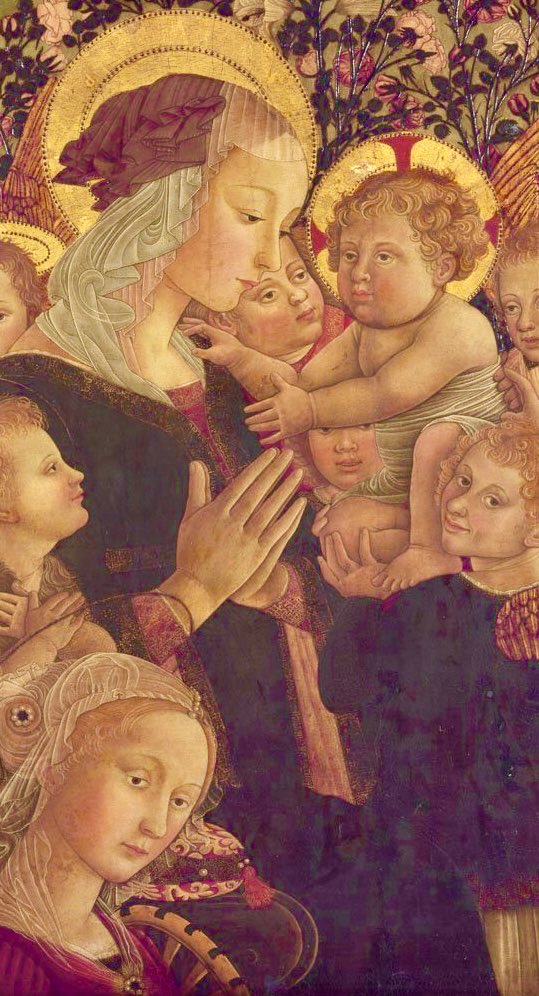
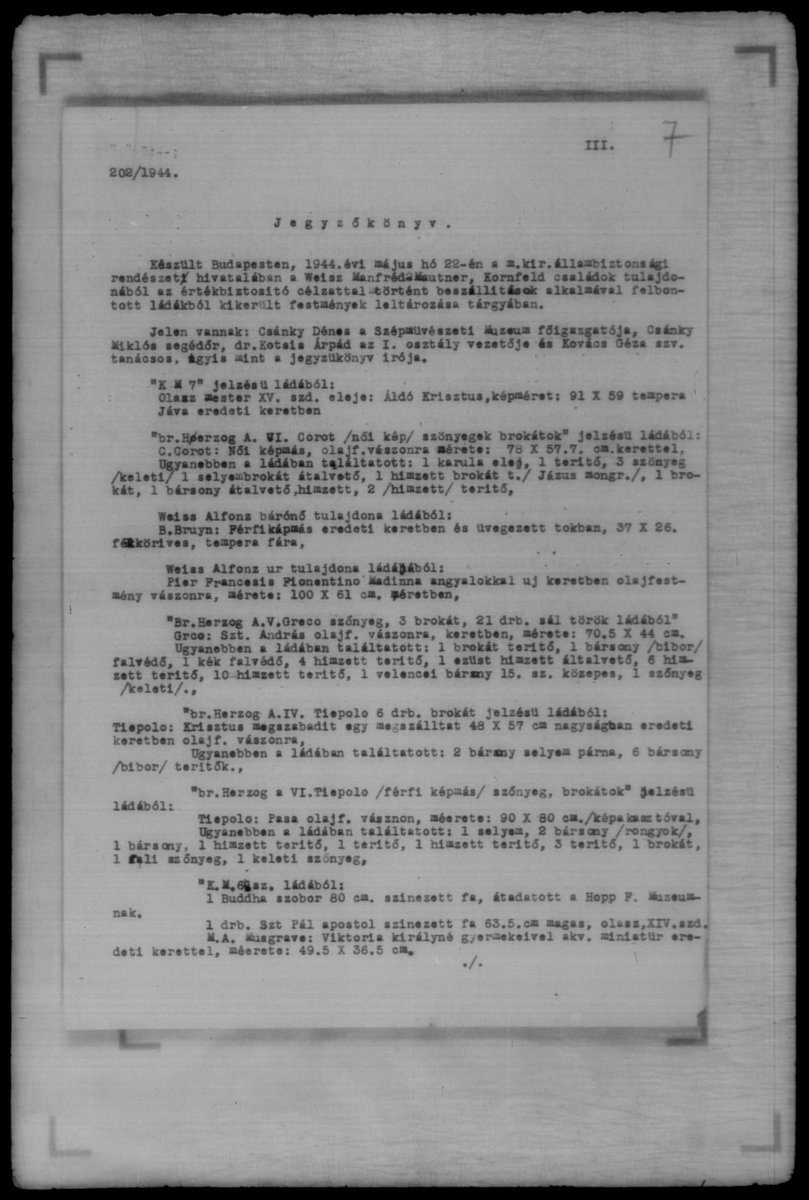
🖼️ A RENAISSANCE MADONNA, A 1944 SEIZURE RECORD, AND THE HERZOG COLLECTION 📜 Newly reviewed archival protocol 202/1944 K.B. (Budapest State Security Police, dated 22 May 1944) documents artworks removed from the Weiss, Kornfeld, and Herzog family properties during the Holocaust in Hungary. The evidence — preserved at the @HolocaustMI — inventories paintings and objects transferred under the bureaucratic framework of wartime “safekeeping” and state control. Among the recorded entries appears: “Pier Francesis Fiorentino Madonna angyalokkal…” (“Pier Francesco Fiorentino — Madonna with Angels”) Oil on canvas, 100 × 61 cm The entry is associated with the Weiss/Herzog collection network connected to the Andrássy út palace holdings in Budapest. 🖼️ CORRESPONDING MUSEUM OBJECT A closely corresponding painting is currently held by the Szépművészeti Múzeum (Museum of Fine Arts, Budapest): Title: Madonna and Child with Saint Catherine of Alexandria, the Infant Saint John the Baptist and Five Angels Artist designation: Lippi-Pesellino Imitator (Pseudo-Pier Francesco Fiorentino) Date: Second half of the 15th century, Florence Medium: Tempera, gold, and oil on canvas (transferred from wood panel) Dimensions: 99 × 60.5 cm Museum inventory no.: SzM. 50.752 Museum record: mfab.hu/artworks/10003/ 📊 OBSERVED CORRESPONDENCE • Protocol entry attribution: “Pier Francesco Fiorentino” • Museum attribution: Pseudo-Pier Francesco Fiorentino / Lippi-Pesellino Imitator • Subject matter: Madonna with angels / Renaissance devotional composition • Dimensions:  Protocol: 100 × 61 cm  Museum object: 99 × 60.5 cm • Institutional context: consistent with 1944 wartime transfers into Hungarian museum custody The dimensional variance falls within the range commonly encountered between wartime handwritten inventories and modern museum cataloguing precision. Taken together, these identifiers support a strongly corresponding object profile warranting full provenance clarification and archival review. 👤 THE HERZOG AND WEISS FAMILIES The Herzog Collection — assembled by Baron Mór Lipót Herzog and connected through family relationships to the Weiss and Kornfeld families — was among the most significant private art collections in Central Europe. During the Holocaust in Hungary, artworks from these collections were systematically inventoried, seized, and transferred into state-controlled repositories and museums under anti-Jewish wartime policies. 🕯️ THE PAINTING The “Lippi-Pesellino Imitator” designation is used by art historians for an anonymous Florentine painter or workshop working in the stylistic tradition of Fra Filippo Lippi and Francesco Pesellino. The composition depicts the Virgin Mary with the Christ Child, Saint Catherine of Alexandria, the infant Saint John the Baptist, angels, and attendant saints within a devotional Renaissance landscape. The museum notes that the work was transferred from wood panel to canvas — a conservation process often undertaken with older Renaissance paintings. ⚖️ LITIGATION AND PROVENANCE STATUS This painting was included within the broader de Csepel v. Republic of Hungary litigation concerning Holocaust-era seizures from the Herzog collection and works presently held in Hungarian state museums. At present, the museum’s public object record does not identify: • the 1944 seizure protocol • Holocaust-era confiscation history • postwar transfer pathway • accession circumstances following wartime seizure The protocol page also references additional objects linked to the same confiscation process, including works attributed to Corot, Tiepolo, Bruyn, and objects transferred to other Hungarian institutions. 🧾 WHY THIS CASE MATTERS Protocol 202/1944 K.B. directly connects Holocaust-era confiscation records to present-day museum holdings. Reconstructing these provenance histories is essential for transparency, historical accuracy, and meaningful restitution. #HEARAct
Holocaust Art Recovery Initiative tweet mediaHolocaust Art Recovery Initiative tweet media
English
0
0
1
109
Holocaust Art Recovery Initiative
Holocaust Art Recovery Initiative@ArtRecoveryInit·
🖼️ HATVANY COLLECTION — 1944 SEIZURE INVENTORY #63 AND A CORRESPONDING PANEL IN THE MUSEUM OF FINE ARTS, BUDAPEST 📜 Entry #63 from the 1944 Hatvany Ferenc seizure inventory (Budapest villa list, page 2) records: “Ismeretlen festő 1500 körül. Szűz Mária halála. Fa, olaj, 93 × 71.” (English: Unknown painter, circa 1500 — Death of the Virgin Mary. Oil on wood panel, 93 × 71 cm.) The work was inventoried during the systematic wartime seizure of Baron Ferenc Hatvany’s collection following the German occupation of Hungary in 1944. 🖼️ CORRESPONDING MUSEUM OBJECT A closely corresponding panel currently held by the Szépművészeti Múzeum (Museum of Fine Arts, Budapest — Old Masters’ Gallery) appears under the title: “Mária halála” (“Death of the Virgin”) Anonymous master, South Tyrolean school, c. 1480–1490 Museum record: szepmuveszeti.hu/mutargyak/1004… Collection inventory no.: 82.5 Museum status: not currently on public display. 📊 OBSERVED CORRESPONDENCE • Subject/title: Death of the Virgin / Mária halála — direct thematic correspondence • Attribution: “Unknown painter around 1500” aligns with anonymous South Tyrolean school attribution, c. 1480–1490 • Medium/support: oil on wood panel (fa, olaj / olaj, fenyőfa — oil on pine wood) — consistent • Dimensions:  1944 inventory: 93 × 71 cm  Museum object: 92.9 × 70.4 cm The sub-centimeter variance is consistent with differences between wartime inventory rounding and modern museum cataloguing precision, particularly for historic wood panels with edge and frame measurement variation. Taken together, these identifiers form a highly corresponding object profile warranting full provenance clarification and archival review. 👤 BARON FERENC HATVANY Baron Ferenc Hatvany was one of Hungary’s most important Jewish collectors and patrons of the arts. His Budapest residence on Andrássy út contained Old Masters, modern Hungarian paintings, and works from major European schools. During the Holocaust-era confiscations of 1944, the collection was systematically inventoried and transferred into state-controlled custody. Significant portions of the collection were later dispersed, transferred, or absorbed into museum holdings during and after the war. 🕯️ THE PANEL The museum attributes the work to an anonymous South Tyrolean master active in the late 15th century. The composition depicts the Dormition / Death of the Virgin Mary, surrounded by mourning Apostles while Christ receives the Virgin’s soul — a devotional theme characteristic of late Gothic Central European painting. The work is catalogued in the museum’s Old Masters’ Gallery Summary Catalogue, Vol. III. ⚖️ PROVENANCE STATUS — OPEN QUESTIONS The museum’s public object page does not presently provide: • acquisition date • wartime transfer history • accession pathway • post-1944 custody history • reference to the Hatvany seizure inventory The museum website further notes that information relating to the object may change as research continues. No public litigation or restitution claim specifically tied to SzM inventory no. 82.5 has been identified in currently available records, although broader restitution efforts involving the Hatvany collection and Hungarian state institutions are well documented. 🧾 WHY THIS ENTRY MATTERS Inventory #63 demonstrates how wartime seizure records, museum collections, and surviving objects can be connected through converging physical and descriptive identifiers across time. Cases of this kind underscore the continuing importance of transparent provenance research, institutional disclosure, and archival access in reconstructing Holocaust-era ownership histories. #HolocaustArtRecovery #HatvanyCollection #ProvenanceResearch #Restitution #WashingtonPrinciples #HungarianArt #SzépművészetiMúzeum #NaziLootedArt #HEARAct @WJRORestitution @NaziLootedArt @brand_arthur @marcorubio @JohnCornyn @RepLaurelLee @RepJerryNadler @nytimesarts @raydowd @NicholasMOD
Holocaust Art Recovery Initiative tweet mediaHolocaust Art Recovery Initiative tweet media
Magyar
0
0
4
780
Holocaust Art Recovery Initiative
Holocaust Art Recovery Initiative@ArtRecoveryInit·
🖼️ RADÓCZY FAMILY INVENTORY — MAGYAR-MANNHEIMER “KOLDUSBARÁT” AND LATER AUCTION RECORD 📜 On November 25, 1944, Hungarian police transferred 143 items from the Radóczy family residence at Budapest II., Pálffy tér (Pálffy Square) to the Szépművészeti Múzeum (Museum of Fine Arts, Budapest). 📂 The associated inventory, preserved on Reel 145 of the Hungarian Holocaust-era microfilm collection (Zekelman Holocaust Center), documents the systematic confiscation and state processing of Jewish-owned cultural property. Among the entries appears: No. 131 — Magyar Mannheimer: Koldusbarát (“Friend of the Beggar” / “Begging Friar”). Oil on paperboard, 19 × 39 cm. 🖼️ RELATED AUCTION RECORD (2018) mutargy.com/mutargy/festme… A painting by Gusztáv Magyar-Mannheimer titled Koldus barát was offered as Lot 338 in Nagyházi Galéria’s auction “Régi mesterek, 19. századi művészek” (Budapest, 28 May 2018): • Oil on cardboard (olaj, karton) • 19 × 38.5 cm • Signed lower left: “Magyar Mannheimer G.” • Includes Nemzeti Szalon (National Salon) exhibition label No. 152, with additional historic label fragments 📊 OBSERVED CORRESPONDENCE (ARCHIVAL SUMMARY) • Inventory No. 131 corresponds to Koldusbarát entry • Title: consistent across archival and auction records • Medium: oil on cardboard/paperboard — consistent • Dimensions: 19 × 39 cm (1944 inventory) vs. 19 × 38.5 cm (2018 auction listing), a minor variance consistent with historical measurement rounding and cataloging practices • Attribution: consistent to Gusztáv Magyar-Mannheimer in both records • Exhibition label reference (Nemzeti Szalon No. 152): present in auction documentation Taken together, these identifiers form a strongly corresponding object profile based on multiple converging characteristics, pending full provenance reconstruction. 🧑‍🎨 THE ARTIST Gusztáv Magyar-Mannheimer (1859–1937), born in Pest to a Jewish family, studied in Budapest, Vienna, and Munich. He exhibited at the National Salon and became known for sensitive genre scenes and depictions of everyday life in late 19th–early 20th century Hungary. 👪 THE RADÓCZY FAMILY The Radóczy family were Jewish residents of Budapest’s II. district. Their documented collection was seized in late 1944 under Arrow Cross-era administrative authority. Reel 145 reflects the structured inventorying and transfer of confiscated cultural property into state custody during the final phase of wartime administration. ⚖️ PROVENANCE STATUS — OPEN QUESTIONS Based on currently available documentation, several areas remain to be clarified: • Full post-1944 chain of custody following transfer into museum holdings • Whether and when the work left institutional custody • Context of the Nemzeti Szalon (National Salon) label (No. 152) within pre-war exhibition history • Degree of Holocaust-era provenance disclosure in later auction catalog descriptions This case represents a high-probability correspondence between a 1944 confiscation entry and a later market appearance, with remaining gaps in postwar custody history requiring further archival verification. 🧾 SIGNIFICANCE Reel 145 illustrates how wartime inventories and later auction records can intersect through shared identifying features across time. This entry underscores the importance of complete provenance chains in confirming object identity with institutional certainty, and the continuing need for transparent reconstruction of wartime-era ownership histories. #HolocaustArtRecovery #ProvenanceResearch #RadóczyFamily #MagyarMannheimer #Restitution #ArtHistory #HEARAct @WJRORestitution @HolocaustMI @NaziLootedArt @nytimesarts @USAmbHungary @marcorubio
Holocaust Art Recovery Initiative tweet mediaHolocaust Art Recovery Initiative tweet media
0
0
4
284
Holocaust Art Recovery Initiative
Holocaust Art Recovery Initiative@ArtRecoveryInit·
🕯️ PROVENANCE QUESTION: Dr. Ágai Béla’s 1944-Looted Michelangelo Kunstwart Portfolios 📌 The case at a glance: Dr. Ágai Béla, a Budapest physician, writer, and art collector, was deported to Auschwitz in 1944 and murdered there. His apartment at Kmetty utca 31 was sealed by the Hungarian Government Commissioner for Jewish Affairs. Among the cultural property removed from his home was a rare two-part Michelangelo portfolio set connected to Der Kunstwart, the influential German arts and culture publication. What happened to Ágai’s library was not vague wartime “loss.” It was documented state seizure. Hungarian authorities catalogued his books and portfolios, signed for them, and transferred them into national institutions through official paperwork that survives today. 📜 The 1944 Archival Record Reel 144, Slide 685, Entry 393 at @HolocaustMI records: “Michelangelo Mappe des Kunstwarts. I. Die Hauptbilder der Sixtinadecke, II. Die Propheten und Sibyllen. Papirmappában 2 db.” In English: Michelangelo, Kunstwart portfolios. Vol. I: The principal images of the Sistine ceiling. Vol. II: The Prophets and Sibyls. In paper portfolios/folders. Two items. The 1944 inventory identifies the object with unusual precision: owner, title, subject, two-part structure, Sistine Chapel contents, and physical format. This is exactly the kind of specificity provenance researchers look for. 🖼️ Where are the Ágai portfolios now? Independent research has identified only two known Hungarian public-collection copies matching this specific Michelangelo Kunstwart portfolio set, including copies held by: National Széchényi Library, Budapest (Országos Széchényi Könyvtár) — Hungary’s national library. Museum of Fine Arts, Budapest Library (Szépművészeti Múzeum Könyvtára) — the library of Hungary’s major state fine-arts museum. That creates a direct provenance question for both institutions: Are the Michelangelo Kunstwart portfolios now held in your collections the same portfolios seized from Dr. Ágai Béla’s apartment in 1944? 🔎 The burden is on the holding institutions The surviving records establish that Dr. Ágai owned this specific two-part Michelangelo Kunstwart portfolio set and that it was removed through the wartime state-seizure process. Under the Washington Principles on Nazi-Confiscated Art, museums and public institutions are expected to identify Nazi-confiscated art, research gaps in provenance, and pursue just and fair solutions. That responsibility cannot depend on heirs or outside researchers doing all the work. The burden now falls on the holding institutions to publish full acquisition documentation showing that their copies were acquired through legitimate prewar or postwar channels — and are not the Ágai portfolios. A vague notation of “old collection,” “prewar holdings,” “unknown acquisition,” or “no information available” is not enough. Full transparency requires disclosure of accession records, shelf records, transfer documentation, wartime intake files, institutional correspondence, ownership markings, stamps, ex libris evidence, and post-1944 cataloguing notes connected to these copies. ⚖️ Why this matters These are not anonymous art books sitting quietly in library stacks. They are potentially documented stolen cultural property from a Holocaust victim whose library was inventoried, removed, and absorbed into the Hungarian state system in 1944. The pattern is familiar across these reels: named Jewish owners, exact inventories, official signatures, institutional transfers, and cultural property disappearing into state collections. Dr. Ágai Béla’s Michelangelo portfolios give us a precise test case. The archival record names the owner. It names the object. It identifies the two parts and the subject matter. It shows the state seizure process at work. Now the holding institutions must answer the provenance question plainly: Are these the Ágai portfolios? If not, publish the records proving it. Transparency is not optional in Holocaust-era provenance research. It is the minimum obligation owed to victims whose collections were taken, catalogued, and redistributed under color of law. The archive has already spoken clearly. It is time for the institutions to do the same. #HolocaustArtRecovery #ProvenanceResearch #LootedArt #Restitution #Michelangelo #Kunstwart #HungarianMuseums #WashingtonPrinciples #HEARAct @WJRORestitution @ClaimsCon @yadvashem @HolocaustMuseum @USAmbHungary @nytimesarts @artnet @WorldJewishCong @SenBlumenthal @RepLaurelLee @marcorubio @UNESCO @nytimesbooks @ahistoryinart @brand_arthur @raydowd @mediciproject @JewishCurrents @JewishJournal @AuschwitzMuseum @RepJerryNadler
Holocaust Art Recovery Initiative tweet mediaHolocaust Art Recovery Initiative tweet mediaHolocaust Art Recovery Initiative tweet media
Română
0
1
4
290
Holocaust Art Recovery Initiative
Holocaust Art Recovery Initiative@ArtRecoveryInit·
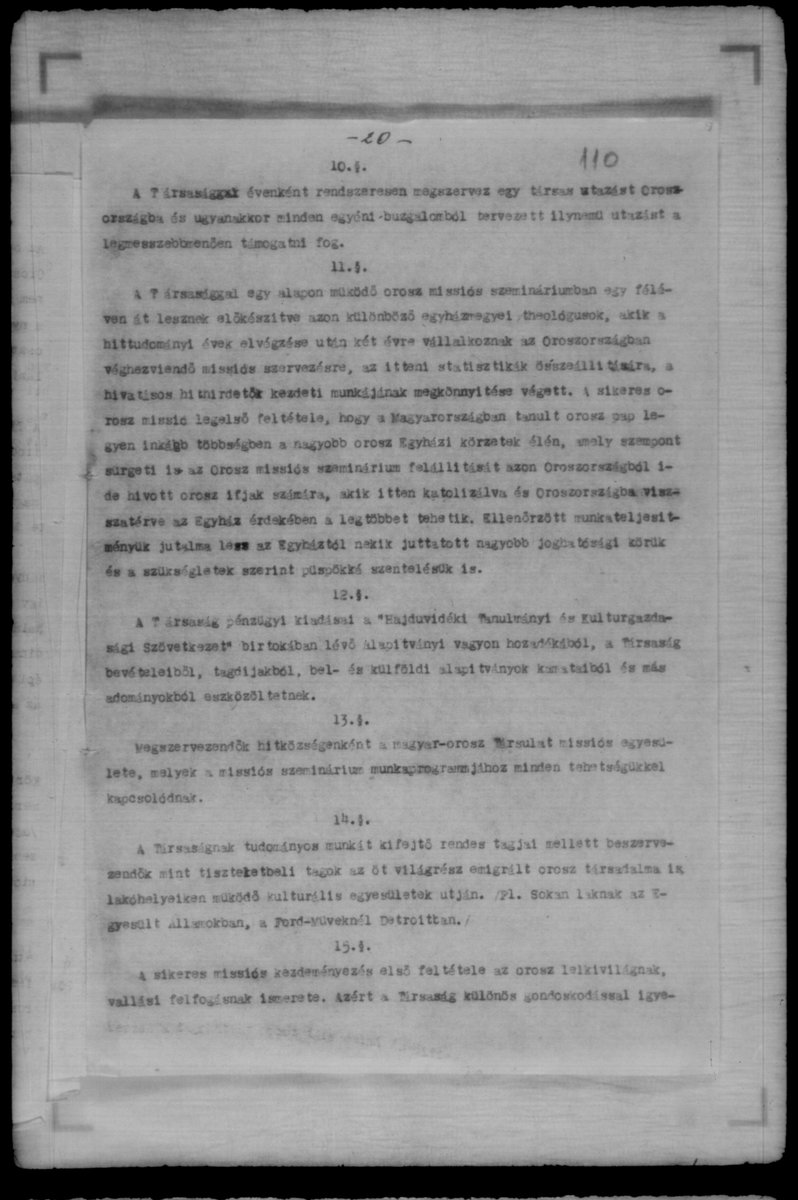
🚗🏭 Detroit, Ford, and the Ideology Behind the Inventories Not a Missing Painting — Something More Disturbing Reel 144, slides 530–556 do not list a missing painting. They reveal something else: the ideological machinery surrounding Hungary’s 1944 seizure bureaucracy. The document proposes a “Hungarian General Cultural-Economic Association” named after P. Bíró Ferenc S.J., a major Hungarian Jesuit organizer. His ideas are invoked to argue that Catholics must enter — and reshape — business, finance, factories, banks, hotels, schools, shops, publishing, and public economic life. On the surface, it sounds like economic renewal. The reality is much darker. ⚠️ Economic “Renewal” as Replacement Earlier pages in the same file portray Jews as controlling Hungarian wealth, commerce, the press, art, literature, fashion, entertainment, and culture. The proposed solution was not coexistence. It was replacement: a Christian-national economic order designed to push Jews out of public, commercial, and cultural life. That is why these pages matter for Holocaust art recovery. Before there were inventories, there was ideology. Before Jewish artworks were reported, sealed, removed, and stolen, Jewish property had already been recast as a “national problem.” Once that lie became official state policy, mass theft could be disguised as administration. 🌍 The Unexpected Detroit Line Then the file takes an unexpected turn. The author proposes a Hungarian-Russian Scientific Society to study Russian language, psychology, church history, and émigré networks for future Catholic mission work. And in §14, one sentence jumps off the page: many Russian émigrés, the document says, lived in the United States — specifically, “at the Ford works in Detroit.” 🚗🏭🇺🇸 This does not make it a Ford art-looting file. It does something subtler: it places Detroit and Ford’s industrial world inside the imagination of a wartime Hungarian Catholic-national network. 🏛️ The Michigan Irony And here lies the historical irony. Eighty years later, the truth hidden in these Hungarian records is being brought to light in Michigan. Clara Garbon-Radnoti — a Hungarian Holocaust survivor, archivist, translator, and co-founder of the Holocaust Art Recovery Initiative — made her life in Michigan. She spent years analyzing these wartime Hungarian microfilms at what is now the @HolocaustMI in Farmington Hills. The wartime document looked toward Detroit’s Ford works as part of a global network of influence. Today, HARI works from Michigan ito expose the paper trail, restore memory, and recover the truth. 🔍 The Real Michigan Connection 🗺️ Detroit appears unexpectedly in wartime Hungarian files. 🚗 Ford’s factories appear as a point of reference in a 1944 transnational plan. 🕯️ Clara Garbon-Radnoti survived the Holocaust and built her life in Michigan. 🏛️ The Zekelman Holocaust Center preserved the microfilm reels. 📜 HARI was founded in Michigan to expose what the 1944 bureaucracy tried to bury. The art-seizure files are not just about objects. They are about the worldview that made seizure possible — and the survivors, archivists, and advocates who refuse to let that worldview have the last word. Theft was preceded by theory. Restitution begins by exposing both. #HolocaustArtRecovery #ProvenanceResearch #ArtRestitution #Detroit #WWIIHistory #ArchivalDiscoveries #HARI #HEARAct #HenryFord @WJRORestitution @HolocaustMuseum @USAmbHungary @CohnHaddow @hnlupovitch @jfederations @WorldJewishCong @Pontifex @BCCAntisemitism @antisemitism @StandWithUs @NYCCTaskForce @HolocaustUK @UNHOP @NaziLootedArt @NewsHourArts @nytimesarts @artnet @_Auto_History_ @edbolian @Yair_Rosenberg @skestenbaum @pawel_sawicki @AuschwitzMuseum @yadvashem @HistoricDetroit @DHSDetroit @SHDetroit @DrHelenFry @aroberts_andrew @SpitfireFilly @authordlewis @RealTimeWWII @HardcoreHistory @WW2Facts @DavidKertzer @geraldposner @yahadinunum @ncph
Holocaust Art Recovery Initiative tweet media
English
0
2
6
398
Holocaust Art Recovery Initiative
Holocaust Art Recovery Initiative@ArtRecoveryInit·
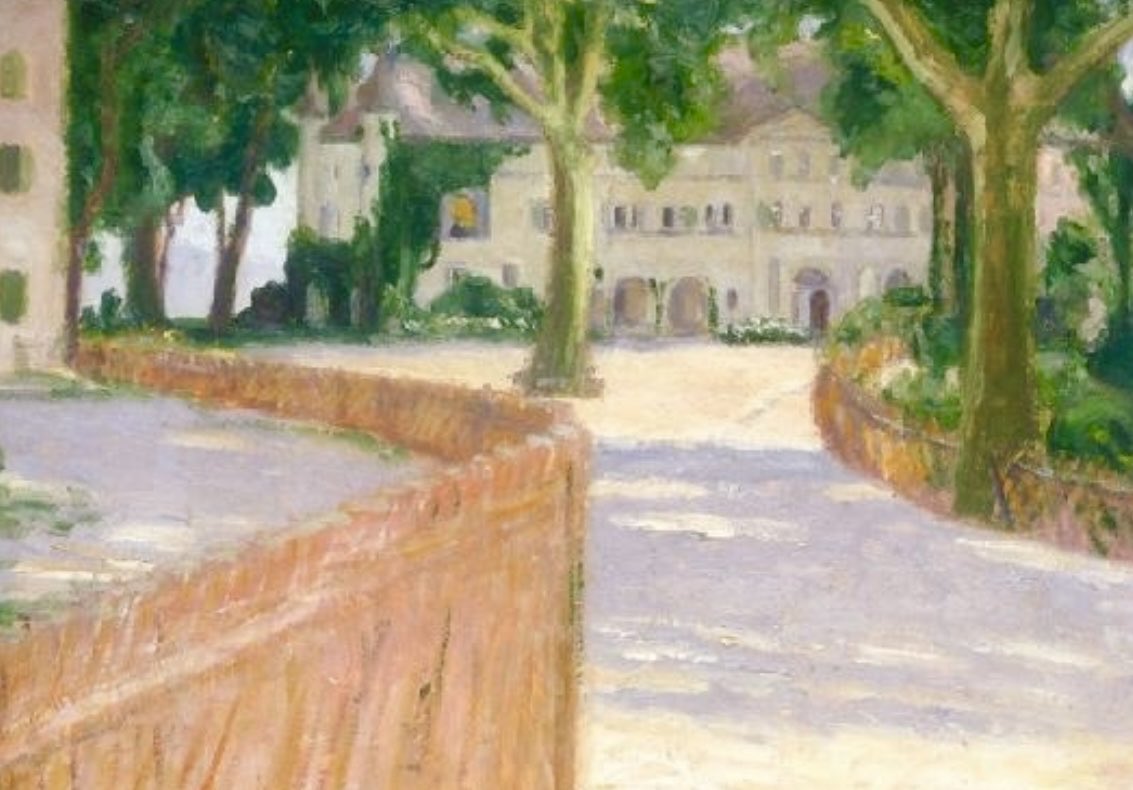
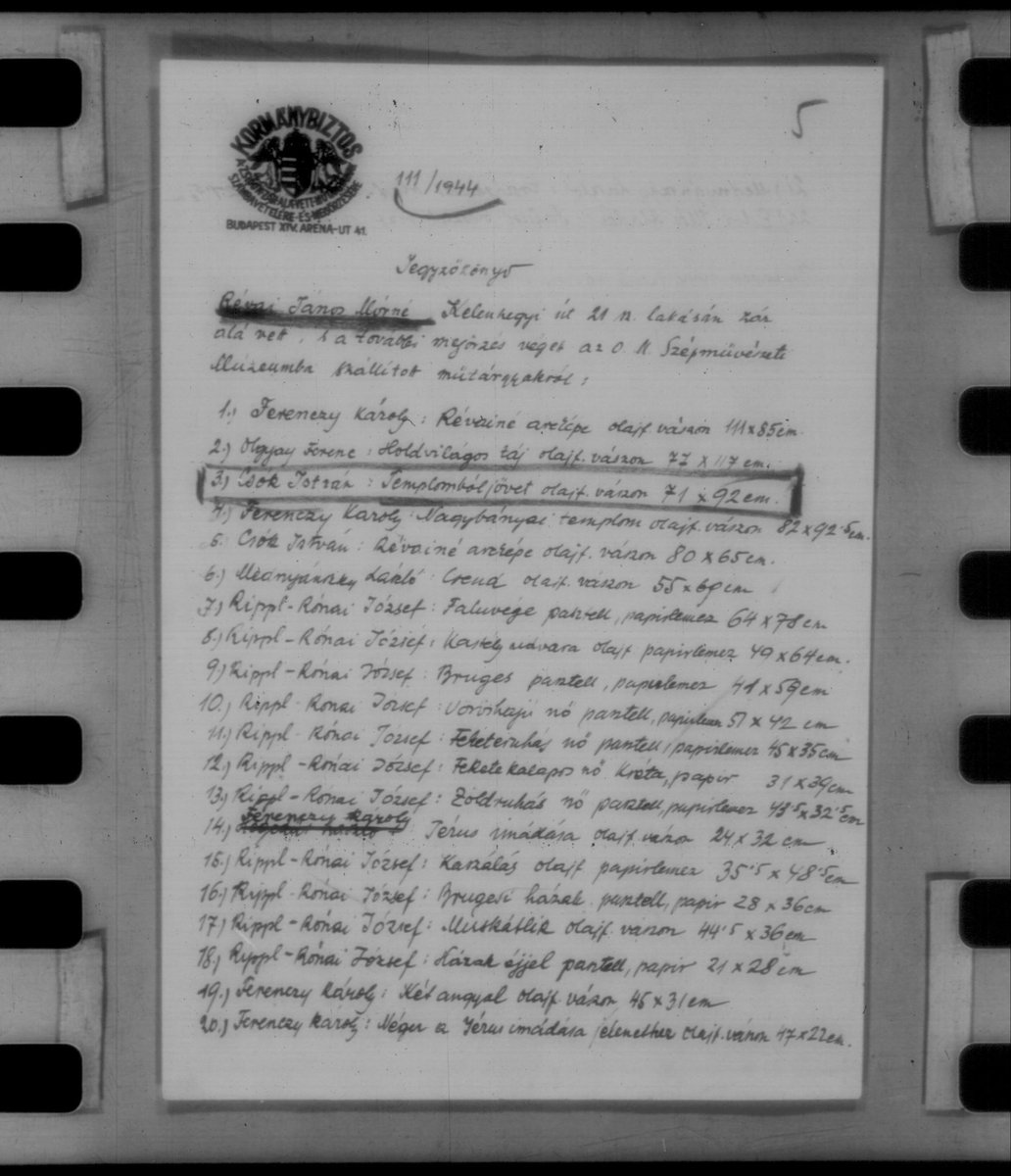
🏛️ EVIDENCE IDENTIFIED: 1944 RÉVAI SEIZURE — RIPPL-RÓNAI “KASTÉLY UDVARA” In July 1944, under decree 1830/1944 M.E., Hungarian authorities seized the art collection of Révai Mór Jánosné from her residence at Kelenhegyi út 21, Budapest. The official inventory (Hungarian National Archives / Magyar Országos Levéltár, K643-1944-111) lists each object in detail. Item #8 is recorded as: Rippl-Rónai József: Kastély udvara (Castle Courtyard). Oil on paperboard, 49 × 64 cm. 🔍 POTENTIAL MATCH: 1944 INVENTORY ↔ CURRENTLY OFFERED WORK A painting offered by Virág Judit Galéria (Lot 225, 25th auction) is described as: • Title: Kastély udvara (also listed as Kastélyudvar / Régi kastély) • Medium: Oil on paperboard (karton) • Dimensions: 49 × 63.5 cm • Signature: “Rónai” (lower right) The gallery listing references “1944-111, 8. tétel”, which corresponds to the archival inventory entry cited above. 🔗 viragjuditgaleria.hu/hu/termek/kast… 📋 OBSERVED CORRESPONDENCES • Title: closely aligned variant forms (Kastély udvara / Kastélyudvar) • Medium: oil on paperboard — consistent • Dimensions: near match (49 × 64 cm vs. 49 × 63.5 cm) • Archival reference: explicit linkage to Item #8 of the 1944 inventory Taken together, these elements suggest a strong prima facie correspondence warranting further provenance verification, rather than a fully confirmed identity. 📜 ARCHIVAL CONTEXT The Révai inventory contains 20+ recorded works seized under wartime administrative authority. Published scholarship, including the Magyar Nemzeti Galéria Évkönyve (1997–2001, pp. 220–221), documents that multiple works from related seizure groups later entered Hungarian institutional collections after 1945. This places the present work within a documented historical framework of wartime seizure and postwar redistribution. ⚖️ PROVENANCE CLARIFICATION REQUEST The 1944 inventory establishes ownership, description, and seizure context. However, the post-1944 chain of custody for this specific work is not publicly documented in full. We call for transparency from: • Virág Judit Galéria • Magyar Nemzeti Galéria (Hungarian National Gallery) • Szépművészeti Múzeum (Museum of Fine Arts, Budapest) Specifically: • Full published provenance (pre-1944 to present) • Any institutional transfer or inventory records between 1944–1950 • Clarification of whether the work passed through state custody following seizure Full provenance disclosure is necessary to resolve the historical record with integrity. #HolocaustArtRecovery #ProvenanceResearch #RipplRónai #RévaiCollection #Restitution #WashingtonPrinciples #HungarianArt #LootedArt #HEARAct @WJRORestitution @marcorubio @nytimesarts @ahistoryinart
Holocaust Art Recovery Initiative tweet mediaHolocaust Art Recovery Initiative tweet media
Magyar
0
0
1
282
Holocaust Art Recovery Initiative
Holocaust Art Recovery Initiative@ArtRecoveryInit·
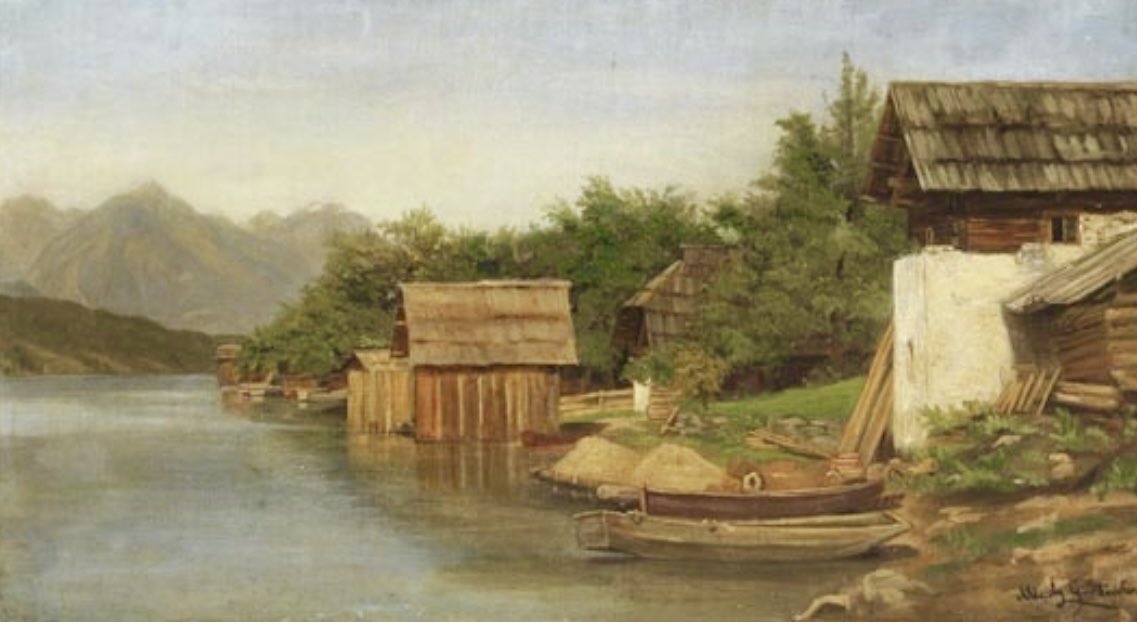
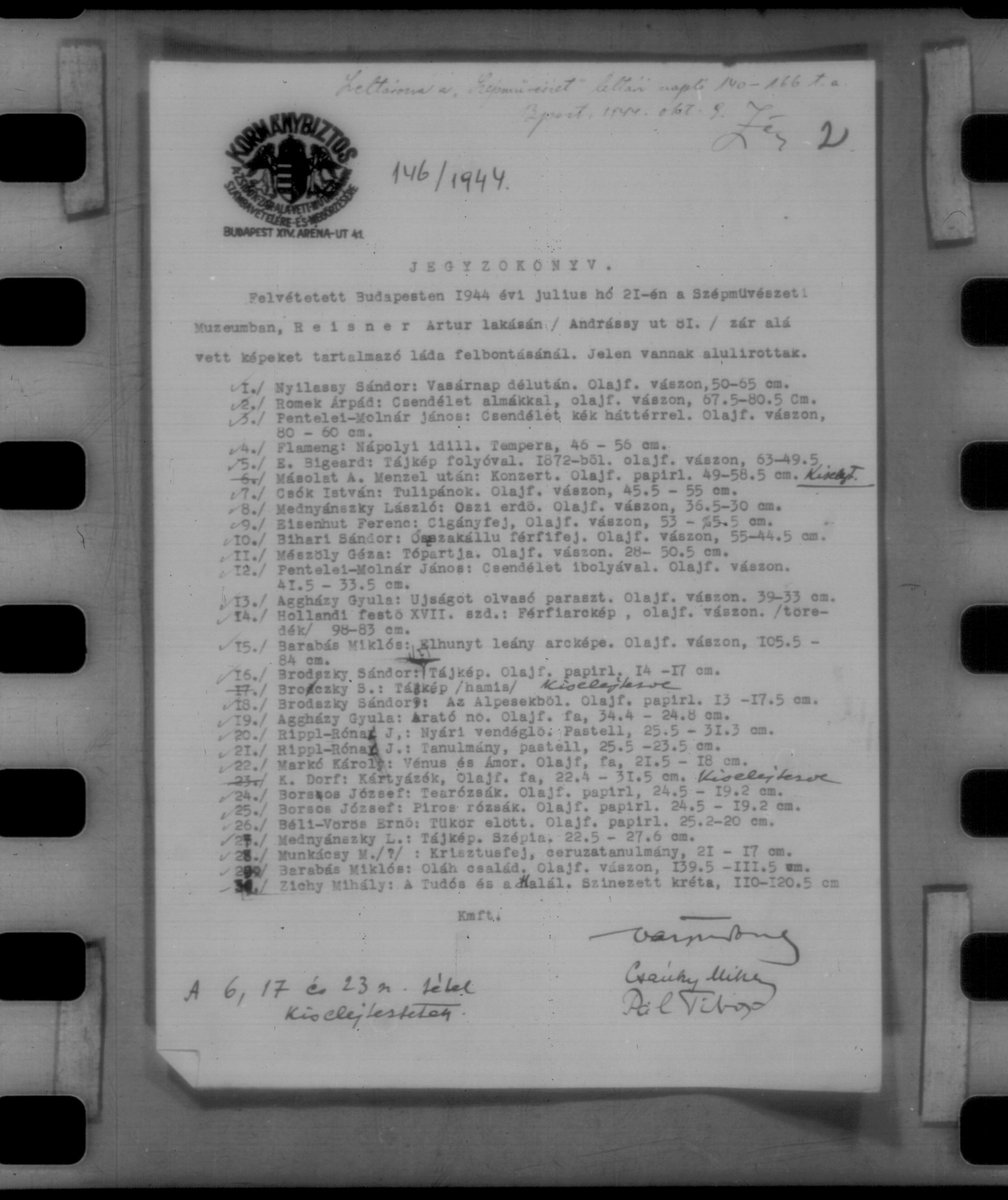
🔎 EVIDENCE IDENTIFIED: 1944 REISNER SEIZURE — MÉSZÖLY “TÓPARTJA” (LAKESIDE) From the official July 21, 1944 Hungarian government inventory (file 146/1944), documenting the seizure of artworks from Artur Reisner (Andrássy út 81, Budapest): 11./ Mészöly Géza: Tópartja. Olajf. vászon, 28–50.5 cm. This is not a general reference. It is a specific, documented object—named, measured, and seized. MATCH CANDIDATE: MÉSZÖLY “TÓPARTJA” (1944 ↔ 2023 AUCTION) Géza Mészöly (1844–1887) — one of Hungary’s leading 19th-century landscape painters, known for atmospheric lakeside scenes, particularly around Lake Balaton. Title: Tópart (Lakeside) Medium: Oil on canvas Dimensions: 28 × 50.5 cm Signature: “Mészöly G. München” (front and reverse) THE CORRESPONDENCE 1944 Inventory: 28 × 50.5 cm Current listing: 28 × 50.5 cm Title: Tópartja → Tópart Medium: Exact Artist: Exact Result: High-probability match candidate based on full alignment of core identifiers. RECENT MARKET APPEARANCE Recently listed at Virág Judit Galéria (Auction 33, December 2023) Starting price: 3,200,000 HUF The public listing contains no reference to: • Artur Reisner • The July 1944 seizure • Transfer to the Museum of Fine Arts, Budapest (Szépművészeti Múzeum) PROVENANCE STATUS: UNACCOUNTED FOR The 1944 record establishes: • Named owner • Exact object • Date of seizure • Receiving institution What is not publicly documented is the post-1944 chain of custody. CALL FOR DISCLOSURE ⚖️ We call upon the Museum of Fine Arts, Budapest (Szépművészeti Múzeum) and the Hungarian Ministry of Culture to produce the full provenance record for this work, including: • 1944–1946 transfer documentation • Accession or deaccession records • Any subsequent sale, release, or reclassification The archival record is precise. The object is identifiable. The provenance gap remains. #HolocaustArtRecovery #ProvenanceResearch #NaziLootedArt #Restitution #Hungary #MészölyGéza #HEARAct @WJRORestitution @nytimesarts @444hu @USAmbHungary @IsraelPresident @WorldJewishCong @marcorubio @JohnCornyn @RepJerryNadler @jaredkushner @elonmusk @grok
Holocaust Art Recovery Initiative tweet mediaHolocaust Art Recovery Initiative tweet media
0
0
3
194
Holocaust Art Recovery Initiative
Holocaust Art Recovery Initiative@ArtRecoveryInit·
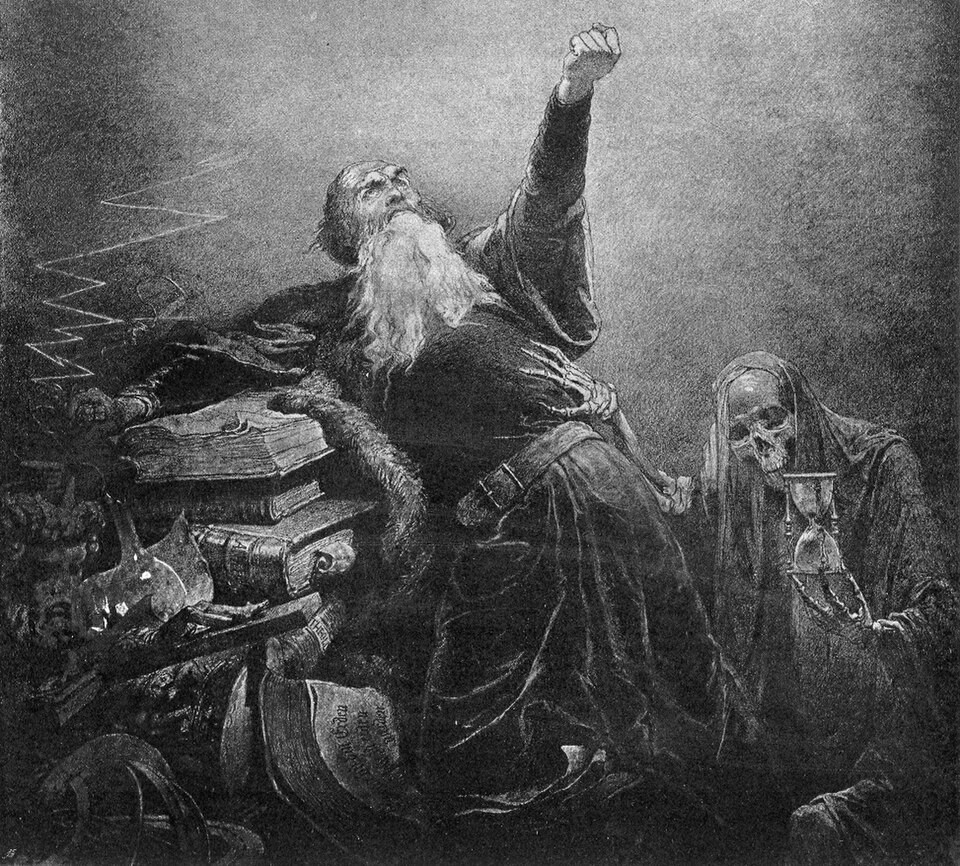
☠️📜 A 1944 Reisner Inventory Entry Points to Zichy’s Faust’s Last Hour The 1944 Seizure Entry On 21 July 1944, Hungarian officials opened a sealed crate of artworks taken from Artur Reisner’s residence at Andrássy út 81 in Budapest and processed through the Szépművészeti Múzeum — the Museum of Fine Arts, Budapest. Inventory Image: pbs.twimg.com/media/HHKxdJaW… The final entry on the page records a major Hungarian artist and a dramatic subject: “Zichy Mihály: A Tudós és a Halál. Színezett kréta, 110–120.5 cm.” In English: Mihály Zichy — The Scholar and Death. Colored chalk, 110 × 120.5 cm. This is not a vague wartime description. It is a named artist, a specific deathbed subject, a colored-chalk medium, and a large-scale measurement with an exact width of 120.5 cm. The Public Match Candidate The work that now demands comparison is Mihály Zichy’s Faust végórája — Faust’s Last Hour — also known as Az emberi tehetetlenség. In 2009, it appeared in the Axioart archive for Nagyházi Galéria és Aukciósház, 154th auction, Régi mesterek és 19–20. századi festmények, held 12 May 2009, Lot 192/256. The auction record lists: Zichy Mihály — Faust végórája, 1870 109.5 × 120.5 cm VÉDETT - NO EXPORT Inscribed: “Zichy a Son ami Atachof le 13. oct. 1870” 🔗muzeumantikvarium.axioart.com/tetel/zichy-mi… Why the Match Matters Artist: The 1944 Reisner inventory names Zichy Mihály. The 2009 auction record also names Zichy Mihály. Subject: The 1944 title is A Tudós és a Halál — The Scholar and Death. The auction title is Faust végórája — Faust’s Last Hour. Faust is the scholar, and the scene centers on death overtaking him. Medium: The 1944 entry says színezett kréta — colored chalk. The auction record presents a large Zichy drawing, not an oil painting. Dimensions: The 1944 record gives 110 × 120.5 cm. The auction record gives 109.5 × 120.5 cm. The width is identical; the height differs by only half a centimeter. Public status: The auction record marks the work “VÉDETT - NO EXPORT” — protected cultural property. That means the work was important enough to be formally restricted from export and should have a protection file. Taken together, these are not casual similarities. They are match factors that require the underlying records: the 1944 museum custody file, the later protection file, and the 2009 auction provenance file. The Title Question “A Tudós és a Halál” is not a competing title so much as a plain description of the image: the scholar and death. “Faust végórája” gives the literary identity of the same kind of scene: Faust at the hour of death. That kind of title movement is exactly why Holocaust-era inventories have to be read against later catalogues, auction records, and protected-object files. The same work can become harder to trace when a descriptive seizure title is later replaced by a literary or art-historical title. The Reisner Context Artur Reisner’s collection entered the 1944 record through seizure, sealing, and museum processing — not through a voluntary sale or ordinary loan. That matters because the comparison does not end with the 2009 auction description. The real question is what happened after the Reisner crate was opened at the Szépművészeti Múzeum — whether the drawing was retained, returned, transferred, released, or otherwise cleared from the wartime custody chain before it later appeared on the Hungarian market. The Missing Paper Trail A work this specific should not have a vague postwar history. The necessary records are concrete: the 1944–1945 custody file, any postwar return, release, transfer, sale, or deaccession documents, the protected-object file, and the provenance materials supplied for the 2009 Nagyházi auction. Those records should answer the central question: whether the 2009 Zichy drawing is unrelated to Reisner item #30, or whether it passed through the 1944 Reisner seizure chain before later resurfacing on the Hungarian market. The Ask We call on the Szépművészeti Múzeum, the relevant Hungarian cultural authorities, and any current custodian of the drawing to publish the provenance record for Zichy Mihály’s Faust végórája / Az emberi tehetetlenség, including any comparison with the 21 July 1944 Reisner inventory. If these are different works, transparency will resolve the question. If they are the same work, then the postwar custody trail must be disclosed and the Reisner history must be confronted. Justice in Holocaust-era art cases begins with the truth. The right thing is to publish the records, acknowledge what happened, and let the history be seen. @WJRORestitution @ClaimsCon @nytimesarts @artnet @JohnCornyn @RepLaurelLee @RepJerryNadler @marcorubio @USAmbHungary @UNESCO @WorldJewishCong @brand_arthur @NicholasMOD @AlexandraSoro @SandraInParis1 @ArtorOtherThing #HolocaustArtRecovery #ProvenanceResearch #LootedArt #ArtRestitution #ZichyMihaly #ZichyMihály #FaustVegoraja #ReisnerCollection #Budapest1944 #WashingtonPrinciples #HEARAct
Holocaust Art Recovery Initiative tweet media
0
0
2
201
Holocaust Art Recovery Initiative
Holocaust Art Recovery Initiative@ArtRecoveryInit·
🔵🏺 Is a 1944 Seizure File the Missing Link to a Painting in a Private Hungarian Collection? 21 July 1944. Andrássy út 81, Budapest. At the Szépművészeti Múzeum — the Museum of Fine Arts, Budapest — officials opened a sealed crate of paintings taken from the residence of Artur Reisner. Item #3 in the official Jegyzőkönyv reads: “Pentelei-Molnár János: Csendélet kék háttérrel. Olajf. vászon, 80 × 60 cm.” Translation: János Pentelei-Molnár — Still Life with Blue Background. Oil on canvas, 80 × 60 cm. That is a remarkably specific lead: artist, subject, blue-background description, medium, and exact dimensions. The strongest public candidate @ArtRecoveryInit has found is: Pentelei-Molnár János — Fehér porcelánok kék háttérrel White Porcelains with Blue Background 1910s Oil on canvas 80 × 60 cm Listed publicly in the Boda József Collection The match profile: Artist: János Pentelei-Molnár — exact match Dimensions: 80 × 60 cm — exact match Medium: oil on canvas — exact match Subject: blue-background still life — direct correlation The title shift is not a contradiction. A clerk in 1944 wrote the plain identifying phrase: still life with blue background. A later title gives the more specific subject: white porcelains with blue background. That may be ordinary cataloguing refinement. It may also make a 1944 seizure trail harder to see unless the records are placed side by side. That is why the file matters. Artur Reisner was not making an ordinary museum deposit. His paintings were taken from his Andrássy út residence, placed under seal, and processed during the 1944 confiscation of Jewish property in Hungary. And because this crate was opened at the Museum of Fine Arts, the museum is the logical place to begin the custody trail. If this is the same painting, the public issue is straightforward: how did a work recorded in a sealed wartime crate at the Museum of Fine Arts later appear in a private Hungarian collection? Was it returned, released, sold, transferred, deaccessioned, or otherwise separated from the Reisner seizure file? We ask the Szépművészeti Múzeum, relevant Hungarian cultural authorities, and any current custodian of the painting to publish the provenance file for Fehér porcelánok kék háttérrel, including: 1️⃣ the 1944–1945 custody trail for Reisner inventory item #3; 2️⃣ any postwar return, release, sale, transfer, or deaccession records; 3️⃣ any documentation showing how the painting entered the Boda József Collection; and 4️⃣ any internal comparison with the 21 July 1944 Reisner protocol. If there is a separate provenance chain, publish it. If not, the 1944 Reisner inventory remains a serious lead. Either way, the file should answer the question. #Holocaust #ProvenanceResearch #NaziLootedArt #ArtRestitution #PenteleiMolnár #Hungary1944 #WashingtonPrinciples #HEARAct @nytimesarts @WJRORestitution @USAmbHungary @raydowd @ahistoryinart @Telexhu @UNESCO
Holocaust Art Recovery Initiative tweet mediaHolocaust Art Recovery Initiative tweet media
0
1
5
465
Holocaust Art Recovery Initiative
Holocaust Art Recovery Initiative@ArtRecoveryInit·
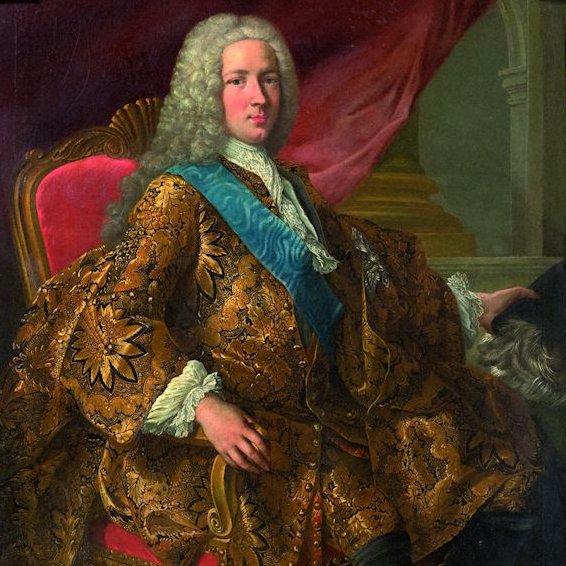
🧾🎨 A Van Loo Portrait on the Budapest Market — and a 1944 Herzog Seizure Record That Demands Answers 1944 Seizure Record On 24 June 1944, Hungarian authorities recorded the following item from the residence of Baron István Herzog (Szemlőhegy utca 29/b): “12./ Van Loo: Fejedelem képmása. Olajf. vászon, 137 – 111,5 cm.” (Portrait of a Prince/Ruler, oil on canvas) Market Record (2017) Kieselbach Gallery (Budapest), 56th Autumn Auction, 8 Oct 2017, Lot 195: Attributed to Louis-Michel van Loo (1707–1771) Portrait of a Spanish Aristocrat Oil on canvas, 137.5 × 111.5 cm 🔗 kieselbach.hu/artwork/portra… Why This Deserves Scrutiny • Dimensions: 137 × 111.5 cm (1944) vs. 137.5 × 111.5 cm (2017) — effectively identical. • Title drift: “Fejedelem képmása” → aristocratic or royal portrait; consistent with Bourbon court subjects painted by van Loo. • Attribution: “Van Loo” in the 1944 record → later refined to Louis-Michel van Loo. • Provenance signal: The 2017 auction record notes prior Herzog Collection ownership and references the 1944 seizure under the Zsidó Kormánybiztosság. This is a document-based provenance lead tied directly to a Holocaust-era seizure record. The Transparency Question The 2017 auction record acknowledges the Herzog connection and expressly references the 1944 seizure. But acknowledgment is not the same as provenance resolution. The public record still does not show how a painting documented in a Holocaust-era seizure record moved from wartime state-controlled custody back into the private market. This leads to the fundamental question that remains unanswered: By what specific legal mechanism did this painting exit the Hungarian State’s custody? Unless there is a documented record of the painting being formally released or restituted to the Herzog family, its appearance on the auction block is a sign of a broken chain of title. The records must answer whether this was a legal restitution to the heirs, an unauthorized "leak" from a state repository, or a de facto sale of a stolen asset by the state itself. Records Request We respectfully call on the Szépművészeti Múzeum (Museum of Fine Arts, Budapest) and relevant Hungarian authorities to publish: 1️⃣ Intake Documentation: All 1944–1945 transfer, custody, and accession records documenting the painting's entry into state repositories from the Herzog residence. 2️⃣ Authorization of Exit: Any postwar documentation justifying the work's exit from state control, including formal restitution receipts, museum deaccession logs, or records of state-authorized sales. 3️⃣ Chain of Title: The complete provenance file and internal "history of ownership" that supported the painting’s reappearance on the Budapest market in 2017. The documents exist. The object has resurfaced. The full history in between should be public. #HolocaustArtRecovery #HerzogCollection #ProvenanceResearch #NaziLootedArt #VanLoo #ArtRestitution #SzépművészetiMúzeum #HEARAct @nytimesarts @JohnCornyn @SenBlumenthal @RepLaurelLee @RepJerryNadler @WJRORestitution @artnet @brand_arthur @raydowd @NicholasMOD @ArtHistoryProf @artlawalex @Telexhu @444hu @USAmbHungary @magyarpeterMP @marcorubio @tedcruz @WorldJewishCong @SCOTUSblog @jacobkornbluh @AlbertBaram @sara_lustig @CathyHickley @reporterfield @yivoinstitute
Holocaust Art Recovery Initiative tweet mediaHolocaust Art Recovery Initiative tweet media
English
0
0
1
551
Holocaust Art Recovery Initiative
Holocaust Art Recovery Initiative@ArtRecoveryInit·
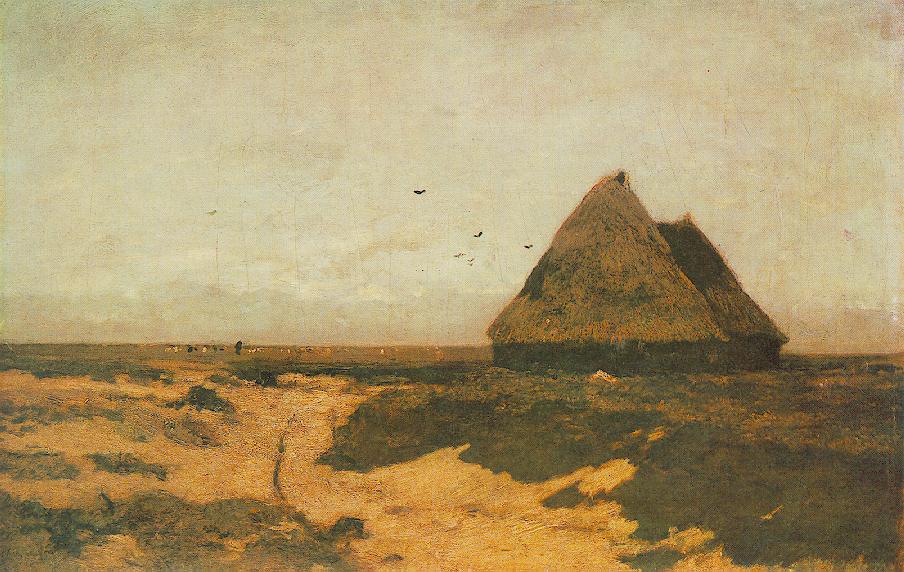
🐑🧾 Herzog Inventory #8 and László Paál’s Sheepfolds in the Hungarian National Gallery 1944 Record: On 24 July 1944, Hungarian authorities recorded the seizure from Baron István Herzog’s residence of: “8./ Paál László: Alföldi táj. Olajf. vászon, 58 – 95 cm.” “Alföldi táj” is a generic inventory label: a landscape of the Great Hungarian Plain. Museum Candidate Today: Magyar Nemzeti Galéria (Hungarian National Gallery), Budapest: László Paál – Sheepfolds (Juhaklok), 1872 Oil on canvas Object no. 60.138T The painting shows sheep dispersed across an open plain. 🔗commons.wikimedia.org/wiki/File:Pa%C… Why This Deserves Scrutiny: • Artist: exact match. • Format: horizontal landscape. • Title drift: the 1944 protocol uses a generic descriptor; the modern title identifies the specific motif. • Dimensions: the 1944 record gives 58 × 95 cm. Current public references vary slightly between 58 × 95.4 cm and 58.5 × 94.5 cm — both very close. • Medium/support: oil on canvas. This is not a vague resemblance. It is a precise archival lead that demands explanation. The Transparency Question: The published museum record identifies the painting, but it does not publicly account for the work’s documented Holocaust-era seizure and wartime transfer. Records Request: We ask the Hungarian National Gallery and the Szépművészeti Múzeum (Museum of Fine Arts, Budapest) to publish: 1️⃣ All accession, deposit, transfer, and deaccession records tied to this work. 2️⃣ Its wartime and immediate postwar location history. 3️⃣ Any internal provenance research or cross-reference to the 24 July 1944 Herzog protocol. The documents exist. The match is clear enough to investigate. The history in between should be made public. #HolocaustArtRecovery #HerzogCollection #NaziLootedArt #ProvenanceResearch #MagyarNemzetiGaleria #LaszloPaal #WashingtonPrinciples @WJRORestitution @USAmbHungary @444hu @UNESCO @Mazsihisz @WorldJewishCong @JohnCornyn @RepLaurelLee @RepJerryNadler @tedcruz
Holocaust Art Recovery Initiative tweet mediaHolocaust Art Recovery Initiative tweet media
Magyar
0
1
1
461
Holocaust Art Recovery Initiative
Holocaust Art Recovery Initiative@ArtRecoveryInit·
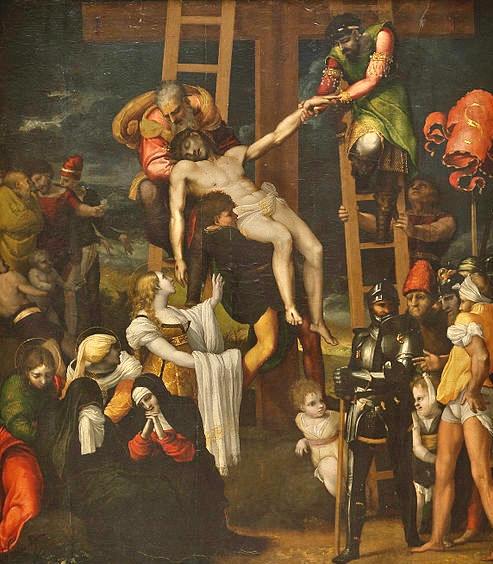
🚨🖼️ PROVENANCE ALERT: Herzog Inventory #9 — the 1944 “Pedro da Campagna” Keresztlevétel may point to the Prado’s Pedro Machuca, The Descent from the Cross (inv. P003017) On 24 July 1944, during the Nazi occupation of Hungary, Hungarian authorities entered the residence of Baron István Herzog at Szemlőhegy út 29/b and compiled an official Jegyzőkönyv recording artworks seized and transferred to the Szépművészeti Múzeum (Museum of Fine Arts, Budapest). 📜 Item #9 is recorded as: “9./ Pedro da Campagna: Keresztlevétel. Olajf. fs, 141–129 cm.” This is a document-based identification, not a speculative resemblance. 🔎 Why this Match Candidate at the Museo Nacional del Prado (“the Prado”), Madrid deserves scrutiny: Link🔗: museodelprado.es/en/the-collect… • Subject: 1944 inventory: Keresztlevétel (“Descent from the Cross”) Prado today: The Descent from the Cross • Support: 1944: oil on panel Prado: oil on panel • Dimensions: 1944: 141 × 129 cm Prado: 141 × 128 cm A 1 cm variance is well within normal archival measurement drift. • Attribution drift: The 1944 inventory uses “Pedro da Campagna,” a period attribution associated with Pedro/Pieter Campaña (Kempeneer). The Prado now attributes the painting to Pedro Machuca. For sixteenth-century Spanish/Flemish material, that kind of historical attribution shift is exactly the kind of issue that demands document-level review, not dismissal. 🏛️ The Prado’s current published provenance reads: “Gourgeois Frères, Paris, 1870; baron M. de Herzog, Budapest; Dimitri Angelupulo; collection of Palermo, early century XX; acquired by the Patronado of the Prado Museum, 1961.” But if the 24 July 1944 Budapest seizure record refers to this same painting, then the currently published provenance does not explain the work’s documented presence in Budapest in 1944. What is missing is not a footnote. It is a public explanation for the painting’s documented 1944 custody in Budapest. We call on the Museo del Prado and the Szépművészeti Múzeum to publish: 1️⃣ All accession, deposit, transfer, and deaccession records tied to Herzog Inventory #9 2️⃣ Any post-1945 documentation showing where this painting was held, moved, sold, or exhibited 3️⃣ The complete provenance file underlying Prado inv. P003017 4️⃣ Any Budapest museum records connecting the July 1944 Herzog seizure to a later transfer abroad This is not an accusation. It is a document-based request for transparency. The records exist. The overlap is too close to ignore. The public deserves the full chain. #HolocaustArtRecovery #HerzogCollection #ProvenanceResearch #NaziLootedArt #WWIIArtRestitution #MuseoDelPrado #WashingtonPrinciples #TerezinDeclaration #PedroMachuca #ArtRecovery @WJRORestitution @marcorubio @JohnCornyn @RepJerryNadler @UNESCO @tedcruz @nytimesarts @artnet @USAmbHungary @CathyHickley @elpais_cultura @elmundoes @eldiarioCultura @Telexhu @BBCWorld @cnni @fcjecom @BarcelonaJudia @IsraelinSpain @jfederations
Holocaust Art Recovery Initiative tweet mediaHolocaust Art Recovery Initiative tweet media
English
0
0
4
875
Holocaust Art Recovery Initiative
Holocaust Art Recovery Initiative@ArtRecoveryInit·
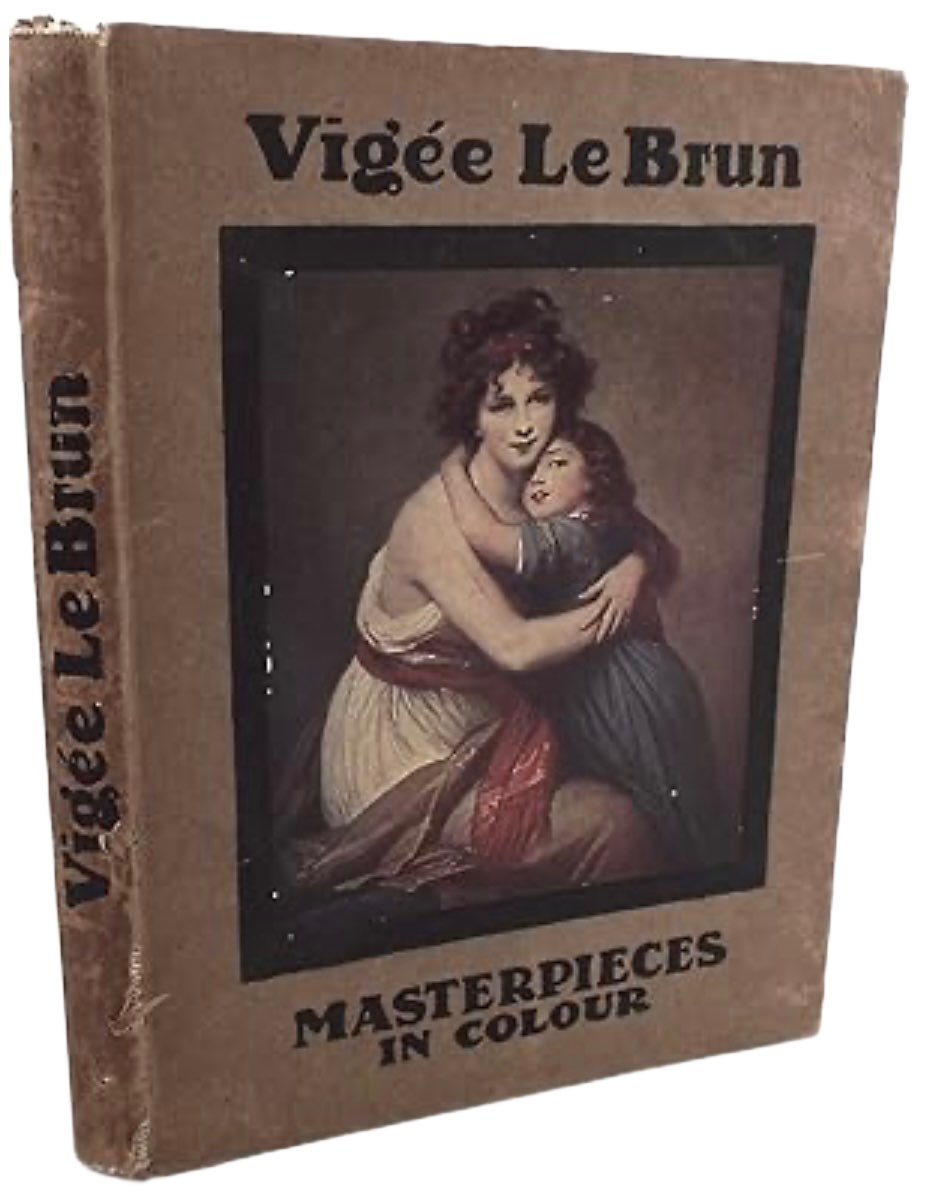
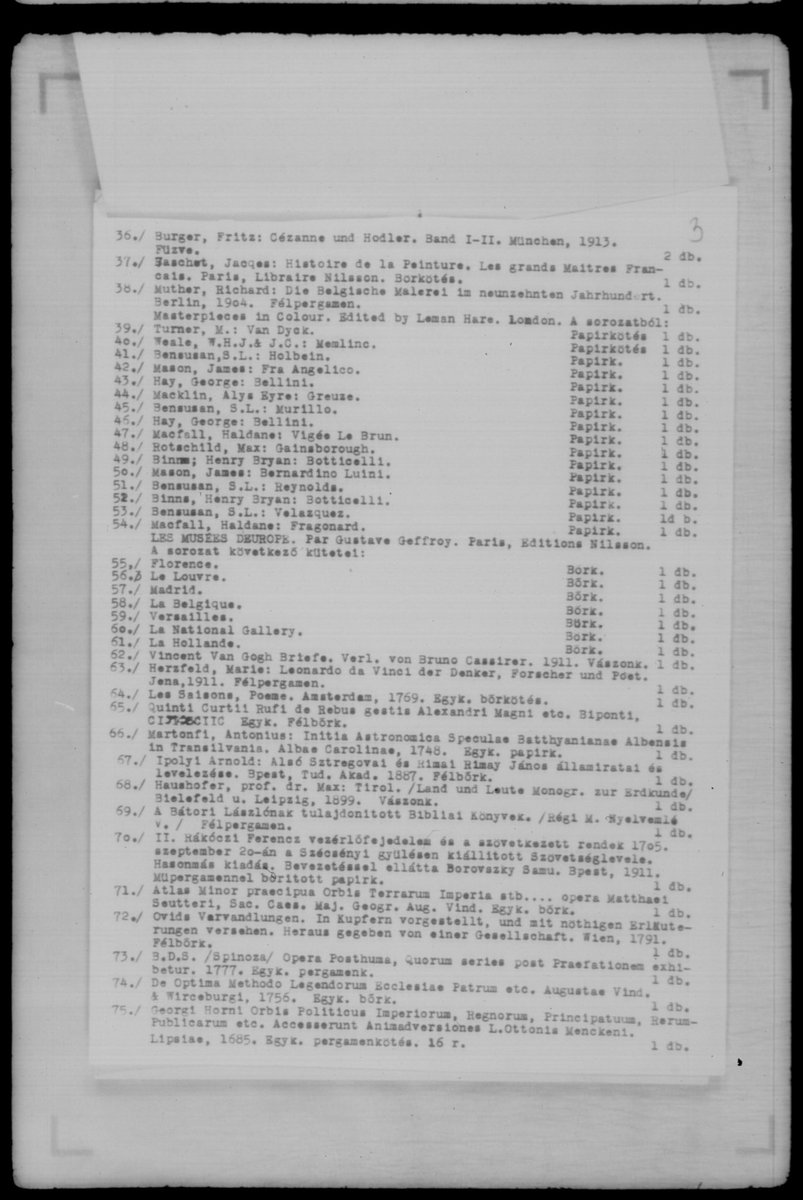
🕯️ Seized in 1944, Sent to the Museum: Where Is Hatvany Deutsch’s Vigée Le Brun Monograph Today? On 17 October 1944, the private library of Baroness Hatvany Deutsch Károlyné was seized from her residence on Lánchíd utca in Budapest and transferred under guard to the Szépművészeti Múzeum (Museum of Fine Arts, Budapest). The official inventory — preserved on microfilm (Reel 143, slides 45–46) — records the collection line by line. Among them: 47./ Macfall, Haldane: Vigée Le Brun. Papirk. 1 db. 🕯️ The victim The Hatvany-Deutsch family were among Hungary’s leading Jewish patrons of art, literature, and scholarship. Their collections—paintings, archives, and libraries—reflected decades of cultural engagement at the highest level. Like the Herzog collection and others, this was not a passive loss. It was a documented, state-directed seizure carried out under antisemitic decrees in 1944, as families were dispossessed and persecuted. This book was part of that removal. 🎨 The artist and the book This entry refers to Haldane Macfall’s illustrated monograph on Élisabeth Vigée Le Brun (1755–1842), one of the most important portrait painters of the 18th century and the official artist to Marie Antoinette. Vigée Le Brun’s life was defined by displacement and defiance. Forced into exile during the French Revolution, she painted her way across Europe, becoming a rare female member of the era's great academies. It is a bitter irony that a book documenting her survival was seized during the 1944 dispossession of the Hatvany Deutsch family. Macfall’s volume—part of the early 20th-century “Masterpieces in Colour” series—brought her work to a wide audience through color reproductions. Typically: - Small-format, paper-bound volume - Issued with color plates of key works - A standard reference in serious private libraries 📂 What the record proves The 1944 documentation establishes: - Ownership by a named Jewish collector - Seizure from a specific address - Transfer into the custody of the Museum of Fine Arts, Budapest This chain is clear as of October 1944. 🔍 What is not publicly documented A review of auction records, library catalogues, and market listings reveals no publicly available chain of custody for this specific item after its transfer into museum custody. 🕯️ Why this matters This is not an abstract cultural loss. It is a specific object, taken from a named individual, with a documented destination. Books like this often retain identifying marks—bookplates, stamps, shelf numbers—that can directly connect surviving copies to their original owners. The starting point is known. The rest should be traceable. ⚖️ Request for disclosure We ask the Szépművészeti Múzeum (Museum of Fine Arts, Budapest) and relevant authorities to: - Publish records relating to the Hatvany Deutsch library intake (October 1944) - Disclose any 1944–1946 accession or transfer documentation - State clearly whether this volume remains in, or passed through, museum custody The 1944 inventory left a precise trail to the museum’s doors. It is now a matter of professional and historical transparency to document the path of this book since its arrival. #Holocaust #WashingtonPrinciples #HEARAct #ProvenanceResearch #HatvanyDeutsch #VigéeLeBrun #Restitution @WJRORestitution @HolocaustMI @marcorubio @USAmbHungary
Holocaust Art Recovery Initiative tweet mediaHolocaust Art Recovery Initiative tweet media
0
0
3
356
Holocaust Art Recovery Initiative
Holocaust Art Recovery Initiative@ArtRecoveryInit·
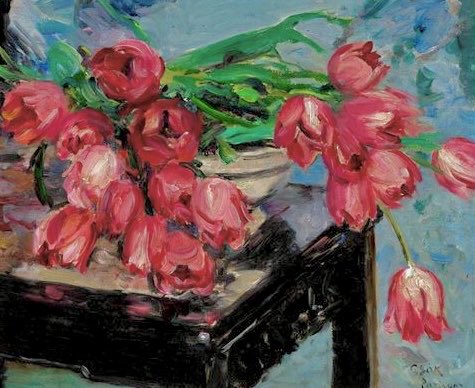
🕯️ The 0.5 cm Match: Is this Artur Reisner’s stolen “Tulipánok” by Csók? 🔍 A 1944 Nazi-era inventory from Budapest lists: #7: Csók István — Tulipánok Oil on canvas, 45.5 × 55 cm We have identified a closely corresponding work that surfaced at auction in 2025. 📜 The 1944 Record (Primary Source) From the July 1944 seizure inventory (Szépművészeti Múzeum file 146/1944; Andrássy út 81), documenting property taken from Jewish collector Artur Reisner: “Csók István: Tulipánok. Olajf. vászon, 45,5–55 cm.” The entry is explicit. No notation of a copy, study, or variant. This was recorded as a finished painting and transferred with the collection. 🖼️ 2025 Auction Candidate Csók István — Tulipánok, 1907 Oil on canvas, 46 × 55 cm Signed: “Csók Paris 907” 📅 Sold: 3 December 2025 — BÁV ART, 86th Fine Art Auction 🔍 Points of Convergence The comparison is straightforward: •Dimensions: 45.5 × 55 cm (1944) vs. 46 × 55 cm (2025) •Title & medium: Exact •Period: Consistent with Csók’s Paris-era floral works •Public record: No clearly documented museum-held counterpart at this size The 0.5 cm variance is well within normal measurement tolerance for canvases recorded under different conditions. ⚠️ The Provenance Gap Despite the work’s quality and exhibition-era significance, the 2025 auction record is silent on its whereabouts between 1907 and the modern market. That silence matters. A painting documented in a 1944 confiscation inventory should not reappear decades later without a clear account of how it moved through — or around — institutional custody. 🎨 Context István Csók was a leading figure of Hungarian Impressionism, working between Paris and Budapest. His early 20th-century tulip still lifes—marked by saturated color and loose brushwork—were widely exhibited and are well documented. 📂 Key Questions •Did a painting matching this description enter museum custody after the 1944 seizure? •Was it part of the unaccounted or omitted inventory during 1944–45 transfers? •What is the complete chain of custody from 1907 to 2025? These are questions of record, not speculation. 🏛️ Call for Professional Transparency Under the Washington Principles, the burden shifts when a work aligns this closely with a documented seizure record. We call for disclosure of: •1944–45 transfer and intake records •Any postwar inventory or deaccession documentation •Full ownership history prior to the 2025 sale Relevant parties include: • BÁV ART Aukciósház • Szépművészeti Múzeum / Magyar Nemzeti Galéria • The current holder of the artwork • Scholars with access to Csók archival material A single inventory line and a single painting are not conclusions on their own. But when the details align this closely, they narrow the possibilities—and shift the discussion from coincidence to documentation. Artur Reisner’s collection was erased by force, but the trail it left behind is indelible. The question is no longer whether the paper trail exists—it’s whether we have the courage to follow it to the end. Restitution is more than a return of property; it is a return of history. The 1944 inventory was written to finalize a theft. We use it today to restore a truth that refuses to stay buried. #HolocaustArtRestitution #WashingtonPrinciples #ProvenanceResearch #CsókIstván #ArtRecoveryInit #HEARAct @marcorubio @JohnCornyn @RepLaurelLee @RepJerryNadler @SenSchumer @NewsHourArts @nytimesarts @artnet
Holocaust Art Recovery Initiative tweet mediaHolocaust Art Recovery Initiative tweet media
1
0
3
335
Holocaust Art Recovery Initiative
Holocaust Art Recovery Initiative@ArtRecoveryInit·
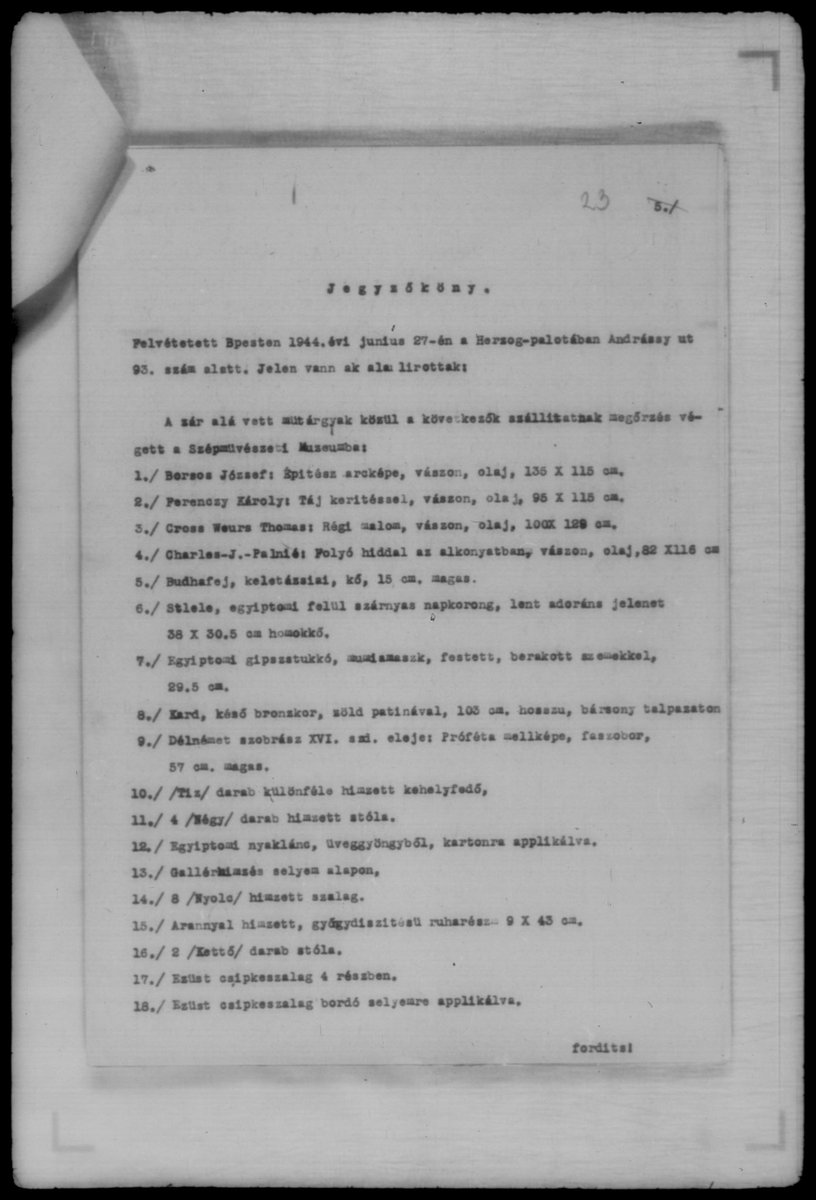
🕯️ PROVENANCE DISCOVERY: Egyptian Stela from 1944 Herzog Palace Seizure Ledger @ArtRecoveryInit has identified a high-probability match candidate from the June 27, 1944 “Jegyzőkönyv” — the official inventory documenting the forced transfer of cultural objects from Baron Mór Lipót Herzog’s Budapest residence (Andrássy út 93) to the Museum of Fine Arts Budapest. Following the confirmed identification of a match candidate for #1 on the list (József Borsos’ Építész arcképe, now MNG inv. 50.517), Item #6 presents a particularly strong convergence of evidence. Original 1944 entry: “6./ Stiele, egyiptomi felül szárnyas napkorong, lent adoráns jelenet 38 X 30.5 cm homokkő.” (“Stele, Egyptian; above: winged sun disk; below: adorant scene; 38 × 30.5 cm; sandstone.”) 🏺 Match Candidate: Funerary Stela of Nebet-wedjat Museum of Fine Arts Budapest — Egyptian Collection Inventory: 51.2152 The convergence of metrics and iconography creates a high-probability identification: 📏 Dimensions: 38.3 × 30.5 cm — aligns closely with the 1944 record (within normal archival variance) 🪨 Material: Limestone (recorded as sandstone in 1944; a standard archival variance for Egyptian lithics under wartime conditions) 🪶 Iconography: Winged sun disk above; adorant figure below before deities — consistent with the 1944 description 📜 Text: Includes a passage from Book of the Dead, Chapter 191 🏷️ Inventory sequence: “51.” series consistent with post-1944 institutional registration patterns seen across the Herzog group 📍 Context: Appears within the same documented transfer cohort as other Herzog Palace objects 📜 WHAT THE HIEROGLYPHS ACTUALLY SAY This object — if confirmed — is the Funerary Stela of Nebet-wedjat, containing a passage from Chapter 191 of the Book of the Dead. •Book of the Dead: A collection of funerary spells guiding the deceased in the afterlife •Chapter 191: A rare spell focused on reuniting the Ba-soul with the body and heart, ensuring continued existence after death The museum record notes that the text centers on restoring the unity of the soul and body — a powerful expression of continuity after loss. One 1944 inventory page recorded its removal. The inscription itself speaks to survival beyond separation. 📎 Museum record: mfab.hu/artworks/14789/ 🕯️ This object was seized alongside paintings and other cultural works — part of a single documented transfer. We call on the Museum of Fine Arts Budapest and relevant authorities to: •Publish complete provenance for inv. 51.2152 •Disclose any 1944–45 transfer documentation •Engage in good-faith review consistent with the Washington Principles Each identification — whether tentative or confirmed — narrows the gap between record and object. #HolocaustArtRecovery #WashingtonPrinciples #HerzogCollection #ProvenanceResearch #EgyptianAntiquities #Restitution #HEARAct @egyptomuseum @UNESCO @marcorubio @USAmbHungary @nytimesarts @Telexhu @WJRORestitution @metmuseum
Holocaust Art Recovery Initiative tweet mediaHolocaust Art Recovery Initiative tweet media
English
0
0
1
329
Holocaust Art Recovery Initiative
Holocaust Art Recovery Initiative@ArtRecoveryInit·
⚖️ HEAR Act of 2025 Signed Into Law: A Major Shift for Holocaust Art Restitution Today marks a decisive development in the effort to recover art and cultural property stolen during the Holocaust. The bipartisan HEAR Act of 2025 permanently strengthens the original 2016 law, ensuring that claims in U.S. courts are judged on the merits of the evidence—not dismissed by the passage of time or technical defenses like laches or international comity. For survivors and heirs, this fundamentally changes the legal landscape. At the Holocaust Art Recovery Initiative (@ArtRecoveryInit), this moment is not abstract. Over the past year, our work has focused on the 1944 Hungarian seizure records stored at @HolocaustMI —primary-source inventories documenting, line by line, the forced confiscation of artworks and cultural property from Jewish families. These are precise records naming individuals, addresses, artists, and specific titles. What was once buried in microfilm is now documented, organized, and publicly accessible. 📂 These records do more than preserve memory—they establish evidence. 🏛️ This law ensures that evidence can now be heard. The timing is especially significant on this Holocaust Remembrance Day (Yom HaShoah). As Hungary enters a new political era following yesterday’s elections, the strengthened HEAR Act provides families with a viable legal pathway in U.S. courts, connecting historical documentation with present-day remedies. More than 80 years after these seizures, the barriers have shifted. The evidentiary record is clearer, and the legal framework is stronger. The HEAR Act of 2025 ensures that justice for Holocaust cultural theft no longer has an expiration date. By removing the legal shields of the past, the law finally allows the truth of a family’s legacy to outweigh procedural loopholes. Where the historical record is clear, the art world must now meet it with the same transparency—honoring both the evidence and the families to whom these pieces belong. 🕯️ #HEARAct #HolocaustArtRecovery #Restitution #ProvenanceResearch #NaziLootedArt #Hungary #ClaraGarbonRadnoti
Holocaust Art Recovery Initiative tweet media
English
0
3
6
440
Holocaust Art Recovery Initiative
Holocaust Art Recovery Initiative@ArtRecoveryInit·
A New Era for Hungary—A New Opportunity for Justice 🇭🇺⚖️ Hungary voted for change yesterday. Now comes a real test of whether that change will include justice. With Viktor Orbán’s concession and Péter Magyar’s Tisza party winning a sweeping mandate, a historic opening has emerged. This is the clearest opportunity in decades to confront one of Hungary’s unfinished moral debts: the restitution of art and cultural property seized from Hungarian Jews in 1944. The evidence is no longer missing. @ArtRecoveryInit has posted hundreds of examples on @X (with key assistance from @grok). Through the work of @HolocaustMI and @WJRORestitution, 180 digitized microfilm reels containing more than 160,000 frames are now online. These records provide a documented map of persecution and looting, identifying specific works and tracing the machinery of seizure that moved them into official custody. The standard is already clear, yet the action is non-existent. While 34 countries have endorsed the 2024 Best Practices, Hungary has continued to evade its responsibilities. For too long, systematic provenance research has been ignored, and the path to restitution has been intentionally blocked by legal and bureaucratic barriers. Our call to action for the incoming government: 1️⃣ Endorse the 2024 Best Practices immediately. 2️⃣ Establish an independent, transparent restitution process. 3️⃣ Publish a searchable provenance database for all public collections. 4️⃣ Negotiate claims in good faith where the historical record is clear. 5️⃣ Drop bad faith and procedural opposition to heir recovery efforts under the HEAR Act. This is not about rewriting history. It is about finally refusing to keep it buried. Let this new chapter for Hungary be defined by the courage to do what is right. 🏛️🕯️ #HolocaustRestitution #HungaryElections2026 #ArtRecovery #HARI #Justice #PéterMagyar #TiszaParty #WashingtonPrinciples #ProvenanceResearch #HEARAct @magyarpeterMP @SecRubio @USAmbHungary @ClaimsCon @UNESCO @vonderleyen @JohnCornyn @RepLaurelLee @RepJerryNadler @SenBlumenthal @MikeJohnson @nytimesarts @CathyHickley @ZacharyHSmall @artnet @444hu @Telexhu
Holocaust Art Recovery Initiative tweet media
English
0
1
1
374
Holocaust Art Recovery Initiative
Holocaust Art Recovery Initiative@ArtRecoveryInit·
Art, Memory, and the Holocaust: From 1944 Records to the HEAR Act After over 600 documented posts, @ArtRecoveryInit closes this public series with a clear sense of what has been accomplished — and what remains unfinished. Our work developed into detailed archival casework drawn from 1944 seizure inventories preserved on microfilm at @HolocaustMI (Reels 143, 144, 145, and related files), and digitized by the @WJRORestitution. Those wartime documents record Jewish families by name and address alongside artists, titles, materials, and dimensions. In case after case, those entries align with postwar museum holdings, auction records, and private collections where provenance remains incomplete or undisclosed. Our posts rested on transcription, comparison with modern records, and a consistent call for full institutional disclosure, expert review, and publication of 1944–1946 intake and accession records. These records are surviving fragments of a displaced cultural map — echoes of lives interrupted by state seizure. Representative match candidates documented include: Isenbrandt — Triptych wings (Saint John the Baptist and Saint Jerome), 87 × 31 cm (exact) — Herzog collection, 19 June 1944 — Szépművészeti Múzeum inv. 9047/b–c. Giampetrino — Christ Carrying the Cross, 62 × 49 cm (exact) — Herzog collection, 14 June 1944 — Szépművészeti Múzeum inv. 58.2. Renoir — Portrait of a Young Woman, 56 × 47 cm (near-exact) — Baroness Ilona Kiss (Herzog family), 8 June 1944 — Szépművészeti Múzeum inv. 435.B. Gerrit Dou — Leiden Civic Guard Officer (Alabárdos), 66 × 51 cm (exact) — Dr. Surányi Miklós, June 1944 — Szépművészeti Múzeum inv. 62.10. Bruyn the Elder — Portrait of Petrus von Clapis, 37 × 26 cm (exact) — Weiss Alfonz bárónő, May 1944 — Szépművészeti Múzeum inv. 50.754. Corot — Lady with Daisies, 78 × 57.7 cm (near-exact) — Br. Herzog A. — Magyar Nemzeti Galéria inv. 501.B. Iványi Grünwald — Öreg hegedűs, 81 × 48 cm — Munther collection, May 1944 — Magyar Nemzeti Galéria inv. 59.118T. Ruysch — Floral Still Life, 107 × 82 cm (near-exact) — Csetényi Ilona — National Museum of Women in the Arts, Washington, D.C., inv. 1986.282. Key collections documented include the Kaszab family (50+ objects, among them works by Ligeti, Csók, and Markó the Younger), the Weiser Miklós collection (Thorma János and Maticska Jenő), and the Herzog Palace group (including Tiepolo’s Apotheosis of Aeneas, now at Harvard’s Fogg Museum, Acc. 1949.76). Families from the 101-page Szeged dossier — Szilárd, Fabó, Grünwald, Lázár, Révai, Winter, and others — follow the same pattern: detailed 1944 inventories, fragmented postwar trajectories, and provenance that remains publicly unaccounted for. The 1944 inventories were never created for historical reckoning. Yet today they function as precisely that: a structured evidentiary framework through which loss, movement, and institutional responsibility can be traced. The bipartisan HEAR Act of 2025 would extend and strengthen the existing framework by removing its sunset provision and narrowing procedural barriers that have prevented claims from being heard on the merits. What these posts collectively document is the persistent presence of unresolved history that the HEAR Act’s passage would finally allow courts to reach. To the many families whose names appear across these inventories, what was once recorded as administrative seizure now stands as enduring proof of cultural loss awaiting resolution. Thank you to every reader, researcher, journalist, and supporter who engaged with this work. The documentation remains public, citable, and available for continued scholarship and review. These records are the foundation of future restitution. The law can remove barriers in court; the archive preserves the evidence. We close this series not because the work is finished, but because the evidence is now firmly in public view. The ledger is open. The responsibility is now shared.
Holocaust Art Recovery Initiative tweet media
English
0
3
6
1.4K